



On Grenada's quieter southeastern shore, Six Senses La Sagesse occupies 38 acres between open ocean and a sheltered bay, with 56 pool suites and 15 villas designed around traditional Caribbean architectural forms. The property received Star Wine List recognition in 2026 and sits at a deliberate distance from the island's busier resort corridors, making it the reference address for visitors who want something slower and more considered.
Pearl is the En Primeur Club membership app — saves, bookings, and concierge access live there. Same editors, same standards.
- Address
- PO Box 3446, St. David
- Phone
- 473-444-6666
- Website
- sixsenses.com
 Saves & bookings on Pearl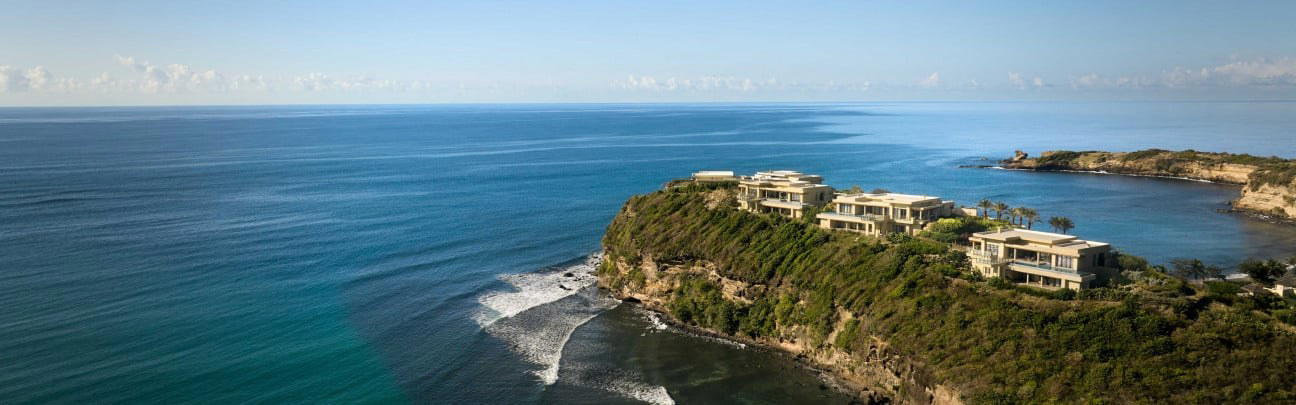
Where the Southeastern Shore Sets Its Own Terms
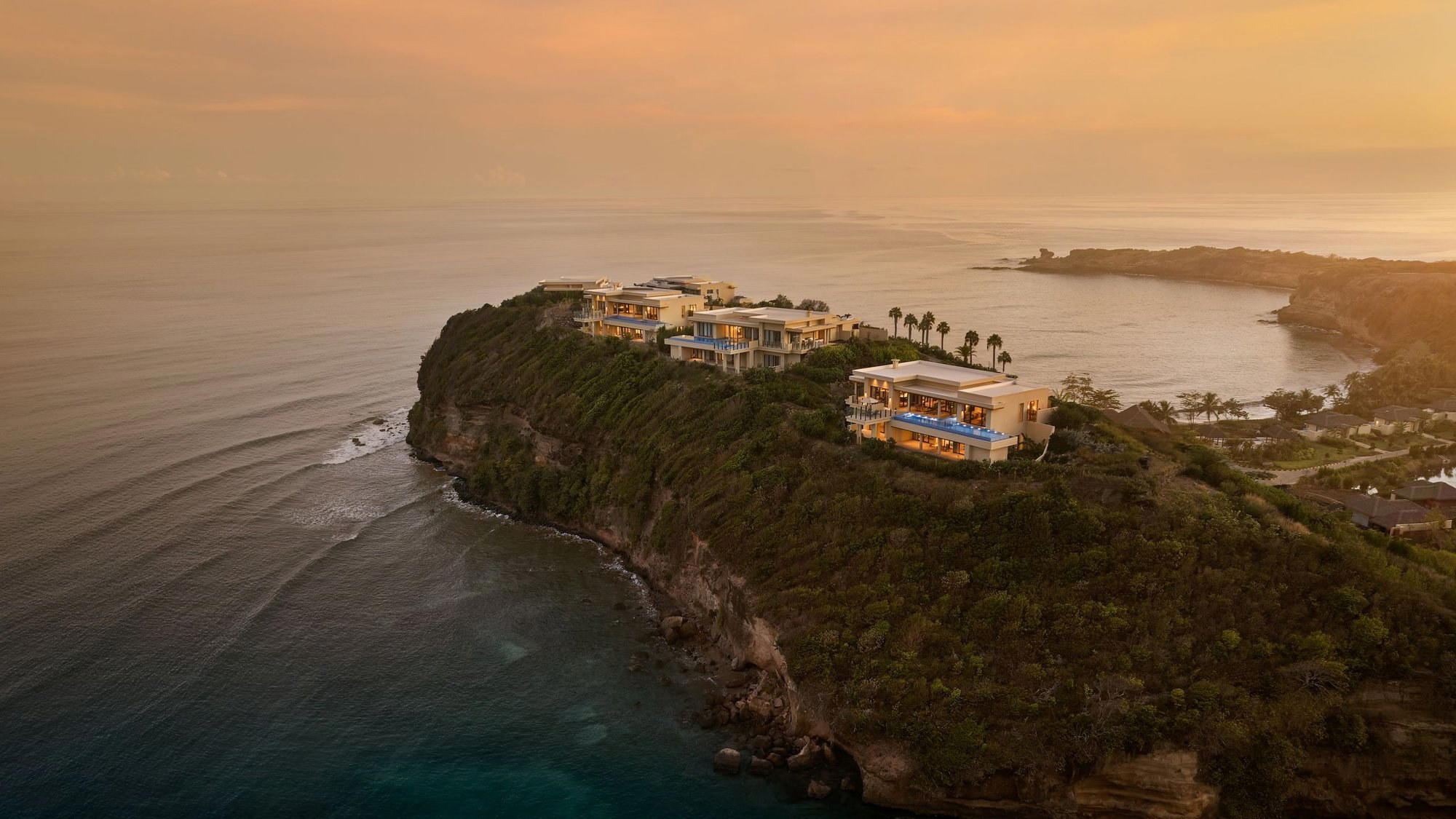
The southeastern corner of Grenada operates differently from the resort-heavy north. Traffic thins, the road narrows, and the bays shift from busy anchorages to near-private coves ringed by volcanic hills. Arriving at Six Senses La Sagesse, you approach along a coastal track that separates the Caribbean's open swell on one side from the still surface of La Sagesse Bay on the other. That physical pinch point between ocean and lagoon is not incidental to the property's design, it is the design. The 38-acre site was laid out to hold this tension between exposure and shelter, between Grenada's famous spice-island energy and the kind of quiet that guests increasingly travel a long way to find.
A Caribbean Village as Architectural Model
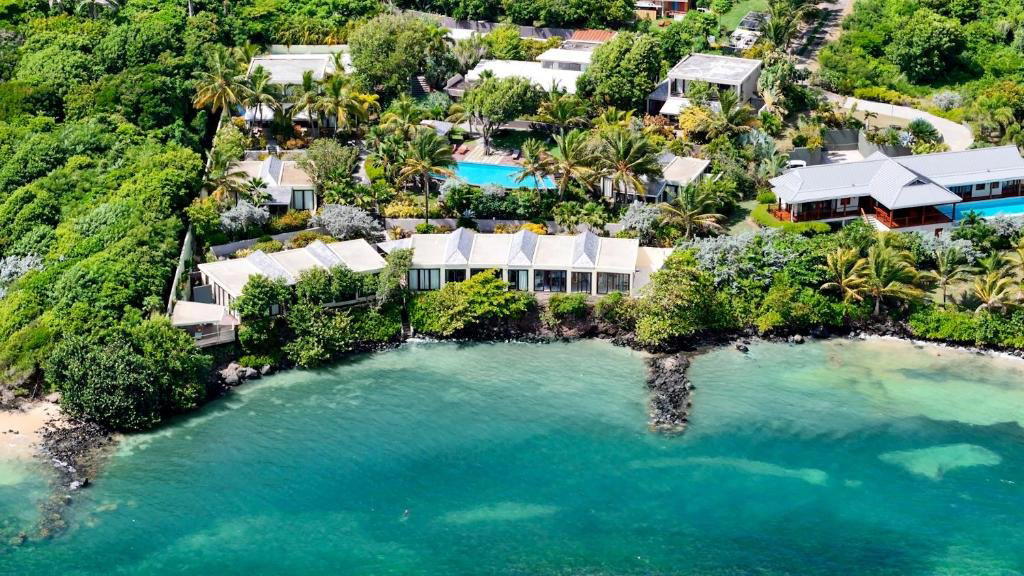
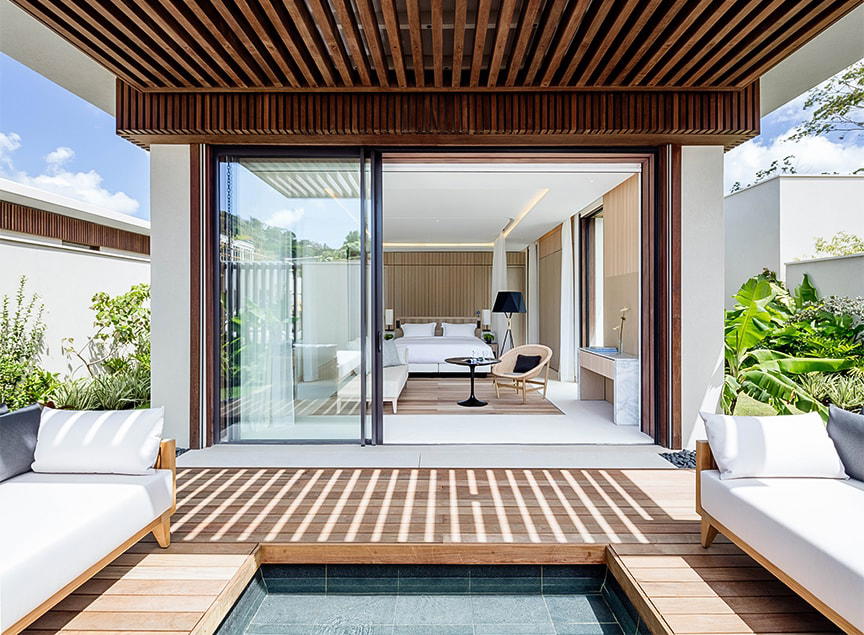
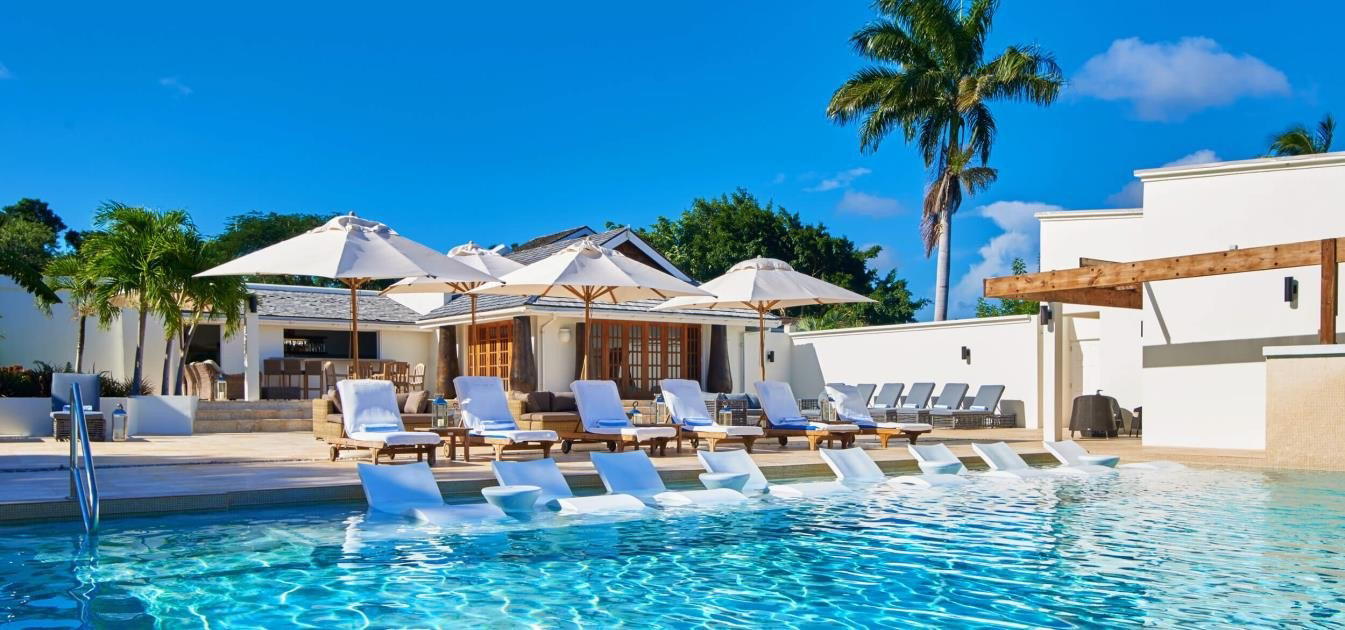
Six Senses La Sagesse draws its design language from the vernacular architecture of the Caribbean village: varied rooflines, coloured timber, natural walkways through gardens, and a promenade format along the lagoon edge that creates the sense of passing through a settlement rather than a single resort complex. The 15 hectares of grounds are divided into differentiated zones that mimic the variety you would find walking through a working coastal town, shaded garden paths giving way to open oceanfront positions, private terraces tucked behind mature planting, and communal spaces scaled for gathering rather than spectacle. The result is a property that reads horizontally rather than vertically, which in practical terms means generous separation between accommodation units and a consistency of privacy that the room count alone would not guarantee.
The 56 pool suites and 15 villas extend across this terrain in configurations that respond to the natural topography. The emphasis on light and size is architecturally deliberate: suites are described as generously proportioned, with interiors that open outward toward either ocean or garden, reflecting a design philosophy that treats the surrounding landscape as a primary finish material rather than a backdrop. For a broader sense of where this approach positions Six Senses La Sagesse within the premium Caribbean tier, it is worth noting that comparable properties in Grenada such as Calabash Hotel in Lance-aux-Épines and Laluna Boutique Hotel and Villas in St George's also operate within a low-density, design-led model, though each occupies a distinct part of the island and a different position in the competitive set.
The Spice Island Context
Grenada's identity as the Spice Island is not marketing shorthand. The island supplies a significant share of the world's nutmeg, and cinnamon, cloves, and mace are woven through local cooking, craft, and landscape in ways that visitors notice immediately. Six Senses La Sagesse positions itself explicitly within this heritage: the property's connection to Grenada's spice culture is built into its hospitality language and into the broader Six Senses wellness and food programming that draws on local botanical traditions. The southeastern parish of St David, where the property sits, has a slower agricultural character than the capital St George's to the west, and that rural identity reinforces the sense that La Sagesse is genuinely embedded in its landscape rather than transplanted onto it.
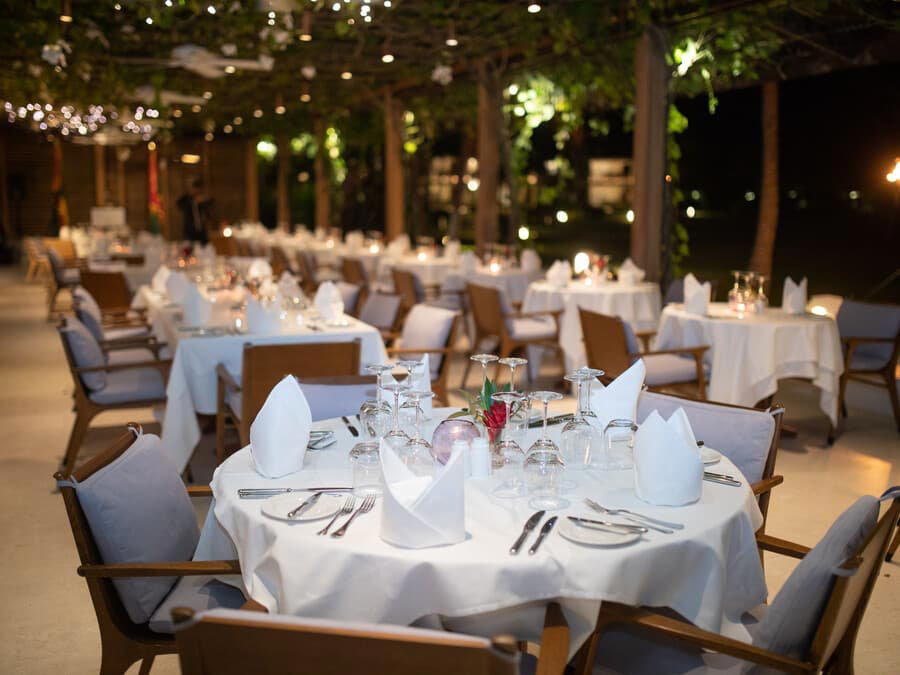
The property’s recognition for 2026 signals a food and beverage program operating at a level consistent with international premium expectations.
Room Positioning Within the Property
The split between 56 pool suites and 15 villas represents two different guest logics. The villas, at the upper end of the accommodation hierarchy, offer the scale and separation associated with the standalone-residence format that has become the reference standard in Caribbean luxury, comparable to what properties like Maca Bana in Grenada and Le Phare Bleu in Egmont offer in their respective configurations. The pool suites address a slightly different brief: private plunge pools with the service infrastructure of a full-service resort, which for many guests represents the practical ceiling of what they want to manage on a holiday. Both categories sit within a setting where the architecture does significant work in making smaller footprints feel expansive, through sightlines, garden planting, and the consistent relationship between indoor and outdoor space.
How La Sagesse Compares Within Grenada's Premium Tier
Grenada's upper accommodation market has developed in a distinctive direction compared to larger Caribbean islands. Rather than concentrating premium inventory at one or two mega-resorts, the island has produced a cluster of independent and branded properties that each occupy a defined niche. Silversands Beach House in St George's and Laluna in St George's represent the design-forward independent end of that tier, while 473 Grenada Boutique Resort in Calivigny occupies a more intimate boutique position. Six Senses La Sagesse enters this market with the structural advantages of a global brand's programming depth and the credibility of the Six Senses wellness framework, while its southeastern location gives it a geographic separation that functions as a genuine differentiator rather than a disadvantage.
For guests accustomed to Six Senses properties elsewhere, the La Sagesse format sits within the group's established model of low-density, landscape-integrated resorts with a strong wellness and food identity. That programming consistency makes it a legible choice for an audience that has encountered the brand at other addresses. Globally, the Six Senses model has shown up in settings as different from each other as urban Asia and remote canyon country; the Grenada property applies the same framework to a Caribbean spice island context with specific architectural and cultural adaptations that make it more than a direct transplant of a standard formula.
Planning a Stay
The southeastern location in St David means guests should plan their arrival logistics in advance: the property is a drive from Maurice Bishop International Airport, and the road quality along the southeastern coast makes a pre-arranged transfer the sensible option rather than a self-drive from the terminal. The dry season from January through April represents the most direct weather window, though Grenada sits at the southern edge of the hurricane belt and generally sees less severe storm activity than islands further north. The property was recognized in 2026, so advance planning is sensible. For guests considering how La Sagesse compares to other properties in its tier, examples include Amangiri in Canyon Point, Hotel Esencia in Tulum, and Castello di Reschio in Lisciano Niccone, each representing the low-density, landscape-first approach that has defined this tier of travel across different geographies. Further reference addresses include Aman New York, Cheval Blanc Paris, Hotel Du Cap-Eden-Roc in Cap d'Antibes, and Badrutt's Palace Hotel in St Moritz.
Comparable Spots, Quickly
Comparable venues nearby, for context on price, style, and recognition.
| Venue | Cuisine | Price | Awards | Notes |
|---|---|---|---|---|
| Six Senses La Sagesse GrenadaThis venue — the venue you are viewing | Contemporary Caribbean luxury resort with traditional architectural influences, emphasizing natural materials and seamless indoor-outdoor living across 38 acres of tropical landscape. | $$$$ | 5-Star | |
| Royalton Grenada, An Autograph Collection All-Inclusive Resort | Modern all-inclusive beach resort with luxury suites and family amenities | $$$$ | 5-Star | St George S |
| Laluna | Boutique beachfront resort with intimate cottage accommodations | $$$$ | 4-Star | Morne Rouge |
| Laluna Boutique Hotel & Villas | Bohemian beach chic boutique resort designed by renowned architect Gabriella Giuntoli, blending luxury with laid-back Caribbean sensibility. | $$$$ | 5-Star | Morne Rouge |
| True Blue Bay Boutique Resort | Tropical hillside boutique resort with waterfront access and sustainable practices | $$$ | 4-Star | True Blue |
| Le Phare Bleu | Boutique villa resort with marina | $$$$ | 4-Star | Egmont |
At a Glance
- Romantic
- Scenic
- Elegant
- Sophisticated
- Quiet
- Honeymoon
- Romantic Getaway
- Wellness Retreat
- Family Vacation
- Anniversary
- Beachfront
- Private Villa
- Destination Spa
- Panoramic View
- Private Dining
- Garden
- Waterfront
- Wifi
- Pool
- Spa
- Fitness Center
- Room Service
- Concierge
- Kids Club
- Beach Access
- Bicycle Rentals
- Water Sports
- Yoga Pavilion
- Sauna
- Waterfront
- Garden
- Mountain
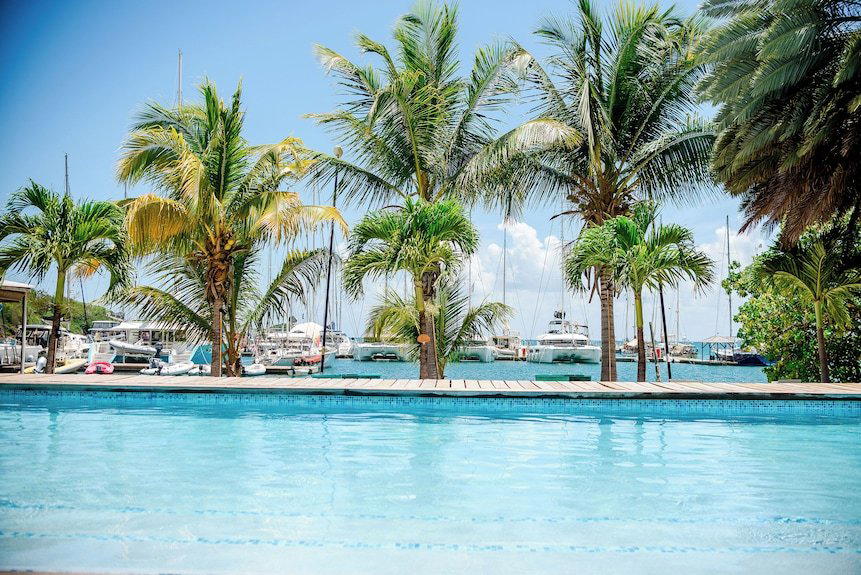
Serene and tranquil with natural light, ocean breezes, and lush tropical gardens creating a calming sanctuary; sophisticated yet relaxed indoor-outdoor living spaces.