Rekona Lodge
Rekona Lodge sits in Gizo, the provincial capital of the Western Province of the Solomon Islands, where the accommodation offer is limited and the setting does much of the work. For travellers moving through this remote corner of Melanesia, the lodge represents a practical and locally rooted base close to the region's extraordinary reef systems and World War II dive sites.

Pearl is the En Primeur Club membership app, where members save venues, book tables and use the concierge.
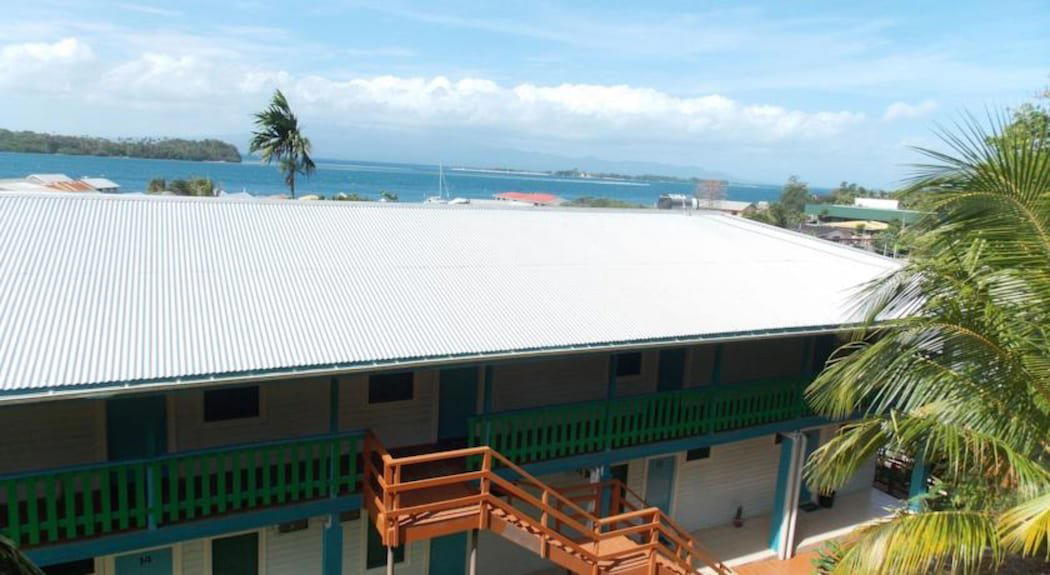
Where the Western Province Meets the Water
Gizo sits at the edge of the Solomon Islands' Western Province, a town that functions as the commercial and administrative hub of an archipelago better known for dive sites than destination hotels. The approach by boat from Honiara or by light aircraft into Nusatupe Airport puts the scale of the place in immediate context: coral-rimmed islands scattered across a blue-green lagoon, a small town waterfront, and an accommodation market that divides cleanly between basic guesthouses and the handful of lodges that cater to divers and long-haul travellers who have made a deliberate choice to come this far. Rekona Lodge occupies that second tier, positioned on the Gizo waterfront where the relationship between built structure and surrounding water is the defining spatial fact of the property.
The Architecture of Remoteness
In the Pacific island lodge category, design philosophy tends to organise itself around one of two instincts: the assertion of comfort through solid, imported materials, or the accommodation of climate and setting through open, locally responsive structures. Rekona Lodge sits in the latter tradition. Waterfront lodges in this part of Melanesia are built with the assumption that the sea is not a backdrop but a functional participant in the guest experience, shaping light, airflow, and the acoustic register of daily life. The physical environment here is determined by proximity to the lagoon, where natural ventilation does the work that mechanical systems handle elsewhere, and where the distinction between interior and exterior softens at almost every threshold.
This design logic reflects a broader pattern across premium lodge properties in remote Pacific destinations, where construction costs, supply chain constraints, and the imperative to connect guests with an extraordinary natural setting push designers toward structures that work with local climate rather than against it. The result is a spatial character that properties in more developed markets rarely achieve regardless of budget, because it depends on genuine geographic isolation as much as architectural intent. For travellers comparing Rekona Lodge against properties like Amangiri in Canyon Point or One&Only; Mandarina in Riviera Nayarit, the relevant difference is not scale or amenity depth but the degree to which the natural setting penetrates the architecture itself.
Gizo as a Destination: The Editorial Context
Understanding Rekona Lodge requires understanding what Gizo is and what it is not. This is not a polished resort island with a developed tourism infrastructure. It is a working town with a functioning local economy, a public market, and a waterfront where fishing boats share space with the occasional dive tender. Travellers who reach Gizo have typically planned around the dive sites: Mbike, Titiana, and the Toa Maru wreck are draws that bring serious divers from Australia, Japan, and Europe. The WWII dive heritage of the New Georgia Sound is among the most documented in the Pacific, and Gizo is the operational base for accessing it.
For travellers oriented toward cultural and environmental depth rather than resort amenity, this context matters. The lodge does not function as a self-contained destination in the way that, say, Hotel Esencia in Tulum or Castello di Reschio in Lisciano Niccone do. Its value proposition is rooted in access: to the water, to the reef system, to a part of the world that the premium travel market has not yet rationalised into a familiar product. That is precisely what draws a particular profile of traveller here, and what makes comparison against high-amenity urban properties like Aman New York or Cheval Blanc Paris instructive but ultimately beside the point. The competitive set for Rekona Lodge is defined by geography and purpose, not by amenity tier.
Planning Your Stay: What to Know Before You Arrive
Reaching Gizo requires a connecting flight from Honiara, the Solomon Islands capital, via Solomon Airlines, with journey times subject to the regional schedule. The dry season, broadly April through October, offers the most reliable conditions for diving and boat travel, with water visibility at its clearest and inter-island movement most predictable. Outside these months, the wet season brings rain and stronger swells that can affect access to outer dive sites. Travellers planning time in the Western Province typically build in buffer days to account for the regional flight schedule, which does not operate with the frequency of routes into more developed tourism markets.
Specific booking logistics, current pricing, and room configurations for Rekona Lodge were not available at the time of publication. Travellers accustomed to instant-confirmation platforms used for properties like The Fifth Avenue Hotel in New York City or Badrutt's Palace Hotel in St. Moritz should expect a different process. That friction is worth accepting; it is also part of what keeps this corner of the Pacific from becoming overcrowded. For a broader survey of where to eat and stay in the area, our full Gizo restaurants guide covers the local scene in more detail.
How Rekona Lodge Sits in the Broader Pacific Lodge Market
The Pacific island lodge market has seen incremental growth at its upper end, with properties across Fiji, Vanuatu, and the Cook Islands attracting significant investment and international operator attention. The Solomon Islands remain at the earlier stage of that curve, which means lower visitor volumes, less developed infrastructure, and a different kind of travel experience. Properties here compete less on polish and more on access and authenticity, two qualities that the high-end market has started to price at a premium precisely because they are harder to manufacture than a spa facility or a restaurant programme. In that sense, the remoteness that makes Gizo logistically demanding is also its primary asset. Travellers who have already experienced the design rigour of Aman Venice, the heritage weight of Mandarin Oriental Bangkok, or the cultural density of HOTEL THE MITSUI KYOTO and are looking for something that operates on entirely different terms will find the Western Province compelling for reasons those properties cannot replicate.
Details
- Quiet
- Cozy
- Scenic
- Weekend Escape
- Garden
- Terrace
- Wi Fi
- Garden
- Laundry Service
- Room Service
- Garden
Peaceful and relaxed with lush garden and welcoming terrace.