Playa Viva

Playa Viva holds two MICHELIN Keys in the 2025 guide, placing it among a small tier of recognized properties along Mexico's Pacific coast south of Ixtapa. The hotel sits on Playa Icacos outside Zihuatanejo, where low-density construction and direct beach access define the stay more than branded amenity stacks. For travelers weighing the Guerrero coast against more developed resort corridors, this is the property that earns closest scrutiny.
Pearl is the En Primeur Club membership app — saves, bookings, and concierge access live there. Same editors, same standards.
- Address
- Zihuatanejo - Acapulco, Playa Icacos, Zihuatanejo, Mexico
 Saves & bookings on Pearl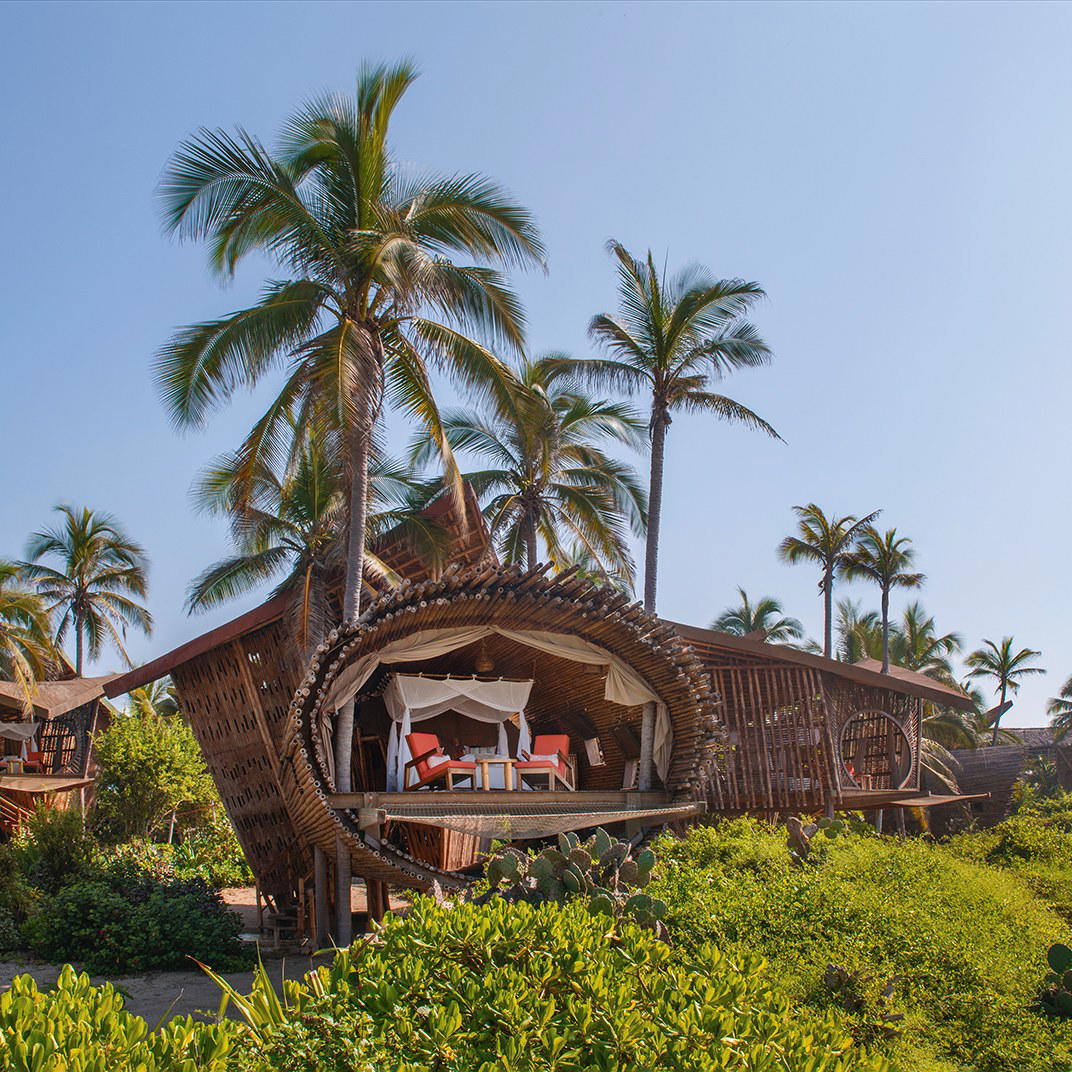
Where the Guerrero Coast Earns Its Credentials
Along Mexico's Pacific coast, the stretch running south from Ixtapa toward Zihuatanejo has long resisted the infrastructure creep that reshaped Los Cabos and the Riviera Nayarit. The hotels that have survived and thrived here tend to do so through site sensitivity rather than facility count. Playa Viva, positioned on Playa Icacos along the Zihuatanejo-Acapulco corridor, belongs to that cohort. Its two MICHELIN Keys recognition in the 2025 guide places it in a comparable set that, across Mexico, remains small: properties where design, setting, and experience are read together rather than evaluated against a branded standard.
That MICHELIN Keys distinction matters more as context than as trophy. The two-key tier, as applied by the guide across Mexico's coast, tends to identify properties where the physical environment does meaningful work, where architecture responds to landscape rather than imposing a resort grammar on top of it. Playa Viva sits apart from the larger-footprint resort developments that dominate the region's marketing output.
The Architecture of the Stay
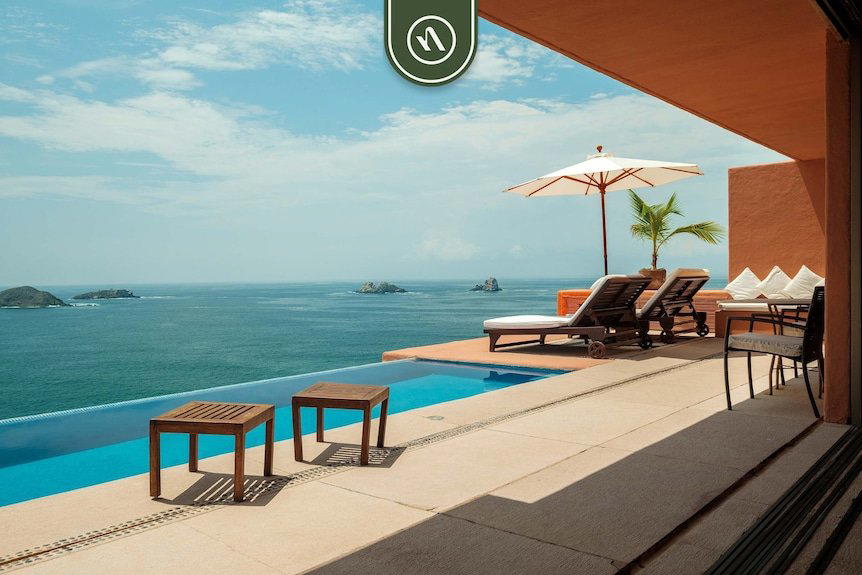
The design approach at properties like Playa Viva reflects a broader turn in Mexican coastal architecture: away from maximalist concrete resort blocks and toward structures that use local materials, open sightlines, and passive cooling. On the Guerrero coast, where the Pacific delivers consistent warm-season heat and occasional dramatic weather, architecture that breathes matters practically as well as aesthetically.
Properties in this category typically work with palapa-influenced roof structures, natural ventilation, and an absence of the sealed, air-conditioned box that defines mass-market resorts. The result is a relationship between interior and exterior that feels continuous rather than divided. You are not inside looking at the ocean through glass; the separation is reduced to something closer to a threshold. For guests arriving from northern climates or from Mexico City's density, this permeability is often the thing that registers first and stays longest.
Compared to nearby options, the hotel occupies a distinct position. Cala de Mar Resort & Spa Ixtapa and Thompson Zihuatanejo bring a more conventional hotel vocabulary to the region, with pools, structured dining, and staffed amenity programs. La Casa que Canta plays in the boutique-luxury register with strong bay views and an intimate room count. Punta Ixtapa operates at a different price point altogether. The hotel's two-key recognition suggests it is being evaluated on different criteria: not the breadth of services but the integrity of the physical and environmental experience.
Placing the Property in Pacific Mexico's Premium Tier
Mexican coastal hospitality has been moving toward a split for the better part of a decade. On one side: large-footprint international-brand properties, many of them all-inclusive, with the facility depth and loyalty program integrations that business travel and family tourism require. On the other: a smaller and more architecturally considered set of properties, often independent or associated with smaller collections, where design ambition and site specificity are the primary offering.
The hotel sits firmly in the second category, and its Guerrero location places it outside particularly trafficked Mexican resort corridors. That geography is both a constraint and an argument. Guests willing to reach this part of the coast, which requires more deliberate routing than flying into Los Cabos or Cancún, tend to arrive with different expectations than mass-market resort travelers.
For comparison across Mexico's premium tier: properties like Hotel Esencia in Tulum, One&Only Mandarina in Riviera Nayarit, and Maroma in Riviera Maya each occupy the design-led or landmark tier of their respective corridors. Zadun, A Ritz-Carlton Reserve in Los Cabos and Las Ventanas al Paraíso in San José del Cabo bring international brand equity to that same conversation. The hotel earns its position without a brand parent, which, for a certain kind of traveler, is precisely the point.
The MICHELIN Keys framework also connects this property to a wider set of recognized addresses across Mexico: Chablé Yucatán in Mérida, Xinalani in Quimixto, and the sister property Playa Viva in Juluchuca all appear within the guide's Mexican hotel selections, suggesting a pattern: smaller-scale, environmentally conscious, architecturally specific properties are the ones the guide is finding worth marking on the Pacific coast.
Planning the Visit
Zihuatanejo is served by its own international airport. The dry season, running roughly November through April, is one consistent weather window for the Guerrero coast, and advance booking is wise.
The coastal positioning along Playa Icacos means the property delivers a Pacific-facing beach away from the cruise-ship density of Acapulco and at a comfortable remove from the more developed Ixtapa strip. Guests who have followed this stretch of coast through its various cycles will know that Zihuatanejo has maintained a different register than its neighbors, smaller in commercial scale and more consistent in its fishing-town-meets-design-hotel character.
Each approaches the question of how a hotel sits in its environment differently, and together they map the range of what premium independent hospitality looks like across Mexico's coasts.
Fast Comparison
Comparable venues nearby, for context on price, style, and recognition.
| Venue | Cuisine | Price | Awards | Notes |
|---|---|---|---|---|
| Playa VivaThis venue — the venue you are viewing | Regenerative luxury eco-resort with open-air construction using traditional techniques and locally harvested sustainable materials; designed as an immersive nature experience without modern technological distractions. | $$$$ | 5-Star | Not listed |
| Thompson Zihuatanejo | Contemporary beachfront resort | $$$$ | 5-Star | Playa La Ropa |
| Punta Ixtapa | Contemporary luxury resort development with duplex and simplex apartment configurations designed for extended stays and group accommodations. | $$$$ | 5-Star | Punta Ixtapa |
| La Casa que Canta | Modern Mexican luxury with rustic charm; adobe brick construction with palapas and tropical woods creating an well-known Pacific Coast aesthetic that blends contemporary design with traditional Mexican architectural elements. | $$$$ | Michelin 1 Key | La Ropa Beach area |
| Cala de Mar Resort & Spa Ixtapa | Contemporary luxury resort blending modern amenities with traditional Mexican architectural and design elements, positioned as an ultra-premium destination for informed travelers. | $$$$ | Michelin 1 Key | Ixtapa Zihuatanejo |
| Hippodrome Hotel Condesa | Restored 1930s Art Deco apartment building blending history and contemporary luxury | $$$$ | 5-Star | Hipodromo |
Recognition history
Dated appearances from independent guides and award organizations, with the underlying list record or original source where available.
Michelin 2 Keys
Michelin
Continue exploring
More in Zihuatanejo
At a Glance
- Bohemian
- Scenic
- Quiet
- Intimate
- Rustic
- Wellness Retreat
- Romantic Getaway
- Family Vacation
- Weekend Escape
- Beachfront
- Private Villa
- Destination Spa
- Garden
- Panoramic View
- Waterfront
- Beach Access
- Spa
- Airport Transfer
- Waterfront
- Garden
- Beach Access
- Spa
- Airport Transfer
Open-air, naturally lit spaces with ocean breezes, soft tropical ambiance enhanced by natural materials, palm trees, and proximity to the Pacific Coast; designed for slow living and connection to nature.