Pioneertown Motel


Michelin Selected · Mr & Mrs Smith Seal of Approval
A Michelin Selected motel on the edge of California's Mojave Desert, Pioneertown Motel sits inside one of the American West's stranger social experiments: a 1940s Hollywood set town that never stopped being lived in. The property trades on honest desert character rather than resort polish, making it a reference point for travellers seeking the high desert on terms the landscape itself would recognise.

Pearl is the En Primeur Club membership app, where members save venues, book tables and use the concierge.

Where the Set Became the Town
Pioneertown was built in 1946 as a working film set and residential community, designed to look like an 1880s frontier settlement while housing the cast and crew who rode through it on screen. Unlike most Hollywood backlots, it was never dismantled. People kept living there, the saloon kept serving drinks, and the dirt main street kept its name: Mane Street. Pioneertown Motel occupies that same geography, positioned along Curtis Road where the built fiction of a Western town and the actual Mojave Desert meet at a geological bluntness that no designer could fabricate.
The Michelin Selected designation, awarded as part of the 2025 Michelin Hotels & Stays guide for the United States, places the motel inside a curated tier that values character, authenticity, and a defined sense of place over brand standardisation or amenity count. That context matters when reading the property: it is not selected despite its modesty, but in part because of what that modesty represents within a broader American hospitality shift toward places that carry actual history.
The Architecture of Staying Still
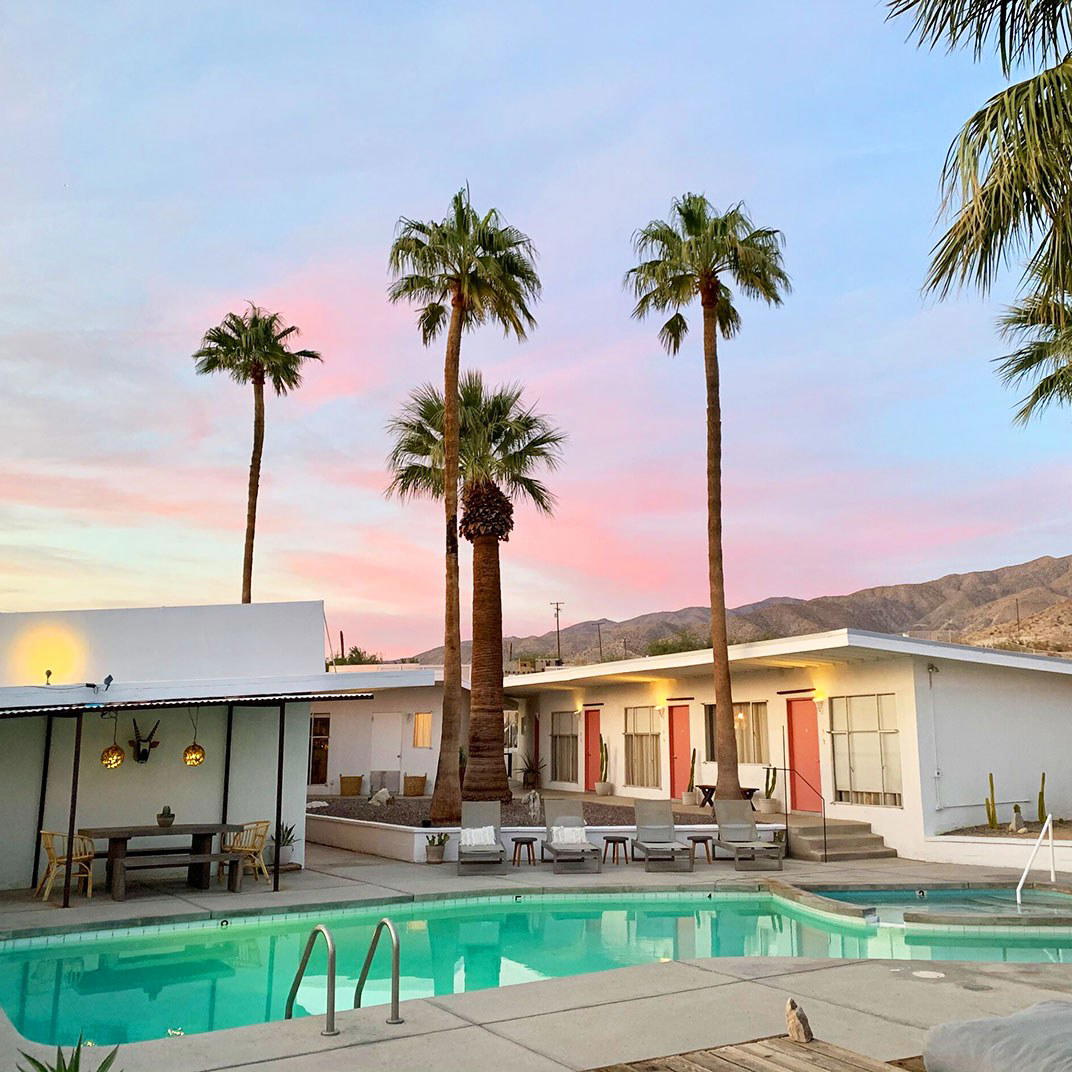
Desert vernacular architecture in the American Southwest has followed a consistent grammar for over a century: low-slung structures that hug the ground, thick walls that absorb daytime heat and release it slowly after dark, and a studied avoidance of anything that would interrupt the sight lines to open sky. Pioneertown Motel works within that grammar. The property reads as a motor court of its era, the mid-century American roadside motel typology that developed alongside Route 66 culture and the democratisation of the automobile as a tool for landscape access.
That typology has had a complicated rehabilitation in American hospitality. At one end, it produced the studied retro-revival model seen in properties like Dunton Hot Springs in Dunton and The Stavrand in Guerneville, where the aesthetic of an older American accommodation format is preserved but the infrastructure and price point are updated substantially. Pioneertown Motel occupies different ground: it is not a revival but a continuation, a property that has remained in its original context while the surrounding cultural interest caught up to it.
The physical setting amplifies the architecture in ways that more polished desert resorts cannot replicate. The Mojave at this elevation, roughly 4,000 feet above sea level in the San Bernardino Mountains foothills, produces light that is harder and more directional than the desert floor, and nights that drop temperature sharply regardless of season. The built environment of the motel sits inside that condition rather than insulating guests from it.
The High Desert Context
The market segment around Joshua Tree National Park and the Yucca Valley corridor has changed significantly since the mid-2010s, when the combination of affordable land, Los Angeles proximity, and a growing appetite for analogue disconnection made the area a target for design-led small hotel development. That wave produced a recognisable type: converted homesteads and compound properties with carefully sourced furniture, strong social media identities, and pricing that tracked urban boutique hotel rates.
Pioneertown Motel predates that wave and does not belong to it. For travellers comparing options in the broader high-desert corridor, properties like Amangiri in Canyon Point represent one end of the desert luxury spectrum, where landscape access is delivered at a premium through architecture designed by specialists to dissolve the boundary between interior space and surrounding terrain. Pioneertown Motel sits at a different point on that spectrum entirely, where the landscape access is simply a function of where the building is, not a designed experience layered over it.
That distinction is useful for the traveller deciding between them. The question is not which property is better appointed, but what kind of relationship with the desert you are actually trying to have. The high desert around Pioneertown, with its Joshua trees, boulders, and open scrub, does not require mediation. It requires proximity.
Pioneertown as a Base
The motel functions most naturally as a base for landscape movement rather than a destination in its own right. Joshua Tree National Park's north entrance via Twentynine Palms is accessible from Pioneertown, and the park's characteristic boulder formations and tree groves are the primary draw for most visitors in the corridor. Pappy & Harriet's Pioneertown Palace, the live music venue operating on Mane Street since the 1970s, is within walking distance and books acts from touring country, rock, and indie circuits with enough regularity to make evening programming part of the stay calculus.
Timing the visit matters. Spring, roughly March through May, produces the leading conditions: wildflower coverage in good rain years, moderate temperatures during the day, and the kind of low-angle afternoon light that the boulder fields around Joshua Tree are photographed for. Summer temperatures in the high desert can reach the upper nineties Fahrenheit even at elevation, and while Pioneertown runs cooler than the valley floor, the heat constrains midday outdoor movement. Winter visits trade warmth for solitude and the possibility of snow on the higher rock formations, a combination that changes the visual register of the landscape entirely.
For travellers building a broader California circuit, the motel sits at a different register from properties like Post Ranch Inn in Big Sur, SingleThread Farm Inn in Healdsburg, or Meadowood Napa Valley in Napa, where the architecture, cuisine, and programming are the primary reasons to go. At Pioneertown, the reason to go is Pioneertown. The motel is how you stay there.
Booking is handled directly; the property's Michelin Selected status is accessible through the Michelin Hotels & Stays guide, and given the limited room count typical of motor court properties of this era, advance booking for spring weekends and any dates adjacent to Pappy & Harriet's notable performances is a practical necessity rather than a formality. Weekend occupancy in the peak spring window moves quickly given the motel's now-established position in the high-desert travel conversation.
For those assembling a Southwest itinerary that takes in more than one desert environment, Canyon Ranch Tucson in Tucson and Sage Lodge in Pray represent adjacent points in the American landscape-stay category, while Amangiri in Canyon Point remains the reference point for what the category looks like when price is not a constraint. See our full Pioneertown restaurants guide for coverage of dining and programming in the wider area.
A Quick Peer Check
Comparable venues nearby, for context on price, style, and recognition.
| Venue | Cuisine | Price | Awards | Notes |
|---|---|---|---|---|
| Pioneertown MotelThis venue (the venue you are viewing) | Restored historic motel blending Old West authenticity with modern boutique comforts. | $100–200 | Michelin Selected · Mr & Mrs Smith Seal of Approval | Not listed |
| Rimrock Ranch | Historic ranch retreat with rustic cabins, Airstream trailers, lodge, and architectural Hatch House. | Not listed | Not listed | Pioneertown |
| The Courts Anza-Borrego | desert compound with tennis courts and camper trailers | Not listed | Not listed | Borrego Springs |
| The Brick Hotel | Historic boutique hotel blending 1888 architecture with modern amenities | Not listed | Michelin Selected | Downtown Oceanside |
| Bolero at Europa Village | Spanish-style winery resort with casitas | Not listed | Not listed | Temecula |
| Hotel Sequoia | Independent boutique hotel in a rehabilitated early-20th-century landmark, blending grand historic bones with modern hospitality and community arts programming. | Not listed | Not listed | Downtown Redwood City |
Recognition history
Dated appearances from independent guides and award organizations, with the underlying list record or original source where available.
Michelin Selected
Michelin
Mr & Mrs Smith Seal of Approval
Mr & Mrs Smith
Continue exploring
More in Pioneertown
Hotels in Pioneertown
All hotels in Pioneertown →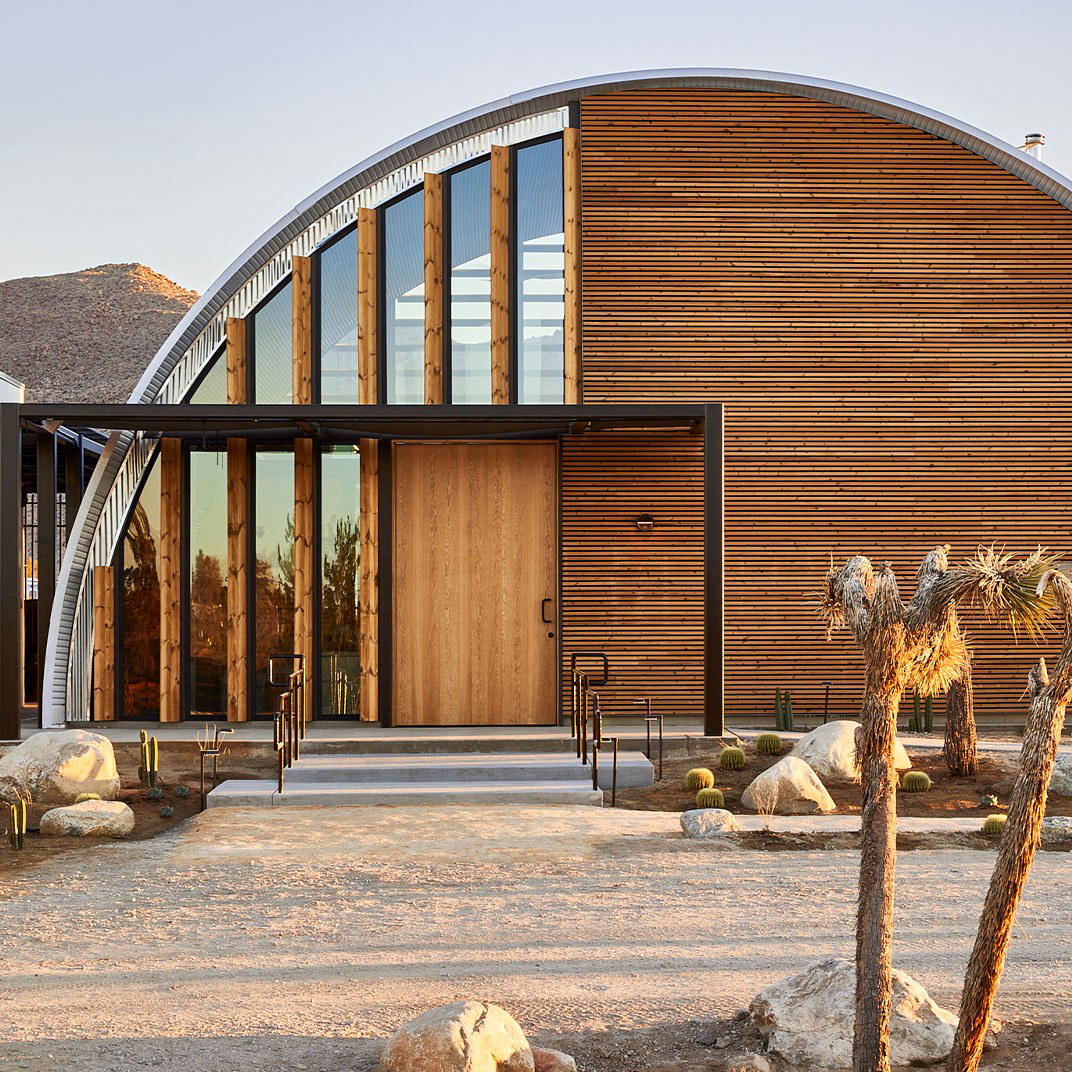
Details
- Rustic
- Cozy
- Scenic
- Romantic
- Quiet
- Romantic Getaway
- Weekend Escape
- Historic Building
- Wi Fi
- Air Conditioning
- Mountain
- Wheelchair Accessible
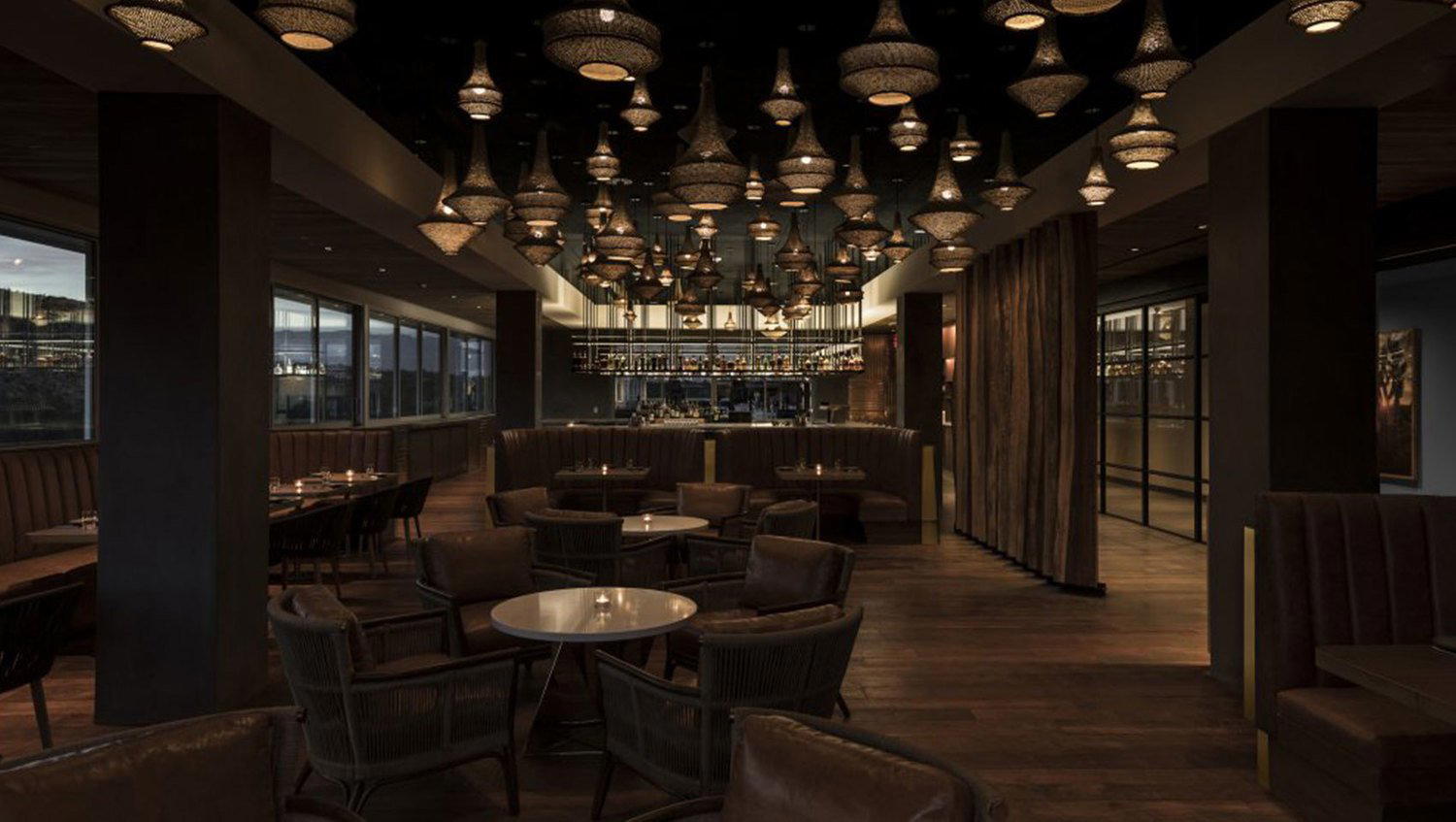
Rustic desert retreat with cozy rooms featuring beamed ceilings, wooden furniture, cowhide rugs, and serene stargazing porches amid quiet natural surroundings.