Petit St. Vincent


Petit St. Vincent occupies its own private island in Saint Vincent and the Grenadines, with 22 cottages distributed across 115 acres of Caribbean terrain. The resort operates as a deliberate disconnection from digital life, with no internet, phones, or television in the rooms. Among privately-held island resorts in the southern Grenadines, it sits at the quieter, more self-contained end of the luxury spectrum.
 Discover on Pearl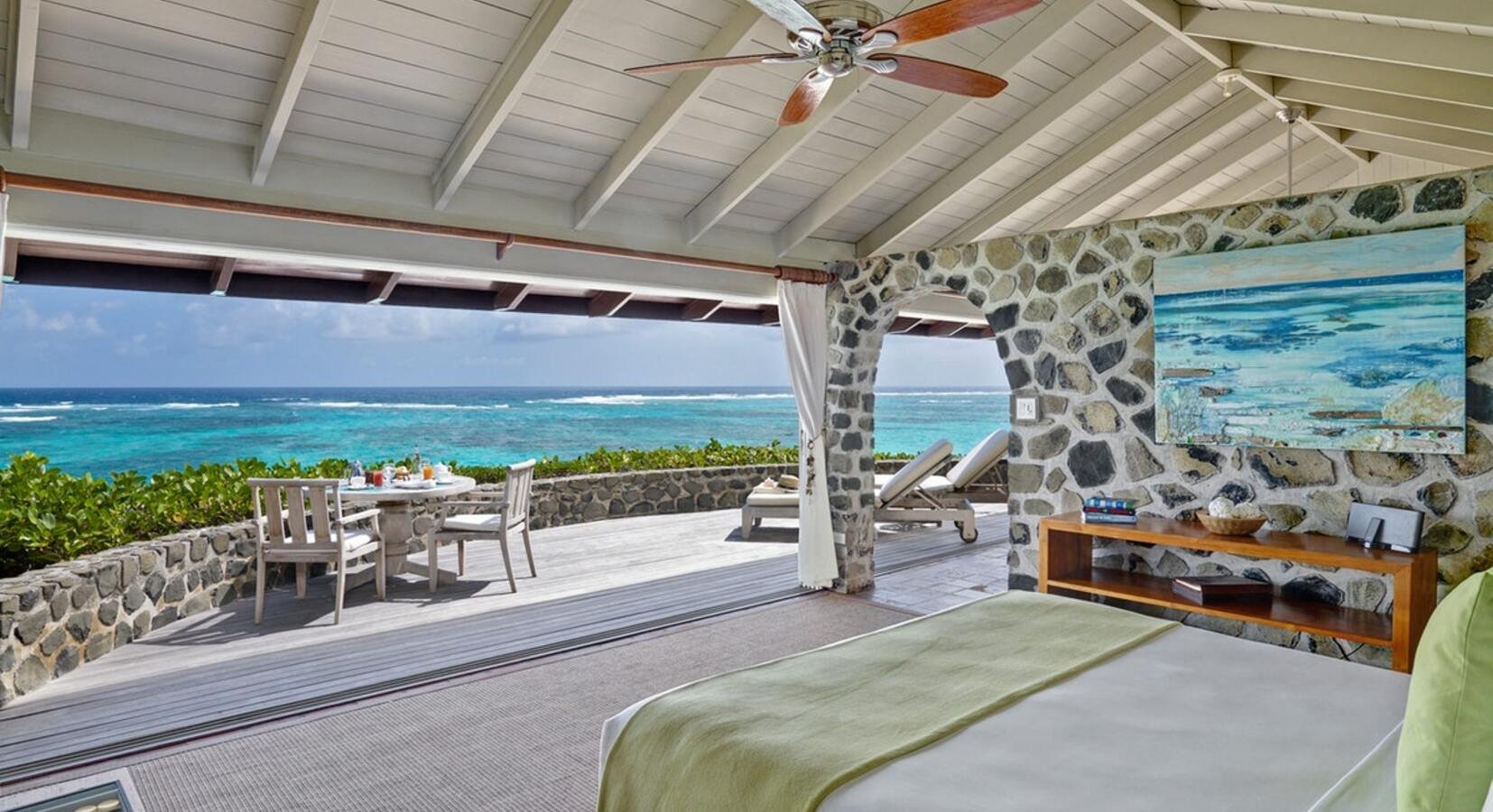
A Private Island Built Around Silence
The southern Grenadines have developed a distinct identity within Caribbean luxury: small, privately held islands where exclusivity is measured not by a lobby's grandeur but by the absence of other guests and the presence of undisturbed nature. Petit St. Vincent, known to regulars as PSV, occupies 115 acres of its own island in Saint Vincent and the Grenadines, and operates on a model that puts architectural restraint and deliberate disconnection at the centre of the experience. There are 22 cottages on the property. No internet. No in-room phones. No television. The logic is spatial and philosophical in equal measure: when the built environment provides no reason to look at a screen, guests look at the sea instead.
That architectural philosophy places PSV in a specific and small cohort of Caribbean properties. Most private-island resorts in the region have moved toward high-amenity compounds with multiple restaurants, spa complexes, and connectivity infrastructure. PSV moved in the opposite direction. The 22-cottage count has remained deliberately low, which means the island never feels occupied at capacity. The cottages are spread across terrain that includes hilltop positions with panoramic water views and lower elevations that give more immediate access to the beach. The physical separation between cottages is significant enough that you can go a full day without seeing another guest unless you choose to.
Cottage Architecture and the Flag System
The cottage design language at PSV leans toward materials and forms that read as Caribbean vernacular rather than international resort standard. Stone, timber, and open-sided structures that allow air movement replace the sealed, air-conditioned boxes that dominate resort architecture across the broader Caribbean. Each cottage sits independently within its plot, with private outdoor space oriented toward the water or the hills depending on position.
The operational detail that has become most associated with PSV is its flag communication system. Each cottage has a flagpole. A yellow flag signals that a guest wants service. A red flag indicates they want privacy and no staff contact. It is a simple mechanism, but it encodes the property's entire hospitality philosophy: interaction is guest-initiated, never property-initiated. In an era when many luxury hotels compete on the frequency and intricacy of touchpoints, PSV competes on their absence. The system has been in place long enough to become part of the property's identity in travel writing circles, and it is the detail most often cited by guests when describing what makes the experience different from comparable Caribbean properties.
For context on the broader peer set in these waters, Palm Island Resort & Spa operates a similar private-island format in the Grenadines, while Canouan Estate Resort & Villas and Bequia Beach Hotel represent the range of accommodation styles across the island chain, from larger resort compounds to boutique shoreline properties. PSV sits at the most privately contained end of that spectrum.
Getting There and Planning Logistics
Reaching Petit St. Vincent requires a multi-stage journey. The standard routing is a flight into Barbados or St. Lucia, then an onward connection to Union Island via a regional carrier, followed by a short boat transfer to the island itself. The journey is part of the experience in the sense that each stage narrows the world down: the international airport gives way to a small regional airstrip, then a boat deck, then the island. Most guests flying from North America or Europe plan for a full travel day in each direction.
Because the property holds only 22 cottages and operates at a high occupancy rate during peak Caribbean season, bookings for the December through April window tend to require advance planning of several months. The shoulder season months of May through early July offer somewhat more availability and lower rates before the Atlantic hurricane season makes late summer bookings less reliable. The property sits in the southern Grenadines, which historically receive less hurricane activity than the northern islands, but the September and October window remains the period most guests avoid.
There is no public-facing phone number or booking website in the EP Club venue record for direct verification, so prospective guests should confirm current rates and availability through a travel specialist or the property's direct contact. For a broader view of accommodation options across the island chain, our full Petit St. Vincent hotels guide covers the relevant alternatives. You can also explore dining options on Petit St. Vincent, bars, wineries, and experiences through the EP Club destination guides.
Where PSV Sits in the Global Private-Island Market
At the level of international private-island resort design, PSV is often grouped with properties that have chosen environmental integration over infrastructure density. The comparison is less about geography and more about design intent. Properties like Amangiri in Utah or Hotel Esencia in Tulum operate on similar principles: limited keys, site-responsive architecture, and a hospitality model where restraint is the luxury. In contrast, properties like Cheval Blanc Paris, Aman New York, or Bvlgari Hotel Tokyo represent the urban high-density pole of premium hospitality, where amenity count and material richness are the primary differentiators.
PSV does not compete with those properties on their own terms. It competes on isolation, consistency, and a design that refuses to insert itself between the guest and the Caribbean environment. The 22-cottage limit is both a commercial constraint and an architectural statement about the relationship between built space and natural space on a small island.
Frequently Asked Questions
- Is Petit St. Vincent more low-key or high-energy?
- PSV is deliberately low-key at every level of its operation. The 22-cottage limit, the no-internet policy, and the flag-based service system are all designed to produce a quiet, unhurried pace. Guests looking for a property with evening entertainment programming, a large pool scene, or a multi-venue dining circuit will find PSV operates at a different register entirely. It belongs to the quieter end of the Grenadines accommodation spectrum, which itself sits at the lower-volume end of Caribbean island tourism.
- What is the signature accommodation type at Petit St. Vincent?
- The freestanding cottage is the core architectural unit at PSV, with 22 spread across the island's 115 acres. Positions vary between hilltop and beach-level, with the hilltop cottages offering wider sea views across the Grenadines chain. The physical separation between units and the private outdoor spaces associated with each cottage are the defining features of the room product, rather than interior amenity density.
- What makes Petit St. Vincent worth visiting?
- The case for PSV is specific rather than general: it is one of a small number of Caribbean properties that enforces a no-connectivity policy at the room level and maintains a guest count low enough to make the island feel genuinely private rather than merely exclusive. Guests who have stayed at comparable private-island properties across the Grenadines, including Palm Island, often cite PSV's architectural integration with its terrain and the flag system as the two details that most clearly distinguish the experience.
- How far ahead should I plan for Petit St. Vincent?
- The December to April peak season, which aligns with the dry season in the southern Caribbean, fills earliest. Booking three to six months in advance for that window is consistent with how comparable low-key count properties in the Grenadines operate. The May to June shoulder period offers more flexibility. Because there is no verified direct booking portal in the EP Club record, planning through a specialist travel advisor familiar with the property is the most reliable approach for confirming current availability and rate structures.
- Does Petit St. Vincent accept day visitors or is it exclusively for overnight guests?
- PSV operates as a private island resort with 22 cottages, and the property's design around guest privacy and low capacity makes it oriented toward overnight stays rather than day access. The island's infrastructure, including the flag service system and the dispersed cottage layout, is built around a resident guest experience rather than day-visitor traffic. Guests considering a stay alongside broader Grenadines island-hopping should factor in the multi-stage transfer from Union Island when planning their itinerary.
For wider regional context, the EP Club guides to Bequia Beach Hotel and Canouan Estate Resort provide useful reference points across the Grenadines chain. Further afield in the premium hotel spectrum, properties like Castello di Reschio, Casa Maria Luigia, and Hotel The Mitsui Kyoto illustrate how the low-key, design-led property model operates across different geographies and cultural contexts, each using restraint as a positioning tool within their respective markets.
In Context: Similar Options
These are the closest comparables we have in our database for quick context.
| Venue | Cuisine | Price | Awards | Notes |
|---|---|---|---|---|
| Petit St. Vincent | A dream idyll, Petit St. Vincent resort is a stunning Caribbean resort on its ow… | This venue | ||
| Mandarin Oriental, Canouan | ||||
| Bequia Beach Hotel | ||||
| Canouan Estate Resort & Villas | ||||
| Palm Island Resort & Spa | ||||
| The Liming Bequia |
Preferential Rates?
Our members enjoy concierge-led booking support and priority upgrades at the world's finest hotels.
Get Exclusive Access