A Meliá-branded hotel in planning for Tabarka, Tunisia's cork-forest coast, signals the kind of international chain investment that has so far bypassed this quietly serious beach and diving town. When operational, it would position Tabarka alongside the country's more established resort corridors, offering a recognisable four- or five-star framework for a destination that has long relied on smaller, locally run properties.

Pearl is the En Primeur Club membership app, where members save venues, book tables and use the concierge.
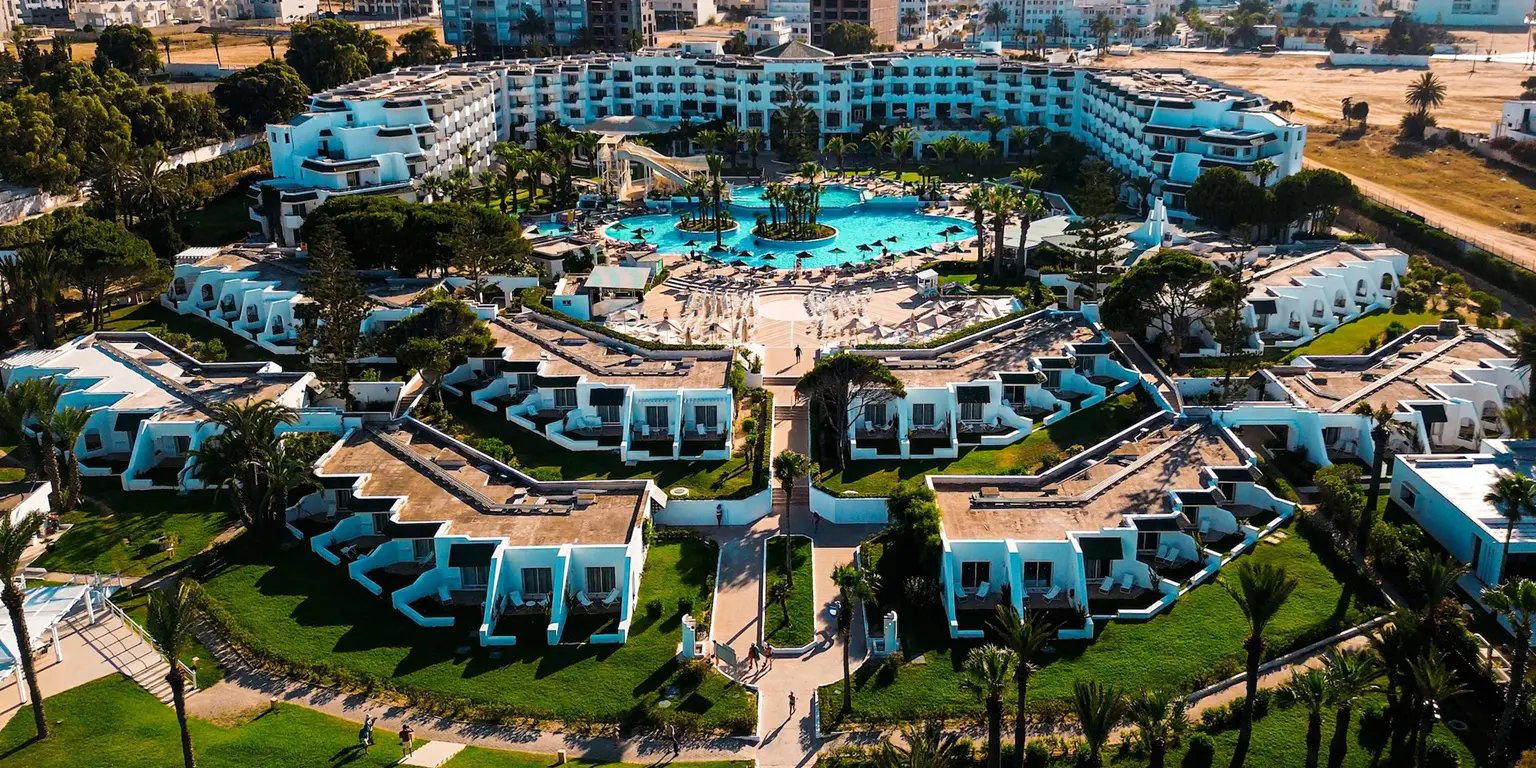
A Chain Footprint on an Unlikely Shore
Tunisia's northern coast has always occupied an awkward position in the country's tourism hierarchy. Hammamet draws the volume, Tunis the business traveller, and the Saharan south the design-hotel crowd chasing that particular combination of silence and spectacle you find at the Anantara Sahara Tozeur Resort in Tozeur. Tabarka, sitting near the Algerian border beneath a ridge of cork-oak forest, has occupied none of those categories comfortably. It has a UNESCO-protected coral reef, a Genoese fort rising directly from the sea, and a jazz festival with four decades of history. What it has lacked is the kind of internationally branded accommodation that gives a risk-averse traveller a recognisable booking anchor. A planned Meliá property would change that calculation.
Meliá Hotels International, the Spanish group with a portfolio spanning mass-market Sol properties to premium Gran Meliá addresses, has accumulated one of the broadest footprints of any European chain across North Africa and the Middle East. The announcement of a Tabarka project places the brand alongside a handful of other international operators beginning to look at Tunisia's underdeveloped northwest. For context, the rest of the country's premium hotel inventory sits largely in a corridor running from Tunis and Gammarth south to Hammamet. The Four Seasons Hotel Tunis in Gammarth anchors the best of that corridor; the La Badira in Hammamet represents the design-led boutique alternative. Tabarka has had no comparable reference point.
What the Design Moment Usually Asks of a Site Like This
The editorial angle here is architecture and physical environment, which in Tabarka is unusually loaded as a subject.
The town's topography is not interchangeable with any other Tunisian resort zone. Cork forests cover the hills directly behind the seafront. The Genoese fort, built in the sixteenth century on what was originally a small island and is now a peninsula, frames every sightline from the bay. The offshore rock formations, locally called Les Aiguilles (the needles), break the surface of the Mediterranean in a configuration that has made Tabarka one of North Africa's more serious diving destinations. Any hotel of scale built here that ignores these conditions in favour of generic resort templates would be making a significant architectural misstep, and the more demanding end of the Meliá portfolio has historically shown awareness of site specificity.
The Gran Meliá tier, for instance, has deployed local-materials palettes and site-responsive massing in several Mediterranean and Canary Island projects. Whether the Tabarka development targets that tier or the more standardised ME or Meliá core brand remains unconfirmed. That distinction matters for travellers comparing it with alternatives: the Maison Dedine in Sidi Bou Said represents the locally rooted, limited-key boutique model that occupies a different market position entirely, while the Four Seasons in Gammarth represents the full-service, capital-city luxury tier. A Meliá in Tabarka would likely sit between those poles, offering chain infrastructure in a location that chain infrastructure has not previously reached.
Tabarka in the Wider Tunisia Hotel Context
Tunisia's hotel development has followed a recognisable post-revolution trajectory. After 2011, occupancy at the coast dropped sharply, foreign investment slowed, and the properties that weathered the period were often those with diversified revenue streams or particularly loyal European markets. Recovery accelerated after 2017, and by the early 2020s Tunisia was re-emerging as a target for both European budget travellers and a smaller cohort of design-conscious visitors who had noticed how much of the country's architectural and landscape inventory remained unexploited.
For the design-hotel comparisons that readers of this platform typically draw, the relevant peer group is wide. Properties like Castello di Reschio in Lisciano Niccone or Hotel Esencia in Tulum demonstrate what sensitive site integration looks like when developers treat landscape as a co-author of the guest experience rather than a backdrop. Tabarka has the raw material for exactly that kind of approach. Whether a Meliá project will pursue it at that register depends on decisions about brand tier and operator brief that are not yet public.
What is documentable is the town's hospitality context. Tabarka currently operates with a small number of three- and four-star properties oriented around beach and golf packages. The Tabarka Golf Course, an eighteen-hole layout that runs along the coast, has given the town a secondary identity beyond diving. A hotel with premium-tier facilities would expand the guest profile significantly, particularly for the short-haul European market flying into Tabarka-Aïn Draham Airport, which handles seasonal traffic from several European cities.
Planning and Arrival
Because no operational details, address, or booking method are confirmed for this project, any planning notes here are necessarily forward-looking. Tabarka-Aïn Draham Airport (TBJ) is the primary entry point, with seasonal connections from Italy, France, and Germany that typically run from late spring through early autumn. The overland route from Tunis takes approximately three hours by road and passes through Beja and Jendouba, crossing a range of wheat plains, olive groves, and the northern ranges of the Atlas system. That drive is context for the project: Tabarka is genuinely remote by Tunisian coastal standards, and any hotel operating there must function as a destination in itself rather than a convenient stopover. The most successful properties in analogous positions, from Amangiri in Canyon Point to One&Only Mandarina in Riviera Nayarit, have resolved that challenge through programming depth and design intensity rather than convenience. Tabarka's coral reef, jazz festival (typically held in July), and cork-forest hiking provide a programming base that a well-resourced operator could build on meaningfully.
For travellers already tracking Tunisia's hotel development, the full range of the country's current premium inventory, including properties in Tunis, Hammamet, and Sidi Bou Said, is covered in our full Tabarka restaurants guide. Readers interested in how other Meliá-tier international brands have addressed comparable coastal environments will find useful reference points across the EP Club portfolio, including Hotel Du Cap-Eden-Roc in Cap d'Antibes and Mandarin Oriental Bangkok in Bangkok, both of which demonstrate what long-standing site commitment can produce at a coastal property over decades.
How It Stacks Up
| Venue | Price | Awards |
|---|---|---|
| Meliá hotel in Tabarka (planned)This venue (the venue you are viewing) | Not listed | Not listed |
| Four Seasons Hotel Tunis | Not listed | Michelin Selected · La Liste Top Hotels |
| Anantara Sahara Tozeur Resort | Not listed | 1 Michelin Key |
| La Badira | $100–200 | Michelin Selected · Leading Hotels of World Member |
| Maison Dedine | $200–300 | Michelin Guide New Hotels New Hotel · Michelin Selected |
Details
- Scenic
- Elegant
- Family Vacation
- Wellness Retreat
- Beachfront
- Golf Course
- Pool
- Spa
- Golf Course
- Beach Access
- Wi Fi
- Restaurant
- Fitness Center
- Concierge
- Waterfront
Relaxed and scenic with natural beauty, golf views, and beachfront atmosphere.