Le Nuku Hiva

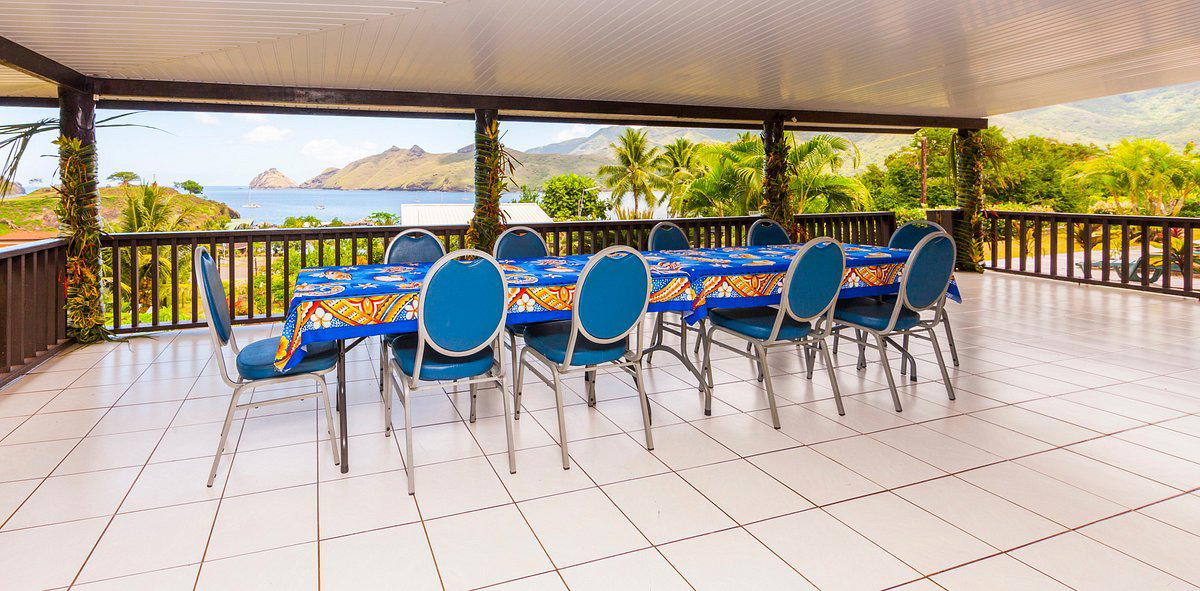
Le Nuku Hiva sits on the cliffside terrain of Taiohae Bay, among the more geographically dramatic settings in the Marquesas archipelago. For French Polynesia beyond the Bora Bora circuit, this is where serious travellers look.
Pearl is the En Primeur Club membership app — saves, bookings, and concierge access live there. Same editors, same standards.
- Address
- BP 53 TAIOHAE TAIOHAE Nuku Hiva, Nuku Hiva 98742
- Phone
- +689 40 92 07 10
- Website
- lenukuhiva.com
- Directions
- Get directions
 Saves & bookings on Pearl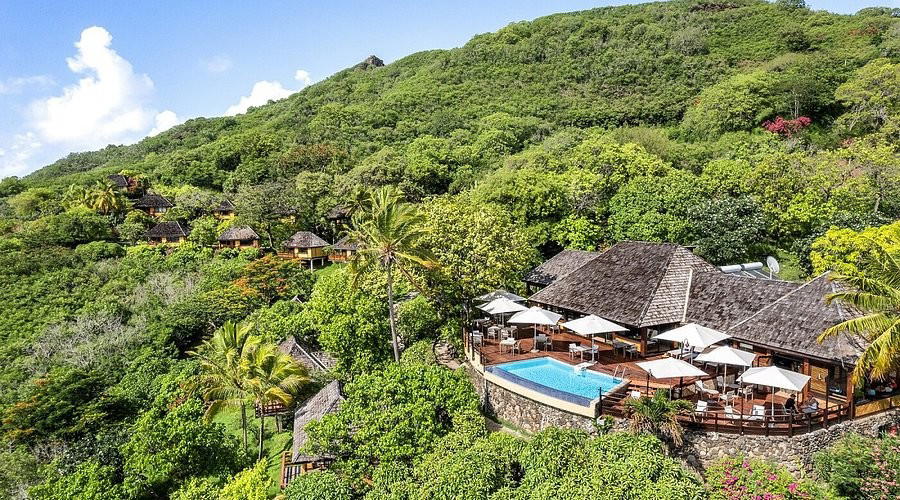
Where Volcanic Cliffs Define the Architecture
The overwater bungalow has become French Polynesia's default visual shorthand, reproduced at scale across Bora Bora's lagoon at properties like the Conrad Bora Bora Nui and the Sofitel Bora Bora Marara Beach Resort. Le Nuku Hiva operates on a different premise entirely. Here, the architecture answers to the island's volcanic topography rather than its coastline, placing cliffside bungalows above Taiohae Bay in a way that makes the land, not the lagoon, the primary design element. The effect is immediately disorienting in the leading sense: this is not the French Polynesia of honeymoon catalogues but a rawer, geologically older version of it.
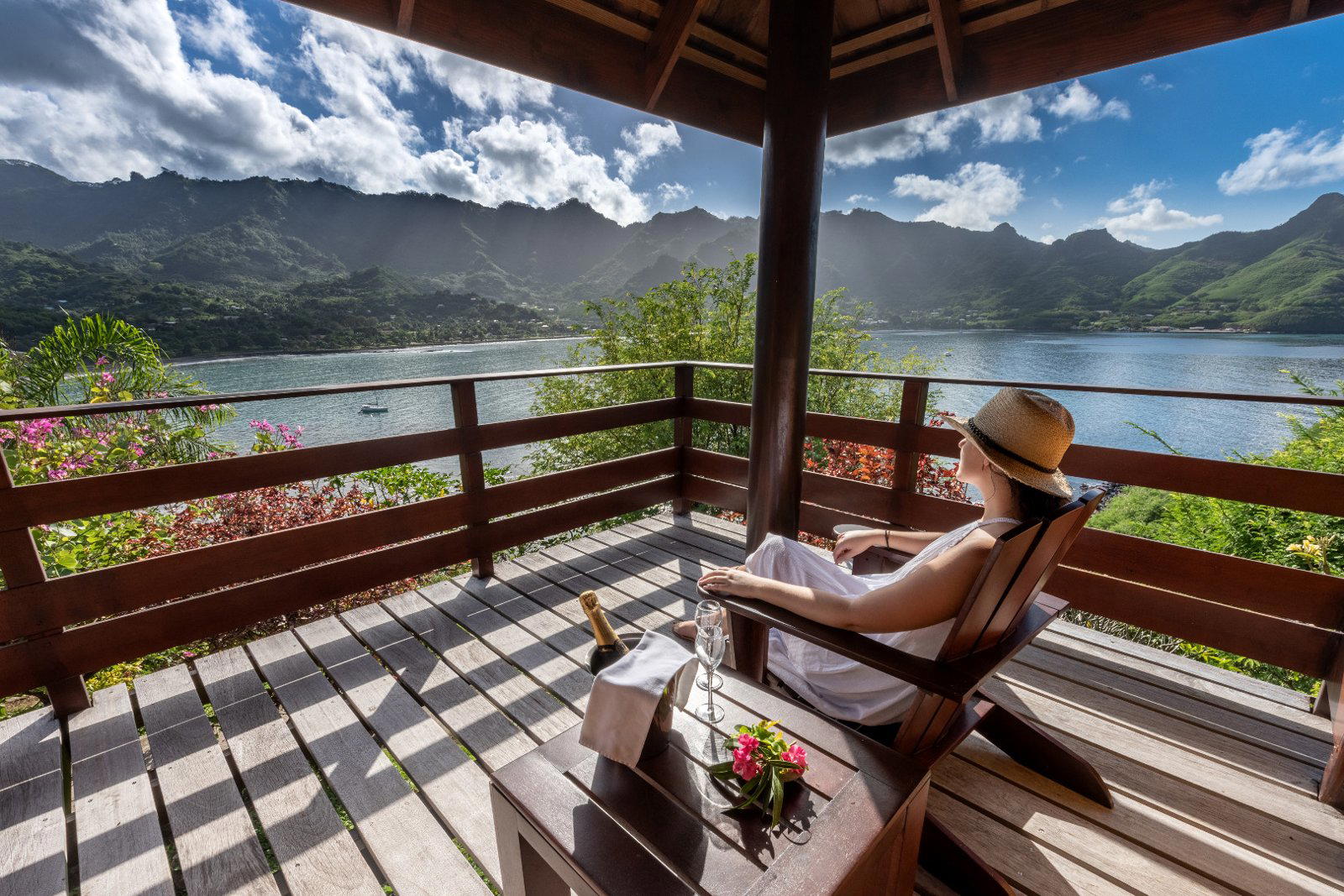
Nuku Hiva is the largest of the Marquesas Islands and among the more remote inhabited territories in the Pacific. There are no encircling barrier reefs to tame the ocean here, no shallow turquoise flats. What the Marquesas offer instead is altitude, interior forest, and coastlines carved by centuries of volcanic activity. Le Nuku Hiva's placement on that cliffside terrain is less a design choice than a direct response to the island's character. The bungalows sit within a range of tropical forest and volcanic ridgelines that frames the bay below with considerable drama.
The Relais and Chateaux Framework on Remote Ground
Relais and Chateaux membership functions as a meaningful signal in remote destinations where independent verification is harder to obtain. The affiliation connects Le Nuku Hiva to a global comparable set of properties distinguished by individuality of design, kitchen seriousness, and a defined sense of place rather than brand standardisation. In a location as far from conventional hospitality infrastructure as the Marquesas, that credential carries weight.
Taiohae is a small administrative settlement, not a restaurant town. Sourcing outside the property involves logistics that most travellers would find limiting, so an all-inclusive structure removes a friction that would otherwise define the stay. Among premium all-inclusive properties in French Polynesia, the model appears across the archipelago, from the eco-focused structure of The Brando in the Tuamotus to the lagoon-side offerings of Le Tahiti by Pearl Resorts near Papeete. The hotel applies it in a context where the surrounding environment is not an amenity but genuinely the reason for being there at all.
Approaching Taiohae: Access and Arrival
Getting to Nuku Hiva requires commitment. Air Tahiti operates inter-island flights from Papeete's Faa'a International Airport, and the flight time to Nuku Hiva's Terre Deserte Airport runs approximately three and a half hours. There are no direct international connections to the Marquesas; Papeete is the transit point for all arrivals. From the airport, the road to Taiohae crosses the island's interior, a journey through landscape that signals immediately how different this terrain is from Tahiti's coastal approach or Bora Bora's lagoon arrival.
The property's contact is reachable via nukuhiva@relaischateaux.com or by telephone at +689 40920710, with the website at lenukuhiva.com handling reservations. Rates start from US$756 per night, positioning the hotel firmly within the premium tier of French Polynesian accommodation. For context, that entry price sits comparably to the opening rates of the more established Bora Bora circuit resorts, though the experience being purchased here is structurally different: smaller scale, more demanding access, and a natural environment with no mass-tourism development around it.
What Draws Travellers This Far
The Marquesas attract a specific kind of traveller: those who have done the Society Islands and want something that does not replicate them. The archipelago appears in a different register than Bora Bora or Moorea, properties that can be reached on a short flight and surrounded by resort infrastructure. French Polynesia's premium tier has in recent years split along a recognisable line: high-volume aspirational product on the Bora Bora–Moorea axis, and low-density specialist product at the edges of the territory, places like the Tuamotu atolls or, at the furthest extent, the Marquesas. The hotel falls clearly in the latter category. For those considering that division, properties like White Sand Beach Resort in Fakarava or Vanira Lodge on the Tahiti peninsula represent the same structural move toward edges of the territory, each in a different environment.
Marquesas also carry a cultural density that the more developed islands sometimes cannot match. Polynesian art traditions, tattoo lineages, stone tiki platforms, and chant forms that have been maintained with less interruption than elsewhere in the territory give Nuku Hiva a substance that operates alongside rather than in competition with its natural setting. The hotel sits within that context without competing against it, which is a reasonable description of what a well-placed Relais and Chateaux property should do in this kind of location.
Travellers comparing across the broader French Polynesian spectrum might also look at Hôtel Raiatea Lodge for an off-circuit island without Marquesas-level remoteness, or Pension Rose Des Iles in Maupiti for an even smaller-scale, locally rooted proposition. Among the Society Islands proper, Hilton Moorea Lagoon Resort and Spa, Sofitel Kia Ora Moorea, and Le Taha'a Pearl Resorts represent the conventional premium circuit. Te Moana Tahiti Resort provides a more accessible base near Papeete for short stays. None of them are attempting what the hotel is attempting.
For those benchmarking against remote luxury properties in other parts of the world, the design-led isolation of Amangiri in Canyon Point or the territorial specificity of Castello di Reschio in Umbria suggest what is possible when architecture takes its cues from terrain rather than category convention. The hotel's cliffside positioning is a version of that same logic, applied to one of the Pacific's most geologically distinctive islands.
Practical Planning Notes
The hotel is a five-star hotel in Taiohae, Nuku Hiva, with rates from US$727 per night. Reservations are recommended.
In Context: Similar Options
Comparable venues nearby, for context on price, style, and recognition.
| Venue | Cuisine | Price | Awards | Notes |
|---|---|---|---|---|
| Le Nuku HivaThis venue — the venue you are viewing | Boutique hillside resort with locally crafted wooden bungalows | $$$$ | 5-Star | Not listed |
| Sofitel Kia Ora Moorea Beach Resort | Luxury bungalow resort blending French sophistication with Polynesian charm. | $$$$ | 5-Star | Maharepa |
| Le Tikehau | Intimate Relais & Châteaux boutique island resort on a private coral motu with pink-sand beach and lagoon views. | $$$$ | 4-Star | Tuherahera |
| Sofitel Kia Ora Moorea Beach Resort | Luxury beachfront bungalow resort blending French elegance with Polynesian authenticity | $$$$ | 4-Star | Temae |
| Hilton Moorea Lagoon Resort & Spa | Eco-friendly luxury bungalow resort blending Polynesian tradition with modern amenities | $$$$ | 5-Star | between Cook's Bay and Opunohu Bay |
| Conrad Bora Bora Nui | Luxury beachfront resort with overwater bungalows and private villas | $$$$ | 5-Star | Motu To’opua |
Recognition history
Dated appearances from independent guides and award organizations, with the underlying list record or original source where available.
Relais Chateaux Award
Relais Chateaux
Relais Chateaux Award
Relais Chateaux
At a Glance
- Scenic
- Elegant
- Intimate
- Romantic
- Sophisticated
- Romantic Getaway
- Honeymoon
- Wellness Retreat
- Weekend Escape
- Panoramic View
- Terrace
- Pool
- Wi Fi
- Room Service
- Restaurant
- Bar
- Concierge
- Laundry Service
- Waterfront
- Mountain
- Garden
- Pool
- Wi Fi
- Room Service
- Restaurant
- Bar
- Concierge
- Laundry Service
Serene and intimate with lush tropical gardens, dramatic bay vistas, and a peaceful hillside setting praised for its tranquility and natural beauty.