White Sand Beach Resort
White Sand Beach Resort sits on Fakarava, a UNESCO Biosphere Reserve atoll in French Polynesia's Tuamotu Archipelago, where the remoteness is the product. The property places guests within reach of some of the Pacific's most celebrated dive sites and an environment shaped more by coral and lagoon light than by resort infrastructure. For travellers prioritising raw atoll geography over polished amenity stacks, Fakarava makes the case clearly.
- Address
- V9RV+8JG, Poste restante, Fakarava 98763, French Polynesia
- Directions
- Get directions
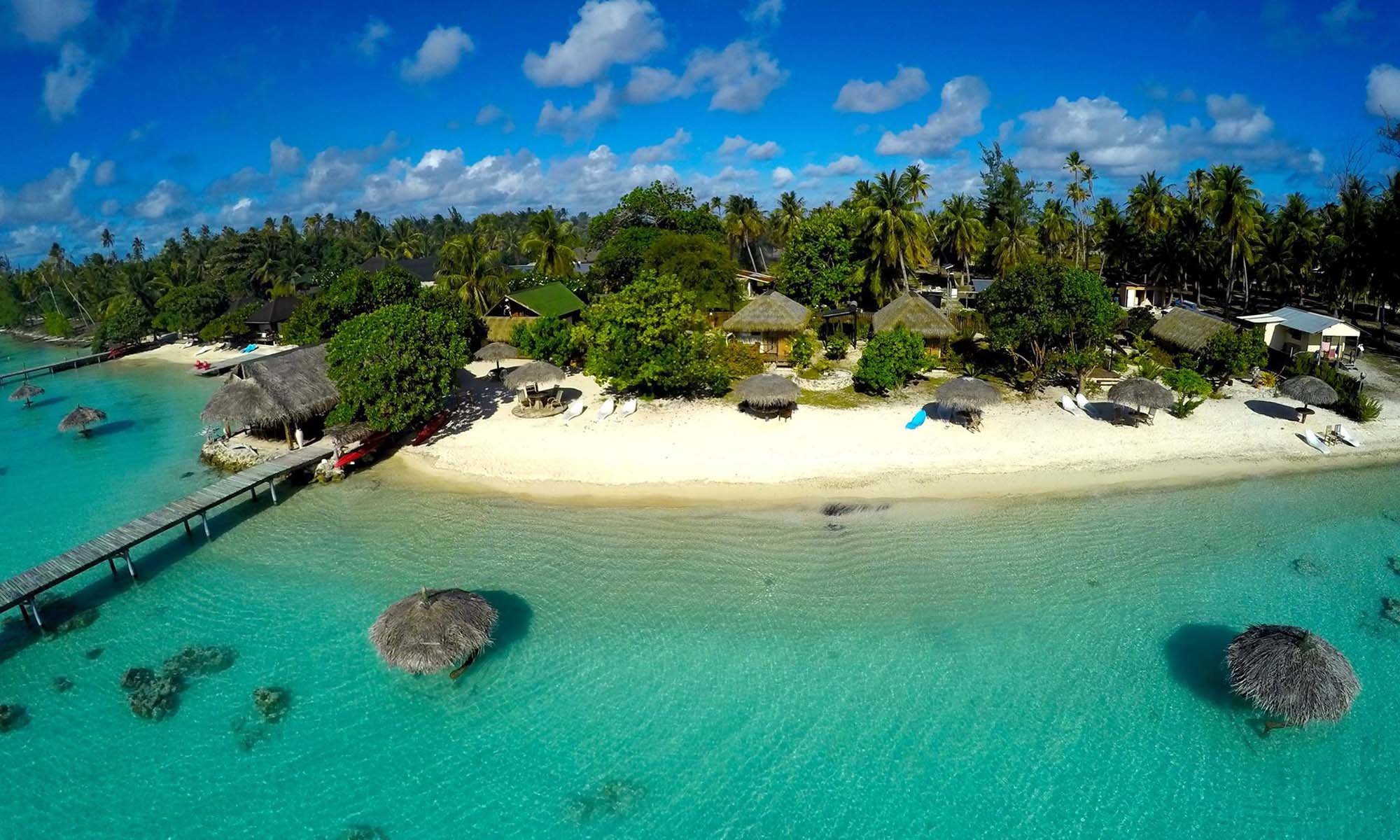
Fakarava's Atoll Architecture: What the Environment Builds
There is a particular kind of accommodation that the atoll format produces almost inevitably. When the land itself is a thin coral ribbon — rarely more than a few hundred metres wide — and the water on both sides reads as two distinct bodies, turquoise lagoon to one side and deep Pacific to the other, the built environment has to recede. Overbuilding is structurally impossible; the terrain won't sustain it. White Sand Beach Resort exists within that constraint, on Fakarava, a UNESCO Biosphere Reserve atoll in the Tuamotu Archipelago of French Polynesia, where the physical setting does most of the architectural work before any human structure arrives. For properties in this category across the region, compare the approach taken at The Brando in Tahiti, where the built footprint is deliberately compressed to let the natural envelope dominate, the design philosophy is less about aesthetic expression and more about what you choose not to build.
Fakarava sits roughly 500 kilometres northeast of Tahiti. Reaching it requires a domestic flight from Papeete, typically under two hours, though connections depend on Air Tahiti's inter-island scheduling, which runs on limited frequencies to the Tuamotu group. That logistical friction is part of what defines the atoll accommodation category in French Polynesia: properties here operate in a different tier of accessibility than Bora Bora or Moorea, and the guest profile self-selects accordingly. You are not arriving with the same ease as you would at the Hilton Moorea Lagoon Resort & Spa in Moorea Maiao or the Sofitel Kia Ora Moorea Beach Resort. The journey itself functions as a filter.
The Tuamotu Atoll as a Design Condition
Understanding White Sand Beach Resort requires understanding what Fakarava is, physically. The atoll is a low-lying coral structure enclosing a lagoon of extraordinary clarity. Its UNESCO Biosphere Reserve designation, held since 2006, reflects both its marine biodiversity and the relative absence of industrial interference. The south pass, Tetamanu Pass, is among the most documented dive sites in the South Pacific, drawing divers specifically for the shark aggregations and strong drift conditions. The north pass, Garuae Pass, is the widest in French Polynesia and generates its own distinct current and marine ecology.
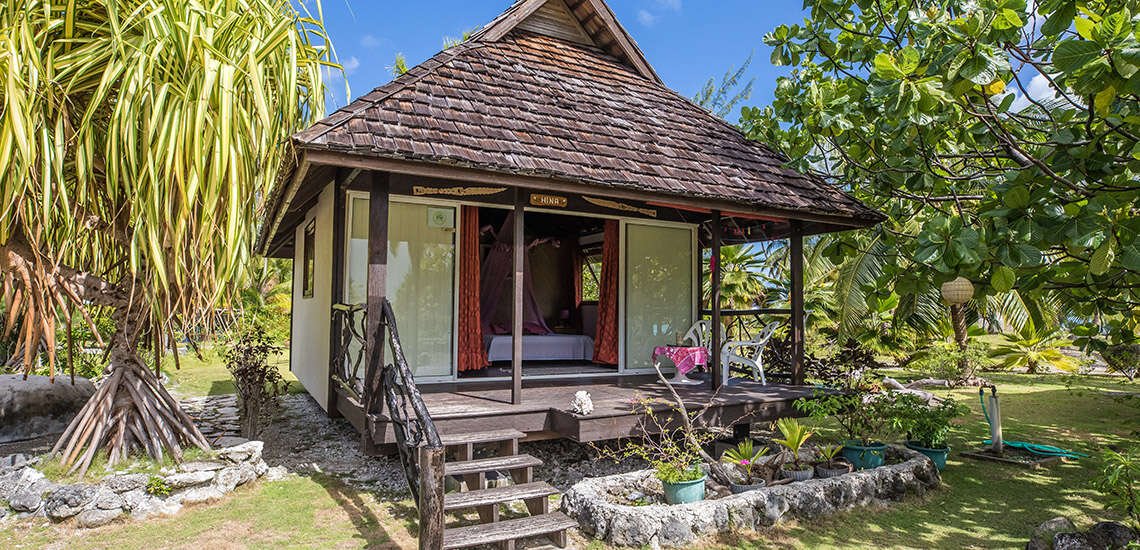
For a property positioned on this atoll, the marine access is the primary amenity. Accommodation design in this context tends toward the functional and low-profile: bungalows or fare-style structures built to ventilate naturally, oriented toward lagoon views, with building materials that weather the salt-heavy environment without demanding constant intervention. The architectural vocabulary across atoll properties in the Tuamotu group reflects these practical realities rather than the overwater villa extravagance associated with Bora Bora. Properties like La Pension Tokerau Village on the same island operate in a similar register: the building is shelter; the environment is the experience.
This is a fundamentally different proposition from what drives the design at properties such as Cheval Blanc Paris or Bvlgari Hotel Tokyo, where the architecture is itself a primary draw and the interior design decisions are scrutinised as carefully as any cultural programme. Fakarava's accommodation tier operates on an inverse logic: the less the building competes with the setting, the more coherent the product. Amangiri in Canyon Point applies a version of this same thinking, letting extraordinary geology do the heavy lifting while the architecture steps back, though at a dramatically different price point and with far more deliberate design investment.
Placing Fakarava in French Polynesia's Accommodation Spectrum
French Polynesia's premium accommodation market clusters most visibly around Bora Bora, where overwater bungalows and international brand infrastructure produce a dense competitive set. The Conrad Bora Bora Nui, the Sofitel Bora Bora Marara Beach Resort, and comparable properties in that market compete on facilities, brand recognition, and the signature overwater format. Moorea and Tahiti anchor a secondary tier. The Tuamotu atolls, including Fakarava, represent a third tier defined by remoteness, ecological sensitivity, and a guest orientation toward active marine pursuits rather than resort amenity consumption.
Within Fakarava specifically, accommodation options run from small family-operated pensions to larger resort-format properties. The island has no large international brand presence, which shapes expectations around service staffing levels, F&B sophistication, and room finish. Visitors accustomed to the amenity depth of, say, Le Taha'a Pearl Resorts or Le Tahiti by Pearl Resorts should calibrate accordingly. The trade is direct: you give up consistent service infrastructure and gain access to a marine environment that the more developed islands in the archipelago cannot match. Fakarava's lagoon and its passes are the draw. Everything else is context. For broader orientation across the islands, our full Fakarava guide maps the accommodation and dining options across the atoll.
Planning Considerations for Atoll Travel
Fakarava operates on a schedule dictated by Air Tahiti connections from Papeete's Faa'a International Airport. Flights to Fakarava's Rotoava airstrip run multiple times weekly, though not daily, and advance booking is advisable, particularly during the July dry season when dive tourism peaks. The island's infrastructure, including power, fresh water supply, and internet connectivity, operates at atoll scale, meaning intermittent availability is a reasonable expectation rather than a service failure. Visitors arriving from properties such as Hotel Bel-Air in Los Angeles or Badrutt's Palace Hotel in St.
The June-to-August dry season offers the clearest visibility for diving and the most stable weather window. The wet season, running roughly November through March, brings higher humidity and some cyclone risk in the broader Tuamotu region, though direct cyclone impact on any specific island remains statistically infrequent. Water temperature stays warm year-round, and the shark aggregations in the south pass are broadly consistent across seasons, making Fakarava a more seasonally flexible dive destination than many comparable Pacific sites. Properties like Vanira Lodge in Taiarapu Ouest and Pension Rose Des Iles in Maupiti operate in comparably remote French Polynesian contexts and reflect similar seasonal planning logic.
For guests building a wider French Polynesian itinerary, Fakarava pairs logically with Tahiti as a base and either Bora Bora or Moorea as a counterpoint. The contrast between an atoll stay and an island with developed resort infrastructure, such as what Te Moana Tahiti Resort or Le Nuku Hiva in Taiohae represents in the Marquesas, tends to make each experience read more distinctly. Combining environments amplifies both.
Fast Comparison
| Venue | Price | Awards |
|---|---|---|
| White Sand Beach ResortThis venue — the venue you are viewing | Not listed | Not listed |
| Conrad Bora Bora Nui | Not listed | Forbes Recommended · Virtuoso Luxury Hotel Partner |
| InterContinental Bora Bora Resort & Thalasso Spa | $1,000–1,500 | Michelin Selected · La Liste Top Hotels |
| The St. Regis Bora Bora Resort | Not listed | 2 Michelin Keys · La Liste Top Hotels |
| The Brando | Not listed | 3 Michelin Keys · World's 50 Best #47 |
| Le Bora Bora | Not listed | 2 Michelin Keys · Relais Chateaux Award |
Details
- Scenic
- Intimate
- Rustic
- Romantic Getaway
- Honeymoon
- Beachfront
- Wi Fi
- Airport Transfer
- Waterfront
Authentic Polynesian charm with tables set in the shallow lagoon water, offering beautiful sunset views over the lagoon.