Each winter, a team of architects and sculptors raises an entirely new hotel from hundreds of tonnes of snow and ice on the fell slopes outside Kittilä. Lapland Hotels Snow Village is one of northern Europe's most ambitious seasonal constructions, rebuilt to a different design theme each year and offering a category of accommodation that sits well outside the conventional hotel market.

Pearl is the En Primeur Club membership app — saves, bookings, and concierge access live there. Same editors, same standards.
- Address
- Lainiotie 566, 99120 Kittilä, Finland
- Phone
- +358 16 3236050
- Website
- laplandhotels.com
- Directions
- Get directions
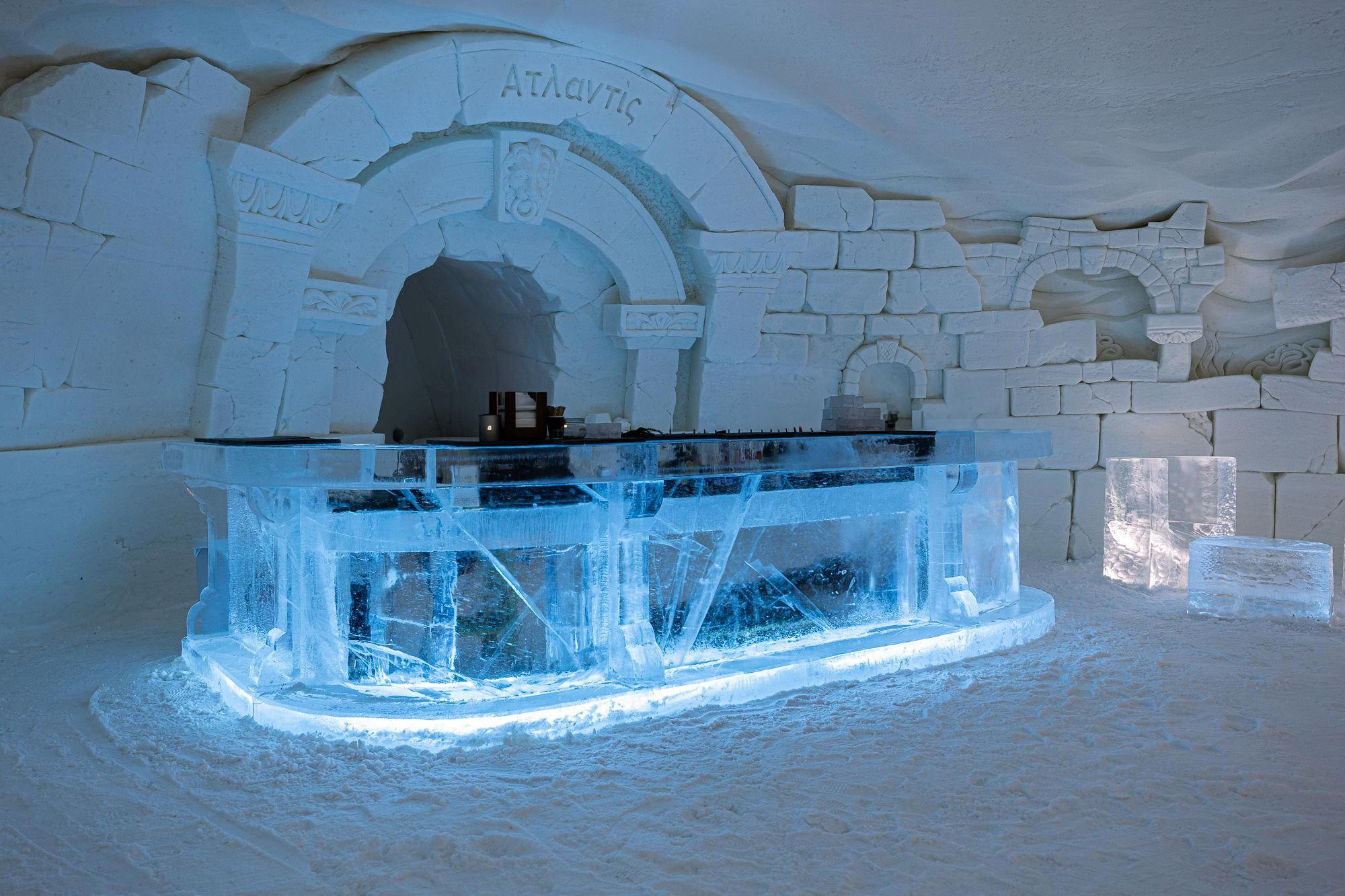
Built From Scratch, Every Winter
There is a category of travel experience that cannot be replicated in another season or approximated in a warmer climate. Lapland Hotels Snow Village, located on Lainiotie 566 outside Kittilä in Finnish Lapland, belongs squarely to that category. The structure does not persist year-round. It is raised from snow and ice each December and melts back into the landscape each spring, meaning that every version of the hotel is, architecturally, a different building. The design theme changes annually, which places it in an unusual position relative to other Arctic accommodation: it is not a fixed property that guests return to for consistency, but a construction project that restarts from a blank canvas each season.
This kind of seasonal ice architecture has roots in Scandinavia going back to the original Icehotel in Jukkasjärvi, Sweden, which opened in 1989 and established the format as a serious hospitality category rather than a novelty. Snow Village in Kittilä operates within that tradition while sitting inside the Lapland Hotels group, which gives it a logistical infrastructure that purely independent ice projects sometimes lack. The combination of group-backed operational stability and an annually rebuilt physical structure is what distinguishes this property within the Finnish Arctic market.
The Architecture of Impermanence
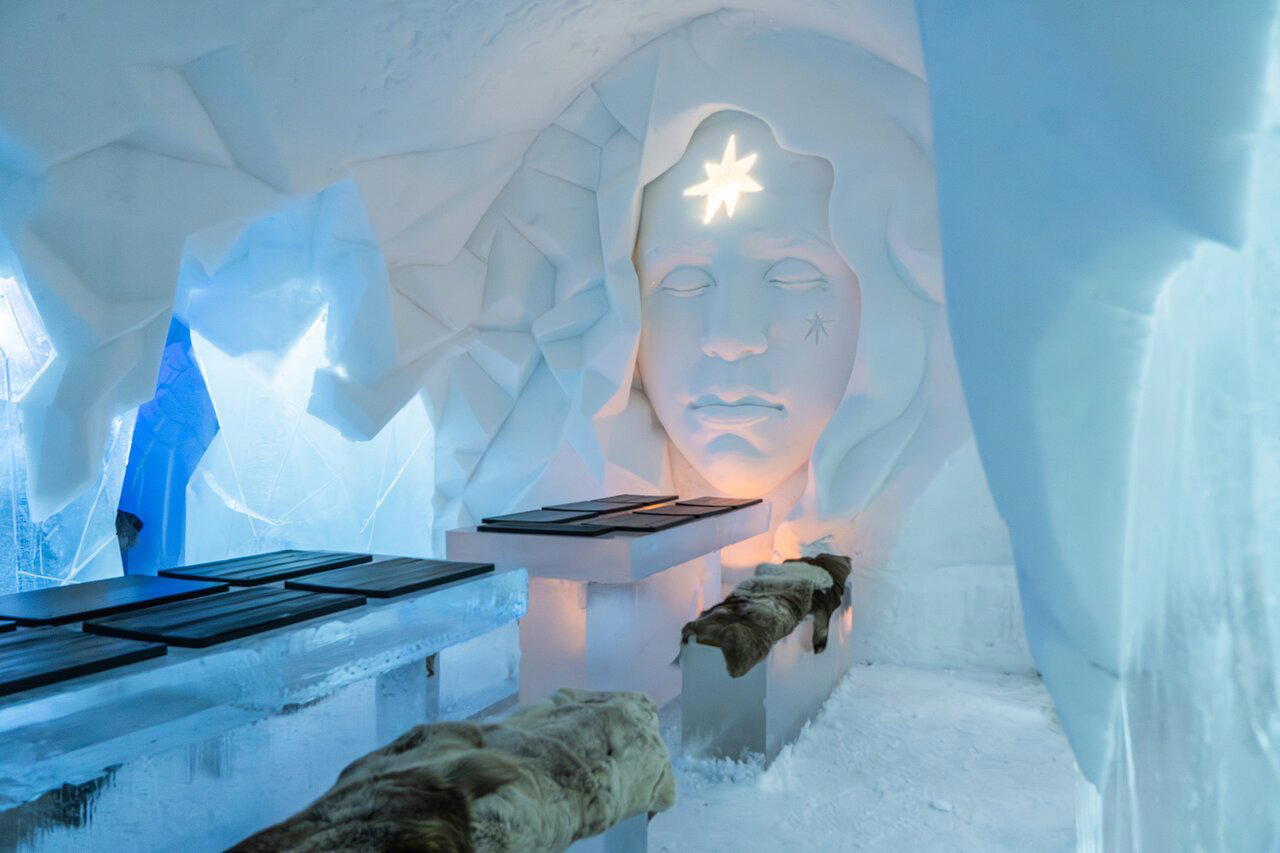
The design process for a snow hotel is fundamentally different from conventional construction. Snow is packed into moulds, ice is harvested, and the resulting walls, vaults, and corridors are carved and sculpted by teams that typically include professional artists alongside construction specialists. Interior temperatures are maintained at roughly minus five degrees Celsius to preserve structural integrity, which means the architecture is not decorative in the conventional sense: the cold is a structural requirement, not a design choice, and every material decision flows from that constraint.
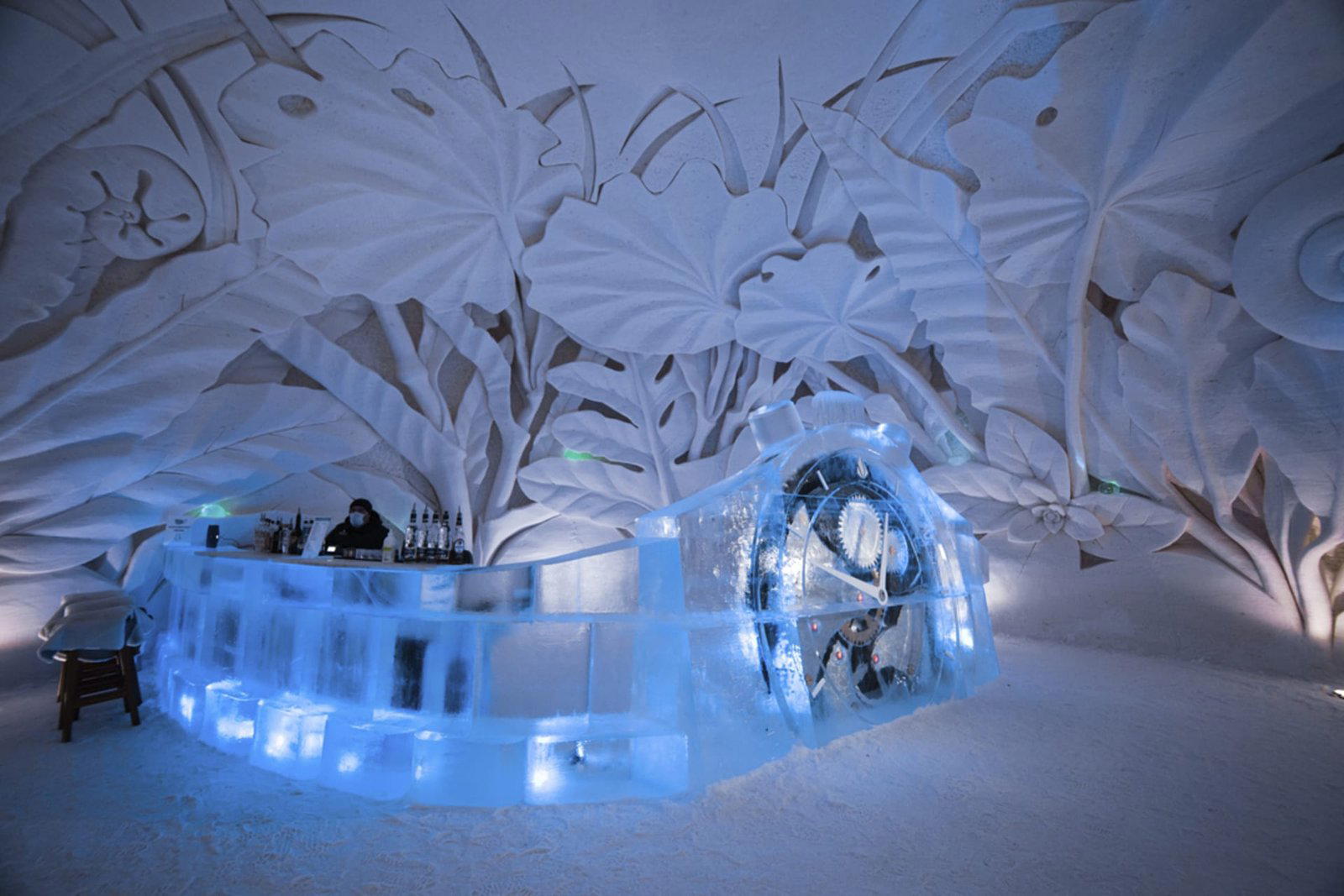
Each year's theme reshapes the aesthetic entirely. Guest rooms are individual sculptural commissions rather than standard hotel rooms, and the corridors connecting them function as gallery spaces where the carving quality and thematic coherence matter as much as the wayfinding. The bar and common areas are built from the same materials, meaning that drinking a warm drink inside an ice structure surrounded by illuminated carvings is part of the architectural experience rather than an add-on. This is the format that the Snow Village shares with peer properties like Arctic TreeHouse Hotel in Rovaniemi, though the two operate in different registers: the TreeHouse works with timber and refined forest architecture, while Snow Village works with materials that will not exist in the same form a year later.
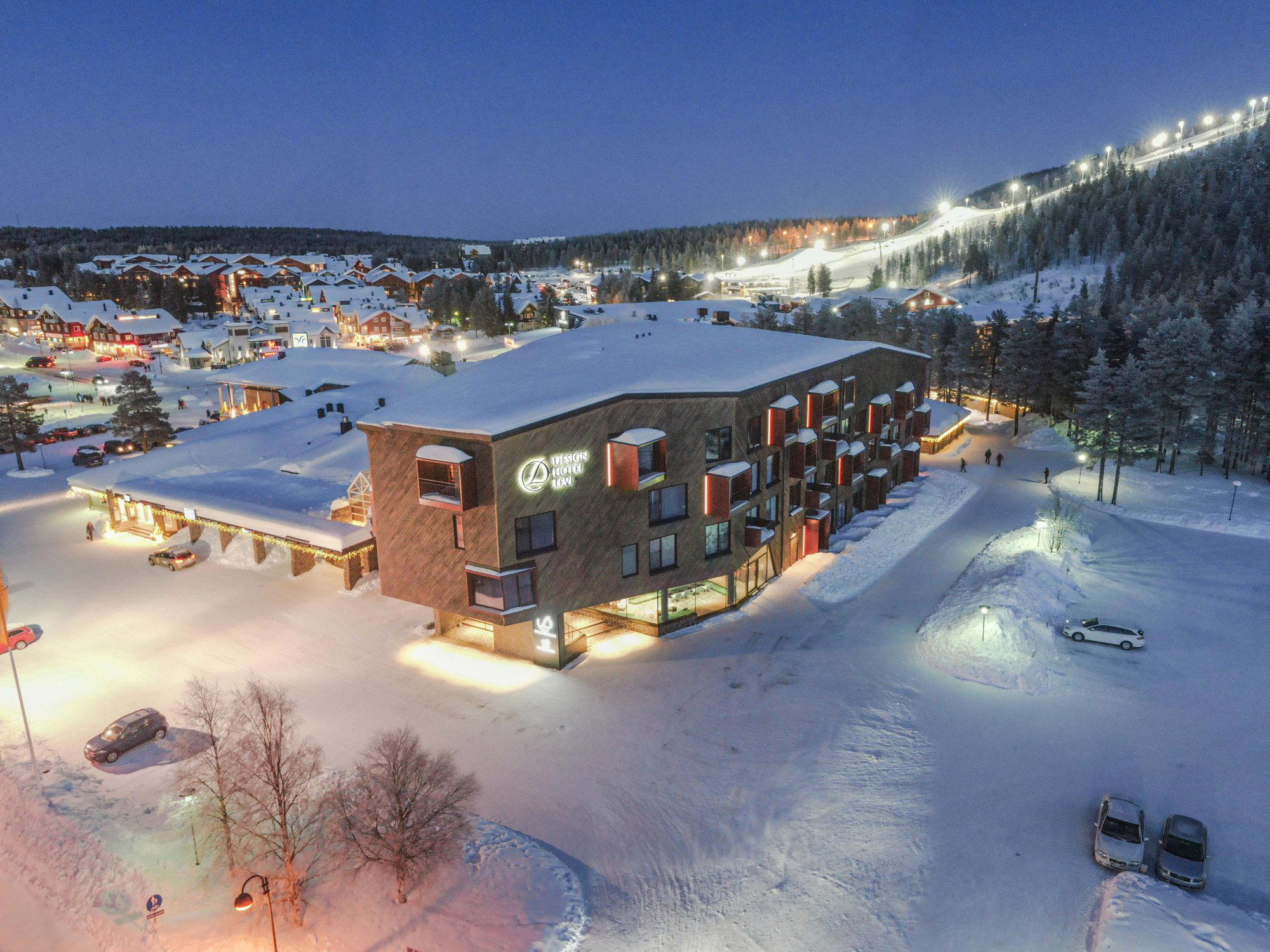
For travellers considering Arctic Finland more broadly, the contrast between fixed-structure design properties and seasonal ice constructions is worth understanding before booking. Design Hotel Levi in Levi and properties like RUNO Hotel Porvoo offer year-round design-led stays, while Snow Village is strictly a winter proposition, available only during the months when temperatures allow the structure to hold.
Where This Property Sits in the Arctic Accommodation Market
The Arctic accommodation market in Finland has separated into several distinct tiers over the past decade. At one end are large resort-hotel complexes serving ski package tourism. At the other end are design-led, low-capacity properties where the physical experience of the space is the primary product. Snow Village occupies a specific position in that second group, where the annual rebuild is itself a signal of investment and seriousness. The fact that it is re-commissioned from scratch each winter, rather than maintained as a fixed asset, is an operational commitment that filters for a guest who is buying an architectural experience, not a hotel stay in the conventional sense.
This positions the property alongside internationally recognised ice and snow hotels rather than alongside standard Finnish ski accommodation. Guests who have stayed at Amangiri in Canyon Point, where the architecture is inseparable from the landscape it occupies, or at Castello di Reschio in Lisciano Niccone, where historic structure and contemporary intervention coexist, will recognise the logic of paying a premium for a physical environment that cannot be separated from its setting. Snow Village operates on the same principle, with Finnish Lapland's winter as the irreplaceable context.
Planning a Stay: Timing, Access, and Practical Framing
The seasonal window is the single most important logistical factor. Snow Village opens each year in December and closes in April, with exact dates varying by season depending on construction progress and weather conditions. The core months of January and February represent the deepest winter experience: polar night or near-darkness, the highest probability of aurora borealis activity, and temperatures cold enough that the ice architecture is at its most structurally coherent. March brings more daylight and remains within the season for those who prefer lighter conditions.
Kittilä is served by Kittilä Airport (KTT), which receives direct flights from Helsinki and seasonal international routes during the ski season, making access from elsewhere in Finland or from major European hubs more direct than many Arctic destinations. The address at Lainiotie 566 places the property in a fell-side context outside the town centre, consistent with the Lapland Hotels group's positioning of the Snow Village as a standalone experience rather than a town hotel.
Travellers who want to use Kittilä or Finnish Lapland as part of a broader Finland itinerary should note that the country's hotel infrastructure extends well beyond the north. Hotel Kämp in Helsinki anchors the capital's luxury market, while properties like Radisson Blu Marina Palace in Turku and Radisson Blu Hotel Oulu in Oulu cover the country's secondary cities. For those entering Finland through Helsinki and continuing north, combining a city stay with an Arctic ice hotel is a logical itinerary structure that covers significant contrast in a single trip.
For our full editorial coverage of the wider Kittilä accommodation and dining scene, see our full Kittilä restaurants guide.
The Broader Context: Ice Hotels as an Architectural Category
Snow Village is most usefully understood not as a hotel that happens to be cold, but as a temporary public art installation that happens to offer guest rooms. That framing explains both its appeal and its limitations. The experience is architectural and sensory first, hospitality second. Guests who approach it primarily as a place to sleep will find it uncomfortable by conventional standards; guests who approach it as an immersive constructed environment that will never exist again in exactly this form are engaging with it correctly.
This puts it in conversation with experience-led properties globally that prioritise physical environment over service depth. Properties like Hotel Esencia in Tulum or The Barö in Barösund make comparable arguments: that the physical context of the property is the product, and that guests are buying access to a specific place and atmosphere rather than a standardised hospitality format. Snow Village makes that argument in its most literal possible form, since the place itself ceases to exist once the season ends.
Side-by-Side Snapshot
| Venue | Price | Awards |
|---|---|---|
| Lapland Hotels Snow VillageThis venue — the venue you are viewing | $300–500 | Not listed |
| The Hotel Maria, Helsinki | Not listed | 1 Michelin Key · Forbes 4-Star |
| Arctic TreeHouse Hotel | Not listed | Michelin Selected · Mr & Mrs Smith Seal of Approval |
| Design Hotel Levi | Not listed | World Luxury Hotel Awards WLHA Regional Winner |
| Haawe Boutique Apart Hotel | $100–200 | World Luxury Hotel Awards WLHA Regional Winner |
| Hotel Kämp | $200–300 | Michelin Selected · Star Wine List |
Details
- Whimsical
- Scenic
- Rustic
- Cozy
- Romantic Getaway
- Family Vacation
- Weekend Escape
- Panoramic View
- Wi Fi
- Sauna
- Hot Tub
- Restaurant
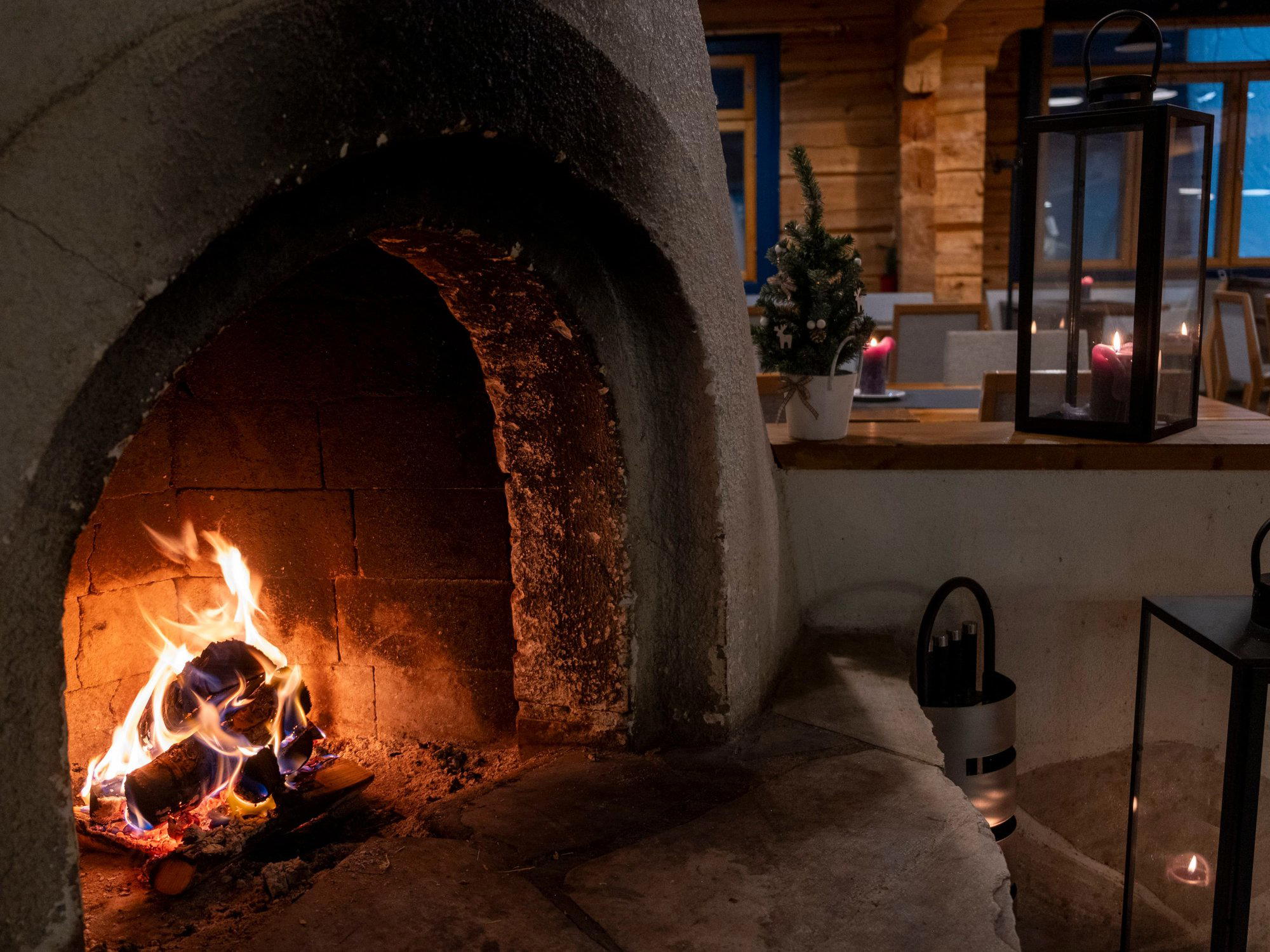
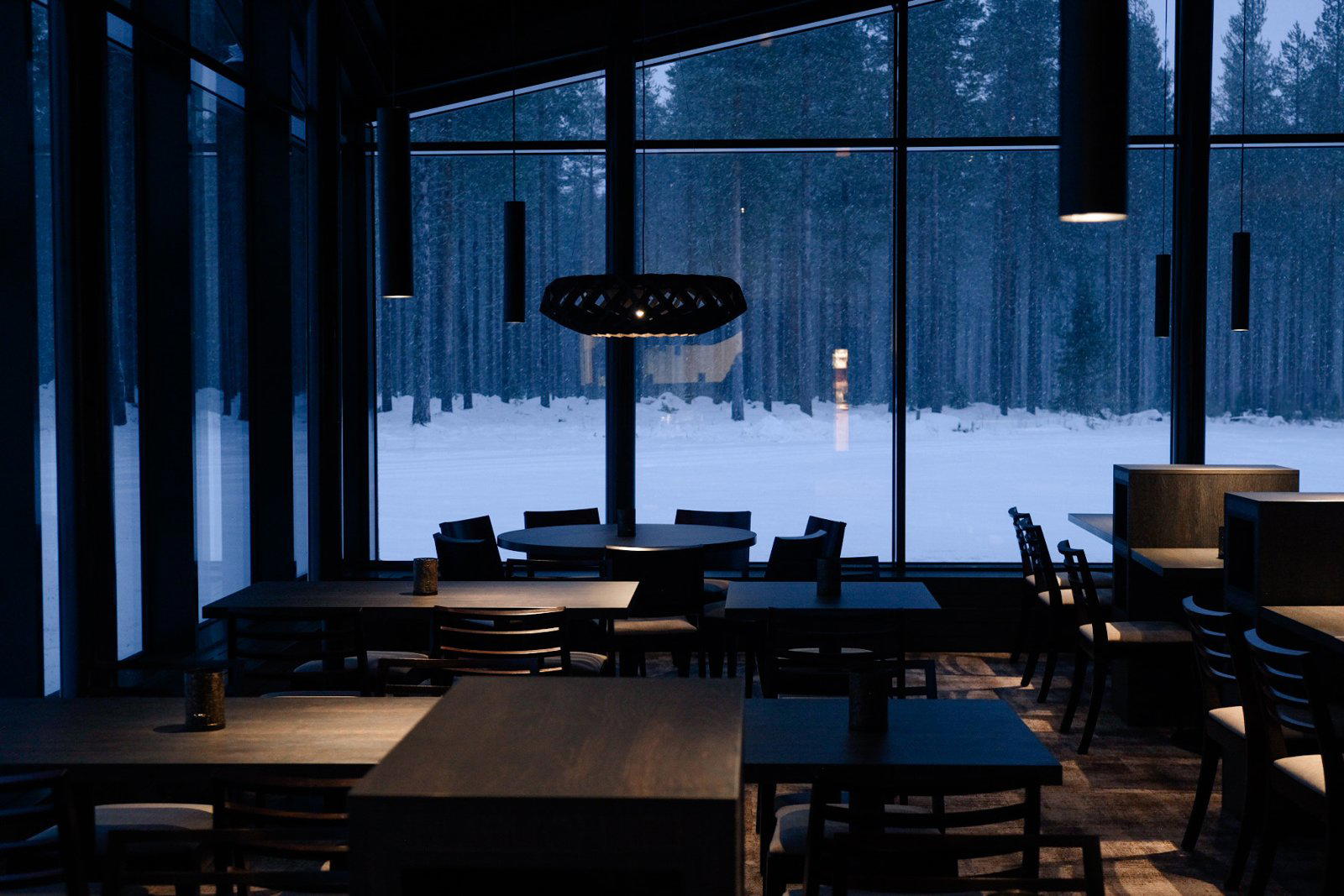
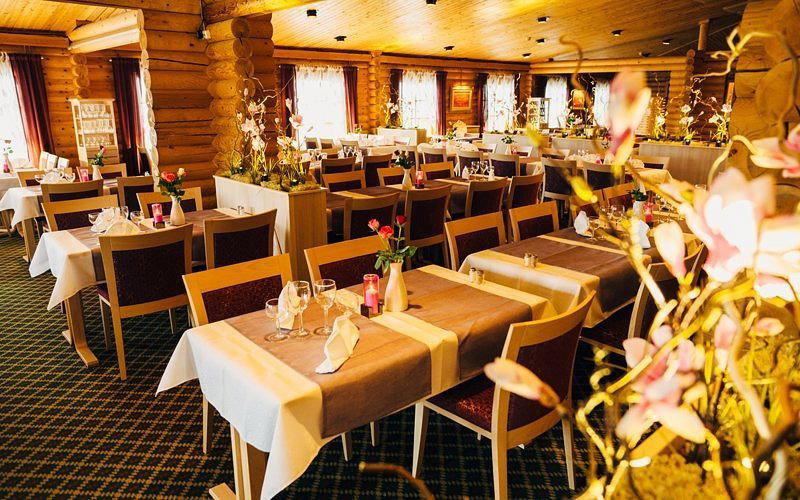
Magical frosty atmosphere with illuminated ice sculptures and snow art in a constant -2°C to -5°C environment, complemented by warm indoor restaurants.