

A treehouse hotel at the Arctic Circle, Arctic TreeHouse Hotel positions dark-stained timber suites among the spruce canopy outside Rovaniemi, with glass panels oriented toward the northern sky. A Regional Winner for Luxury Sustainable Hotel, it belongs to the design-led, landscape-first tier of Arctic accommodation, where forest immersion and aurora access are the primary amenity.
Pearl is the En Primeur Club membership app — saves, bookings, and concierge access live there. Same editors, same standards.
- Address
- Tarvantie 3, 96910 Rovaniemi, Finland
- Phone
- +358 50 5176909
- Website
- arctictreehousehotel.com
- Directions
- Get directions
 Saves & bookings on Pearl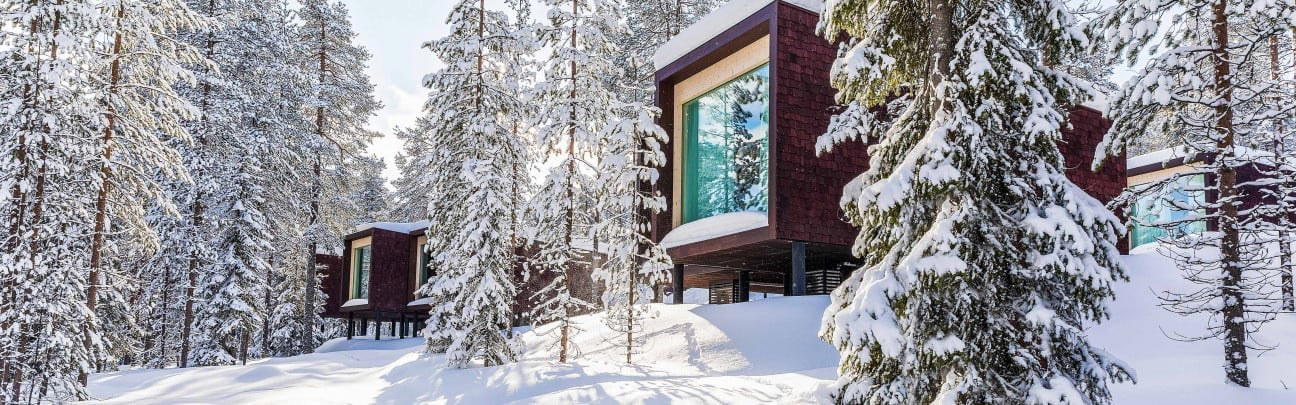
Where the Forest Floor Meets the Aurora Sky
In the design conversation around Arctic accommodation, the dominant tension is between spectacle and subtlety. Glass-domed igloos and mirrored aurora cabins chase the sky; another, smaller cohort of properties anchors itself in the treeline, using timber and elevation to frame the landscape rather than compete with it. Arctic TreeHouse Hotel, at Tarvantie 3 on the outskirts of Rovaniemi, belongs to the latter tradition. The treehouse format here is not a novelty gimmick bolted onto a standard hotel frame. It is a structural commitment: suites positioned among the spruce and pine canopy, connected by wooden walkways that creak pleasantly underfoot as temperatures drop toward minus twenty.
Rovaniemi sits on the Arctic Circle, a designation that matters more here than in most destinations that trade on latitude. The city is the administrative capital of Finnish Lapland, and the surrounding landscape shifts with unusual drama across a single calendar year: perpetual darkness in December, perpetual daylight in June, and two distinct transition seasons that most itineraries ignore entirely. The hotel's architecture responds to all four states. Glass wall panels in the suites are sized for aurora observation in winter; the same orientation captures the low copper light of late-autumn afternoon sun in October.
The Architecture as Argument
The design logic here reads as a counterpoint to the heavy-brand luxury model that has expanded across northern Scandinavia. Where properties like Lapland Hotels Snow Village in Kittilä trade on the ephemeral spectacle of ice construction, and where Design Hotel Levi in Levi leans into alpine-contemporary styling, Arctic TreeHouse Hotel takes a position that is quieter and more materially specific. The built language is dark-stained Nordic timber, low-impact footprints, and a visual vocabulary borrowed from vernacular Finnish forest architecture rather than international resort design.
The effect is more profound than it initially appears. Arriving after dark in November, you walk a lit path through snowfall into a property that does not announce itself with a grand lobby or a statement chandelier. The architecture performs its welcome through framing: a window positioned precisely to show spruce branches under snow, a deck rail at the right height to rest an arm while scanning the northern horizon. This kind of spatial intelligence is less common in the luxury segment than the price tier implies. It is the same quality that separates a considered room at Castello di Reschio in Lisciano Niccone from a merely expensive one: the sense that the architecture has an argument, and that argument is about where you are.
Arctic TreeHouse Hotel holds a Regional Winner award for Luxury Sustainable Hotel, a trust signal worth reading carefully. Sustainability credentials in hospitality range from greenwashing to genuine operational commitment, and the award category here is regional, not global. What it does confirm is that the property has cleared a formal assessment in a market, Finnish Lapland, where sustainable building standards are among the more rigorously applied in Europe. The timber sourcing, heating systems, and low-ground-disturbance construction techniques that define properties at this tier in the Nordic market are not accidental decisions. They are the structural identity of the hotel.
Positioning Within the Rovaniemi Market
Rovaniemi has developed a two-speed accommodation market. The first speed is volume-driven: city-centre hotels that process large tour groups arriving for Santa Claus Village visits and package aurora tours. The second is low-capacity and experience-led, where properties compete on design specificity, landscape access, and the quality of the northern lights window rather than room count or lobby amenity. Arctic TreeHouse Hotel sits firmly in the second tier and prices accordingly.
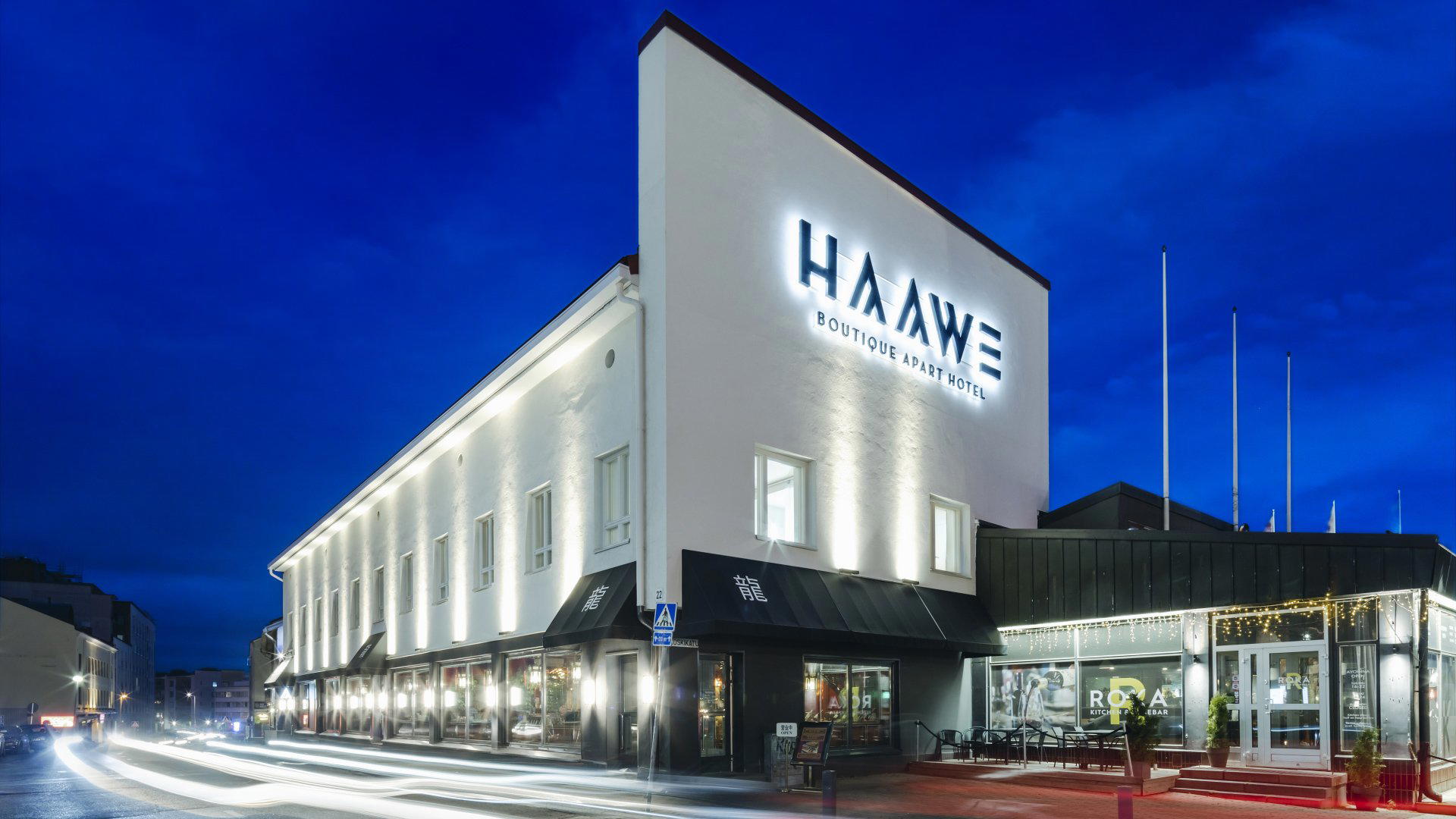
Within Rovaniemi itself, the property occupies a distinct niche relative to more urban options. Nova Skyland Hotel and Haawe Boutique Apart Hotel serve travellers whose priority is city-centre proximity. The hotel is a different proposition: it requires a transfer from central Rovaniemi and delivers in return a physical remove from the town's infrastructure, which is precisely the point. The suites are built for the landscape, not for convenience.
In global terms, the property sits alongside a cohort of design-led remote-luxury hotels that have expanded significantly since 2018. Properties such as Amangiri in Canyon Point and Hotel Esencia in Tulum share the same structural philosophy: architecture conceived for a specific landscape, with limited keys and a design vocabulary drawn from the immediate environment. The competitive comparable set is not other Rovaniemi hotels. It is the global tier of destination properties where the room's relationship to its site is the primary amenity.
Seasonality and the Aurora Question
The hotel's calendar divides into two high-demand windows and two softer periods that sophisticated travellers have begun to prioritise. Peak winter, roughly late November through February, delivers the highest aurora probability and the full snowscape experience. It also delivers the highest prices and greater competition for dates. The shoulder periods, September to October and March to April, offer lower occupancy, the possibility of both snow and early thaw, and in autumn, the additional draw of ruska, the Finnish term for the brief, vivid foliage season in Lapland.
Summer visits, June and July, present a completely different hotel: the same timber architecture now surrounded by dense green forest, with the midnight sun flooding the glass panels that in winter frame darkness and aurora light. This seasonal duality is one of the more architecturally interesting aspects of the property. Most glass-fronted Arctic rooms are designed implicitly for one condition. Here the orientation works across the full annual range.
Planning lead times are material. Properties in this tier, with limited inventory and a globally distributed travel audience drawn by aurora season coverage in major travel publications, typically book out four to six months ahead for peak winter dates. For September through early November, timelines are more forgiving, but the window for specific suite preferences narrows quickly. Consulting the hotel's website directly for availability is the correct starting point; third-party platforms do not always carry the full suite inventory.
Placing It in a Broader Finnish Context
Visitors using Rovaniemi as a single destination sometimes miss the broader structure of Finnish luxury accommodation, which spans from city-centre heritage properties to the remote-cabin tradition of the north. Hotel Kämp in Helsinki represents the formal end of that spectrum; the hotel represents the landscape end. Between those poles sit properties like RUNO Hotel Porvoo in Porvoo and Solo Sokos Hotel Torni Tampere in Tampere, which hold the middle position of design-conscious urban stays. Understanding that range helps calibrate what the hotel is asking of its guests: a willingness to prioritise immersion in a specific environment over urban accessibility, and to pay a premium for architecture that earns that premium through spatial intelligence rather than brand weight.
For those building a fuller Scandinavian itinerary, comparable design-led stays in the Nordic region include The Barö in Barösund, where archipelago landscape takes the role that Arctic forest plays here. Further afield, the broader tradition of landscape-responsive luxury architecture that hotel participates in runs through properties as varied as Badrutt's Palace Hotel in St. Moritz and Cheval Blanc Paris in Paris, though the formal language and price register differ considerably.
In Context: Similar Options
Comparable venues nearby, for context on price, style, and recognition.
| Venue | Cuisine | Price | Awards | Notes |
|---|---|---|---|---|
| Arctic TreeHouse HotelThis venue — the venue you are viewing | Nordic treehouse cabins blending luxury with Arctic nature | $$$$ | Not listed | Not listed |
| Skyra Retreat | Raw luxury Nordic retreat blending restored heritage schoolhouse with traditional log accommodations | $$$$ | 5-Star | Saarenkyla |
| Haawe Boutique Apart Hotel | Boutique apart hotel with nature-themed apartments in a historic brick building. | $$$ | 4-Star | city center |
| Nova Skyland Hotel | Modern Scandinavian luxury boutique hotel emphasizing nature connection and Nordic minimalism with contemporary comfort. | $$$ | 4-Star | Santa Claus Village |
| VALO Ice Cube Villas | Contemporary Nordic luxury villas | $$$$ | Not listed | Saariselka |
| Gáldu Hotel & Spa | Premium boutique hotel with Arctic luxury experience | $$$$ | 4-Star | Laanila |
Recognition history
Dated appearances from independent guides and award organizations, with the underlying list record or original source where available.
Mr & Mrs Smith Smith Seal of Approval
Mr & Mrs Smith
Michelin Selected
Michelin
World Luxury Hotel Awards WLHA Regional Winner
World Luxury Hotel Awards
Continue exploring
More in Rovaniemi
Hotels in Rovaniemi
Browse all →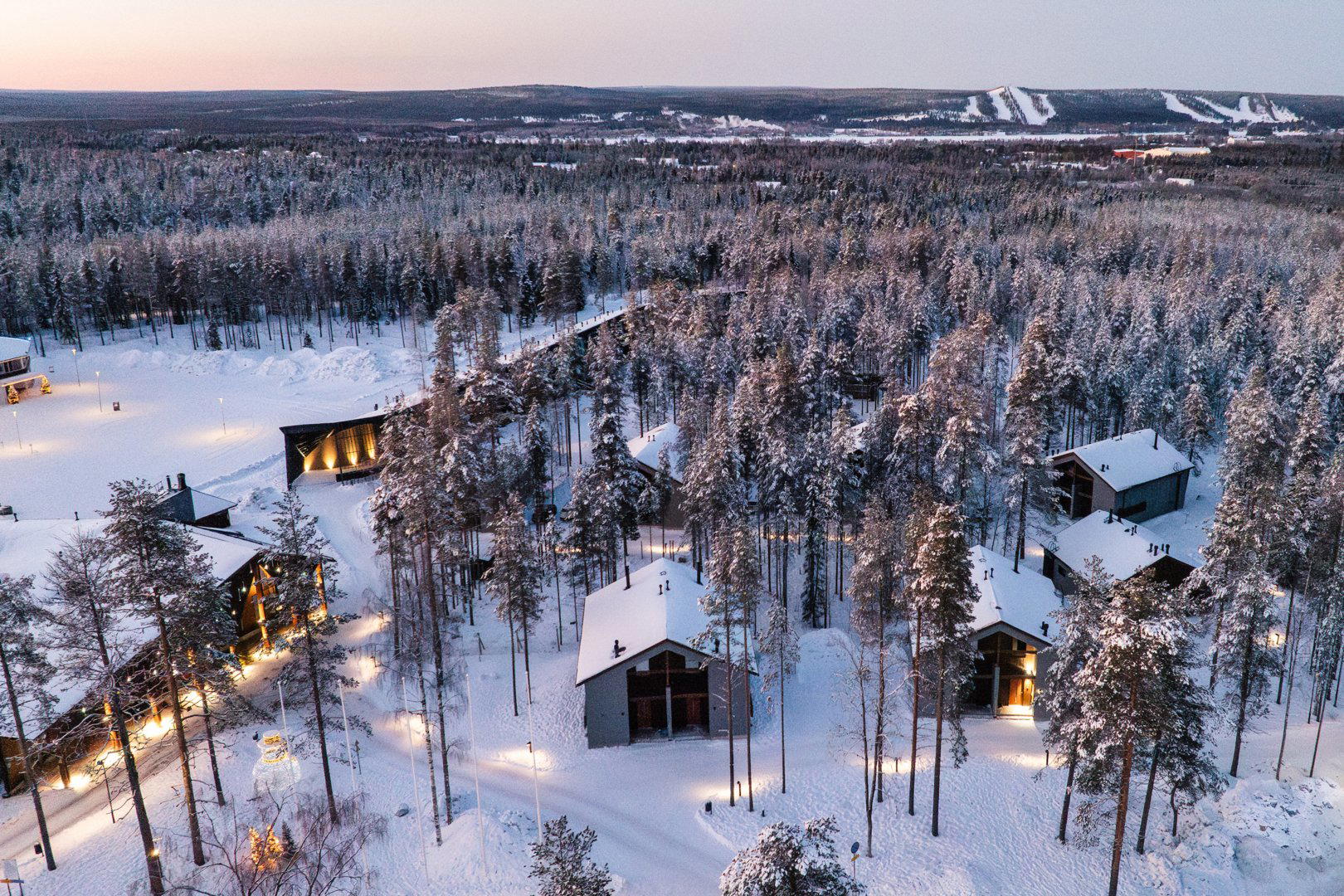
Restaurants in Rovaniemi
Browse all →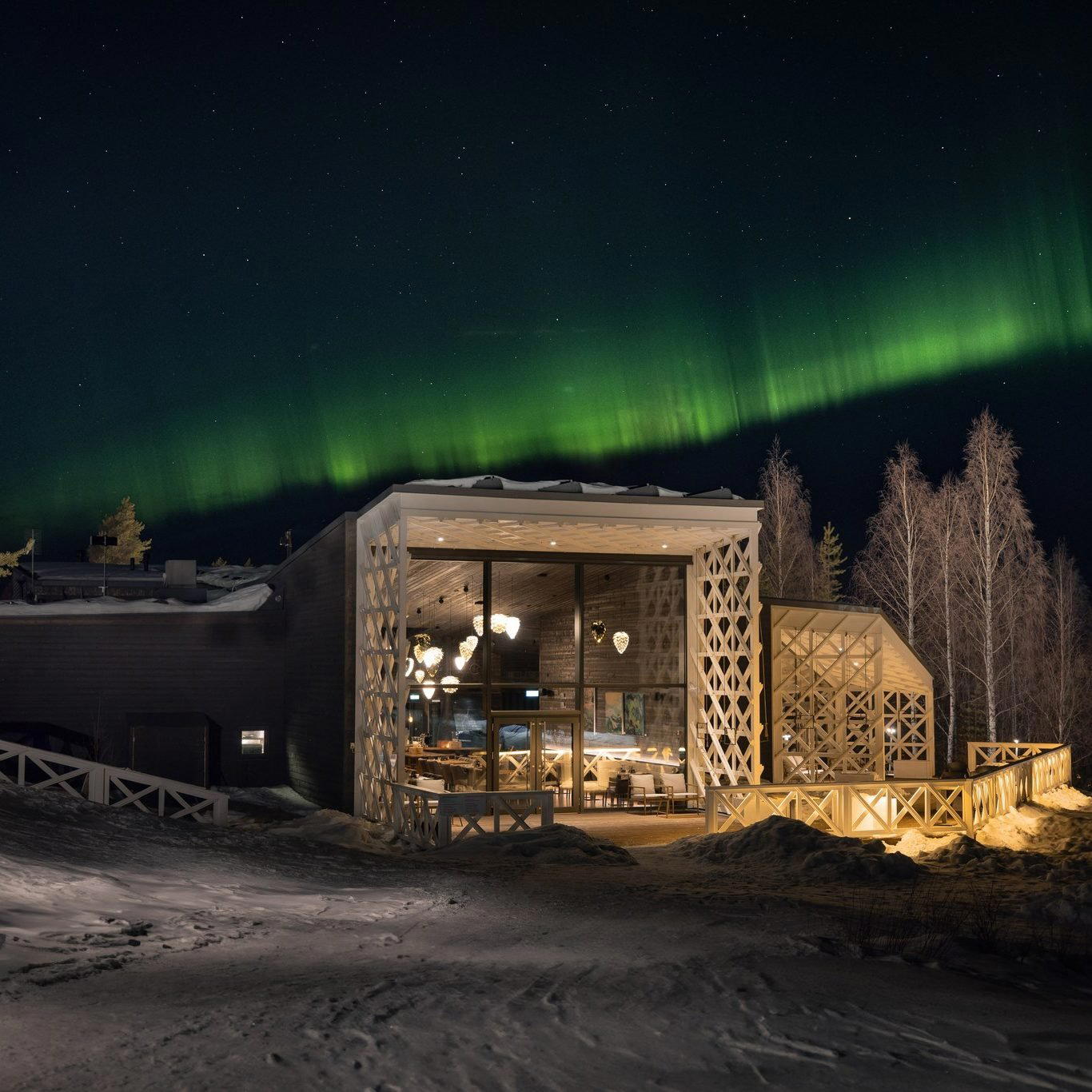
At a Glance
- Cozy
- Modern
- Scenic
- Romantic
- Quiet
- Whimsical
- Romantic Getaway
- Honeymoon
- Family Vacation
- Weekend Escape
- Panoramic View
- Private Dining
- Wi Fi
- Spa
- Room Service
- Concierge
- Sauna
- Restaurant
- Wi Fi
- Spa
- Room Service
- Concierge
- Sauna
- Restaurant
Nest-like cozy ambiance with warm natural materials, fireplaces, and soft lighting enhancing forest immersion.