Hotel El Roblar



Michelin Selected · Conde Nast Hot List Hotels · Esquire Best New Hotels
Ojai's oldest hotel, Hotel El Roblar has operated on the town's main avenue for more than a century. A Hollywood-tied ownership group spent six years restoring the Spanish Revival landmark after it went dark in 2017, preserving the mission-style arches and stone fireplace while adding 50 rooms, two restaurants, and a pool. Rates start from $550 per night.

Pearl is the En Primeur Club membership app, where members save venues, book tables and use the concierge.
A Century-Old Landmark Reclaimed
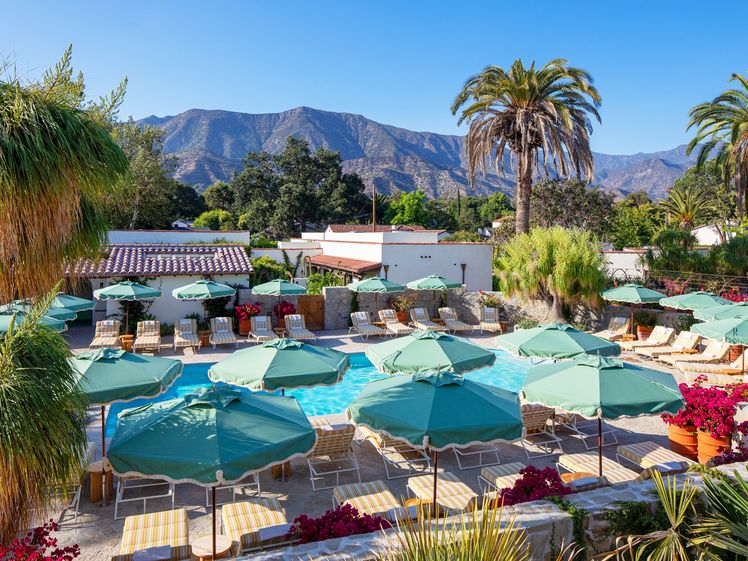
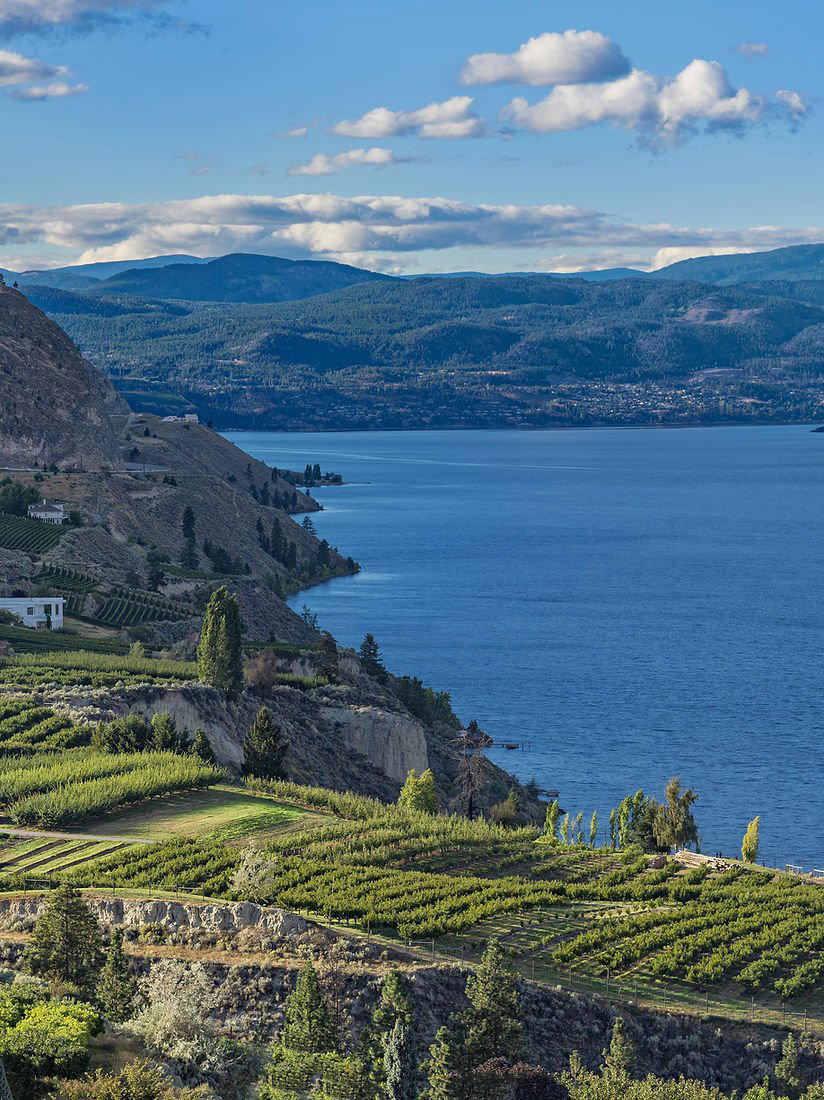
The approach along East Ojai Avenue frames what you're about to encounter before you reach the front door. The mission-style arched entryway of Hotel El Roblar, low, wide, and shaped by Spanish Revival conventions that date back more than a century, reads as architecture that was never trying to impress, only to endure. Beyond it, the Topatopa Mountains complete the frame. It is the kind of arrival that more recently built resort properties spend considerable effort trying to manufacture, and it works here precisely because nothing about it was manufactured at all.
Ojai has long attracted a specific type of traveler from Los Angeles: not someone chasing nightlife or restaurants that require reservations six weeks out, but someone who wants terrain, quiet, and a town with an actual character. That appetite shaped the original Hotel El Roblar when it was established over a hundred years ago, and it shapes the version that stands today. When the Thomas fire swept through in 2017, the property, which had been operating as a wellness retreat, went dark. The Ojai Avenue address sat dormant until a team of creatives with ties to Hollywood acquired it and began a six-year restoration. The scope of that work is evident in what they chose to keep as much as in what they added.
Spanish Revival Bones, Carefully Preserved
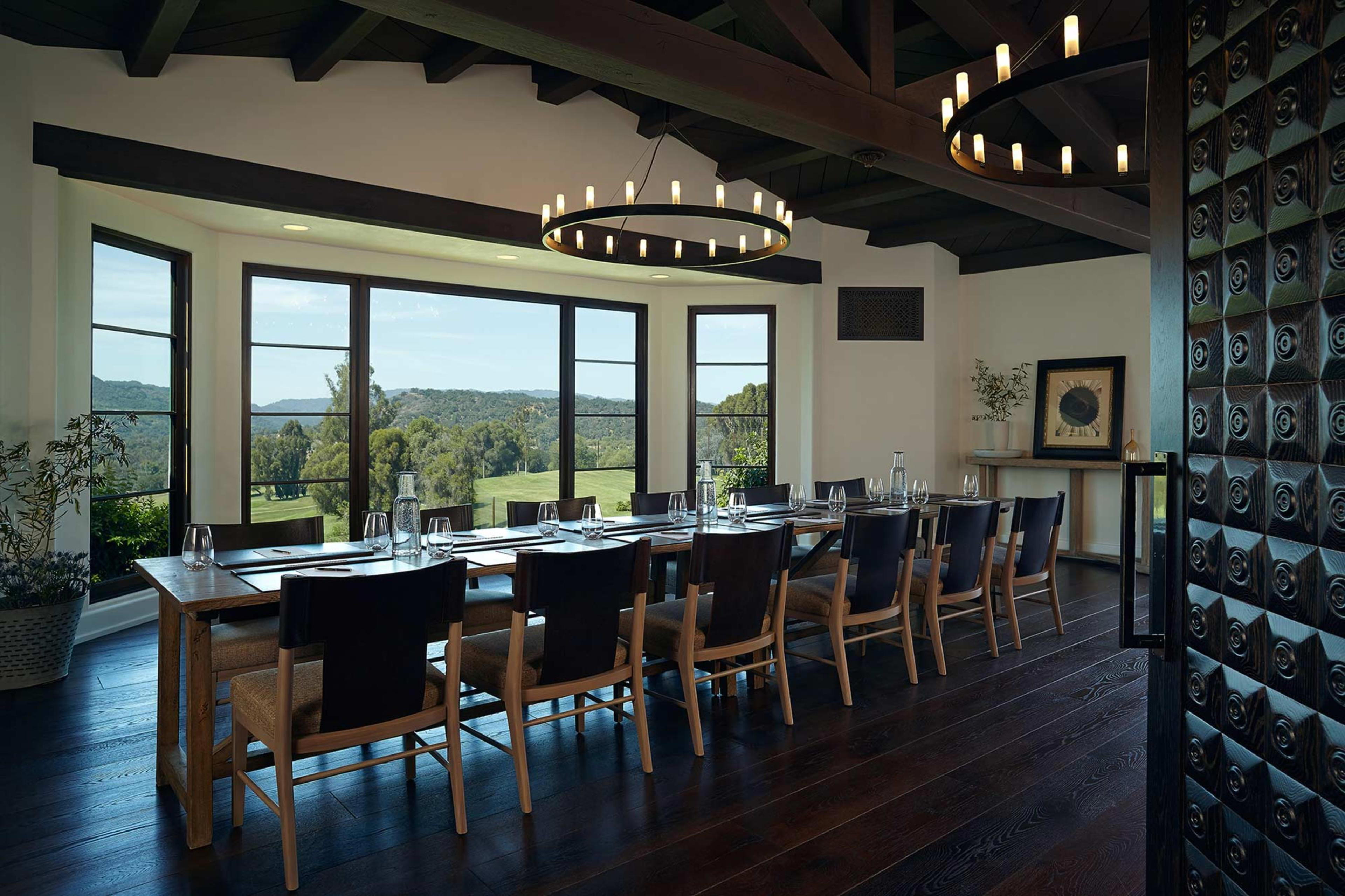
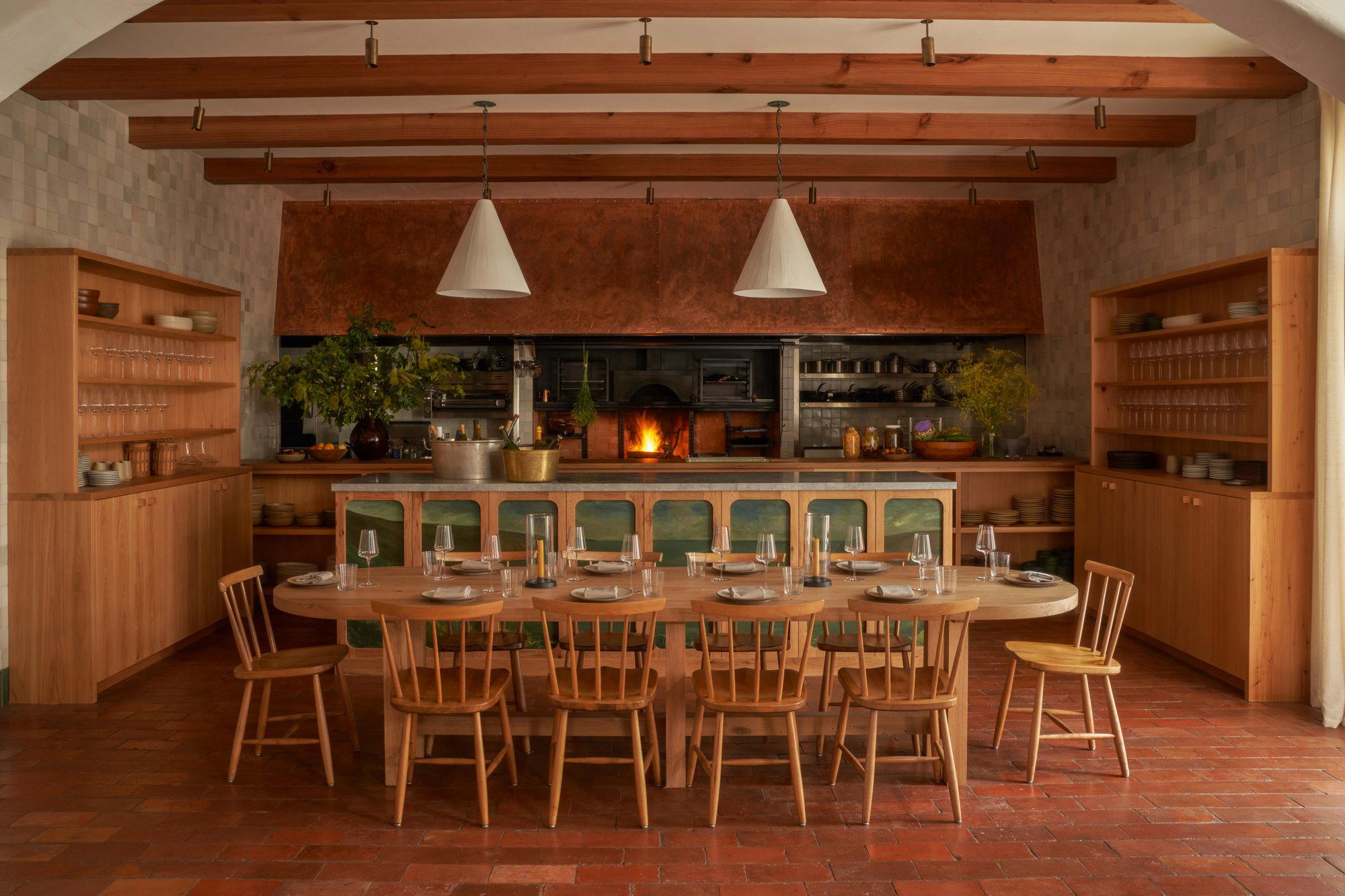
The restoration's most consequential decision was restraint. Historic hotel renovations in California frequently arrive with a complete design overhaul that preserves little beyond a plaque on the wall. El Roblar took the opposite approach. The stone fireplace remains. The Monterey furniture, a regional style that pairs Spanish Colonial influence with frontier-era practicality, anchors the communal spaces. The arched entryway has not been smoothed into something more contemporary-friendly. What has been added sits alongside these elements rather than replacing them, creating an interior register that tilts toward a particular era without tipping into theme-park historicism.
Spanish Revival architecture proliferated across Southern California in the early twentieth century, institutions like The Beverly Hills Hotel in Los Angeles and grand civic buildings across the region were shaped by the same vocabulary of arched corridors, red-tile roofing, and white stucco. El Roblar belongs to a smaller category within that tradition: properties that adopted the style not as aspiration but as function, built for a specific town character rather than a wealthy destination market. That original intent is still legible in the building's proportions and in the way the 50 rooms and bungalows are distributed across the property rather than stacked into a single block.
The wild-west tonal layer that sits over the Spanish Revival foundation is harder to locate in any single design element but easy to feel in aggregate. There is something in the combination of stone, warm timber, and landscaping that encourages a kind of temporal looseness, the sense that the current decade is not the only decade happening here. For travelers accustomed to the precision of properties like Amangiri in Canyon Point or the refined historic restoration of Troutbeck in Amenia, El Roblar offers something less polished and more specific to its actual place.
The Property and Its Residents
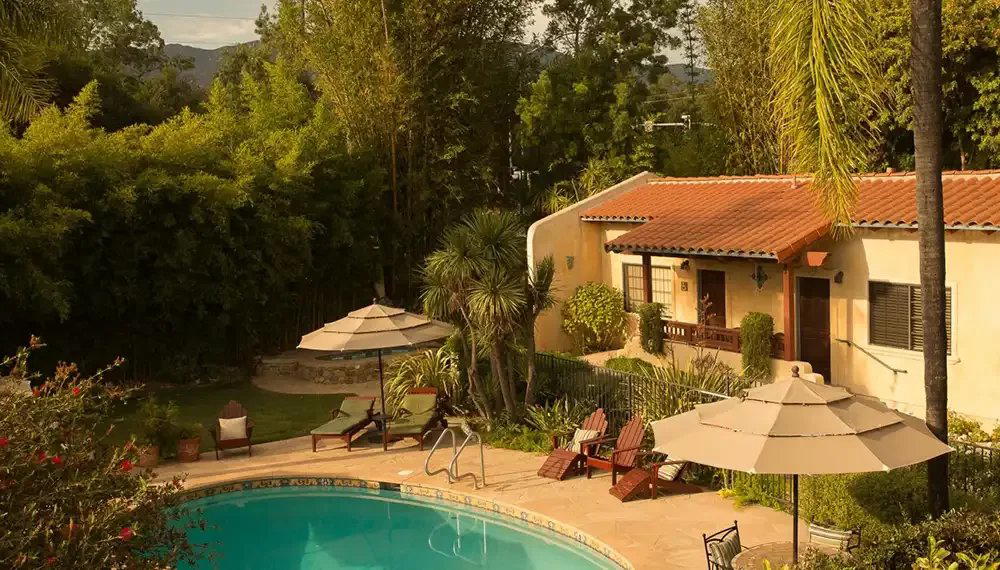
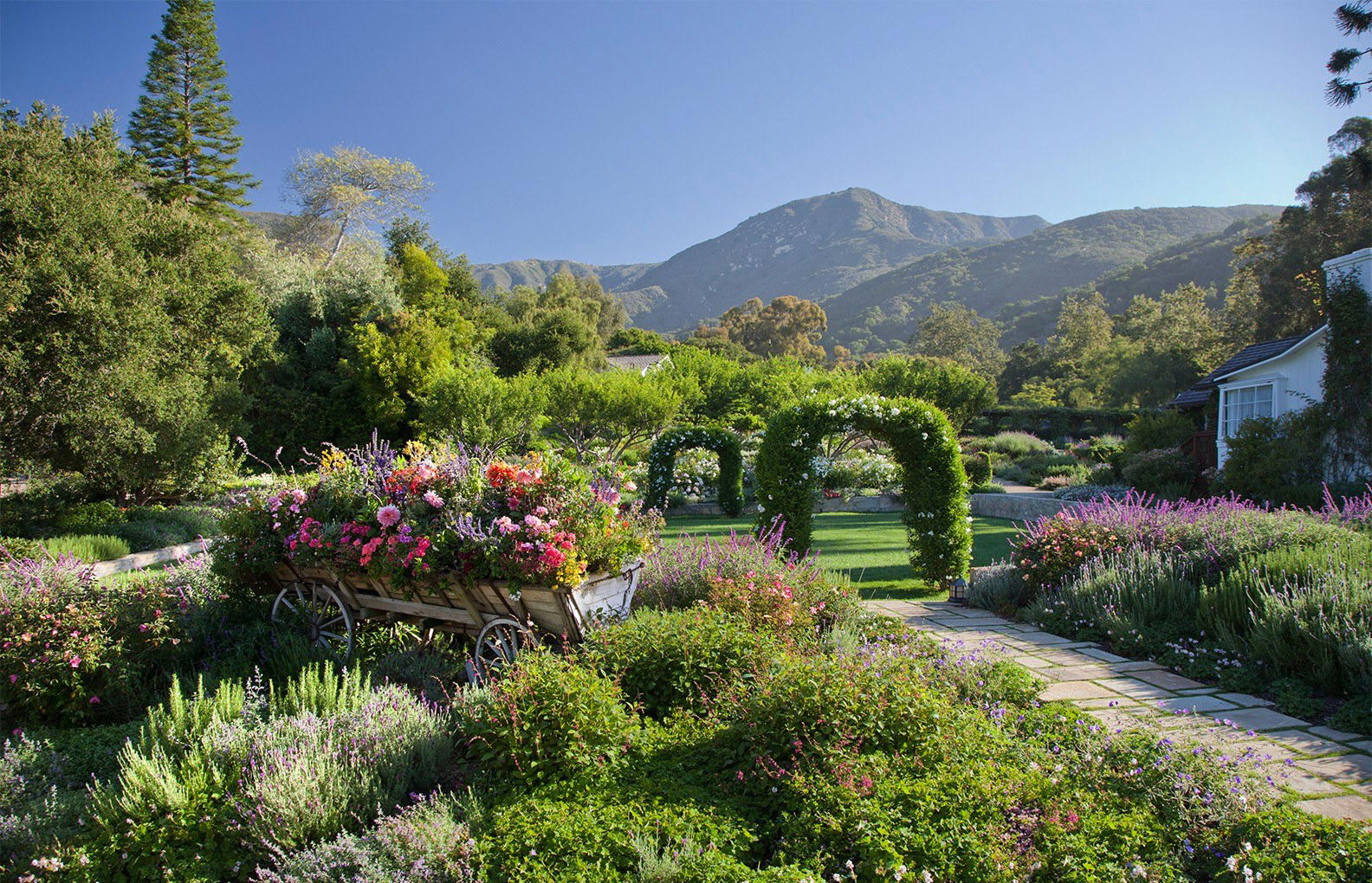
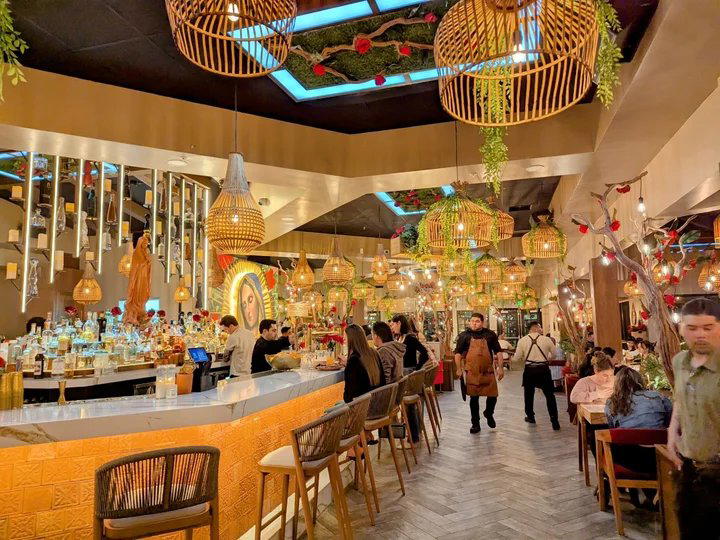
Fifty rooms and bungalows is a scale that allows for genuine hospitality without the anonymity that larger properties tend to produce. The pool sits within landscaping described as seriously showy, a deliberate contrast with the more austere mountain backdrop visible from much of the property. Two intimate restaurants serve the property without trying to function as destination dining operations in their own right, which is consistent with the overall editorial of the hotel: it is not trying to be more things than it is.
The most discussed feature of the property may be its most improbable: two Aldabra giant tortoises, named Abra and Cadabra, each weighing more than 160 pounds, that move through the gardens at their own pace. Aldabra tortoises are among the largest land tortoises in the world, and they are not a common amenity. As a design choice, if that is even the right framing, their presence says something about the sensibility of the ownership group. This is a property comfortable with the eccentric and unhurried, and it has the residents to prove it.
Ojai in Context
Ojai operates within a specific category of Southern California escape: small enough to feel genuinely removed from Los Angeles, large enough to have its own dining and arts ecosystem. Visitors typically arrive for hiking in the Los Padres National Forest, the famous Ojai pink moment at sunset, and a general deceleration that the town's layout and culture actively support. The local hotel market reflects that orientation. Ojai Rancho Inn occupies the relaxed-motel end of the spectrum, while Ojai Valley Inn anchors the large-resort category with its golf course and full spa infrastructure. El Roblar positions itself between those poles: more considered and historically grounded than a roadside motel, less amenity-saturated than a resort complex. For travelers whose Ojai priorities are town access, architectural character, and a property that does not feel like it was assembled from a hospitality group's design template, that positioning is the point.
The comparison set extends beyond Ojai when you consider properties of similar character elsewhere in California. Post Ranch Inn in Big Sur and SingleThread Farm Inn in Healdsburg represent the design-led, small-footprint end of California's boutique hotel spectrum, each deeply rooted in its specific geography. El Roblar belongs to a similar conversation, though its axis runs through historical preservation rather than new-build environmental integration. The Stavrand in Guerneville offers another point of comparison: a restored property with strong design intent in a California town that runs on its own schedule. For a broader view of landmark restorations that took the long route, the six-year timeline of El Roblar also echoes the careful approach seen at properties like Chicago Athletic Association in Chicago or The Hornibrook Mansion Empress of Little Rock.
Planning Your Stay
Hotel El Roblar is located at 122 E Ojai Ave, placing it directly on Ojai's central commercial corridor, with walkable access to the town's shops, galleries, and restaurants. Rates start from $550 per night. The property's 50 rooms and bungalows span a range of configurations; bungalows offer more separation and garden proximity, which makes them the more requested option for longer stays and return guests. For a full picture of where to eat and drink while in town, see our full Ojai restaurants guide.
Comparable Venues
Comparable venues nearby, for context on price, style, and recognition.
| Venue | Cuisine | Price | Awards | Notes |
|---|---|---|---|---|
| Hotel El RoblarThis venue (the venue you are viewing) | historic Spanish Revival boutique resort | Not listed | Michelin Selected · Conde Nast Hot List Hotels | Not listed |
| Ojai Rancho Inn | 50's ranch style with summer camp vibes | $200–300 | Not listed | Ojai |
| Ojai Valley Inn | Historic Spanish Colonial Revival with modern updates | Not listed | Michelin Selected · La Liste Top Hotels | Ojai Valley |
| Hyatt Place Sonoma Wine Country | Upscale select-service hotel with polished public spaces and Wine Country charm. | Not listed | Not listed | Sonoma Wine Country |
| Soho Ranch House Sonoma | Members-only wine-country ranch resort spread across a large vineyard estate with freestanding cottages and villas instead of a single main hotel block. | Not listed | Not listed | Kenwood |
| The Bungalows at Retreat by Homestead Modern | Mid-century modern post-and-beam bungalows architecturally restored in 2022 on a historic retreat campus. | Not listed | Michelin Selected | Joshua Tree |
Recognition history
Dated appearances from independent guides and award organizations, with the underlying list record or original source where available.
Michelin Selected
Michelin
Conde Nast Hot List Hotels
Conde Nast
Esquire Best New Hotels
Esquire
Continue exploring
More in Ojai
Hotels in Ojai
All hotels in Ojai →
Bars in Ojai
All bars in Ojai →
Restaurants in Ojai
All restaurants in Ojai →
Details
- Rustic
- Scenic
- Cozy
- Elegant
- Romantic Getaway
- Wellness Retreat
- Weekend Escape
- Garden
- Historic Building
- Pool
- Fitness Center
- Spa
- Mountain
- Garden
Warm earthy tones, natural wood, stone fireplace, and old-world rustic vibe with Spanish Revival architecture amid lush gardens.