A Napier Town address near Naudra Bridge places Hotel Anand within reach of Jabalpur's central corridor, where older commercial infrastructure and civic architecture define the streetscape. For travellers moving through Madhya Pradesh on their way to Marble Rocks or Kanha, the property sits in a part of the city that rewards those who read it on its own terms rather than against India's more decorated hotel markets.
Pearl is the En Primeur Club membership app — saves, bookings, and concierge access live there. Same editors, same standards.
- Address
- Near, Naudra Bridge, Napier Town, Jabalpur, Madhya Pradesh 482002, India
- Phone
- +91 761 400 5114
- Website
- hotelanandjbp.in
- Directions
- Get directions
 Saves & bookings on Pearl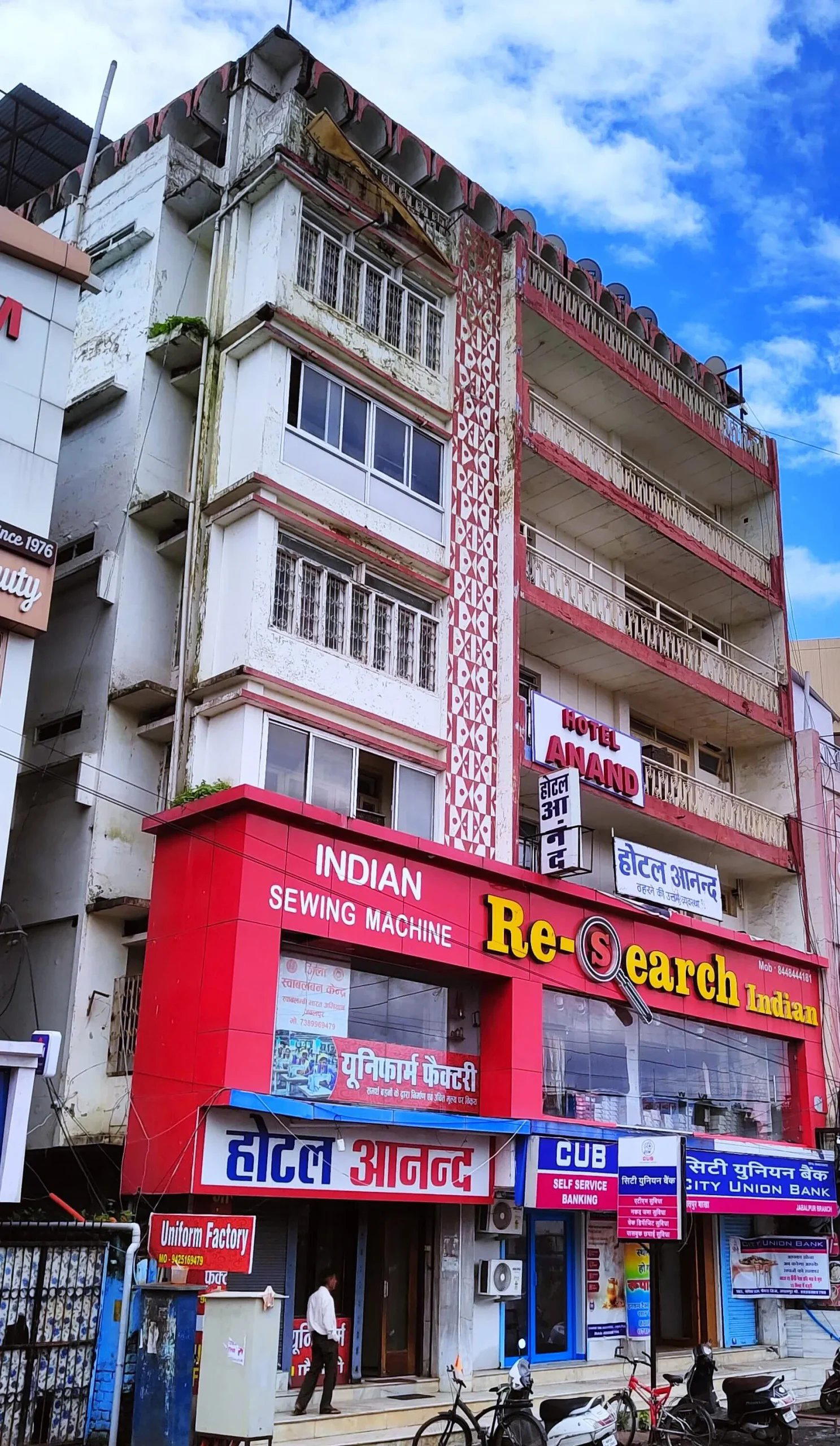
Napier Town and the Architecture of Midrange Hospitality in Jabalpur
Approach Naudra Bridge in Napier Town and you find yourself in one of Jabalpur's most commercially active corridors, where civic life runs on a practical axis rather than a tourist one. This is not a neighbourhood built around heritage hotels or resort amenities. It is a district where working professionals, regional business travelers, and families passing through Madhya Pradesh converge on accommodation that prioritises location and accessibility over architectural theatre. Hotel Anand occupies this tier of the market, and understanding what that tier represents in a city like Jabalpur tells you more about the property than any individual detail could.
Jabalpur sits at a crossroads that is easy to underestimate. The city is the administrative capital of Madhya Pradesh's Jabalpur district, a transit point for travellers heading to the marble rocks of Bhedaghat, and home to a legal and administrative class that generates steady midweek demand for business-suitable accommodation. The hospitality infrastructure here reflects that demand pattern: functional, centrally located, and priced against local competitors rather than against the branded hotel chains that dominate Bhopal or Indore. For context on what the wider Indian hotel spectrum looks like at its most considered end, properties such as The Oberoi Amarvilas in Agra or The Taj Mahal Palace, Mumbai set a benchmark that Jabalpur's midrange market does not attempt to meet, but also does not need to.
Physical Position and What It Signals
The address near Naudra Bridge places Hotel Anand within reach of Jabalpur's commercial core. Napier Town is one of the city's older planned quarters, its grid laid out during the colonial period and now layered over with the visual complexity typical of Indian tier-two cities: autorickshaws, street vendors, administrative offices, and local restaurants operating in close proximity. For a traveller arriving from one of Jabalpur's railway station or from the airport at Dumna, this location reduces transit time and positions the hotel within walking distance of the kinds of services, eateries, and connectivity points that matter most to practical visitors.
The design language of hotels in this bracket across Indian tier-two cities tends toward functional modernism: tiled lobbies, modest reception areas, air-conditioned rooms built to a consistent specification, and common areas that serve operational purposes more than aesthetic ones. This is not a criticism. In cities where most premium visitors are traveling for court appearances, regional business meetings, or as a staging point before excursions to Bhedaghat, the physical environment of the hotel is secondary to its reliability and position. The architecture here is the architecture of utility, and in that category, central location is especially meaningful design choice a property can make.
For those who want design-led properties in India more broadly, the comparison set looks different. Alila Fort Bishangarh in Manoharpur operates from a 17th-century Rajput fort, and Amanbagh in Ajabgarh uses Mughal garden architecture as its spatial grammar. These are properties where the building itself is the primary editorial subject. Hotel Anand belongs to a different conversation, one about access, practicality, and the everyday infrastructure of travel in central India.
Jabalpur as a Base: What the City Demands of Accommodation
Visitors to Jabalpur generally divide into two categories: those with a specific purpose in the city itself, and those using it as a gateway. The marble rocks at Bhedaghat, a gorge carved by the Narmada River through white magnesian limestone, draw travellers who base themselves in the city and make the roughly 25-kilometre day trip outward. The Dhuandhar Falls, located at the same site, are a secondary draw. Neither attraction requires overnight accommodation outside the city, which means Jabalpur hotels serve primarily as bases rather than destinations.
That function places a premium on check-in efficiency, breakfast service quality, and the ability to arrange local transport. It also means that the competitive pressure on Jabalpur hotels comes primarily from other local midrange properties rather than from resort-style destinations. The visitor making multiple trips to the High Court of Madhya Pradesh, which is headquartered in Jabalpur, has different requirements than a leisure traveller booking Aman-i-Khas in Ranthambore or Ananda in the Himalayas in Narendra Nagar. Recognising which category you fall into before booking shapes the hotel decision significantly.
For those planning a central India itinerary that includes Jabalpur, the city pairs naturally with Kanha and Bandhavgarh tiger reserves, both within a few hours by road. Travellers making that circuit sometimes use Jabalpur as a stopping point, which adds a wildlife-tourism layer to the accommodation demand.
Planning Your Stay
Jabalpur sees two distinct seasonal rhythms. The cooler months from October through February represent one comfortable period for visiting Bhedaghat and for general city travel, and accommodation demand rises accordingly. The summer months from April through June bring significant heat, and the monsoon from July through September can make the marble gorge particularly atmospheric but also less reliably accessible. Booking ahead during the October-February window makes practical sense, as both leisure and business demand concentrate in that period.
The Naudra Bridge address is navigable by auto-rickshaw or taxi from the railway station and from the airport. Jabalpur Junction, the main rail hub, connects the city to Bhopal, Nagpur, and Delhi on major trunk lines, making rail arrival the common mode for both domestic business and leisure visitors. Local transport in Napier Town is generally direct to arrange from any hotel address in the area.
A Quick Peer Check
Comparable venues nearby, for context on price, style, and recognition.
| Venue | Cuisine | Price | Awards | Notes |
|---|---|---|---|---|
| Hotel AnandThis venue — the venue you are viewing | Hotel | $$ | 3-Star | Not listed |
| Tree of Life Shambala, Yercaud | Mindful living sanctuary inspired by Buddhist concept of Shambala; designed for rest, rejuvenation, and deeper connection with nature. | $$$ | 3-Star | Shevaroy Hills, Yercaud |
| Tilar Siro, Andamans | Eco-conscious beachfront resort on stilts integrated with rainforest. | $$$ | 4-Star | Vijay Nagar Beach |
| Kaav Safari Lodge, Kabini | Intimate eco-friendly jungle villa with luxury tents. | $$$$ | 4-Star | Begur |
| Purity at Lake Vembanad | Colonial-style boutique villa with contemporary minimalist furnishings | $$$$ | 4-Star | Muhamma |
| Taj Fort Aguada Resort & Spa | Portuguese-colonial heritage resort with modern luxury | $$$$ | 5-Star | Candolim |
At a Glance
- Classic
- Airport Transfer
- Airport Transfer