
World Luxury Hotel Awards WLHA Continent Winner
The only resort in Qatar to hold both a Regional Winner award for Luxury Desert Resort and a Continent Winner title for Luxury Beachfront Resort, Hilton Salwa sits at the southern edge of the country where the desert meets the Gulf. The property occupies a position unlike anything in Doha's competitive hotel tier, offering a dual landscape that shapes both its architecture and its guest profile.

Pearl is the En Primeur Club membership app, where members save venues, book tables and use the concierge.
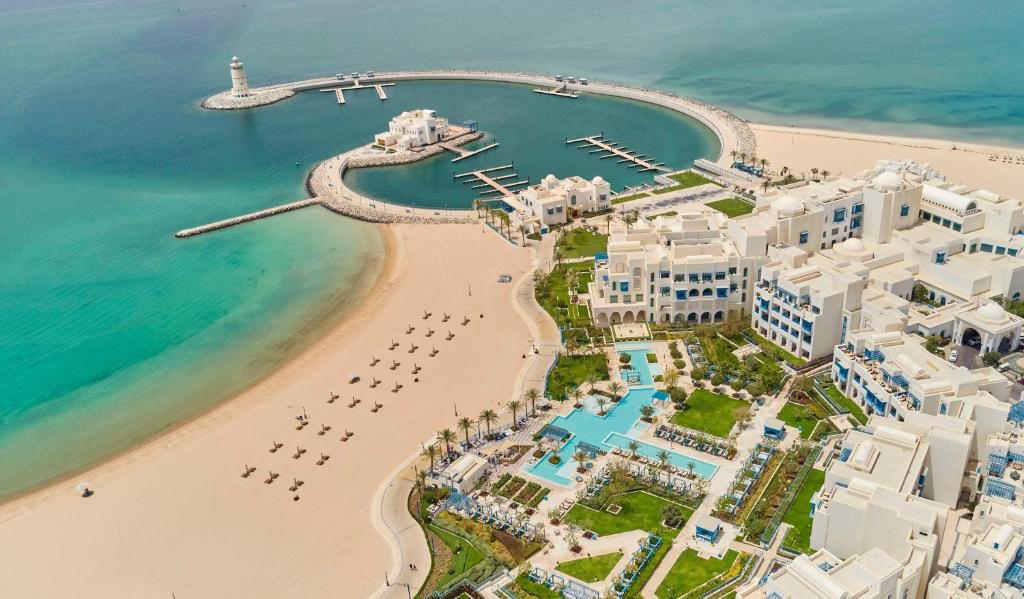
Where Desert Architecture Meets the Gulf Shore
Qatar's resort geography divides into two distinct zones: the capital's polished waterfront corridor, where properties like Four Seasons Hotel Doha and InterContinental Doha Beach & Spa compete on Corniche proximity, and the southern reaches along Salwa Road, where the interior desert pushes almost to the water's edge before the land opens out onto the Gulf. Hilton Salwa Beach Resort & Villas occupies that second zone, at exit 86 off Salwa Road near the Learaig Interchange in Abu Samra, roughly at Qatar's southern border with Saudi Arabia. The position is deliberate. This is not a city hotel dressed in resort clothing. The surrounding landscape, flat salt plains dissolving into Gulf water, informs the spatial logic of the property in a way that no Doha urban address can replicate.
The architectural premise at resorts of this category, where desert and coastline share a boundary, tends toward one of two approaches: maximise the water frontage and treat the arid hinterland as a backdrop, or acknowledge the duality and build spaces that sit between the two registers. Properties that succeed at the latter, such as Amangiri in Canyon Point, use material honesty, low horizontal profiles, and a restrained palette to anchor the architecture in its actual geography rather than impose a foreign resort idiom onto it. Gulf luxury properties face a version of the same question, and how a resort answers it says something real about its design ambitions.
A Dual Award Position in the Gulf Resort Tier
Hilton Salwa holds two separate World Luxury Hotel Awards: Regional Winner for Luxury Desert Resort and Continent Winner for Luxury Beachfront Resort. That pairing is not common. Most Gulf properties compete in one category or the other. Resorts that earn recognition across both desert and beachfront classifications are, in practice, judged to deliver credibly on two distinct spatial and experiential propositions simultaneously. In a regional competitive set that includes Banana Island Resort Doha by Anantara and Banyan Tree Doha at La Cigale Mushaireb, neither of which holds an equivalent dual classification, that distinction carries weight beyond marketing language.
For context, Continent Winner status in World Luxury Hotel Awards places a property against the full African and Middle Eastern field, not just the Qatari or Gulf cluster. Achieving that classification in the Luxury Beachfront category while also holding a Regional Desert award positions Hilton Salwa as a property the awards circuit regards as operating in a different register from the Doha hotel corridor. Travellers who have visited comparable dual-environment properties, whether in Oman, the UAE, or further afield at something like Hotel Esencia in Tulum, will recognise the particular atmosphere that a genuine land-sea boundary produces: a sense of exposure and scale that enclosed urban properties cannot manufacture.
The Physical Logic of Abu Samra
Abu Samra sits at Qatar's southernmost reach, approximately 130 kilometres from central Doha along Salwa Road. That distance is significant for the guest experience. The drive south from Doha passes through the industrial fringe of the city before opening into the flat, ochre emptiness of the Qatari interior, punctuated by the occasional camel herd and the slow arc of the horizon. By the time the resort appears, the psychological shift from city to landscape is already complete. This is not incidental. Resorts in genuinely remote locations, whether Zulal Wellness Resort by Chiva-Som in Al Ruwais to the north or the desert lodges of Oman's interior, rely on that transitional journey as part of the arrival sequence. The distance functions as a decompression chamber.
For guests flying into Hamad International Airport, the resort requires forward planning. A private transfer along Salwa Road is the logical approach; the route is direct but long. Those combining a Qatar stopover with onward travel should factor the 130-kilometre return trip into their itinerary timing. The payoff for that planning is a location where the Gulf horizon is unobstructed and the ambient noise register of a capital city is genuinely absent. See our full Abu Samra restaurants guide for further context on what the area around the resort offers.
Design Frameworks at This Category of Gulf Property
Gulf beachfront resorts have moved through several design phases over the past two decades. The marble-and-gold maximalism of early luxury build-outs gave way to a period of restrained regionalism, with properties drawing on Islamic geometric patterning, local stone, and wind-tower references. More recent openings have leaned into landscape integration, borrowing design thinking from properties in other arid coastal geographies. The challenge specific to Qatar's southern coast is the absence of dramatic topography: there are no cliffs, no wadis, no volcanic rock formations of the kind that define Omani coastal resorts. Design at Hilton Salwa must work with horizontality, with the interplay of sand and water, and with the quality of Gulf light, which at latitude tends toward a bleached intensity in summer and a warm amber flatness in winter months.
Interior design at properties in this climate tier, where summer temperatures regularly exceed 45 degrees Celsius, prioritises shade architecture: deep overhangs, shaded walkways, and pools positioned to maximise morning or evening use. The villa format common at this category of Gulf resort, with private outdoor space and direct pool or beach access, suits the climate better than high-rise room blocks, which tend to produce an institutional atmosphere incompatible with the landscape context. How Hilton Salwa addresses these spatial decisions is embedded in its dual-award recognition: a property that earns both desert and beachfront classifications is, by definition, one that the awards circuit judges to have resolved those environmental tensions with some coherence.
Where Hilton Salwa Sits in the Wider Gulf Context
Qatar's luxury hotel market has expanded considerably in the past decade, with Fairmont Doha and Four Seasons Hotel Doha anchoring the capital's premium tier. The southern resort position Hilton Salwa occupies is less crowded. Properties that deliberately trade city-centre access for landscape immersion occupy a niche in the Gulf that remains less developed than the Doha waterfront corridor, and the guest profile that seeks out Abu Samra is meaningfully different from the conference and transit traveller that drives Doha's hotel economics.
For travellers building a Gulf itinerary across multiple properties, the sequencing logic is worth considering. Combining a capital-city opening at a Doha property with a southern desert-coast closer at Hilton Salwa produces a genuine tonal shift rather than more of the same. Those with an appetite for international comparisons across similar dual-environment resorts might look at One&Only Mandarina in Riviera Nayarit, which similarly navigates the junction between two distinct natural registers, or Castello di Reschio in Lisciano Niccone for a European example of award-recognised architecture working in dialogue with its surrounding terrain. Further afield, the design thinking at Bvlgari Hotel Tokyo and HOTEL THE MITSUI KYOTO demonstrates how award-tier properties anchor their identities in physical environment rather than brand formula, a reference frame worth carrying when assessing what Hilton Salwa's dual recognition actually signals.
Planning Your Stay
The resort sits at exit 86 on Salwa Road, near the Learaig Interchange in Abu Samra. Given the distance from Doha, a minimum two-night stay is the practical threshold for the location to pay off. Direct booking via the Hilton reservations platform is the standard approach; specific rate and availability information should be confirmed there, as pricing varies considerably by season. Qatar's optimal resort season runs from October through April, when daytime temperatures are manageable and the Gulf water is at its clearest. Summer visits are possible given the resort infrastructure, but require genuine heat tolerance and an expectation that outdoor activity will be concentrated in early morning and evening windows.
Comparable Venues
Comparable venues nearby, for context on price, style, and recognition.
| Venue | Cuisine | Price | Awards | Notes |
|---|---|---|---|---|
| Hilton Salwa Beach Resort & VillasThis venue (the venue you are viewing) | Luxury beach resort with Arabesque styling and private villas | $300–500 | World Luxury Hotel Awards WLHA Continent Winner | Not listed |
| Sheraton Grand Doha Resort & Convention Hotel | Well-known beachfront resort with convention facilities and pyramidal architecture. | Not listed | Not listed | West Bay |
| Park Hyatt Doha | Contemporary luxury urban retreat | Not listed | Michelin Selected · Star Wine List | Fereej Mohammad Bin Jasim/Mushaireb |
| Al Messila Resort & VIP Spa | Palace-style resort preserving Qatari natural heritage in a gated botanical oasis. | $200–300 | Michelin Selected | Zone 36 |
| The St. Regis Marsa Arabia Island, The Pearl Qatar | Ultra-luxury all-suite resort with classical elegance and modern undertones, positioned as an exclusive island escape within a lively marina community. | $200–300 | Michelin Selected | The Pearl, Porto Arabia |
| Banyan Tree Doha At La Cigale Mushaireb | luxury urban resort | Not listed | Michelin Selected · La Liste Top Hotels | Mushaireb |
Recognition history
Dated appearances from independent guides and award organizations, with the underlying list record or original source where available.
World Luxury Hotel Awards WLHA Continent Winner
World Luxury Hotel Awards
Full recognition history (2 entries)
World Luxury Hotel Awards WLHA Regional Winner
World Luxury Hotel Awards
Hilton Salwa Beach Resort & Villas
Featured Guides

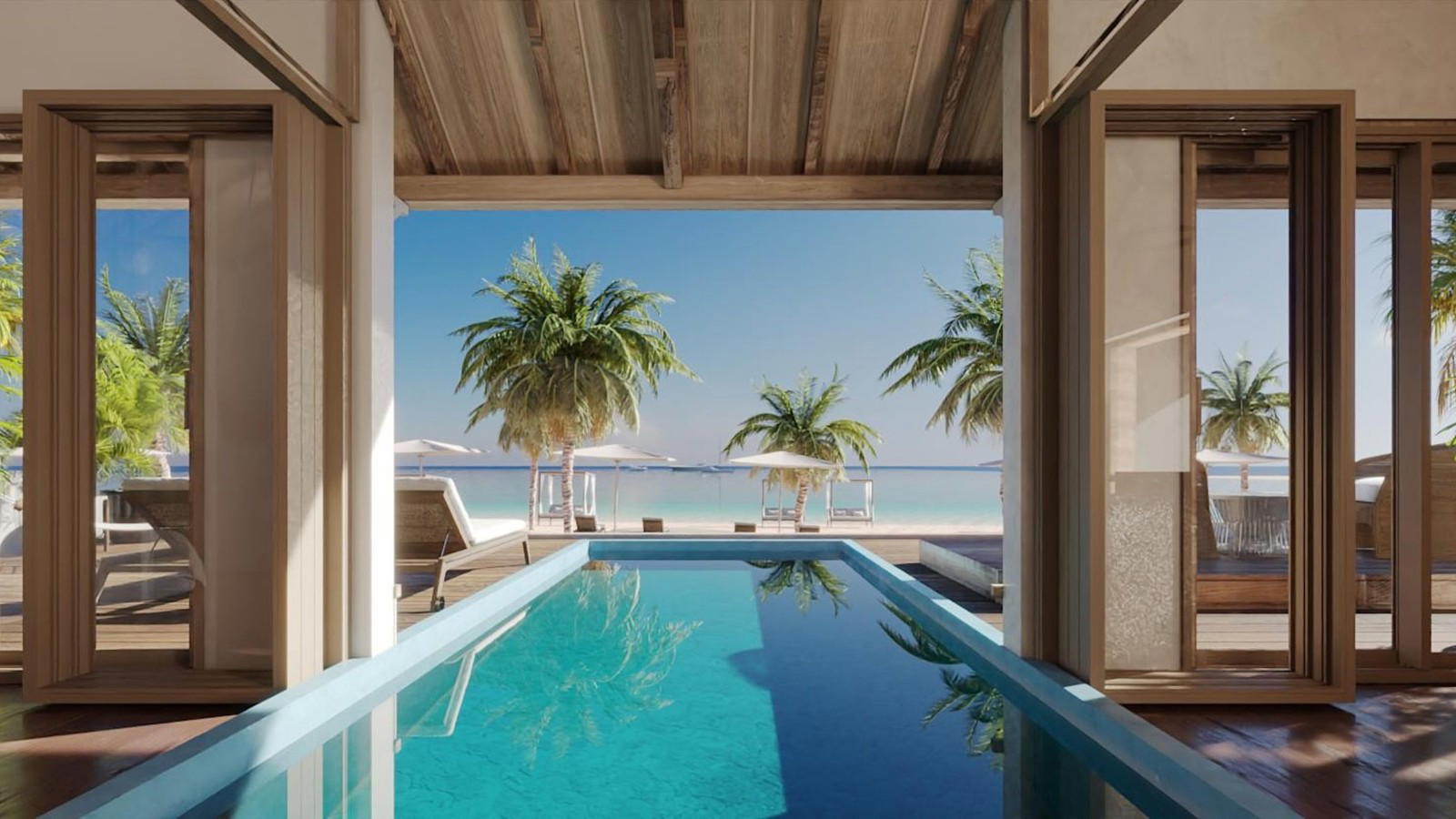
Details
- Scenic
- Elegant
- Family Vacation
- Romantic Getaway
- Weekend Escape
- Beachfront
- Private Villa
- Infinity Pool
- Waterfront
- Wi Fi
- Pool
- Spa
- Fitness Center
- Room Service
- Concierge
- Kids Club
- Beach Access
- Waterfront
- Garden
- Wheelchair Accessible
- Elevator
- Accessible Parking
Luxurious beachfront setting with soundproofed rooms, Arabesque styling, and relaxing spa atmosphere featuring saunas and steam rooms.