Daios Cove


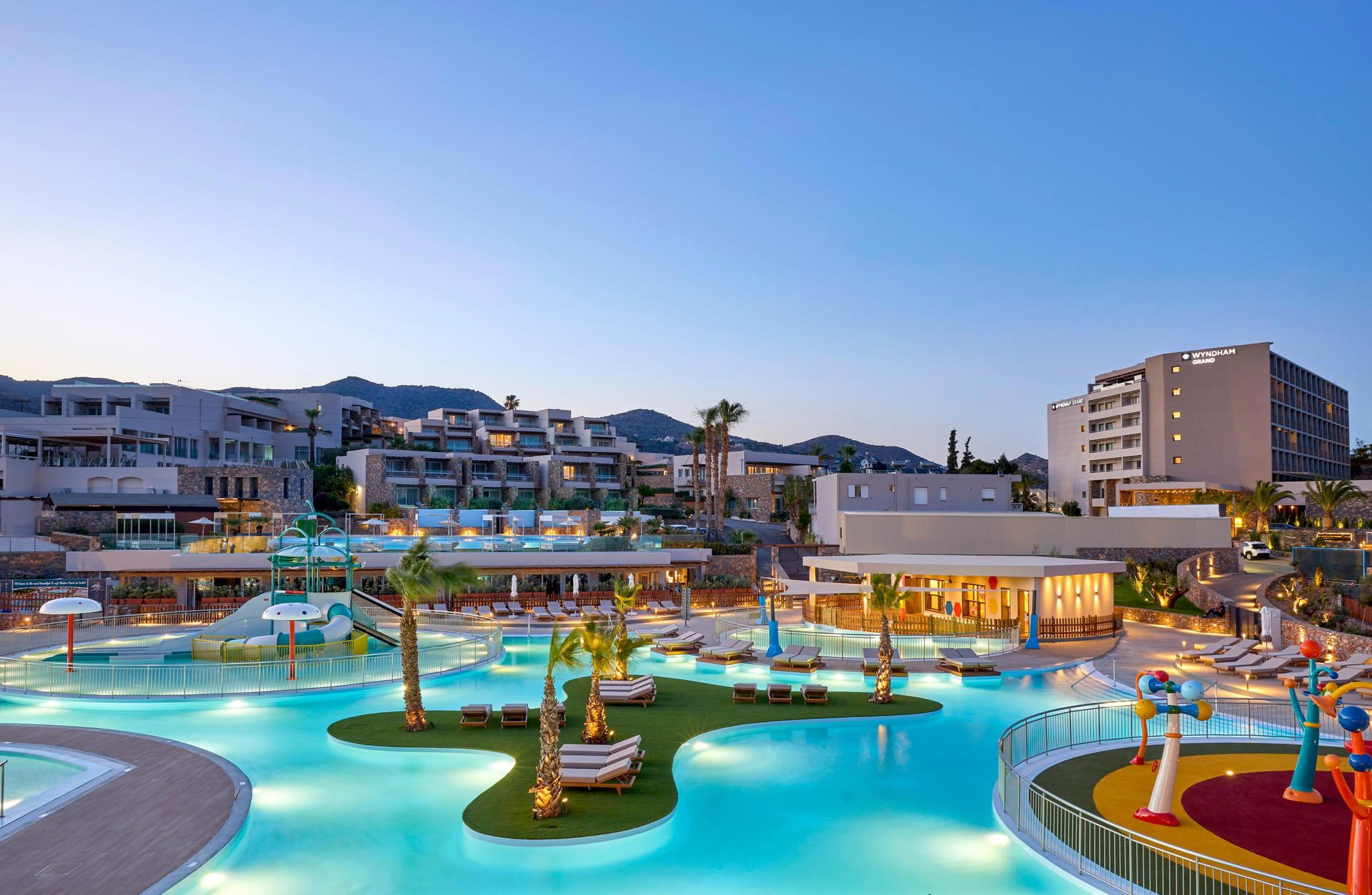
Daios Cove occupies a private cove in Vathi, on the eastern flank of Crete near Agios Nikolaos, where five-star accommodation meets architecture designed to recede into the surrounding rock and hillside rather than compete with it. Six dining and bar venues, a 2,500sqm wellness facility operated in partnership with Goco, and direct access to a secluded private beach position it firmly in the design-led, low-footprint tier of Greek luxury hospitality.
Pearl is the En Primeur Club membership app — saves, bookings, and concierge access live there. Same editors, same standards.
- Address
- Vathi
- Phone
- +30 2841 062600
- Directions
- Get directions
 Saves & bookings on Pearl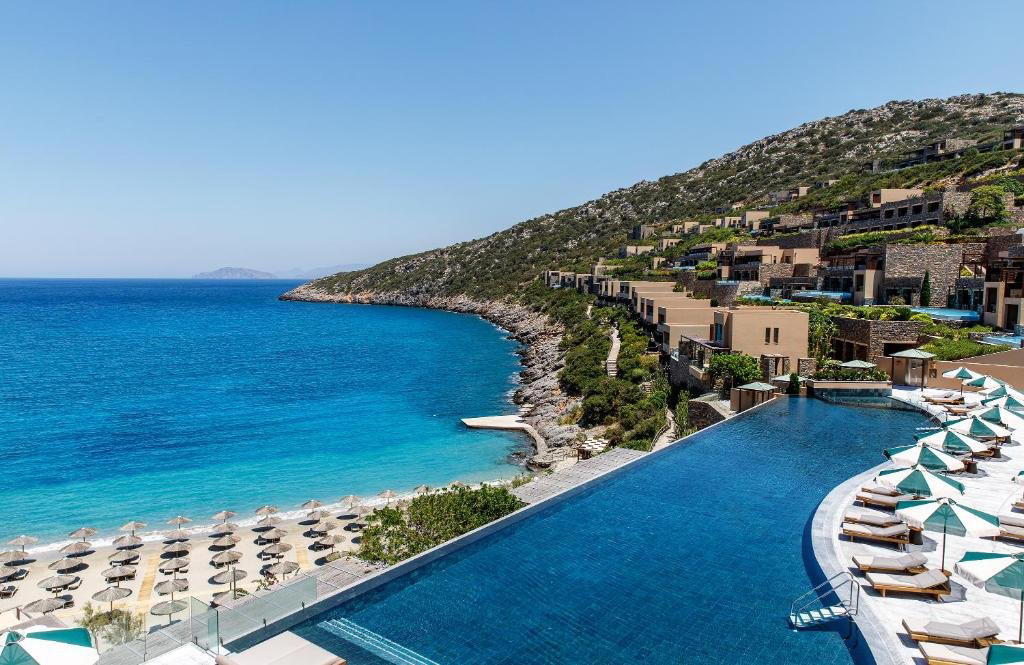
Architecture That Borrows From the Coastline
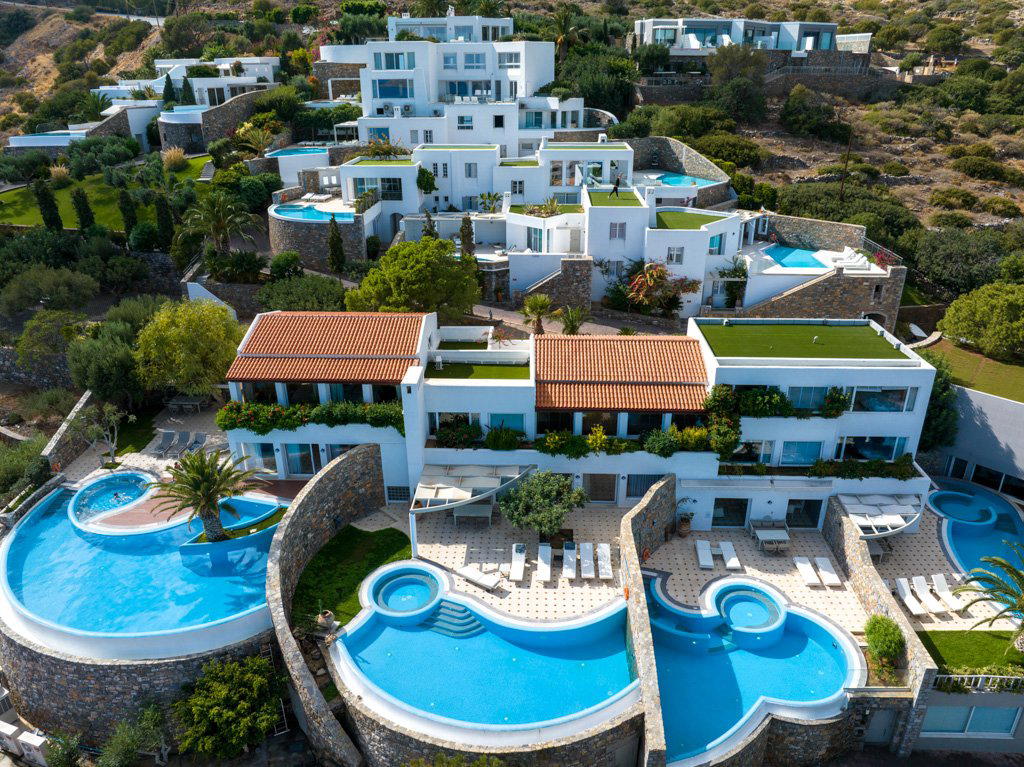
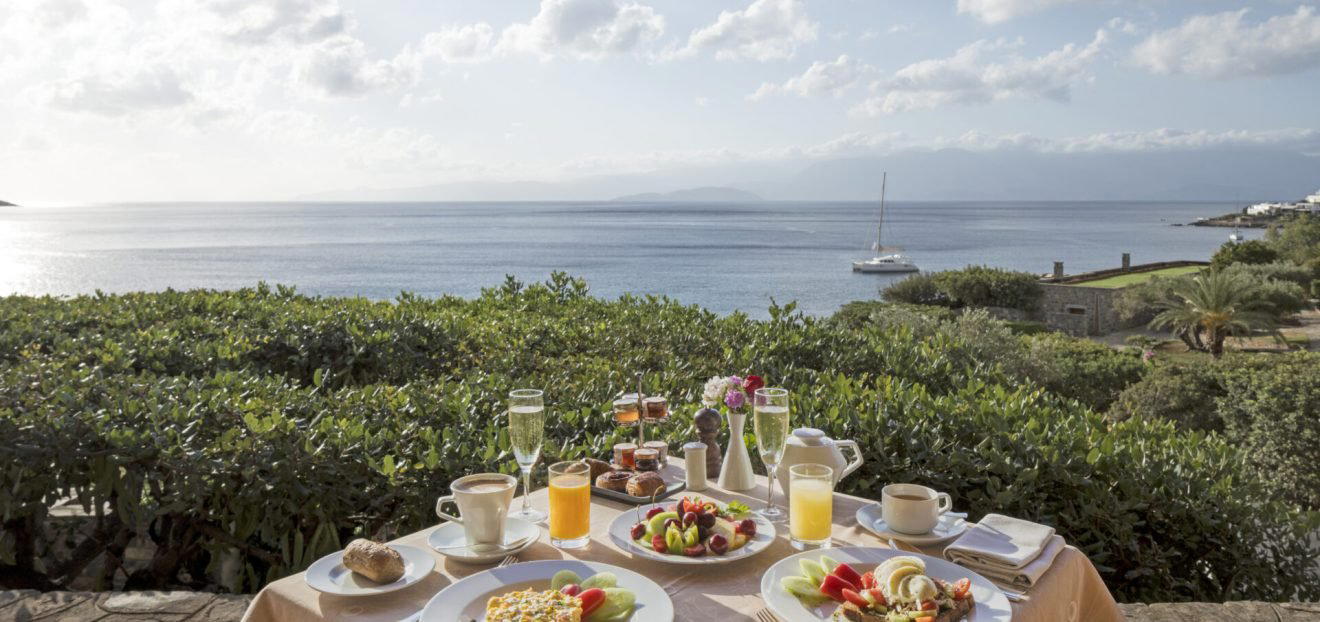
The eastern coast of Crete between Agios Nikolaos and Sitia holds some of the island's most severe and least-developed terrain: limestone ridges dropping sharply into water of unusual depth and clarity. It is precisely this geography that shapes the logic of Daios Cove's physical form. Where many large Greek resort complexes impose themselves on a site, flattening and regularising the terrain to accommodate volume, the architecture here works differently. Structures follow the gradient of the hillside at Vathi, a private cove that was always going to resist the kind of horizontal development common to flatter stretches of the Cretan coast. The result is a resort that reads as a series of terraced forms rather than a single sprawling footprint, each level retaining line-of-sight to the Aegean below.
This approach to siting, adapting the built environment to topography rather than overriding it, is a design philosophy that has become increasingly significant in Greek luxury hospitality. Properties like Amanzoe in Porto Heli have built their entire identity around it, and the design-led segment of the Greek market now treats landscape integration as a baseline expectation rather than a premium feature. Daios Cove operates within that expectation, with architecture that uses the rugged surroundings as material rather than obstacle.
The lobby sets the tone early. Placement of artwork is deliberate and editorial: hand-selected pieces sit alongside contemporary furnishings in a sequence that functions more as a curated interior passage than a conventional hotel arrival. That attention to the detail of object placement carries through the public spaces and reflects a consistent aesthetic position rather than decorative improvisation.
The Wellness Building as Anchor
Following a complete redesign, the KĒPOS by Goco facility has become the structural centrepiece of Daios Cove's non-beach offering. At 2,500 square metres (approximately 27,000 square feet), it operates at a scale that places it well above the standard hotel spa format, where a handful of treatment rooms and a sauna constitute the full programme. The facility carries credentials that are specific and verifiable: treatment rituals built around 111SKIN and [comfort zone] product lines, and a fitness programme delivered in partnership with BXR London, the Mayfair boxing and performance gym with a client base drawn from professional sport. These are not generic wellness partnerships. BXR has a documented methodology and a comparable set that sits considerably above resort gym consultancy. The combination signals a facility oriented toward performance and recovery rather than passive relaxation alone.
The physical position of KĒPOS by Goco amplifies this. Views from the wellness building extend across the bay at Vathi, making the spatial experience of treatment and training continuous with the wider setting. In a market where wellness provision at premium Greek resorts has expanded significantly, the facility's size, its named partners, and its post-redesign positioning distinguish it within the local competitive set. For context, Abaton Island Resort & Spa in Chersonisos represents another Cretan property taking wellness infrastructure seriously, though the two sit in different geographic and design contexts.
Six Venues and the Question of Dining Coherence
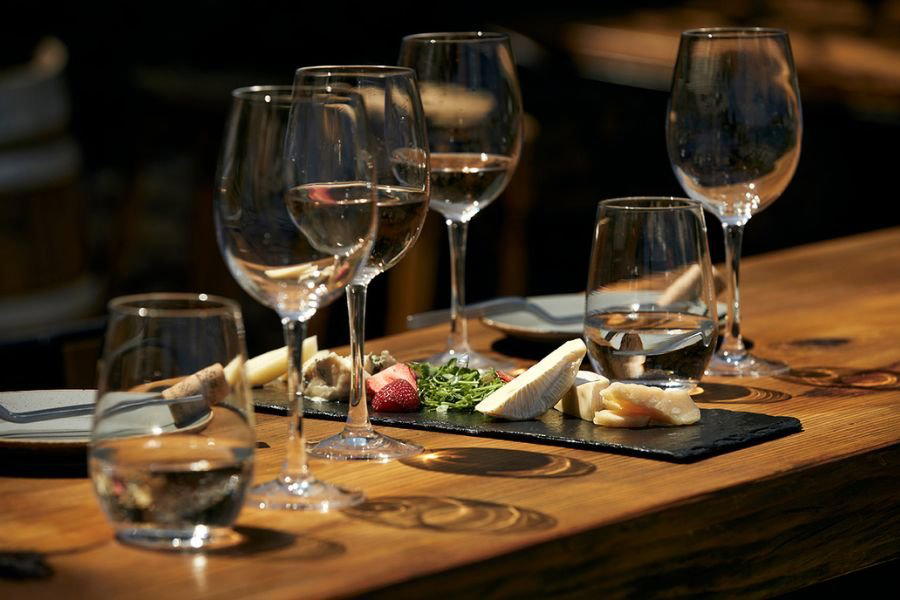
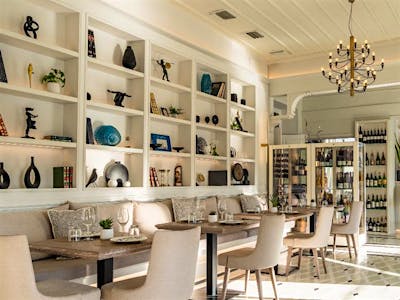
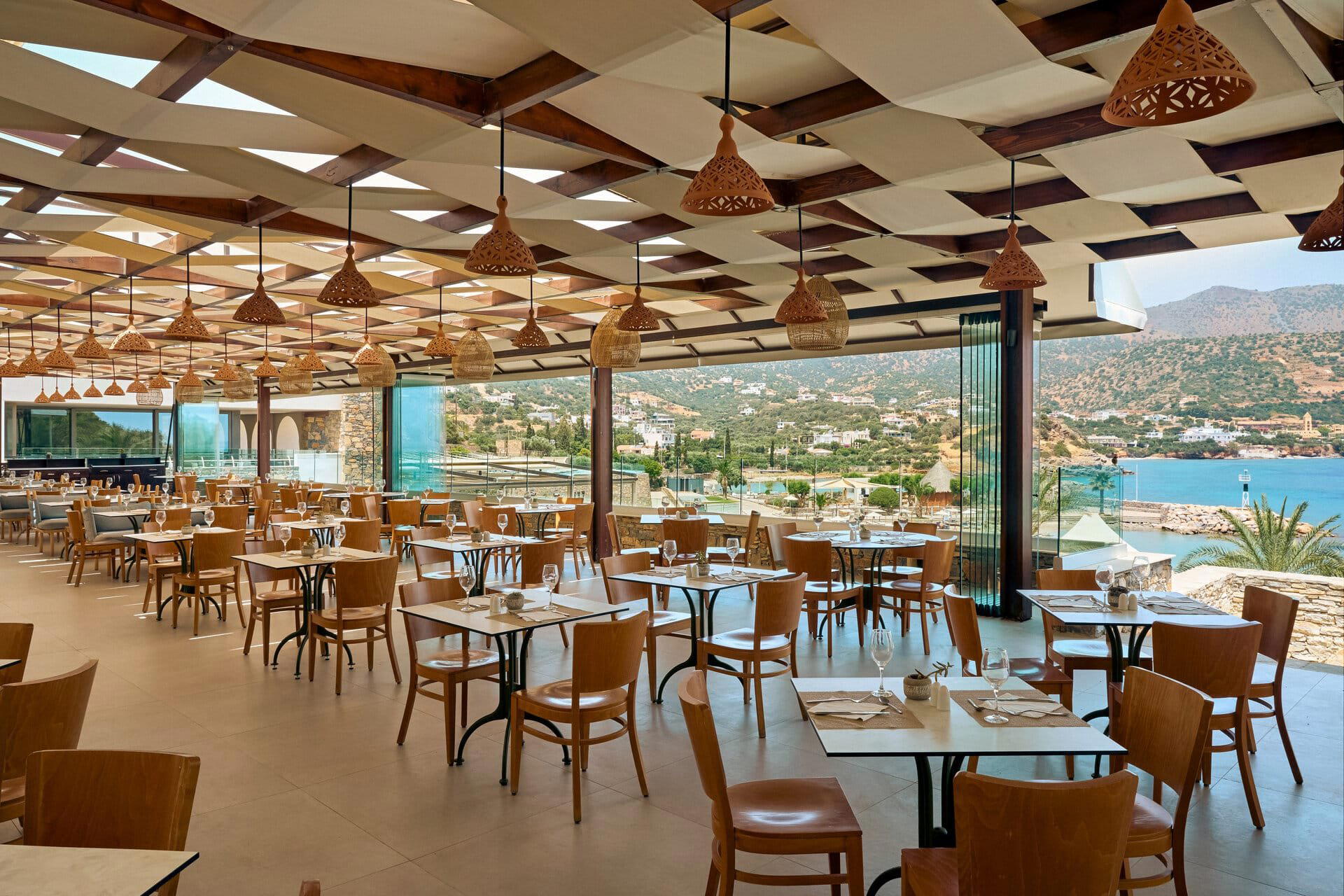
Six restaurants and bars across a single property is a format that raises an immediate editorial question: does the number represent genuine culinary range, or does it dilute focus across a set of venues that are functionally interchangeable? What can be assessed is the structural logic: a five-star resort on a private cove in eastern Crete, with no walkable restaurant alternatives immediately adjacent, has both the obligation and the opportunity to make dining self-sufficient. Six venues, correctly differentiated, create the conditions for a guest to eat and drink across a week without repetition. The test is always in the execution rather than the count.
Agios Nikolaos as a wider dining reference point sits at a different level of depth than Heraklion or Chania. The town has a credible taverna and seafood tradition, and the lake-to-harbour district produces reliable settings for Cretan cooking, but it does not function as a destination dining city. A resort at this price tier needs to supply what the surrounding area cannot, which is a degree of formal and creative ambition in the kitchen.
Situating Daios Cove in the Greek Luxury Market
Greek luxury hospitality has, over the past decade, split into recognisable tiers. At the leading end, a small set of properties compete on design singularity, low key count, and amenity depth rather than on beach-club volume or ballroom scale. The hotel belongs to a particular subtype within this group: the large-footprint, multi-amenity resort that nonetheless secures its premium positioning through location inaccessibility and architectural coherence rather than through boutique restraint. The private cove setting at Vathi is not replicable; no new-build could locate itself there. That geographic irreplaceability is itself a form of competitive moat.
The comparison set within Crete includes properties like Milatos Marriott Resort Crete in Milatos and Amirandes, A Grecotel Resort to Live in Heraklion, both of which operate at volume with strong amenity provision. The hotel's differentiator within this group is the cove itself and the terraced architecture that responds to it, rather than scale or brand affiliation. Elsewhere in Greece, properties pursuing similar design-integrated positioning include Acro Suites in Agia Pelagia, Gundari in Petousis, and at the islands, Eréma in Milos. Within Agios Nikolaos specifically, St. Nicolas Bay Resort Hotel & Villas operates as the closest local peer in terms of positioning, though it sits on a different stretch of coastline with a different architectural character.
For travellers calibrating the hotel against broader Mediterranean luxury, the relevant comparison points extend beyond Greece. Properties like Le Méridien Sissi Crete in Sissi occupy the international-brand tier of the same island market, while at the Cyclades end, Amoudi Villas in Oia and Andronis Minois in Paros represent the design-led, island-specific model. The hotel's Cretan mainland-coast positioning gives it a different character from Cycladic cliff-face properties, with more physical space and a more active amenity set.
A Quick Peer Check
Comparable venues nearby, for context on price, style, and recognition.
| Venue | Cuisine | Price | Awards | Notes |
|---|---|---|---|---|
| Daios CoveThis venue — the venue you are viewing | Boutique luxury resort seamlessly blended into rugged coastal landscape | $$$$ | 5-Star | Not listed |
| St. Nicolas Bay Resort Hotel & Villas | Luxury beachfront resort with bungalows and private villas | $$$$ | 5-Star | Agios Nikolaos |
| Elounda Bay Palace | Luxurious beachfront resort set in semi-tropical gardens | $$$$ | 5-Star | Elounda |
| Cosme, a Luxury Collection Resort, Paros | Village-style luxury resort blending Cycladic architecture with modern Mediterranean elements | $$$$ | 5-Star | Naoussa |
| Avaton Luxury Beach Resort | Contemporary luxury beach resort | $$$$ | 5-Star | Ouranoupoli |
| Numo Ierapetra Beach Resort, Crete | Barefoot luxury resort renovated in 2021 with low-profile buildings cascading to the beach. | $$$$ | 5-Star | Ierapetra |
Recognition history
Dated appearances from independent guides and award organizations, with the underlying list record or original source where available.
Mr & Mrs Smith Smith Seal of Approval
Mr & Mrs Smith
Virtuoso Luxury Hotel Partner
Virtuoso
Michelin Selected
Michelin
Continue exploring
More in Agios Nikolaos
Hotels in Agios Nikolaos
Browse all →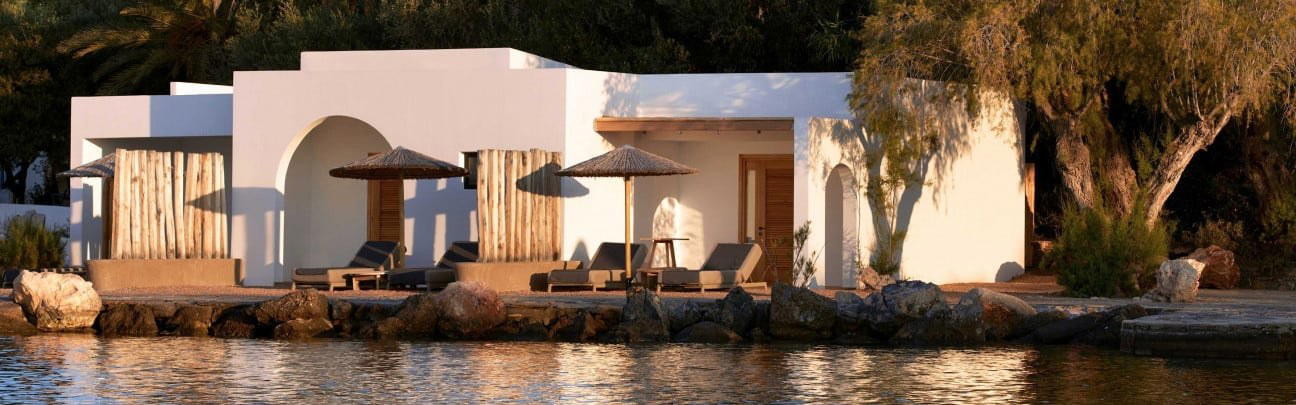
Bars in Agios Nikolaos
Browse all →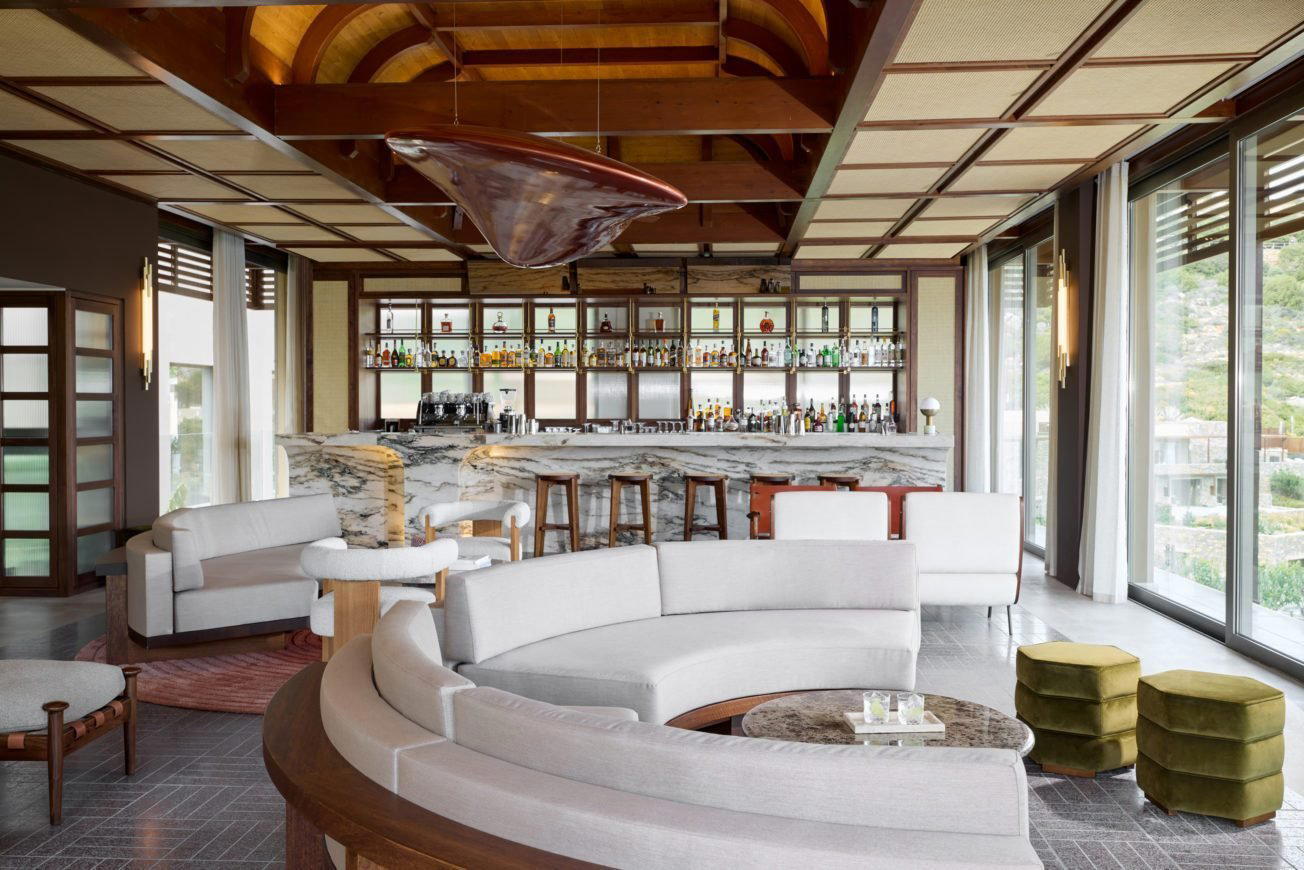
At a Glance
- Elegant
- Sophisticated
- Scenic
- Romantic
- Honeymoon
- Romantic Getaway
- Family Vacation
- Wellness Retreat
- Beachfront
- Infinity Pool
- Private Villa
- Destination Spa
- Panoramic View
- Wi Fi
- Pool
- Spa
- Fitness Center
- Room Service
- Concierge
- Business Center
- Valet Parking
- Kids Club
- Beach Access
- Tennis
- Waterfront
- Garden
- Wi Fi
- Pool
- Spa
- Fitness Center
- Room Service
- Concierge
- Business Center
- Valet Parking
- Kids Club
- Beach Access
- Tennis
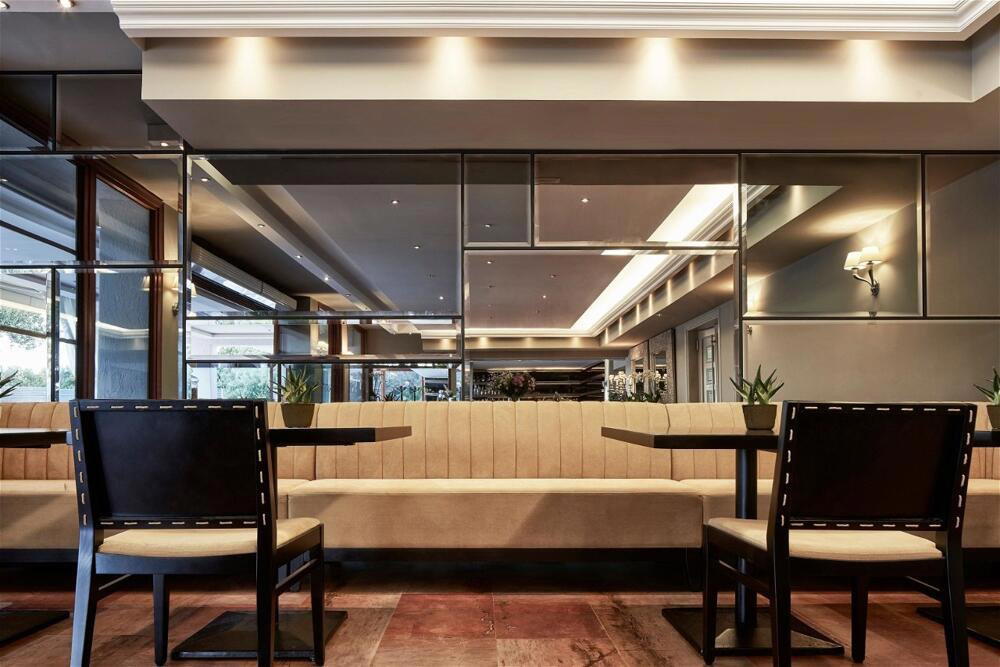
Sophisticated lighting with refined colors, plush fabrics, and chic vibes creating a serene, luxurious atmosphere.