That makes it a useful case for reading Adelaide’s hotel scene through context rather than claims, especially for travellers comparing city hotels, wine-country estates, and design-led Australian stays.

Pearl is the En Primeur Club membership app, where members save venues, book tables and use the concierge.
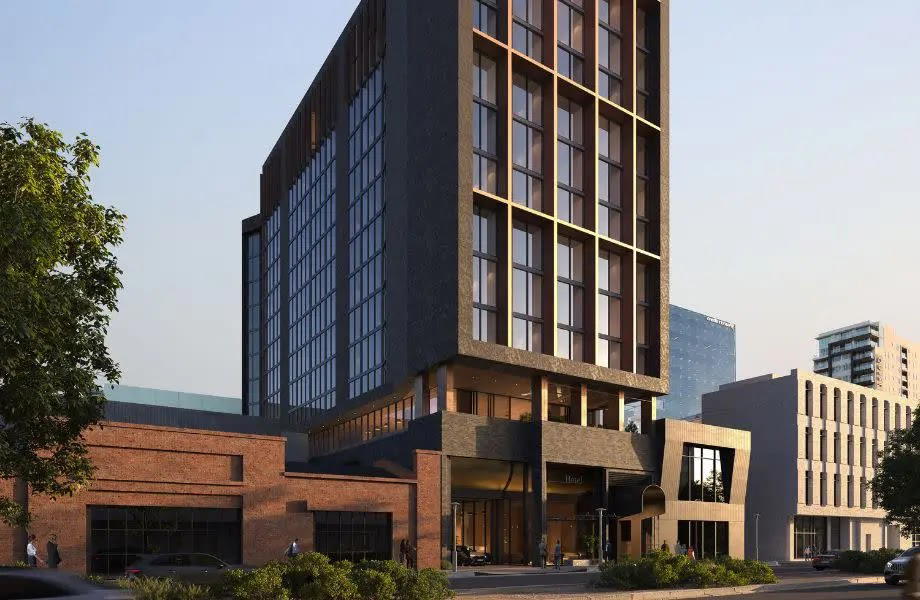
Adelaide's hotel question begins with scale, not spectacle
Approaching Adelaide as a traveller, the first impression is rarely about height or theatrical arrival. The city works at a lower register: broad streets, parklands, sandstone civic buildings, compact laneways, and a centre that moves quickly from government precincts to markets, university edges, and riverfront entertainment. That physical rhythm matters when assessing any hotel here. Adelaide does not ask a property to compete with the vertical drama of Sydney Harbour or the resort energy of the Gold Coast. It asks whether the building gives a guest an intelligent base for food, wine, culture, and the short transfers that define South Australian travel.
That absence should not be filled with invented certainty. Instead, it sharpens the editorial question: how should a premium traveller evaluate an Adelaide hotel when the usual signals, awards, published rates, chef names, branded design language, are?
The answer is comparison. Adelaide’s accommodation market splits into several clear strands. There are central business hotels built for proximity and convention traffic; riverfront and stadium-adjacent properties that use event access as their core advantage; art-led or residentially scaled stays in quieter districts; and Adelaide Hills estates that trade the city grid for vineyard and garden atmosphere. Within EP Club’s Adelaide hotel coverage, that means reading Crystalbrook Sam Hotel alongside city comparators such as Adelaide Marriott, Amora Adelaide, Art Series - The Watson, Eos by SkyCity, and Oval Hotel at Adelaide Oval, rather than treating the name alone as evidence.
Design in Adelaide is judged by restraint and usefulness
Australian city hotels often borrow luxury language from larger markets: imported stone, lobby theatre, name-brand restaurants, rooftop bars, and spa floors. Adelaide rewards a different discipline. The city’s strongest hospitality spaces tend to understand proportion, light, and access. A hotel lobby that works here is not merely a waiting room; it should orient a guest toward the city’s day-to-night pattern: Central Market mornings, North Terrace cultural hours, late restaurant bookings, and wine-region departures that may begin early.
That is why architecture and design carry more weight than decorative claims. The design question remains open. Travellers should look for evidence that the building handles Adelaide’s practical demands: a location that does not waste time, room layouts suited to short city stays or longer wine trips, and public spaces that serve actual use rather than staged photography.
For design-led context, Adelaide has nearby reference points with clearer editorial positions. Mount Lofty House & Estate and Sequoia Lodge shift the conversation into the Adelaide Hills, where landscape, cellar-door access, and retreat pacing change the definition of luxury. Thorngrove Manor belongs to a more idiosyncratic heritage-fantasy category, where architecture itself becomes the stay’s central argument. In the city, by contrast, the stronger test is whether the hotel gives a traveller frictionless access to Adelaide’s eating, drinking, galleries, and event calendar.
The city's hospitality scene is shaped by food and wine before room service
Adelaide is unusual among Australian capitals because its premium identity is so closely tied to what sits outside the hotel room. The Barossa, McLaren Vale, Adelaide Hills, Clare Valley, and Langhorne Creek create a wine culture that reaches into restaurant lists, bar programmes, and guest itineraries. That does not mean every hotel needs a destination restaurant. It means a hotel has to understand that guests may be planning around cellar-door appointments, producer dinners, festival dates, or a restaurant table rather than around a resort-style day inside the building.
That limits any claim about its food and beverage identity. In Adelaide, the lack of verified dining detail matters because restaurant access often defines the value of a central stay.
For planning the wider trip, the hotel decision should be paired with the city’s separate food and drink research. EP Club’s full Adelaide restaurants guide gives the restaurant layer, while maps the after-dinner circuit. Wine-focused travellers should add, and those building a cultural itinerary can use the Adelaide experiences guide. In this city, those categories are not extras; they are often the reason the hotel booking exists.
How to position Crystalbrook Sam Hotel against Adelaide peers
That distinction matters. A five-star claim, a published nightly rate, a Michelin-adjacent restaurant, a national hotel award, or a documented design practice would all shift the assessment. None is present here. The hotel is therefore better treated as a listing requiring confirmation rather than a fully assessed editorial recommendation.
That does not make the listing irrelevant. It makes the comparison more precise. If a traveller needs a city-centre base, especially properties with clearer positioning around business access, entertainment precincts, or design identity. If the trip is built around wine country and slower pacing, the Adelaide Hills and estate properties become more persuasive. If the trip is built around an event, riverfront or stadium-adjacent locations may carry greater value than room size or brand language.
The same logic applies at national level. Australia’s premium hotels have split into several recognisable families: heritage conversions, urban lifestyle hotels, coastal resorts, and remote lodges. The Tasman in Hobart uses a layered heritage setting as part of its appeal. Capella Sydney in Sydney operates in the grand civic-building category. The Calile in Brisbane is often discussed through climate, courtyard life, and urban resort design. Southern Ocean Lodge in Kingscote and Emirates One&Only Wolgan Valley in Wolgan Valley belong to the lodge-and-land setting.
What the missing details tell a careful traveller
Missing data is not a flaw to disguise; it is a signal to manage. The record does not list a phone number or website, so booking policies cannot be confirmed here. It does not list hours, so check-in windows, bar opening times, restaurant service, and spa access cannot be inferred. It does not list a price range, so value cannot be judged against Adelaide’s event surges or festival periods. It does not list awards, so recognition cannot be used as a trust signal. It does not list room categories, so there is no verified signature room.
For premium travel planning, that level of uncertainty changes the sequence. A traveller should first verify the hotel’s official channel, address, room inventory, cancellation terms, and any design or dining claims directly from a current source. Only then does it make sense to compare it against Adelaide’s more documented options. In periods such as Adelaide Festival, WOMADelaide, major sporting fixtures, and harvest-season wine travel, central rooms can become more expensive and less flexible. That seasonal pressure is a city-level pattern, not a venue-specific booking policy, but it is relevant when price data is absent.
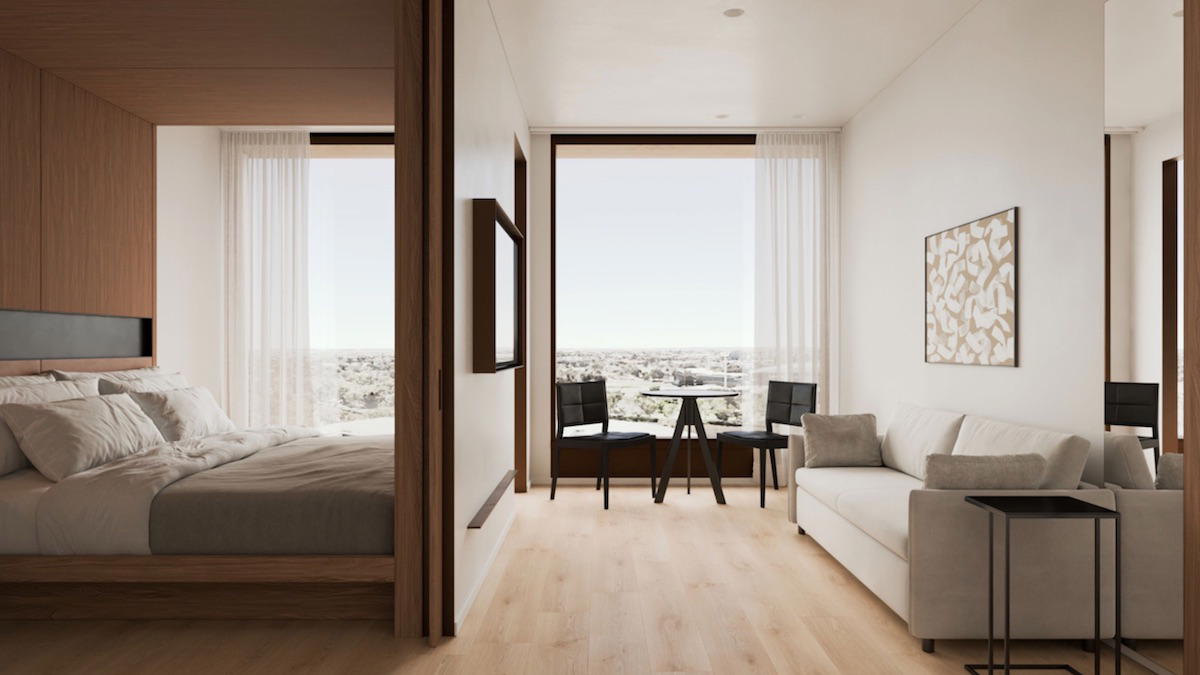
Design-minded travellers should be especially strict. Rendered images and short brand phrases are not enough. Ask what the building actually offers: natural light, acoustic comfort, bathroom configuration, desk space, parking or transfer practicality, and distance to the parts of Adelaide that matter for the trip. A hotel can look persuasive in a cropped lobby image and still fail at the daily logistics of a three-night city stay.
Beyond Adelaide: where the comparison becomes clearer
Crystalbrook Sam Hotel is easiest to evaluate after the trip’s purpose is fixed. A restaurant-led weekend needs different evidence from a wine-region itinerary, and a design-focused stay needs different evidence again. This is where broader Australian and international comparisons help discipline the choice. JW Marriott Gold Coast Resort & Spa in Surfers Paradise sits in a resort-service category. Melbourne Place in Melbourne speaks to the dense urban hotel model. Mondrian Gold Coast in Gold Coast belongs to a branded lifestyle conversation. Osborn House in Bundanoon shifts toward regional retreat culture. Each of those categories asks different questions of architecture, food, and guest flow.
Internationally, the contrast becomes even sharper. The Fifth Avenue Hotel in New York City operates in a high-density, design-conscious urban market where address and interior identity carry heavy weight. Hôtel de Paris Monte-Carlo in Monte Carlo belongs to a palace-hotel tradition shaped by service history and civic theatre. Badrutt's Palace Hotel in St. Moritz is tied to alpine seasonality and long-established resort culture. Adelaide is not trying to imitate those models. Its stronger hotel experiences usually understand the city’s compactness and its connection to wine regions rather than importing borrowed grandeur.
Planning notes for a low-certainty listing
For Crystalbrook Sam Hotel, the practical advice is necessarily conservative. Treat those omissions as checks to complete before committing. If the stay is time-sensitive, confirm the address first, then test it against the itinerary: restaurant bookings, festival venues, train or airport transfers, and any wine-region departure point. If design is the reason for interest, request current room images and written confirmation of the room category being booked. If budget is the concern, compare live rates across documented Adelaide peers rather than assuming a category from the name.
The editorial position is measured: Crystalbrook Sam Hotel may prove relevant for an Adelaide stay, but the supplied data does not support claims about luxury tier, design significance, dining quality, chef credentials, awards, or signature rooms. In a city where the hotel often functions as the hinge between restaurants, bars, galleries, and wine country, that verification work is not administrative detail. It is the difference between a coherent Adelaide itinerary and a booking made on incomplete evidence.
How It Compares
Comparable venues nearby, for context on price, style, and recognition.
| Venue | Cuisine | Price | Awards | Notes |
|---|---|---|---|---|
| Crystalbrook Sam HotelThis venue (the venue you are viewing) | Luxury, sustainability-led urban hotel bringing Crystalbrook’s forward-thinking five-star hospitality to Adelaide. | Not listed | Not listed | Not listed |
| Mount Lofty House & Estate | Historic boutique luxury estate with modern extensions | $300–500 | 1 Michelin Key · Virtuoso Luxury Hotel Partner | Crafers |
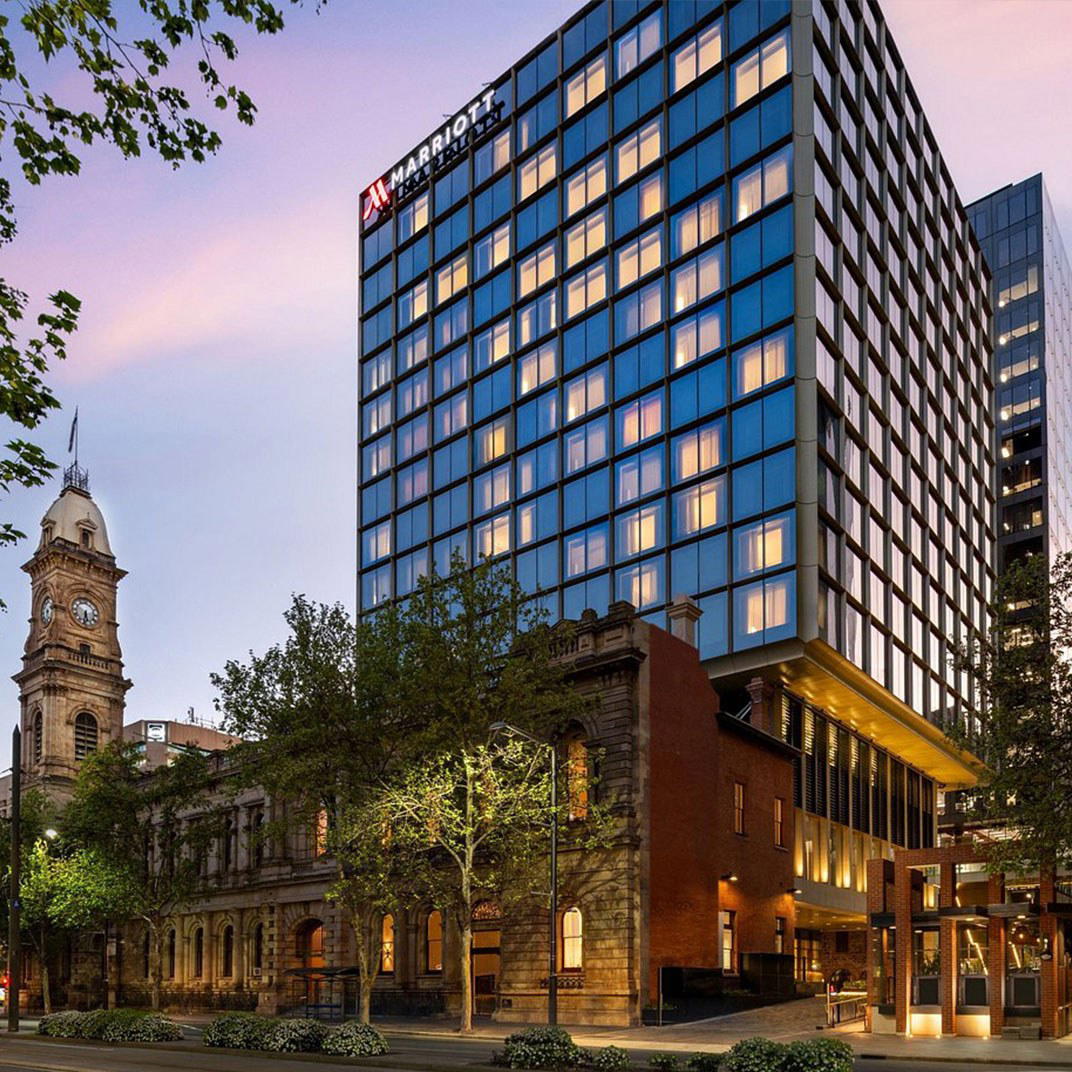
| Adelaide Marriott | Heritage luxury blending Victorian-era architecture with contemporary design in Adelaide's CBD | $200–300 | Michelin Selected | Adelaide CBD |
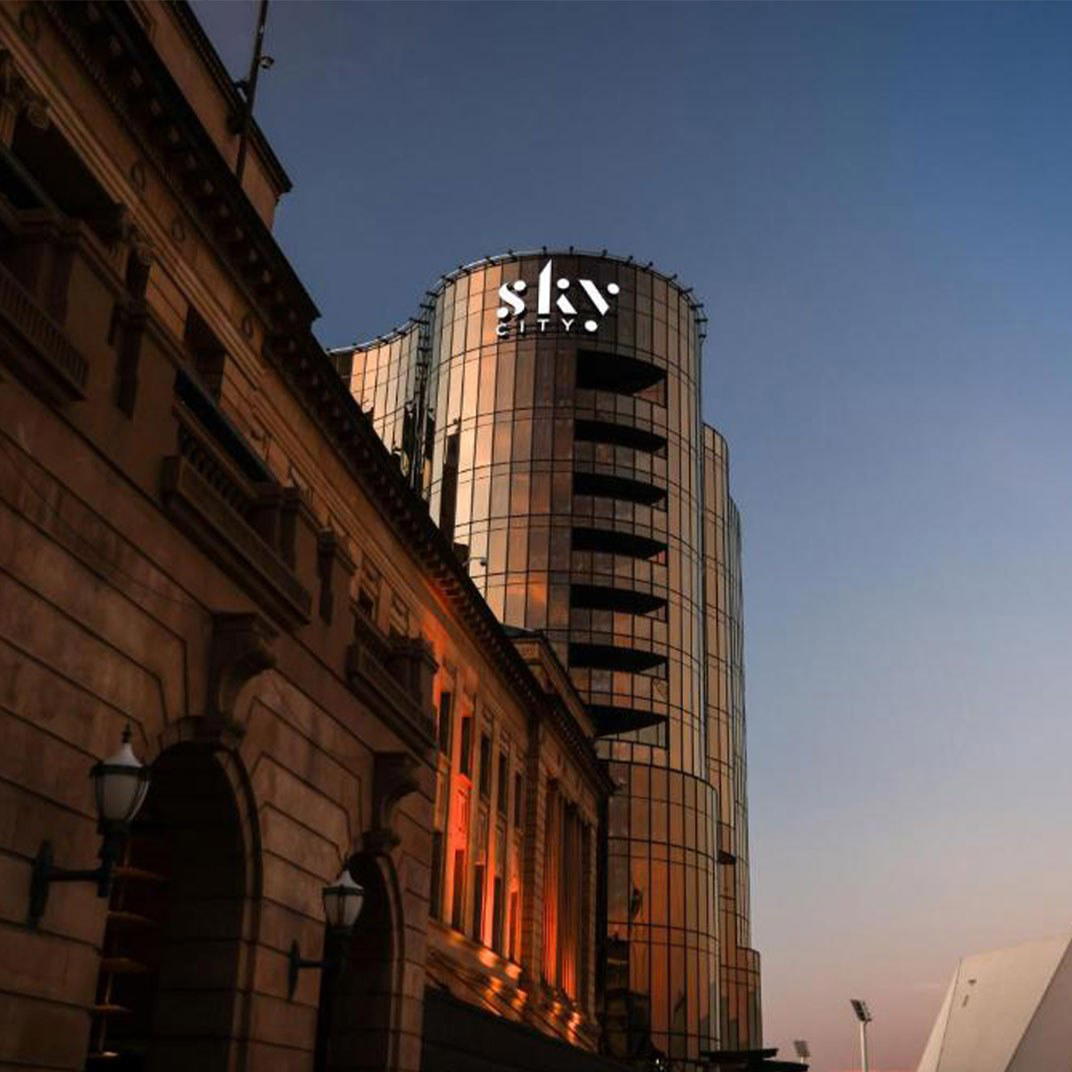
| Eos by SkyCity | Modern luxury integrated with entertainment complex, showcasing sleek design in polished gold and mirrored glass as part of major urban redevelopment. | $200–300 | Michelin Selected | Adelaide Central Business District |
| Oval Hotel at Adelaide Oval | Boutique hotel seamlessly integrated into Adelaide Oval stadium | Not listed | Michelin Selected | North Adelaide |
| Panorama Hotel | A newly constructed, multi-venue suburban lifestyle hotel that positions itself as a total hospitality destination for dining, drinking and accommodation near Adelaide’s southern health and education hubs. | $1–100 | Not listed | Panorama |
Continue exploring
More in Adelaide
Hotels in Adelaide
All hotels in Adelaide →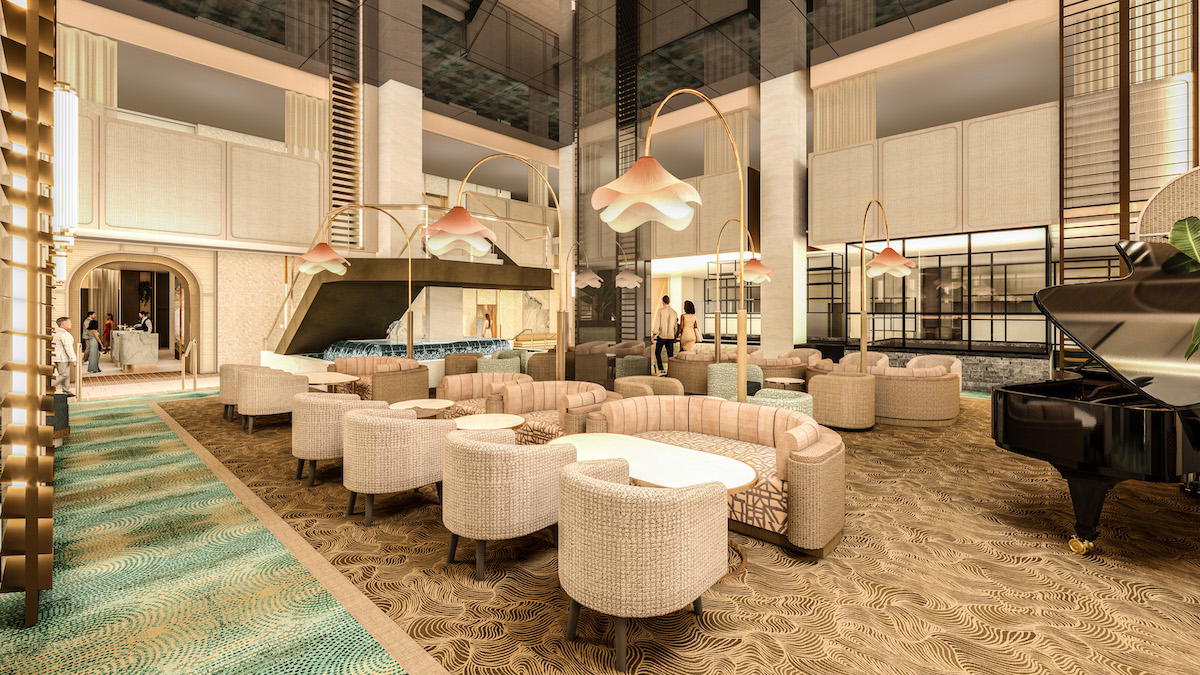
Bars in Adelaide
All bars in Adelaide →
Details
- Modern
- Sophisticated
- Energetic
- Business Trip
- Group Retreat
- Weekend Escape
- Destination Spa
- Panoramic View
- Design Destination
- Wi Fi
- Pool
- Spa
- Fitness Center
- Room Service
- Concierge
- Business Center
- Skyline
- Wheelchair Accessible
- Elevator
- Accessible Restroom
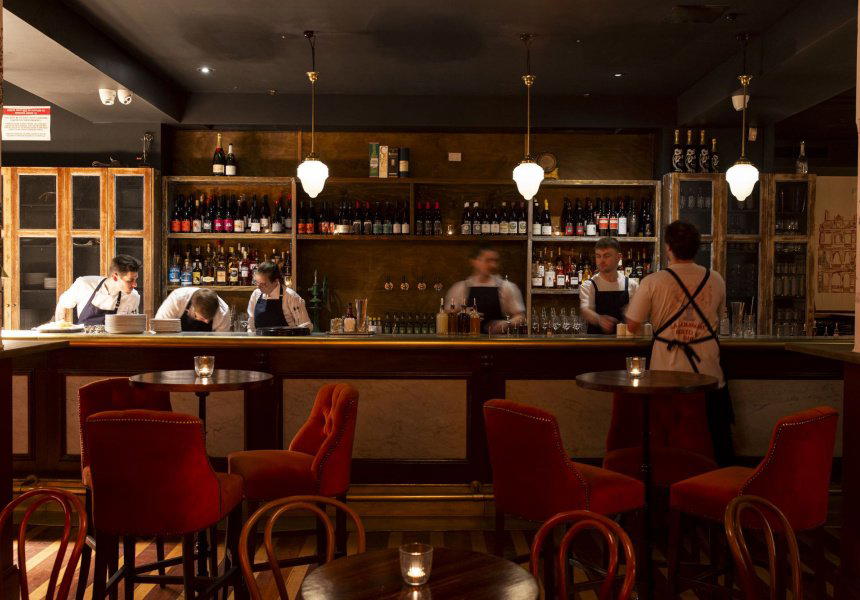
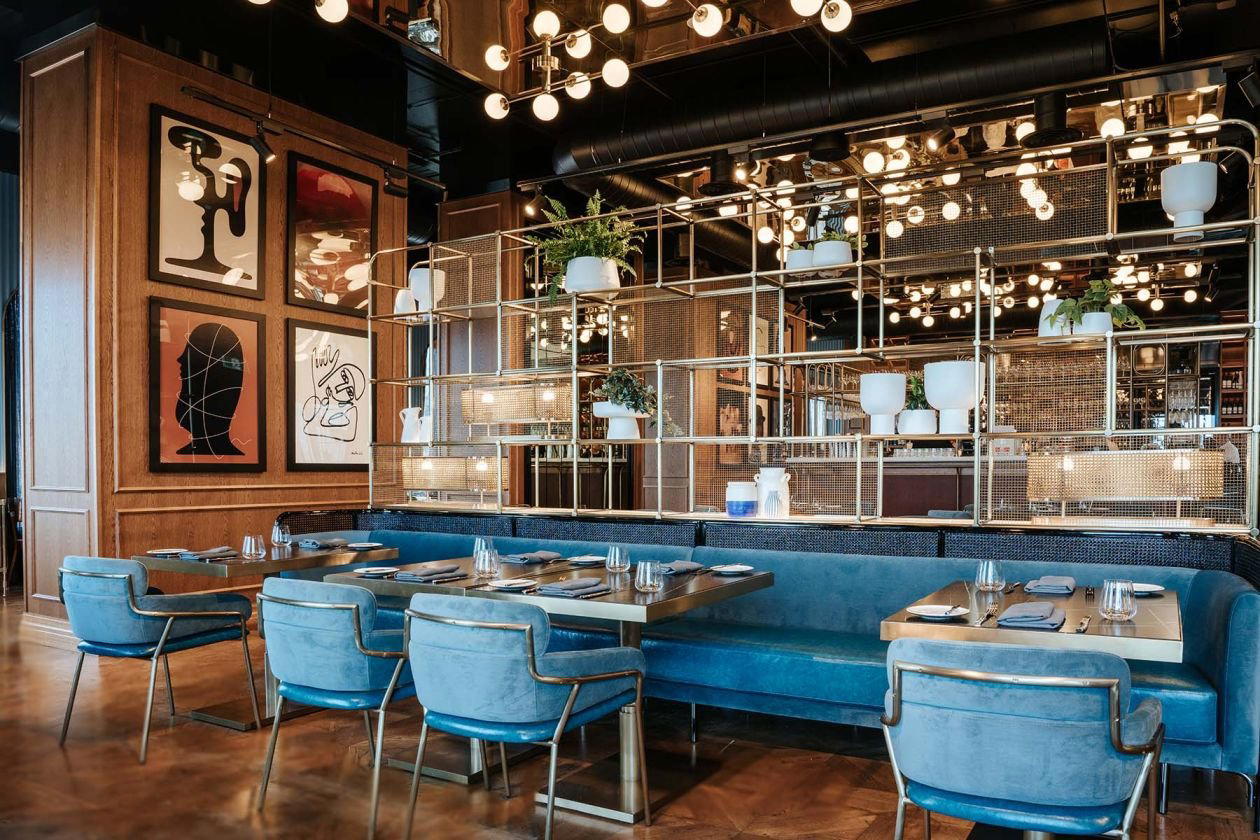
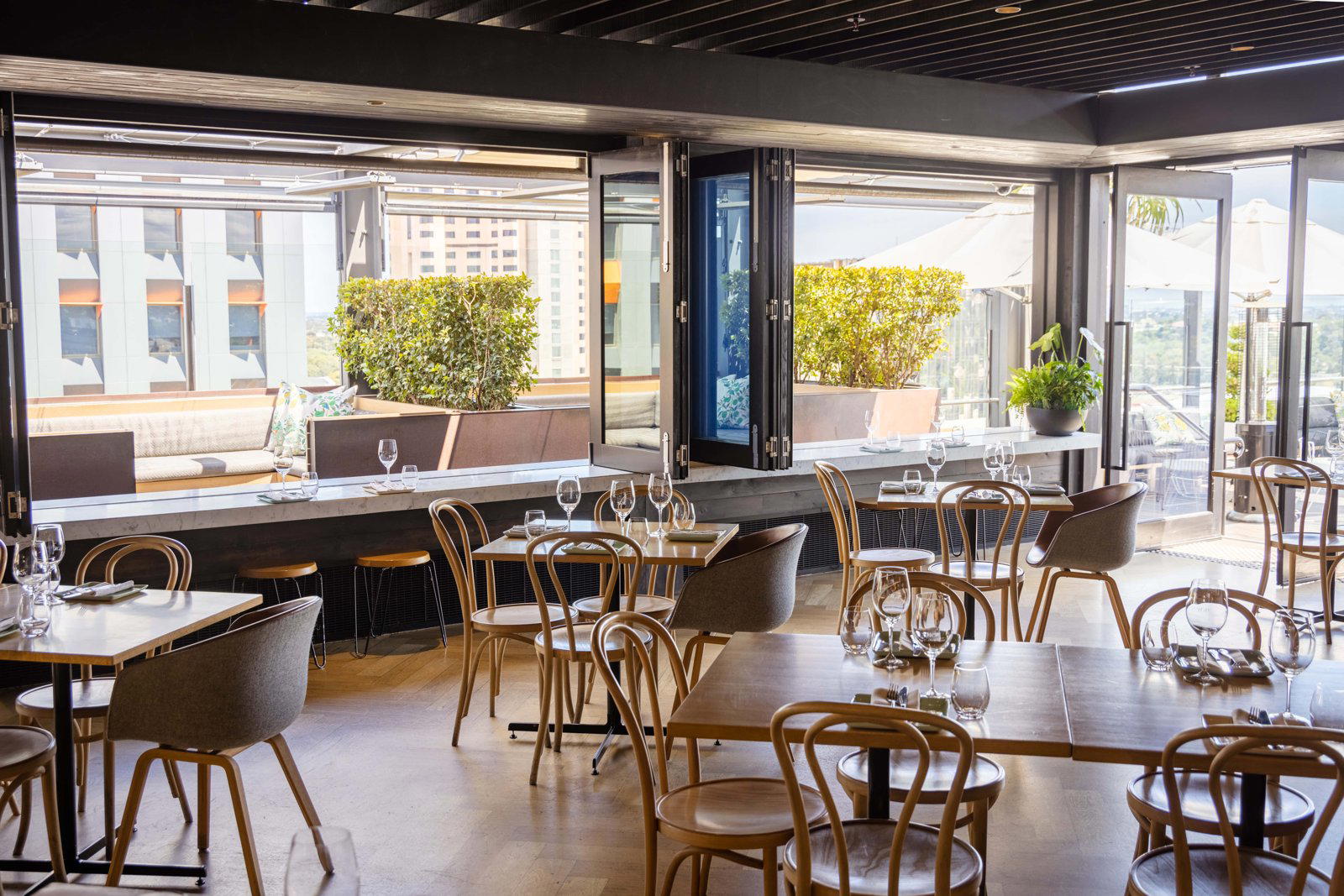
Contemporary luxury with a design-led, playful Crystalbrook feel; the planned Level 12 restaurant and panoramic CBD/Adelaide Hills views suggest a polished, polished atmosphere.