Cottonwood Inn & Suites
Positioned on US Highway 2 at the edge of Glasgow, Montana, Cottonwood Inn & Suites serves as a practical base for travelers moving through the Hi-Line corridor of the northern Great Plains. The property sits in a part of Montana where lodging options are genuinely sparse, making it a functional anchor for those heading to Fort Peck Lake, the CMR Wildlife Refuge, or the broader stretch of open country between Havre and Williston.
Pearl is the En Primeur Club membership app — saves, bookings, and concierge access live there. Same editors, same standards.
- Address
- 54250 US-2, Glasgow, MT 59230
- Phone
- (406) 228-8213
- Website
- cottonwoodinn.net
- Directions
- Get directions
 Saves & bookings on Pearl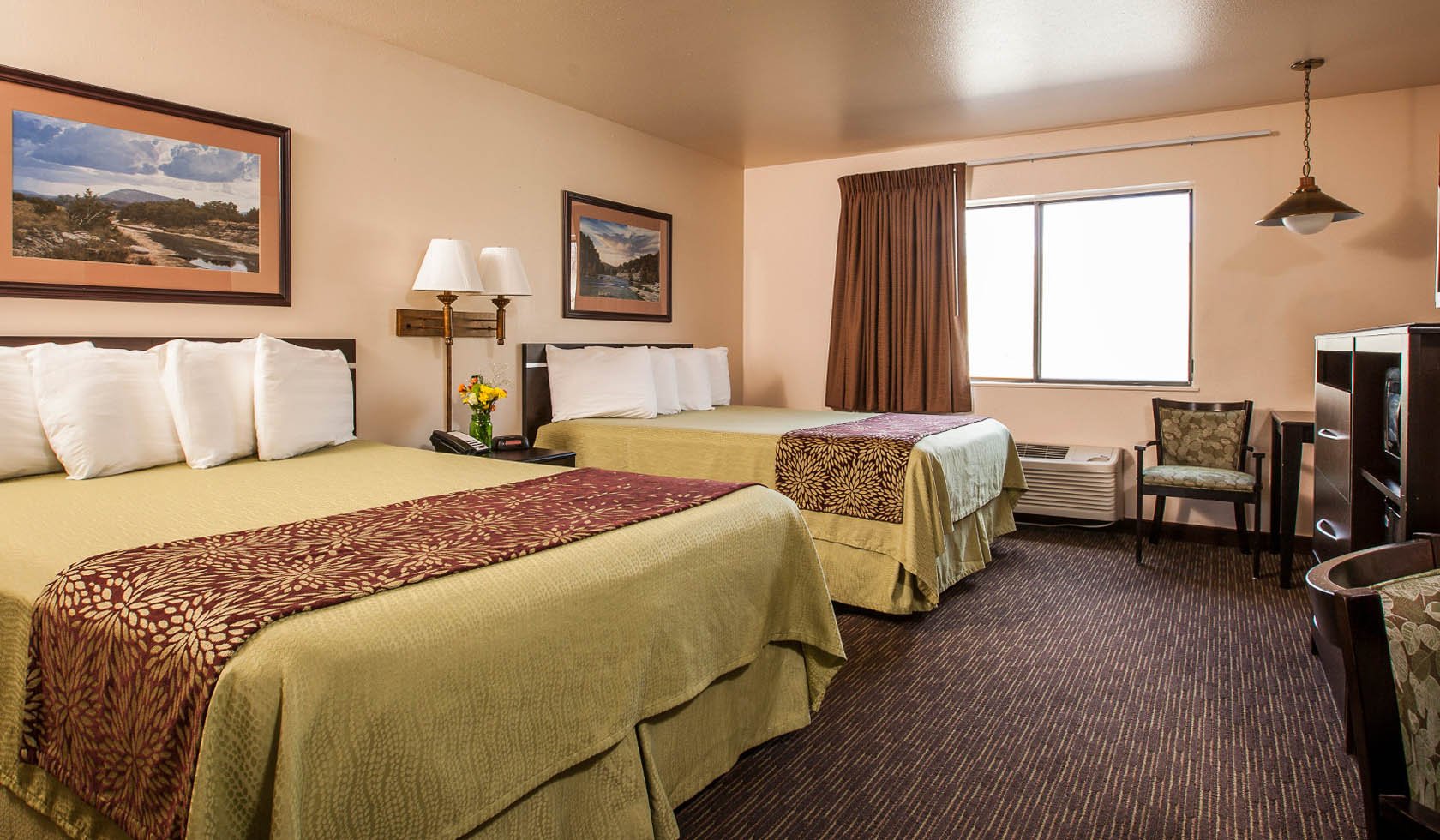
Lodging at the Edge of the Hi-Line
The northern Montana Hi-Line is one of the least-traveled corridors in the American West. US Highway 2 runs east to west along the Canadian border through a stretch of shortgrass prairie and river-bottom country that most travelers experience only as a route between elsewhere and somewhere else. Glasgow, Montana sits near the center of that corridor, a town of roughly three thousand that functions as a regional service hub for Valley County and the communities that surround Fort Peck Lake, the largest reservoir in the Missouri River system. Accommodation options in this part of the state are limited by design rather than oversight: the demand base is narrow, the visitor season concentrated around fishing, hunting, and outdoor recreation. Cottonwood Inn & Suites, at 54250 US-2, occupies a position on that highway that places it within reach of the primary reasons people stop in Glasgow.
In the broader context of American road-travel lodging, properties like Cottonwood Inn & Suites occupy a specific and useful tier. They are not destination hotels in the way that Amangiri in Canyon Point or Post Ranch Inn in Big Sur are. They exist to serve travelers who are in motion, or who need a reliable night before a morning on the lake. That functional role is not a limitation so much as a different category of hospitality, and in a county where the next option might be an hour of driving in either direction, performing that role well carries genuine value.
The Environmental Logic of Remote Lodging
There is an underappreciated sustainability argument to be made about highway-corridor lodging in low-density rural areas. When a property like Cottonwood Inn & Suites anchors overnight stays in a small regional hub, it reduces the pressure on travelers to push through longer driving windows, which has measurable effects on road safety and fuel consumption across regional corridors. The alternative, in a county with Fort Peck Lake drawing anglers and birders from across the northern plains, is often dispersed camping with variable waste-management infrastructure, or a long drive back to a larger city. A functional in-town property absorbs that load and concentrates it in a single managed location.
Montana as a state has seen increasing attention paid to how tourism intersects with conservation in its most rural counties. The Charles M. Russell National Wildlife Refuge, which surrounds much of Fort Peck Lake, covers more than a million acres and supports populations of elk, pronghorn, bighorn sheep, and migratory waterfowl. Travelers who base themselves in Glasgow rather than attempting single-day drives from Billings or Great Falls reduce their overall footprint on the refuge's approach roads and reduce the frequency of after-dark driving on highways that cross active wildlife zones. Properties that make Glasgow a viable overnight destination, rather than a pass-through point, contribute to that pattern in a small but real way. For travelers thinking carefully about how they move through sensitive landscapes, choosing a Glasgow base over a long day-trip model is the more considered approach. Comparable thinking applies to properties like Sage Lodge in Pray, which sits near Yellowstone and positions responsible access to wild country as part of its offer.
Glasgow in the Context of Montana Lodging
Montana's lodging market splits sharply by geography. In the west and southwest, around Bozeman, Missoula, and the gateway towns to Glacier and Yellowstone, there is a developed hospitality infrastructure that includes properties with genuine design ambition, farm-to-table programming, and wellness facilities. Further east, particularly in the Hi-Line counties, the market is thinner and the offer more utilitarian. This reflects the economics of a region where the visitor base is seasonal, largely self-sufficient, and oriented around outdoor activity rather than hotel amenity. The premium rural lodge model represented by properties like Kona Village, A Rosewood Resort in Kailua Kona or Canyon Ranch Tucson in Tucson has not taken root in Valley County, and there is no particular market signal that it should. What eastern Montana towns like Glasgow need from their lodging stock is reliability, cleanliness, and proximity to the access points that matter: the highway, the lake, the wildlife refuge trailheads.
For travelers calibrating their Montana itinerary, this distinction matters in practical terms. Those moving along the Hi-Line by rail on Amtrak's Empire Builder, which stops in Glasgow, will find the property's highway address manageable on foot or by short transfer. Travelers arriving by car from the west on US-2 will find the address on the main approach corridor. The Fort Peck Dam visitor area, one of the few Depression-era public works projects in the region that draws consistent historical tourism, sits roughly 20 miles south of Glasgow on Montana Highway 24, placing it within comfortable day-trip range of a Glasgow base.
Who Stays Here and Why It Works
The guest profile for a Hi-Line highway property trends toward a distinct and self-selecting group: anglers targeting the walleye and northern pike fishery at Fort Peck Lake, hunters working the pheasant and waterfowl seasons in Valley County, birders and wildlife photographers working the CMR Refuge, and through-travelers moving along US-2 between Havre and the North Dakota border. Each of these visitor types shares a common characteristic: they are in Glasgow because of what is outside Glasgow, and their accommodation needs are organized around early starts and late returns rather than in-hotel programming.
This places Cottonwood Inn & Suites in a comparable set that is local rather than national, competing on the basis of availability, location, and operational reliability in a county where the alternative tier is narrow. Travelers who have used comparable properties in similar remote western contexts know that the evaluation criteria shift: the question is not whether the spa is well-designed, but whether the parking lot accommodates a boat trailer, whether breakfast is early enough before a dawn fishing departure, and whether the Wi-Fi holds for the kind of remote-work travelers who increasingly use Montana's rural corridors as a base for longer stays.
For a different register of American regional lodging, the contrast is instructive. Properties like Troutbeck in Amenia or SingleThread Farm Inn in Healdsburg have built reputations around the intersection of place, food, and intentional design in rural settings with sufficient visitor density to support that model. Eastern Montana's visitor base does not yet generate that density, which means the lodging offer reflects what the market can support rather than what a developer might prefer. That gap is worth understanding before arrival rather than after.
Planning Your Stay
Cottonwood Inn & Suites is located directly on US Highway 2, which is the primary surface route across northern Montana. For travelers building an itinerary around Fort Peck Lake, the Fort Peck Interpretive Center and Museum, or the Charles M. Russell Wildlife Refuge, Glasgow represents the closest substantial town with lodging infrastructure. Given the limited options in the region, travelers planning visits during peak fishing or hunting seasons would benefit from booking well in advance, as the available room stock across Glasgow's lodging properties fills quickly when regional activity peaks. Current booking details, pricing, and availability are best confirmed directly with the property, as rates in this tier of lodging typically vary by season and are managed dynamically. For travelers comparing US properties at a premium level before or after a Montana segment, Raffles Boston in Boston, The Fifth Avenue Hotel in New York City, or Hotel Bel-Air in Los Angeles represent the urban anchor points of a longer American road itinerary. The EP Club Glasgow city guide, covering a different Glasgow entirely, is available at our full Glasgow restaurants guide for those planning the Scottish leg of a longer journey.
Pricing, Compared
Comparable venues nearby, for context on price, style, and recognition.
| Venue | Cuisine | Price | Notes |
|---|---|---|---|
| Cottonwood Inn & SuitesThis venue — the venue you are viewing | Hotel | $$ | Not listed |
| ECHO Suites Extended Stay Bozeman | Not listed | $$ | New-construction extended-stay with apartment-style suites equipped for long-term comfort. |
| Crazy Mountain Inn | Not listed | $$ | Martinsdale, Historic turn-of-the-century B&B with community hub vibe |
| Chico Hot Springs Resort & Day Spa | Not listed | $$$ | Paradise Valley, Historic ranch-style resort with cabins, chalets, and main lodge accommodations |
| Under Canvas West Yellowstone | Not listed | $$$ | West Yellowstone, safari-inspired glamping resort |
| Howlers Inn B&B and Wolf Sanctuary, Bozeman MT Bed and Breakfast Lodging | Not listed | $$$ | Bridger Canyon, rustic log home B&B on 42 acres with wolf sanctuary |
Continue exploring
More in Glasgow
Restaurants in Glasgow
Browse all →
At a Glance
- Cozy
- Quiet
- Family Vacation
- Business Trip
- Wi Fi
- Pool
- Fitness Center
- Room Service
- Wi Fi
- Pool
- Fitness Center
- Room Service
Quiet and comfortable with clean, well-maintained rooms providing a welcoming Montana hospitality experience.