
World Travel Awards
Moldova's 2025 World Travel Awards winner for Leading Boutique Hotel, Castel Mimi Wine Resort in Bulboaca sits at the intersection of estate architecture and wine-country hospitality at a moment when Eastern Europe's premium travel offer is drawing serious attention. The property positions itself within a small cohort of destination wine resorts where the vineyards, the building, and the accommodation are conceived as a single experience rather than separate amenities.

Pearl is the En Primeur Club membership app, where members save venues, book tables and use the concierge.
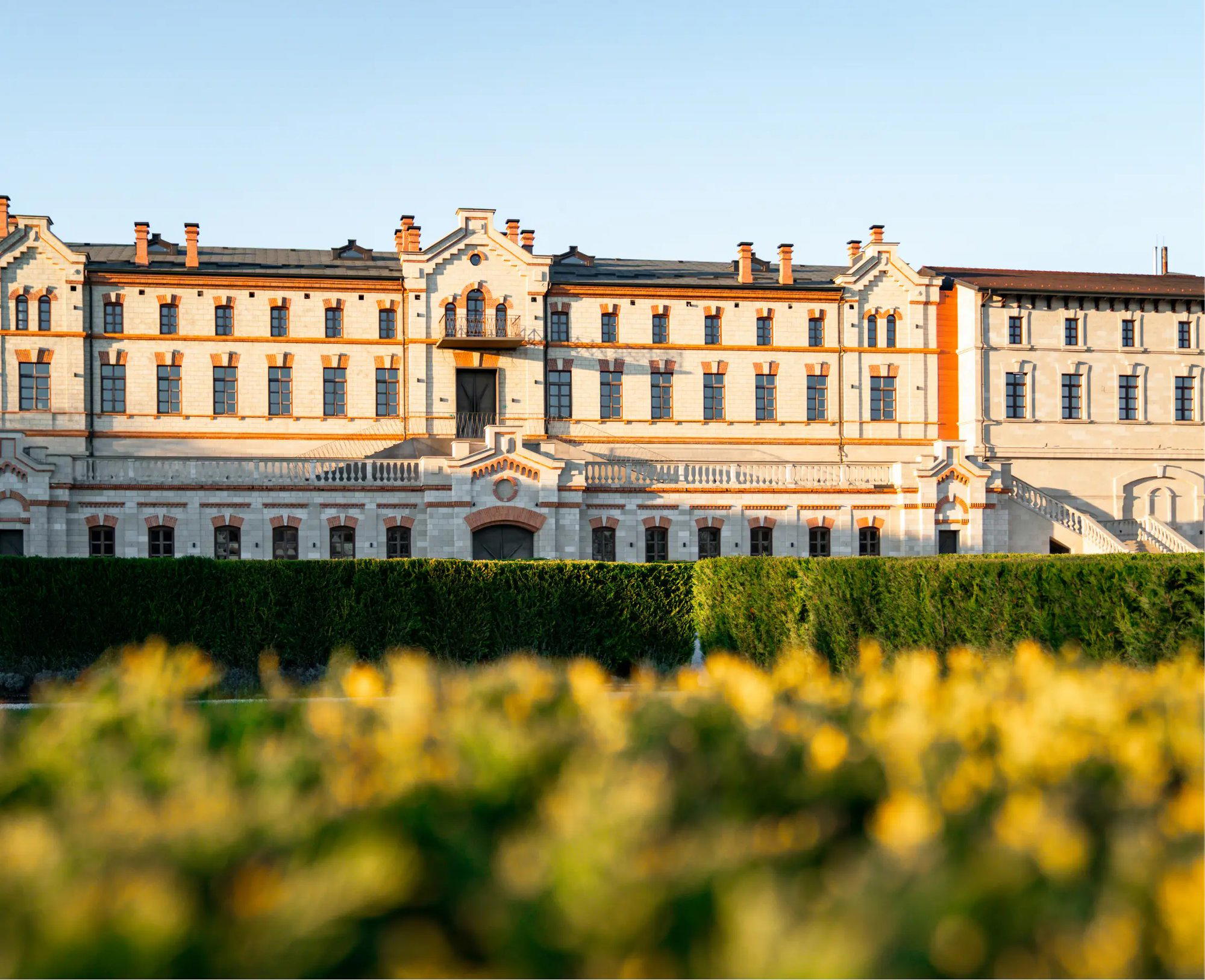
A Wine Estate Built to Be Looked At
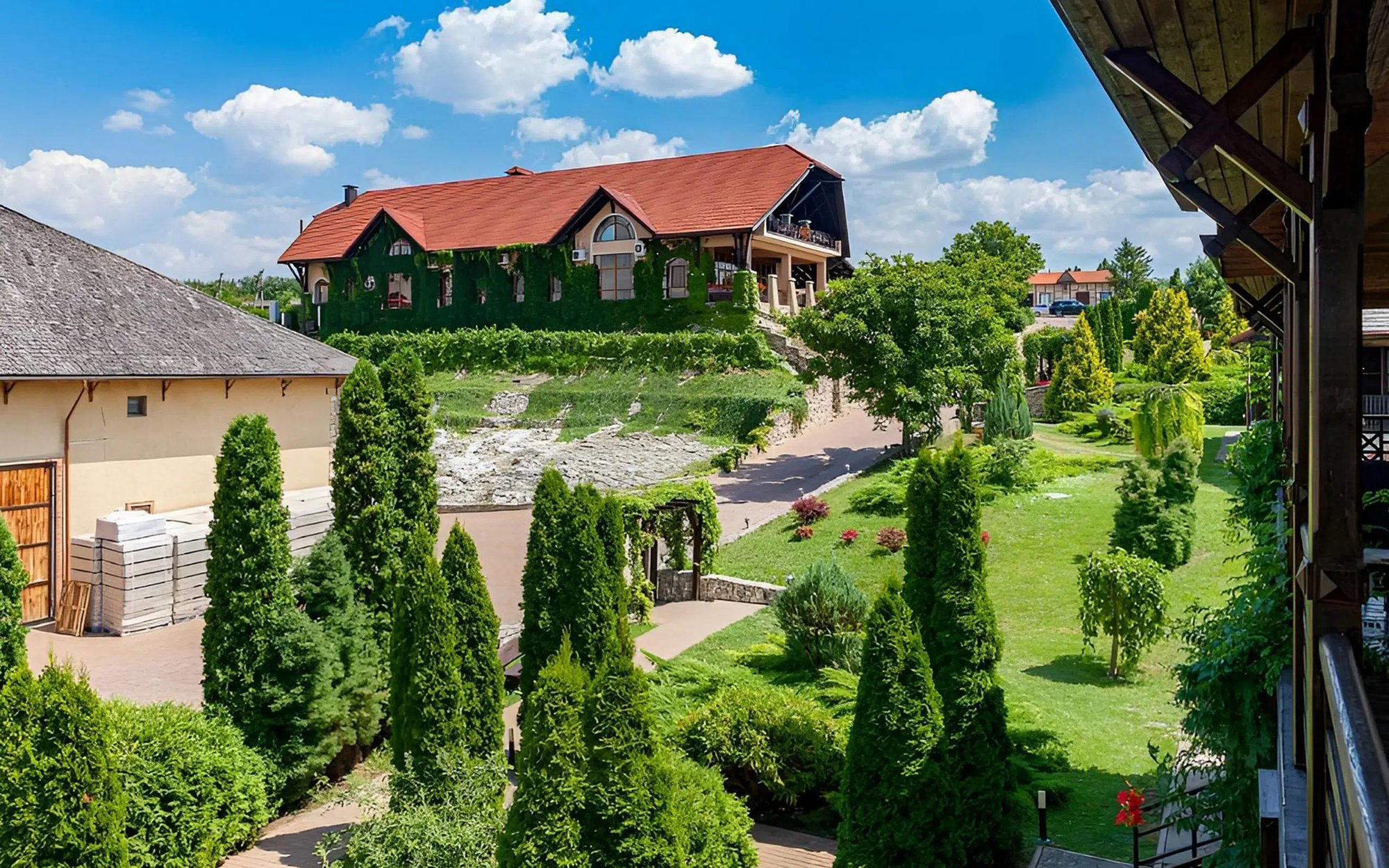
The boutique wine resort format has a clear logic: place guests inside a working wine estate, make the architecture worthy of the wine, and let the two things reinforce each other. Across Europe, a handful of properties have pulled this off convincingly, from Tuscan agriturismo estates to Burgundy domaine conversions. In Moldova, the category is younger and the reference points fewer, which makes the design ambition at Castel Mimi Wine Resort in Bulboaca worth examining on its own terms. The property takes its visual cues from the French castle typology suggested by its name, applying a Gothic-inflected architectural language to a site that sits in the Moldovan countryside southeast of Chisinau. The effect is deliberate and self-aware: this is not vernacular farm architecture, but a purpose-built estate conceived to signal permanence and seriousness in a wine region that has historically struggled to project either.
For context on what this kind of design ambition costs in peer markets: estate-integrated boutique hotels in established wine regions, whether in Umbria, the Douro Valley, or Margaret River, have converged on a formula of high materials quality, low key count, and landscape integration. Castel Mimi's approach tracks that formula, fitting within a cohort of properties where the building itself functions as the primary argument for the room rate. The 2025 World Travel Awards recognition as Moldova's Leading Boutique Hotel confirms that the positioning has registered with the industry's evaluation mechanisms, even if the broader travel market is still catching up with Moldova as a destination.
Moldova's Wine Credentials and Why They Matter Here
To understand Castel Mimi's positioning, it helps to understand what Moldova actually produces. The country sits on the same latitudinal band as Burgundy and Bordeaux and has been growing wine grapes commercially since the Soviet era, when its output fed a captive market of several hundred million consumers. Post-independence, the industry went through a long structural adjustment, losing its Russian export market to an embargo in 2006 and spending the following decade rebuilding around European quality standards and export markets. By the early 2020s, a tier of Moldovan producers had achieved credible international recognition, with indigenous varieties like Feteasca Neagra and Feteasca Alba sitting alongside international plantings of Cabernet Sauvignon and Merlot.
Bulboaca, where the resort is located, sits in this producing context. Wine tourism in Moldova remains at an earlier stage of development than equivalent regions in Georgia, Romania, or Hungary, which means the infrastructure around tastings, cellar tours, and hospitality is less saturated and, for the right traveller, more direct in access. Properties like Castel Mimi operate in a space where they function simultaneously as producers, hospitality venues, and effective ambassadors for the region, a role that the design and award positioning are clearly intended to support. Visitors interested in emerging wine regions who have worked through the more established circuits in Georgia's Kakheti or Romania's Dealu Mare may find the Moldovan version a natural next chapter. For a broader look at what Bulboaca offers beyond the estate, see our full Bulboaca restaurants guide.
What the Architecture Is Actually Doing
The castle aesthetic in European wine hospitality is not new. Properties from Castello di Reschio in Lisciano Niccone to Cipriani, A Belmond Hotel, Venice use historic built fabric to anchor a luxury proposition. In those cases, the buildings predate the hospitality offer by centuries. Castel Mimi works differently: the Gothic vocabulary is applied to a modern estate, which means the architecture is performing heritage rather than inheriting it. This is a choice that has divided opinion in wine tourism circles, but it has clear strategic logic. In a market where guests arrive with limited prior associations with Moldovan wine culture, a strong and legible visual statement does more work than restraint would.
The result is a property that photographs well and orientates first-time visitors quickly. The courtyard, the stone detailing, and the formal garden geometry that defines the estate's public spaces create a sense of arrival that smaller, more understated properties in the region cannot match. For the segment of traveller who approaches wine-country stays as partial cultural immersion and partial visual experience, this matters. Compare the approach to estate-integrated design at Casa Maria Luigia in Modena, where a more restrained Italian country house idiom serves a similarly wine-and-food-focused audience, and the differences in design strategy become instructive rather than simply preferential.
Where It Sits in the Premium Boutique Market
Boutique hotel category has bifurcated sharply over the past decade between properties that compete on brand association with large international groups and those that compete on specificity of place and experience. Castel Mimi sits clearly in the second cohort. The property is not competing with Aman Venice or Badrutt's Palace Hotel in St. Moritz for the same guest, but it may well be drawing from a travelling audience that has stayed at Amangiri in Canyon Point or Hotel Esencia in Tulum and is actively seeking out destinations that have not yet been fully absorbed into the premium travel circuit.
That audience tends to be more research-led, more willing to accept infrastructural gaps in exchange for access and originality, and more interested in the wine or food story than the thread-count conversation. Castel Mimi's positioning as a wine resort rather than simply a boutique hotel signals this priority clearly. The emphasis on the estate, the cellars, and the production side of the operation places the wine experience at the centre of the guest proposition in a way that distinguishes the property from urban boutique competitors like La Réserve Paris or The Fifth Avenue Hotel in New York City, which serve an entirely different set of priorities.
Planning a Stay
Moldova sits outside the main EU travel circuit and does not yet have the tourism infrastructure of its neighbours, which affects logistics. Chisinau's international airport connects to major European hubs, and Bulboaca is reachable from the capital in under an hour by road. The leading periods for a wine-focused visit align with harvest season in September and October, when estate activity is highest and the countryside is at its most visually compelling. Spring, from April through June, offers a quieter alternative with the vineyards coming into leaf. Travellers accustomed to the hospitality density of wine regions in France, Italy, or Spain should calibrate expectations accordingly: Moldova's wine tourism infrastructure is developing, and the appeal is in the early-access quality of the experience rather than the surrounding support network. Castel Mimi's own estate provides enough on-site programming, including cellar visits, tastings, and dining, to sustain a two-to-three night stay without requiring significant off-site movement.
Recognition history
Dated appearances from independent guides and award organizations, with the underlying list record or original source where available.
World Travel Awards
World Travel Awards
Continue exploring
More in Bulboaca
Hotels in Bulboaca
All hotels in Bulboaca →
Restaurants in Bulboaca
Browse all →
Wineries in Bulboaca
Browse all →
Details
- Romantic
- Elegant
- Scenic
- Rustic
- Sophisticated
- Romantic Getaway
- Honeymoon
- Weekend Escape
- Celebration
- Historic Building
- Panoramic View
- Terrace
- Pool
- Outdoor Pool
- Wi Fi
- Spa
- Restaurant
- Room Service
- Free Parking
- Bicycle Rental
- Garden
- Vineyard
Elegant castle atmosphere with lush gardens, fountains, and a serene, romantic setting enhanced by beautiful architecture and well-maintained grounds.