Cannery Pier Hotel & Spa

Built on a working pier over the Columbia River, Cannery Pier Hotel & Spa occupies a structure that is inseparable from Astoria's industrial past. The property sits where fishermen once processed salmon for shipment east, and the river views from every room reflect that unmediated relationship with the water. For travellers drawn to places shaped by geography rather than resort convention, it occupies a distinct position on Oregon's north coast.
Pearl is the En Primeur Club membership app — saves, bookings, and concierge access live there. Same editors, same standards.
- Address
- 10 Basin St, Astoria, OR 97103
- Phone
- +1 503 325 4996
- Website
- cannerypierhotel.com
- Directions
- Get directions
 Saves & bookings on Pearl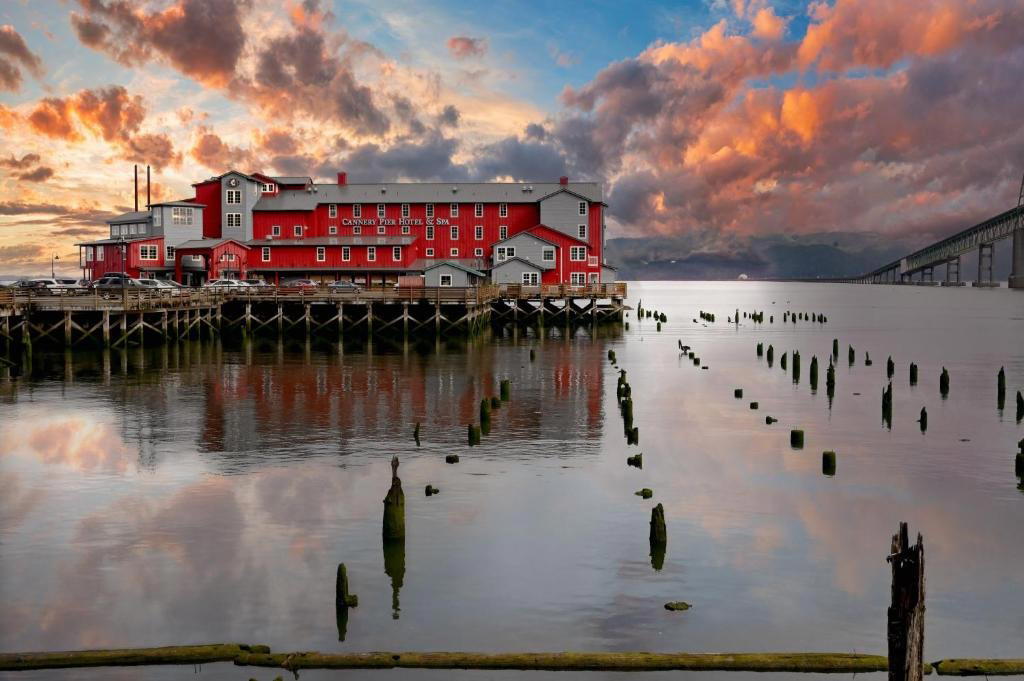
A Pier That Earns Its Architecture
Most waterfront hotels sit near water. Cannery Pier Hotel & Spa sits on it. The property extends 600 feet out over the Columbia River from the Astoria waterfront at 10 Basin Street, built atop pilings where a commercial salmon cannery operated for decades into the twentieth century. That industrial foundation is not incidental to the experience, it shapes everything from the physical sensation of standing above moving water to the constant parade of oceangoing cargo ships passing at close range on one of the busiest river channels on the Pacific coast.
This kind of adaptive reuse has become a recognisable pattern in American boutique hospitality, where former industrial structures, warehouses, mills, rail stations, get converted into lodging that uses history as an amenity. What separates genuinely successful conversions from cosmetic ones is whether the original function of the building remains legible in the guest experience. At Cannery Pier, the answer is yes: the river is not a backdrop framed through windows but the actual medium the building inhabits. Tides, current, and weather register differently when the floor beneath you is a pier deck rather than solid ground.
The Columbia River as Constant Reference Point
Astoria sits at the point where the Columbia River meets the Pacific Ocean, making it one of the more geographically charged locations on the Oregon coast. The river here runs four to five miles wide, and the bar where it meets the ocean has historically been among the more hazardous maritime passages on the American West Coast. The town itself carries that history in its bones, fishing canneries, Victorian merchant houses climbing the hill behind the waterfront, and the Astoria Column marking the ridge above. For travellers exploring the region, Astoria functions as a working port city, which gives it a texture that self-consciously touristic towns along the coast often lack.
The hotel's position on the pier means that river traffic, container ships, tugboats, fishing vessels, moves past at eye level. That proximity to working maritime activity is not something you can replicate by building a hotel near a marina. It requires the building to be in the water, and Cannery Pier's structural inheritance from the cannery era makes that possible.
Industrial Inheritance and Design Logic
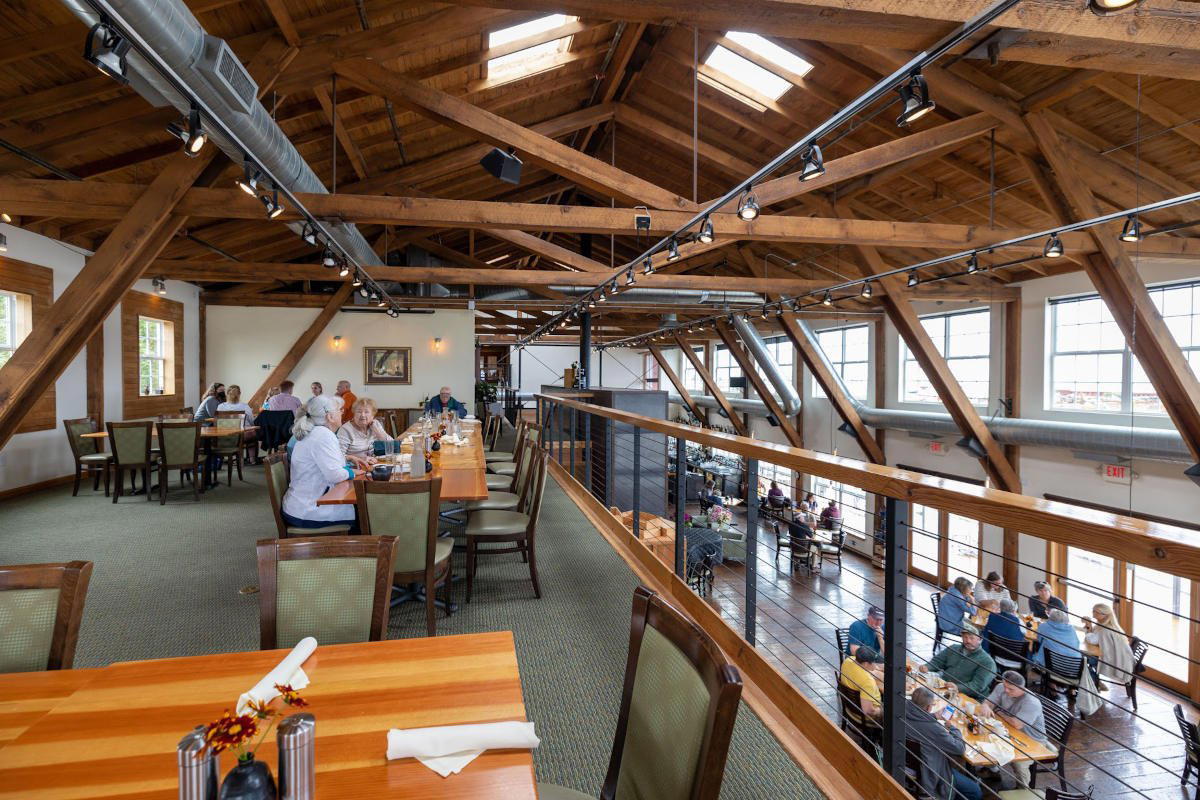
Properties that occupy former industrial sites face a recurring design decision: how much of the original character to retain versus how much to smooth over in service of comfort. Particularly coherent conversions use the industrial elements as structural arguments rather than decorative ones. Exposed materials, the scale of former processing spaces, the evidence of working infrastructure, these become the architectural language of the property rather than an awkward contrast with hotel amenities.
The pier format itself does much of the work here. A building on pilings over a river cannot pretend to be something other than what it is, and that constraint is a design asset. Compare this approach with properties that layer industrial aesthetics onto entirely new construction, a category that includes some well-regarded American hotels where the salvaged-wood and exposed-steel vocabulary is essentially theatrical. At Cannery Pier, the industrial logic is structural and geographical, not decorative.
For context on how American boutique hotels handle the question of setting and design identity, it is worth looking across the broader spectrum. Properties like Post Ranch Inn in Big Sur and Amangiri in Canyon Point represent the landscape-integration model taken to a high level of investment and finish. Troutbeck in Amenia and Blackberry Farm in Walland operate in the historic-property-restoration register. Chicago Athletic Association exemplifies urban adaptive reuse at scale. Cannery Pier belongs to a smaller, more geographically specific category: working-waterfront conversions where the site's former industrial function is the primary architectural argument.
Positioning on Oregon's North Coast
Oregon's north coast hospitality market spans a wide range, from roadside motels serving beach access to higher-end properties targeting design-conscious travellers from Portland, Seattle, and the Bay Area. Astoria sits at the northern edge of that market, roughly two hours from Portland by car, and it attracts a visitor profile that tends to be more interested in history, maritime culture, and regional specificity than in spa amenities or curated resort programming.
Within that context, Cannery Pier occupies the upper end of the local accommodation tier by virtue of its architectural distinctiveness and river position. Comparable properties in the broader Pacific Northwest boutique hotel category, Sage Lodge in Pray, Alpine Falls Ranch in Superior, share the characteristic of placing guests in a specific landscape rather than insulating them from it. The Columbia River estuary is one of the more dramatic natural environments available to travellers in the Pacific Northwest, and the pier format puts guests closer to it than any landside property could.
Other reference points in the American boutique hotel market worth considering for their similarly site-specific approaches include Ambiente in Sedona, Bernardus Lodge & Spa in Carmel Valley, and SingleThread Farm Inn in Healdsburg. Each anchors the guest experience to a specific geography; what varies is the nature of that geography and the level of hospitality infrastructure built around it. For travellers whose interest runs toward the urban-historic end of the spectrum, The Fifth Avenue Hotel in New York City, Raffles Boston, and Aman New York represent the high end of that register. For landscape immersion at greater investment levels, Kona Village in Kailua Kona and Little Palm Island Resort & Spa in Little Torch Key offer comparable site specificity in different climates.
Planning a Stay
Astoria is reachable by car from Portland in approximately two hours via US-30, which follows the Columbia River west through the Columbia River Gorge foothills. The drive itself is worth factoring into the trip: the river widens dramatically as you move toward the coast, and the industrial and agricultural history of the Columbia corridor is visible from the road. The town of Astoria has no commercial airport; the nearest regional options are Portland International and Astoria Regional Airport, which handles limited charter traffic. Visitors arriving from further afield often route through San Francisco or Seattle before driving.
Fast Comparison
Comparable venues nearby, for context on price, style, and recognition.
| Venue | Cuisine | Price | Awards | Notes |
|---|---|---|---|---|
| Cannery Pier Hotel & SpaThis venue — the venue you are viewing | Well-known Northwest luxury on a historic pier blending maritime heritage with modern sophistication. | $$$$ | Not listed | Not listed |
| Hotel Rose - A Staypineapple Hotel | Funky boutique with colorful, eclectic design | $$$ | Not listed | Downtown |
| McMenamins Kennedy School | Repurposed historic schoolhouse with preserved architectural details and artistic renovations. | $$ | Not listed | Concordia |
| Valley River Inn | Mid-century modern resort with Northwest lodge architecture | $$$ | Not listed | Valley River |
| The Hotel Zags Portland | Modern boutique blending Pacific Northwest nature and urban play | $$$ | Not listed | Downtown |
| The Setting Inn Willamette Valley | luxurious contemporary inn | $$$$ | 3-Star | Newberg |
Recognition history
Dated appearances from independent guides and award organizations, with the underlying list record or original source where available.
Michelin Selected
Michelin
Continue exploring
More in Astoria
At a Glance
- Romantic
- Elegant
- Scenic
- Sophisticated
- Cozy
- Romantic Getaway
- Weekend Escape
- Anniversary
- Waterfront
- Historic Building
- Panoramic View
- Spa
- Wi Fi
- Fitness Center
- Free Parking
- Hot Tub
- Waterfront
- Spa
- Wi Fi
- Fitness Center
- Free Parking
- Hot Tub
Tranquil and inviting with cozy fireplaces, far-reaching river views, modern luxe design, and sophisticated comfort.