Athita The Hidden Court

Athita The Hidden Court brings design-led hospitality into Chiang Saen, a northern Thai river town better known for temple ruins, trade history, and the Golden Triangle than polished hotel theatrics. Its 2026 Tablet Hotels Design Awards recognition places the property in a small Asia-wide conversation about hotels where architecture carries the stay, not just the service script.
Pearl is the En Primeur Club membership app — saves, bookings, and concierge access live there. Same editors, same standards.
- Address
- 984 Moo 2 Wiang, Chiang Saen, Chiang Rai, Thailand
 Saves & bookings on Pearl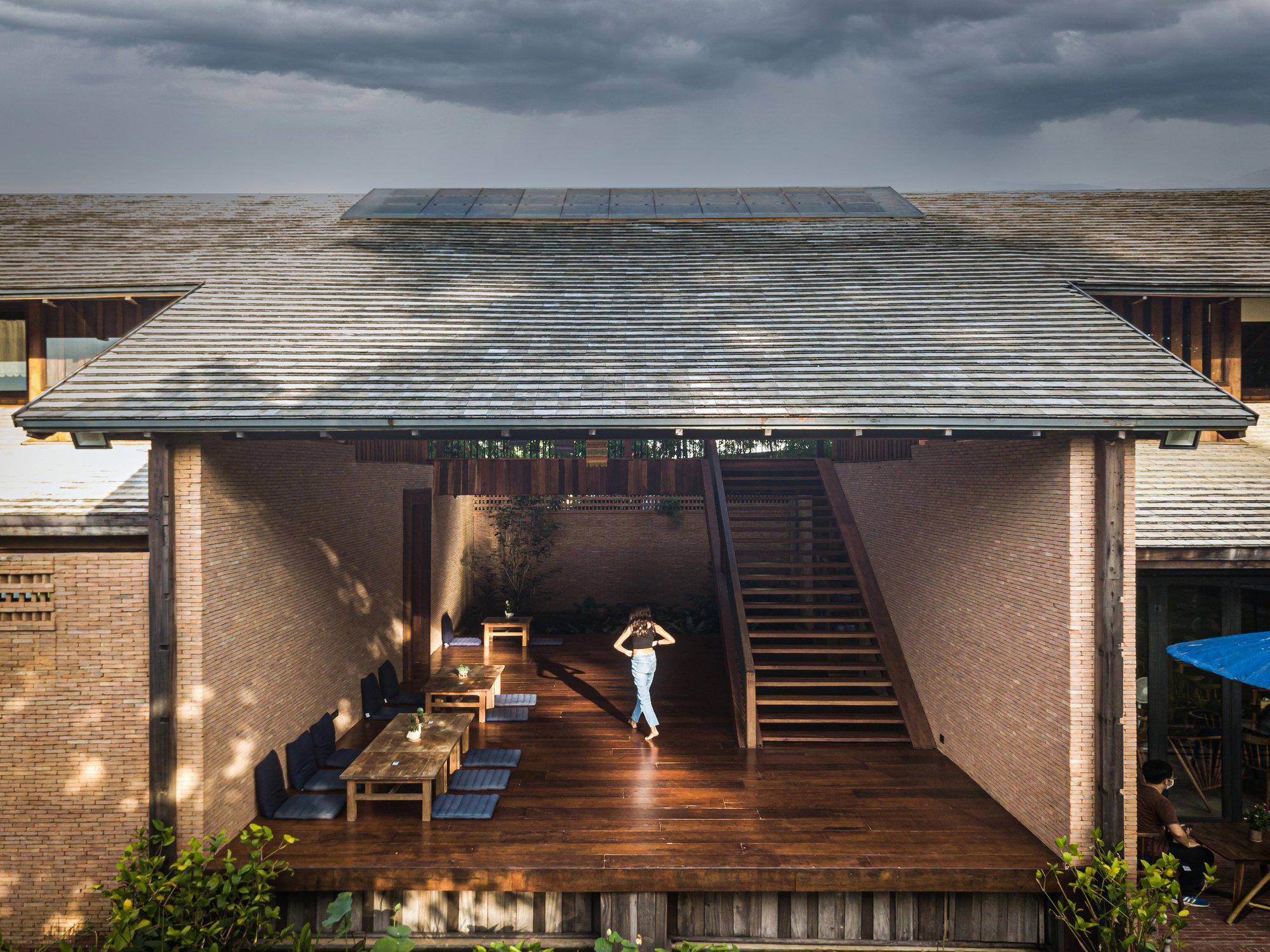
Approaching Chiang Saen, the hotel scene changes register. This is not Bangkok’s tower-hotel grammar or Phuket’s resort choreography; it is a quieter northern language shaped by low buildings, temple compounds, river air, and the town’s long memory as a former Lanna stronghold. In that setting, Athita The Hidden Court reads less as a conventional resort and more as an architectural pause: a courtyard-led address in a city where scale matters, and where design has to negotiate with history rather than overwhelm it.
The useful way to read the property is through place. Chiang Saen sits on the Mekong-side edge of Chiang Rai province, close to the Golden Triangle, with a cultural identity tied to old city walls, Buddhist sites, and cross-border movement. Hotels here do not compete on the same terms as beach villas or Bangkok business suites. The sharper question is whether a stay gives visitors a more precise way into northern Thailand’s slower rhythm. Athita The Hidden Court enters that conversation through design credibility: Tablet Hotels included it in its 2026 Design Awards for Asia, a signal that the property’s physical language has been judged beyond local charm or boutique scale.
A courtyard hotel in a town of ruins, river trade, and Lanna memory
Chiang Saen rewards restraint. The city’s older fabric is not built for spectacle; its appeal comes through temple remains, riverside movement, and the sense that northern Thai history is present without being staged at every corner. A hotel in this context has a narrow margin for error. Too much polish can flatten the town into a lifestyle backdrop, while too little structure leaves the stay feeling incidental. The courtyard model is a smart answer because it turns inward without severing the guest from the city around it.
That inwardness matters in a destination often treated as a day-trip appendage to Chiang Rai or the Golden Triangle. A design-led hotel gives Chiang Saen a different travel argument: stay long enough to let the town set the pace. The name Athita The Hidden Court carries a strong promise, but the more relevant point is not secrecy. It is compression. Courtyard hotels create a controlled sequence of threshold, shade, circulation, and quiet; in a hot northern climate, those old architectural instincts are practical as well as atmospheric.
For readers mapping northern Thailand beyond the standard resort circuit, the property belongs beside wider Chiang Saen planning rather than isolated hotel collecting. Use Our full Chiang Saen hotels guide for the lodging frame, then build around food, drinking, wine, and cultural days through Our full Chiang Saen restaurants guide, Our full Chiang Saen bars guide, Our full Chiang Saen wineries guide, and Our full Chiang Saen experiences guide. The strongest itineraries here are not overpacked; they leave room for the river, ruins, and a slower evening return.
Design recognition changes the way Chiang Saen reads as a hotel destination
Tablet’s 2026 Design Awards recognition gives the hotel a useful external marker. Awards matter less as decoration than as sorting devices. In Thailand, luxury hospitality often defaults to beach privacy, Bangkok brand density, or Chiang Mai heritage restoration. A Chiang Saen hotel receiving Asia design recognition shifts attention toward a smaller, more place-specific category: properties where architecture is the main editorial argument.
That does not make the hotel interchangeable with larger Thai names. It works in another register. Travellers comparing northern and national options can look to 137 Pillars House in Chiang Mai for urban heritage, Anantara Golden Triangle Elephant Camp & Resort in Chiang Rai for a broader resort proposition near the borderlands, or InterContinental Khao Yai Resort in Nakhon Ratchasima for destination theming at a larger scale. Chiang Saen asks for a different lens: less program, more setting.
Thailand’s hotel map is broad enough that category discipline helps. Beach and island stays such as Amanpuri in Phuket, Aleenta Resort & Spa, Phuket in Phang Nga, Banyan Tree Krabi in Krabi, Devasom Khao Lak Beach Resort & Villas in Khao Lak, and Dinso Resort & Villas Phuket in Patong solve for coast, pool time, and resort infrastructure. City and resort hybrids such as 137 Pillars Residences Bangkok in Bangkok, Grand Hyatt Erawan Bangkok in Pathum Wan, Aleenta Resort & Spa, Hua-Hin in Pranburi, and Anantara Hua Hin Resort & Spa in Hua Hin answer other needs. The hotel is better understood as a northern design stay, where the reward is proportion, quiet, and proximity to Chiang Saen’s historical texture.
Who should choose this slower northern address
The fit is clear. Travellers who need a high-service beach circuit or dense urban dining agenda should look elsewhere in Thailand first, including Anantara Bophut Koh Samui Resort in Koh Samui, Anantara Rasananda Koh Phangan Villas in Surat Thani, Anantara Rasananda Koh Phangan Villas in Koh Phangan, Anantara Layan Phuket Resort in Tambon Choeng Thale, and Andaz Pattaya Jomtien Beach in Na Jomtien. Those addresses belong to a more programmed version of Thai hospitality. Chiang Saen is for travellers willing to trade volume for atmosphere and let architecture frame the day rather than fill it.
That same design-first logic also links the hotel to a wider international taste for remote or context-heavy stays, from! Xaus Lodge in Dawid Kruiper to. Here Baa Atoll Maldives in Baa Atoll and "Róże i Zen" Apartamenty. Pokoje Gościnne in Torun. The common thread is not sameness; it is the idea that a stay can be shaped by setting and architectural attitude rather than brand spectacle. In Chiang Saen, that makes the hotel a pointed choice for a northern Thailand itinerary built around history, borders, and calm.
Reputation & Price
Comparable venues nearby, for context on price, style, and recognition.
| Venue | Price | Awards | Notes |
|---|---|---|---|
| Athita The Hidden CourtThis venue — the venue you are viewing | $$$ | 4-Star | Not listed |
| sala rattanakosin Bangkok | $$$ | 4-Star | Rattanakosin Island, Contemporary boutique in converted riverfront warehouse |
| Volve Hotel Bangkok | $$$ | 4-Star | Thonglor, Indie heritage boutique blending aristocratic Sukhumvit homes with modern twists. |
| Public House Bangkok | $$$ | 4-Star | Khlong Toei Nuae, Seventies and Eighties-inspired boutique with vintage influences and modern touches |
| Maison Hotel Bangkok | $$$ | 4-Star | Sukhumwit, Contemporary design hotel with Cabinet of Curiosity concept, blending traditional Thai aesthetics with modern minimalism across four room categories inspired by natural elements. |
| Courtyard by Marriott Bangkok Suvarnabhumi Airport | $$$ | 4-Star | Ladkrabang, Urban resort-style hotel with landscaped gardens and canal access. |
Recognition history
Dated appearances from independent guides and award organizations, with the underlying list record or original source where available.
Tablet Hotels Best New Hotel Designs (Asia)
Tablet Hotels · Tablet Hotels Design Awards 2026: Best New Hotel Designs (Asia)
Continue exploring
More in Chiang Saen
Restaurants in Chiang Saen
Browse all →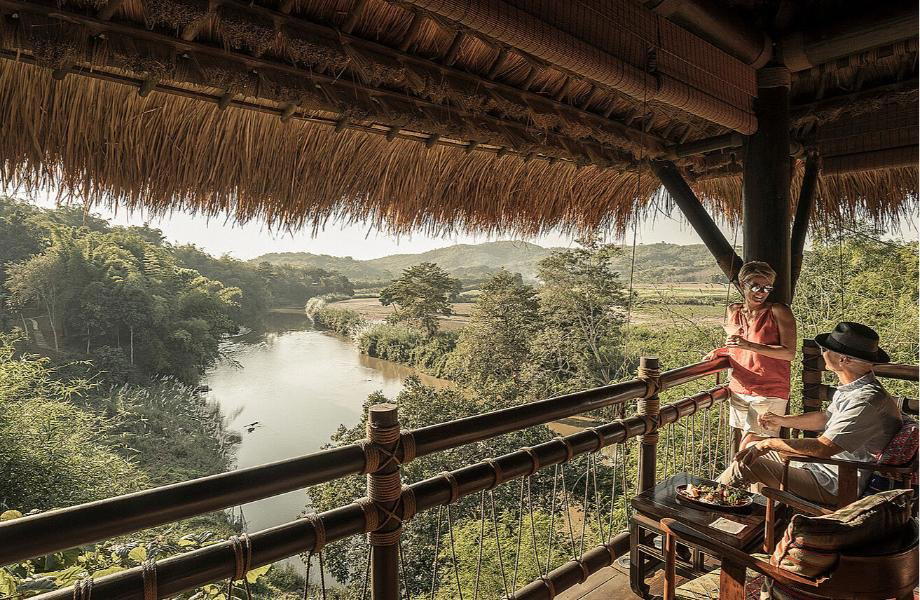
At a Glance
- Quiet
- Scenic
- Classic
- Elegant
- Intimate
- Romantic Getaway
- Honeymoon
- Anniversary
- Weekend Escape
- Wellness Retreat
- Celebration
- Garden
- Waterfront
- Historic Building
- Design Destination
- Panoramic View
- Private Dining
- Wi Fi
- Pool
- Spa
- Room Service
- Concierge
- Garden
- Waterfront
- Wi Fi
- Pool
- Spa
- Room Service
- Concierge
Atmosphere is tranquil and contemplative, with warm teakwood, traditional Lanna details, and soft natural light around a quiet courtyard and pool, creating a refined yet homely sense of living inside Chiang Saen’s history.