← Guides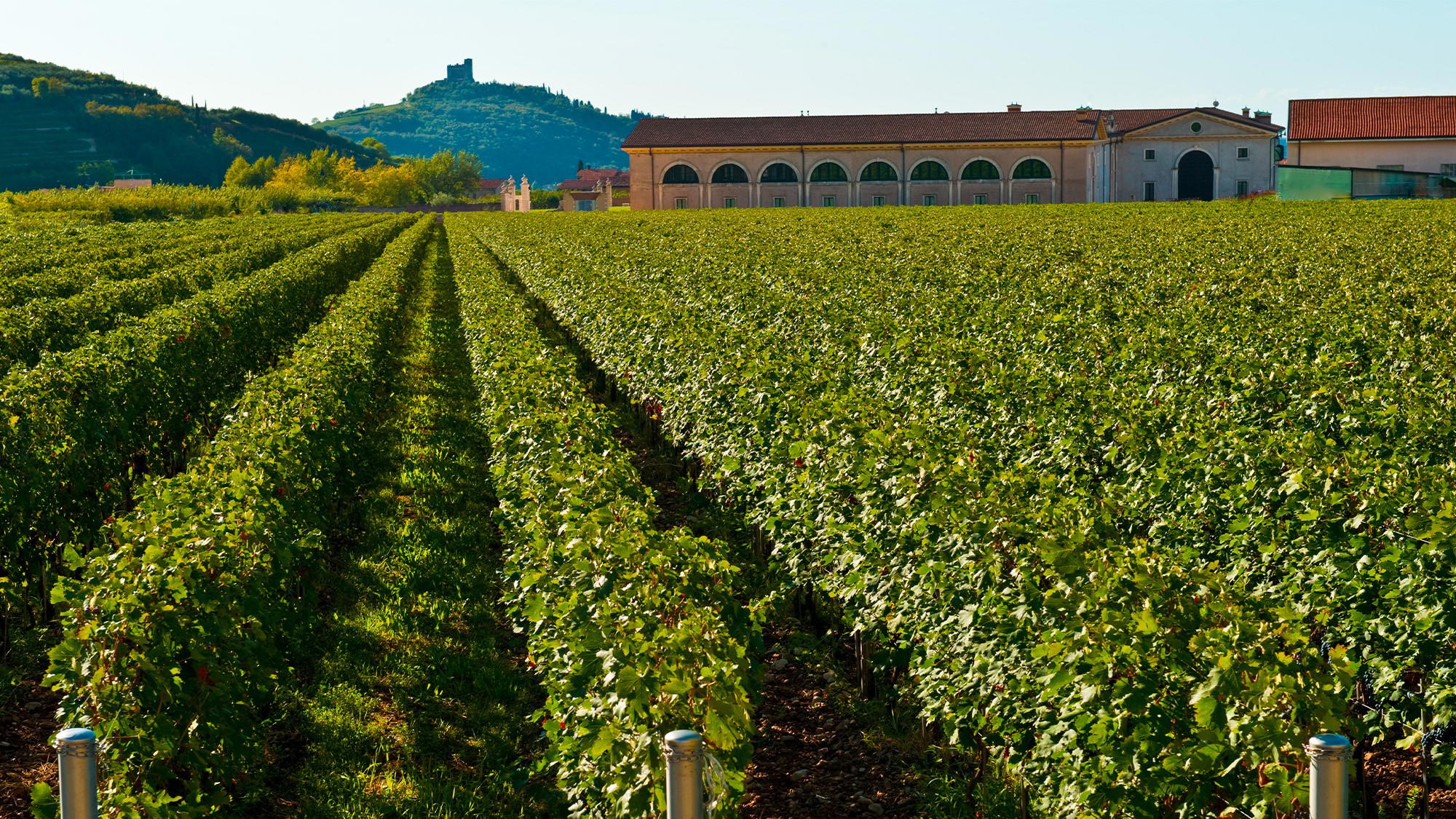
Born in 1957 to a family of small vineyard owners, Romano dal Forno became the first to bottle wine under his own name, then revolutionised Amarone with 11,000 vines per hectare and a radically shortened appassimento.
Born in 1957 to a family of small vineyard owners, Romano dal Forno became the first to bottle wine under his own name, then revolutionised Amarone with 11,000 vines per hectare and a radically shortened appassimento.
In 1996, Romano dal Forno planted a vineyard in the valley of Ilasi with 11,000 vines per hectare, roughly triple typical planting densities in Valpolicella and unheard of in the Veneto at the time. The gamble was enormous: hyper-density planting meant drastically reduced yields, higher costs, and no guarantee that the market would reward the quality leap.
But dal Forno had spent more than a decade refusing to follow the path laid out for him, first by the local cooperatives, then by Giuseppe Quintarelli, the well-known Amarone producer who had become his mentor. 'I didn't want to be a copy of Quintarelli,' he says.
'I wanted to stand on my own two feet.' That vineyard, and the estate-wide conversion to hyper-density that followed over the next decade, redefined what Amarone could be: not the rustic, sweet-edged wines of the cooperative era, but dry, age-worthy, technically precise bottlings that command secondary-market premiums today.
Romano dal Forno was born in 1957, the only son of a family of small vineyard owners in the valley of Ilasi, in the east of Valpolicella. Like many families in the valley, the Dal Fornos produced wine for their own use and sold the bulk of their grapes to the local cooperative.
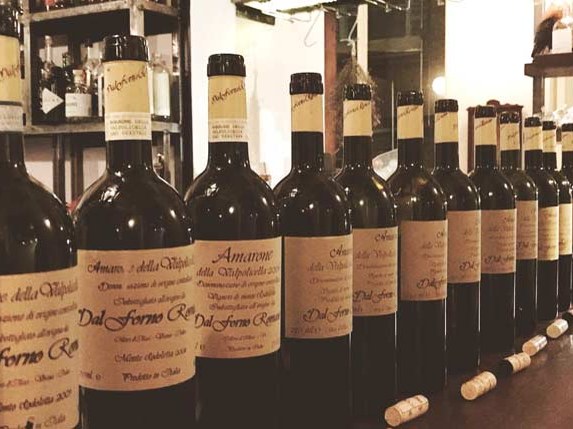
Romano was the first in his family to bottle and sell wine under his own name, a decision that isolated him commercially but gave him the freedom to experiment. When he made his first official vintage in 1983 at age 26, the word 'quality' did not exist in the Italian language, as he puts it.
'You had to produce quantity to get ahead.' The cooperative model rewarded volume; dal Forno's vision required the opposite.
The vineyard area has grown from the original 7.5 hectares to 35 hectares, and production from 5,000 bottles a year to an average of 50,000. But the transformation is not one of scale alone.
The wines, which for most of the 1980s reached only a small circle of importers, today enjoy well-known status, and the technical innovations that underpin them have influenced a generation of producers.
Dal Forno's shift to hyper-density planting in 1996, combined with a radically shortened appassimento window and a commitment to dry elegance over old-fashioned sweetness, moved the category's quality ceiling.
Collectors who track Amarone vintages know that the 1996 watershed marks the point at which dal Forno's wines became structurally different from what came before.
It was in the early 1980s that Romano met Giuseppe Quintarelli, with whom he formed a lasting relationship. The well-known Amarone producer was an inspirational figure for Romano, but when it came to making wine, he was determined to do it his way. 'Giuseppe always used to say, "We have always made wine the way tradition commanded, and how it always has been", but that jarred with me,' Romano recalls. He could not relate to a tradition that was not a part of him, an admission that set him apart in a region where lineage and continuity were the currency of legitimacy.
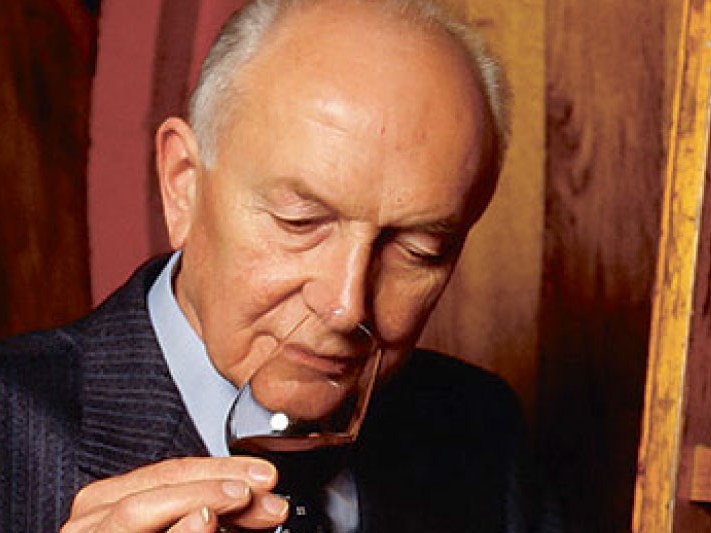
There was one instance, however, when following Quintarelli's advice proved to be a game-changer. Quintarelli had suggested that Romano thin out the crop, which he did, not by removing whole bunches, but by cutting away the bottom of the bunch to leave only the wings, known as the 'ears'.
'I saw immediately that this was a good thing to do, but also risky,' he recalls. 'The results were great when the weather held, but in years when it rained it was a disaster.' Despite the risks, this extremely rigid selection using only tiny bunches of the fruit enabled Romano to produce high-quality wine.
It attracted the attention of an American importer and allowed him to enter the US market at the end of the 1980s, commanding prices well above the average for the period.
At this stage, no more than 5,000 bottles were being made from his 7.5 hectares of vineyard, around 3,500 bottles of Valpolicella and 1,500 of Amarone. The scarcity was not a marketing strategy but a consequence of dal Forno's uncompromising approach: tiny bunches, extreme selection, yields that would have been considered commercially suicidal in a region where cooperatives moved wine by the tanker load. These drastically reduced yields and hyper-selection became hallmarks of the estate, but Romano knew that castigating the vines in a vineyard which was not designed for low yields was a compromise. The vineyard itself had to change.
Following visits to France to study high-density planting, Romano planted a vineyard with 11,000 vines per hectare in 1996. Over the next 10 years, between new acquisitions and the replanting of existing plots, he converted the entire estate to hyper-density, resulting in low yields unheard of in the Veneto at that time. Typical densities in Valpolicella were, and in many cases still are, commonly cited at 3,000 to 5,000 vines per hectare. Dal Forno's 11,000 vines per hectare was a radical departure, and the financial and viticultural risks were substantial.
Hyper-density planting forces each vine to compete for resources, reducing per-vine yields but increasing phenolic concentration and structural complexity. The result is fruit with greater aging potential and more pronounced tannin structure, qualities that justify the secondary-market premiums dal Forno's wines command today.
But the model requires meticulous canopy management, precise irrigation, and a willingness to sacrifice volume for quality. In a region where cooperatives still dominated production and quantity was the path to profitability, dal Forno's bet on hyper-density was a commercial outlier.
The 10-year conversion window, replanting plot by plot, vintage by vintage, meant that dal Forno was effectively running two parallel estates: the old low-density vineyards still producing wine, and the new hyper-density parcels coming online one by one. The commitment was total.
The vineyard is the starting place, but it does not stop there. Romano likes to cite the late Carlo Petrini's dictum that, 'From great grapes you can also make excellent vinegar.' The refinement of the vinification processes has played a central role in the evolution of the winery. The distinctive features of Dal Forno's wines, the purity of fruit, the dry elegance, the finesse of the tannins, and the extreme technical precision, can all be traced to specific innovations in winemaking over the course of time.
The fruit quality comes from the rethinking of the grape drying, appassimento, process. Romano recounts that in the first years: 'Clients used to come to visit... and I would proudly show them grapes still laid out to dry in April.
The concentration that comes with appassimento is indispensable to Amarone, but over-long drying compromises the purity of the fruit, introducing notes of advanced evolution. 'Appassimento isn't like sending a school kid to do cramming lessons to make up for what he didn't learn at school,' Romano notes.
'It's that extra bit of study that helps him to excel.'
Reducing the length of appassimento meant going back to the vineyard and picking later to have levels of ripeness which offset a shorter period of grape drying. Grapes for Amarone now dry for no more than 60 days, and since 2001 the fruit for Dal Forno's Valpolicella is pressed after 30 days.
The shift is significant: traditional appassimento regimes often ran well past Dal Forno's 60-day cap, sometimes stretching into spring, resulting in wines with higher residual sugar and a softer, more oxidative profile. Dal Forno's shortened window preserves the fruit's freshness and allows for a drier, more structured style.
The 60-day maximum for Amarone and the 30-day window for Valpolicella are not arbitrary, they represent the point at which concentration is achieved without compromising the purity of the fruit. For collectors evaluating vintages, this timeline matters: wines produced after 2001 reflect the full implementation of the shortened appassimento protocol.
The second milestone in the forming of the house style was the development of a drier style of Amarone. 'Amarone is an ornate wine; if it's not ornate it's not Amarone, but that opulence has to be supported by a freshness and sapidity that make it inviting to drink,' Romano explains.
Obtaining the elegance of the style he was looking for meant reducing the residual sugar, but up until 1993, when he moved into new, purpose-built cellars, fermenting all the sugar out of musts with the massive concentration of partially dried grapes was problematic.
'I remember that in the early years, not having the technology, nor the understanding of how to solve the issue, many vintages ended up with residual sugar. some clients liked the old-fashioned style, but I didn't. Amarone should have three or four grams of residual sugar, maximum five, but sometimes it used to go up to eight, nine or even 10 grams.'
The move to purpose-built cellars in 1993 gave dal Forno the control he needed. The cellars go down three levels, and the vaulted barrique cellar alone extends for an area of 1,392 square meters.
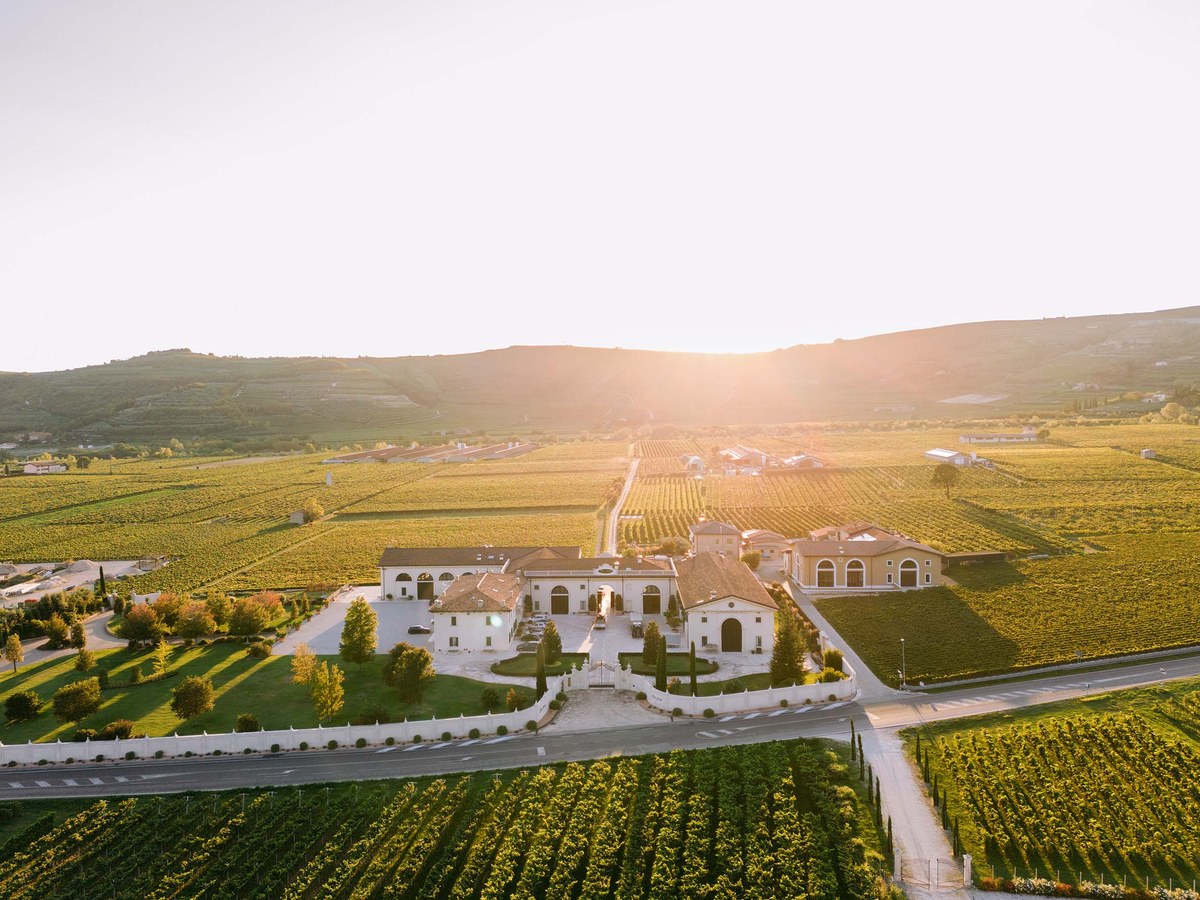
The architecture of the company headquarters could easily be mistaken for a rather grand 17th-century Venetian villa from the outside, but the grape-drying and vinification facilities are high-tech, with an array of equipment designed to the company's own specifications.
The contrast with the tiny underground cellar where Romano's entire production once aged in traditional casks, a single light bulb dangling from the ceiling, is stark.
The 1993 cellar investment was the infrastructure that made the dry style possible: temperature-controlled fermentation, precise monitoring of sugar conversion, and the ability to manage the massive concentration of appassimento fruit without leaving residual sugar behind.
When Romano told his father he wanted to start his own production, his father took it badly. Where was the sense in setting up in competition with the cooperatives? In the end his father acquiesced, but looking back now, Romano has to admit that he was right to be sceptical. In the 1980s, breaking with the local cooperative was a giant step, one that required not just idealism but a willingness to accept financial risk and social isolation. Romano was bursting with energy, idealistic and galvanised by the dream of making quality wine. But the path from 5,000 bottles a year to an average of 50,000 was not a simple scaling exercise.
The estate's expansion from 7.5 hectares to 35 hectares was accompanied by the conversion of the entire vineyard to hyper-density planting. This meant that even as production volumes increased tenfold, the per-hectare yields remained drastically low.
The commitment to quality over quantity, the same commitment that isolated dal Forno in the 1980s, was maintained across the expanded estate. The result is a portfolio that commands attention in the secondary market and among collectors who track Amarone's evolution.
The production figure of 50,000 bottles annually is modest for a 35-hectare estate, a reflection of the hyper-density model and the extreme selection that dal Forno has maintained even as the estate has grown.
Since 2020, production has been managed by Romano's son, Marco. The succession marks a generational shift, but the technical foundations laid by Romano remain intact. The hyper-density vineyards, the shortened appassimento, the commitment to dry elegance, these are now the defining features of the estate, and they continue to influence producers across Valpolicella who have watched dal Forno's trajectory from cooperative-era outsider to well-known producer.
For collectors, the 1996 watershed is the key dividing line. Vintages produced after the introduction of hyper-density planting reflect the structural shift that defines dal Forno's modern style: greater phenolic concentration, more pronounced tannin structure, and aging potential that justifies the secondary-market premiums these wines command.
Earlier bottlings, those produced between 1983 and 1995, represent the pre-revolution style, when dal Forno was still working with lower-density vineyards and longer appassimento windows. These vintages trade differently on secondary markets and offer a window into the evolution of the estate.
The 2001 vintage marks another inflection point: the first full implementation of the 30-day appassimento protocol for Valpolicella, a change that further refined the house style.
The wines today enjoy well-known status, but they are also the product of a specific set of technical innovations that can be traced to precise moments in the estate's history. The 1996 planting. The 2001 shift to 30-day appassimento for Valpolicella. The 1993 move to purpose-built cellars that allowed for greater fermentation control and lower residual sugar.
Each of these changes is reflected in the wines, and collectors who understand the timeline can make more informed decisions about which vintages to pursue. The production constraint, 50,000 bottles annually from 35 hectares, means that allocation is limited, and secondary-market pricing reflects the scarcity.
Romano himself sometimes wanders around the winery on his own and thinks to himself, 'How on earth did I manage all this?' The transformation of the azienda has something of a fairytale story about it, from a tiny underground cellar lit by a single bulb to a high-tech facility that could be mistaken for a 17th-century Venetian villa.
But the story is also one of technical precision, financial risk, and a willingness to reject both cooperative-era volume culture and Quintarelli-style traditionalism in favor of a third path. That path, hyper-density planting, shortened appassimento, dry elegance, is now the standard by which modern Amarone is judged.
For travelers planning a visit to Valpolicella, the Azienda Agricola Romano dal Forno in the valley of Ilasi offers a case study in how a single producer can reshape a category. The estate's architecture and high-tech facilities are impressive, but the real story is in the vineyards, 11,000 vines per hectare, planted over a decade, each one a bet on quality over quantity. The wines that result from those vines are the reason dal Forno's name appears on auction lists and in the cellars of collectors who track Amarone's evolution. The category has moved forward, and Romano dal Forno is the reason why.
Tagged
Get the App
Take the shortlist into the En Primeur Club app for concierge access, saved places, and the next step after discovery.
Get Exclusive AccessMore from the editors