← Guides
Planning a visit to Jacques Selosse in 2026 offers a distinctive opportunity to explore the renowned champagne house's precise offerings and rich heritage. Experience the artistry behind each bottle firsthand.
Planning a visit to Jacques Selosse in 2026 offers a distinctive opportunity to explore the renowned champagne house's precise offerings and rich heritage. Experience the artistry behind each bottle firsthand.
The confirmation arrives by email, a room at Jacques Selosse's Maison Les Avises in Avize, and with it, the closest thing to a guaranteed audience with Champagne's most influential grower-producer. The reliable route into the Selosse world in 2026 is not a tasting appointment, not a négociant contact, not a well-placed email to the domaine. It is a room at Les Avises, the hotel and restaurant next door to the domaine in Avize, where Anselme Selosse hosts hotel visitors.1 Book a room, and you are already inside.
The Jacques Selosse domaine, founded by Jacques Selosse in 1949, polished by his son Anselme, and run since 2018 by his son Guillaume, produces Champagne from a small footprint across the Côte des Blancs and Aÿ, a tiny base for a producer whose Substance solera and lieu-dit cuvées from parcels like Chemin de Châlons and Bout du Clos redefined how the Côte des Blancs is read by a generation of grower-Champagne makers. These wines, along with his Exquise demi-sec, are allocated in quantities that make Burgundy's most coveted domaines look generous. The domaine does not conduct visits to vineyards or cellars and does not hold tastings open to the public.2 Walk-in visits are not available. Cold-contact requests for appointments are, by most accounts, rarely answered, and when they are, the response is typically a polite refusal. The allocation list for bottles is closed to new entrants through most conventional channels. This is not a producer who courts visitors; the wines find their buyers through a network of long-standing importers and a handful of specialist merchants who have held relationships with the domaine for decades.
The competition for any form of access is global. Collectors from Tokyo, New York, and Hong Kong pursue the same bottles and the same proximity. Guillaume Selosse has led the domaine and made the wines since 2018, with Anselme as the founding figure and elder presence,1 which means the production ceiling, set by those parcels and his uncompromising approach to yields, will not expand to meet demand.
The property has ten rooms,3 and demand from wine travelers means availability disappears quickly when it does appear. One practical approach is to check the property's booking page regularly and to contact the hotel directly by email or telephone when you have flexible travel dates. Flexibility is the single most useful asset a prospective guest can bring.
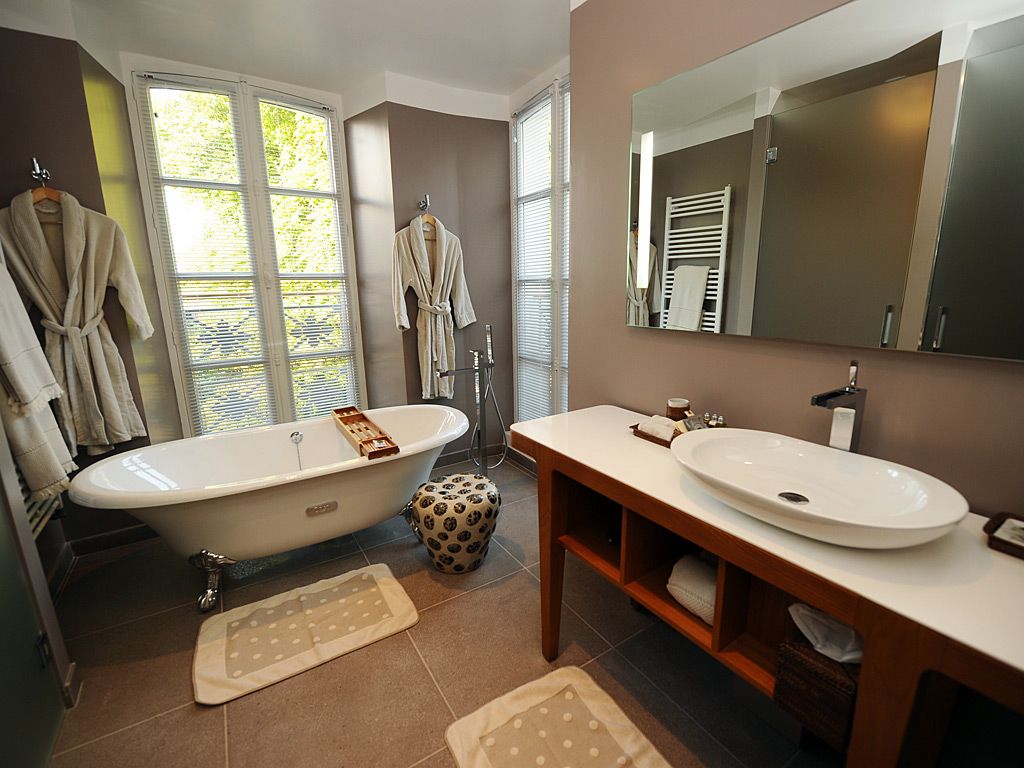
There are three realistic routes, ranked by reliability:
Direct booking through Les Avises. The hotel's own website and direct contact remain the primary channel. The property is not listed on every major platform, and availability that appears briefly on one channel may not appear on another. Checking directly, and checking often, is the approach that works. The hotel is not listed on every booking platform, so contact the property directly to confirm the current booking method.
Specialist wine travel agencies. A small number of Champagne-focused travel operators maintain relationships with Les Avises and can sometimes access rooms that are not visible through public channels. These agencies typically work with clients who have established travel histories in the region and are planning multi-day itineraries across the Côte des Blancs and Montagne de Reims. The lead time required varies; some operators recommend approaching them several months ahead for peak harvest-season dates; confirm directly with the operator.
Off-peak timing. January through March and November see lighter demand from wine tourists. Harvest season, typically late September into October, is the hardest window. If your primary goal is proximity to the domaine rather than harvest atmosphere, the quieter months offer a meaningfully better chance of securing a room.
Staying at Les Avises does not automatically unlock a bottle allocation from the domaine. The two access questions, visiting and buying, run on separate tracks.
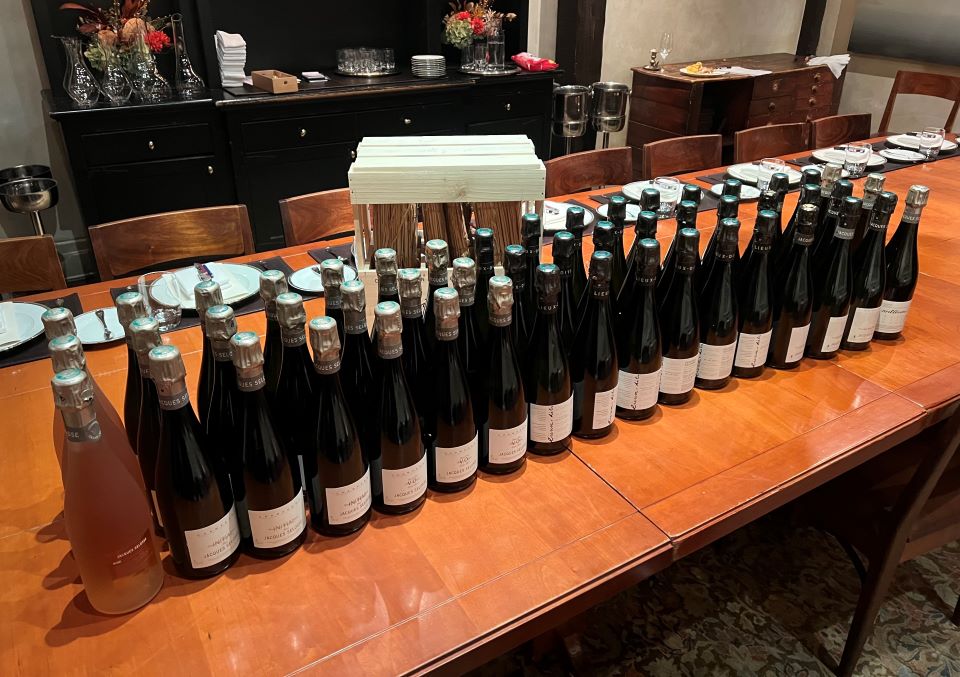
For bottles, the practical routes in 2026 are: building a purchase history with one of Selosse's established importers (in the UK, specialist merchants with long Champagne lists; in the US, the importer network is narrow and allocations are pre-committed); monitoring auction houses including Acker, Hart Davis Hart, and Idealwine for secondary-market bottles; and ordering from the restaurant list at Les Avises itself, where Corinne Selosse curates a selection that includes domaine wines not available through retail channels.
The restaurant list is, in practice, among the more accessible legal routes to drinking current Selosse releases. A dinner reservation at Les Avises, even without an overnight stay, puts you in front of that list. Contact the property directly to ask about dinner-only bookings.
What insiders do differently: they treat Les Avises as a multi-night stay rather than a single-night stop, which builds familiarity with Corinne and the small team, and they arrive having already studied the lieu-dit map of the Côte des Blancs. Knowing the difference between Chemin de Châlons (a mid-slope parcel with more clay influence) and Les Carelles before you sit down signals the kind of engagement that tends to open conversations. Guillaume Selosse has taken on the role of hosting hotel visitors,1 and regulars note that visiting outside the obvious harvest window, when the domaine is less besieged, creates more space for unhurried exchange.
Arriving without a reservation and expecting a cellar tour is especially common error, and the definitive. The domaine does not accommodate walk-ins, and showing up unannounced at the winery address is likely to result in no contact at all. Second: booking a single night during harvest week and expecting extended access to Anselme.
That week is the domaine's most pressured period; the winemaker is in the vineyard and cellar, not receiving guests. Third: approaching the domaine directly for a bottle allocation without any prior relationship, the list is not open to cold inquiries, and the attempt can close doors rather than open them.
Fourth: overlooking the restaurant as an access point. Guests who book a room but skip dinner at Les Avises miss the curated Selosse experience the property offers.
| Route | Access Difficulty | Bottle Access | Lead Time | How to Book |
|---|---|---|---|---|
| Les Avises (hotel + restaurant) | High, ten rooms, no published drop time | Restaurant list available; allocation separate | Unpublished, contact directly | Direct with property |
| Champagne Krug, Krug Ambassade dinners | High, invitation or specialist operator | Wines poured at dinner; retail allocation separate | Varies by operator | Via Krug Ambassade network or LVMH hospitality |
| Champagne Egly-Ouriet, Ambonnay | Moderate, small grower, appointment possible via importer | Importer allocation; limited but less closed than Selosse | Several weeks minimum | Via importer introduction |
| Champagne Ulysse Collin, Congy | Moderate-high, mailing list, no public visits | Mailing list; join via importer | N/A, list-based | Importer or direct mailing list inquiry |
Egly-Ouriet in Ambonnay is particularly practical alternative for collectors who want a grower-Champagne appointment with genuine cellar access. The estate's Pinot Noir-dominant cuvées, particularly the Blanc de Noirs Vieilles Vignes from old vines planted in 1946, are allocated but not entirely inaccessible through importer introductions. A visit to Ambonnay also puts you in the Montagne de Reims, a different terroir conversation from Avize's chalk.
Ulysse Collin in Congy, run by Olivier Collin, offers a mailing-list model that is more recently established and therefore slightly less impenetrable than Selosse's. The Blanc de Blancs Les Pierrières and the rosé Les Maillons are worth tracking; contact via importer is the entry point.
A Champagne specialist merchant tasting, Berry Bros. & Rudd in London, The Rare Wine Co. in the US, or Sélection Massale in Paris, will put current Selosse releases in your glass without requiring any direct domaine relationship. These tastings are announced on merchant mailing lists and are one accessible format for encountering the wines in a guided context.
Les Avises occupies a stone maison de maître on the main road through Avize, a Grand Cru village whose chalk subsoil gives the appellation's Chardonnay its particular tension and mineral persistence. The hotel has ten rooms,3 each individually furnished, and the atmosphere is closer to a well-kept private house than a wine-country inn. Corinne Selosse manages the property and the restaurant with a directness that sets the tone: this is not a hospitality operation designed to impress; it is a place where the wines are the point.
The restaurant is where the experience concentrates. The menu is seasonal and changes with what is available locally, the Côte des Blancs is not a gastronomic region in the way that Burgundy's Beaune is, but the kitchen at Les Avises works at a level that matches the cellar list.
That list is the reason to be there: Corinne curates a selection of domaine wines, including older vintages and lieu-dit cuvées that do not appear in retail channels, and the by-the-glass and by-the-bottle options shift with what is open.
Drinking a Selosse Blanc de Blancs from a parcel like Bout du Clos alongside a dish built around local produce, in a room where the winemaker may walk through, is the experience that no secondary-market bottle can replicate.
Occasional aperitif meetings are organized exclusively for hotel guests, conducted in French, at €50 per person, or €60 per person with translation arranged by the domaine.2 Guests should ask when booking whether a meeting is scheduled during their stay dates,2 these sessions are not guaranteed and do not appear on a fixed calendar.
The village itself is worth a morning on foot. The Selosse parcels are not marked or open to visitors, but the landscape of the Côte des Blancs, the east-facing slopes, the chalk outcrops visible at the vineyard edges, the quiet that settles over the village outside harvest, gives context to what is in the glass. Avize is not a tourist village; that is precisely what makes staying there feel like access rather than performance.
Les Avises is the right destination for collectors and wine travelers who already know the Selosse wines and want to understand the terroir that produces them, not for those seeking an introductory Champagne experience. If you are coming to Champagne for the first time, the grandes maisons in Reims and Épernay offer cellar tours, structured tastings, and hospitality infrastructure that Les Avises does not try to provide. If you have already worked through the grower-Champagne canon and want to spend two nights in the village where Selosse's Blanc de Blancs is made, this is the specific and correct destination.
The stronger occasions: a focused Champagne research trip built around the Côte des Blancs, combining Avize with visits to Cramant, Le Mesnil, and Oger; a celebration that warrants a serious cellar list rather than a grand hotel; or a harvest-adjacent trip in early October when the vineyards are still active but the peak pressure of picking week has passed.
Yes, with clear eyes about what you are and are not getting. Les Avises is not a tasting room, and a stay there does not guarantee a conversation with Anselme Selosse or a bottle allocation from the domaine. What it does guarantee is one legitimate and immersive point of entry into the Selosse world that is available to anyone without a decades-long importer relationship. The restaurant list alone justifies the effort for serious collectors; the ten-room scale means the experience never tips into wine-tourism product.
The allocation list for bottles remains effectively closed through conventional channels. For that problem, the restaurant list and the secondary market are the practical answers, not a cold email to the domaine. Build your merchant relationships in parallel, monitor the auction houses, and treat the Les Avises stay as the experiential layer rather than the procurement route.
Go with flexible dates, contact the property directly, and consider winter or early spring if your schedule allows. The chalk reads the same in February as it does in October, and the room is considerably easier to find. For most collectors, the aperitif meetings, the restaurant list, and the unhurried pace of an off-peak stay add up to something the secondary market cannot sell you, a grounded sense of where these wines actually come from.
Not through any publicly available channel. The domaine does not conduct visits to vineyards or cellars and does not hold tastings open to the public.2 The only reliable route to proximity with the Selosse operation is a stay or dinner at Les Avises. Cellar visits are not offered to the general public.
With ten rooms,3 availability moves quickly, particularly around harvest (late September to October) and during the summer months. Contact the property directly with flexible dates. Regular checking and direct inquiry are one effective approach.
Not automatically. The hotel stay and the domaine's bottle allocation operate on separate tracks. The restaurant at Les Avises does carry a curated selection of domaine wines, including cuvées not available through retail, which is among the more accessible legal routes to drinking current Selosse releases. For retail allocations, the practical channels are established importer relationships and the secondary market.
Occasional aperitif meetings are organized exclusively for hotel guests, conducted in French at €50 per person (€60 with translation arranged by the domaine).2 Guests should inquire whether a meeting is scheduled during their stay dates,2 these sessions are not guaranteed and do not run on a fixed calendar.
The restaurant list is curated by Corinne Selosse and changes with what is open and available. By most accounts it includes lieu-dit cuvées and older vintages that do not appear in retail channels, the Substance solera Blanc de Blancs, parcel-specific releases from Avize and Aÿ, and occasionally the Exquise demi-sec. The list is best discovered in the room.
Get the App
Take the shortlist into the En Primeur Club app for concierge access, saved places, and the next step after discovery.
Get Exclusive AccessMore from the editors