← Guides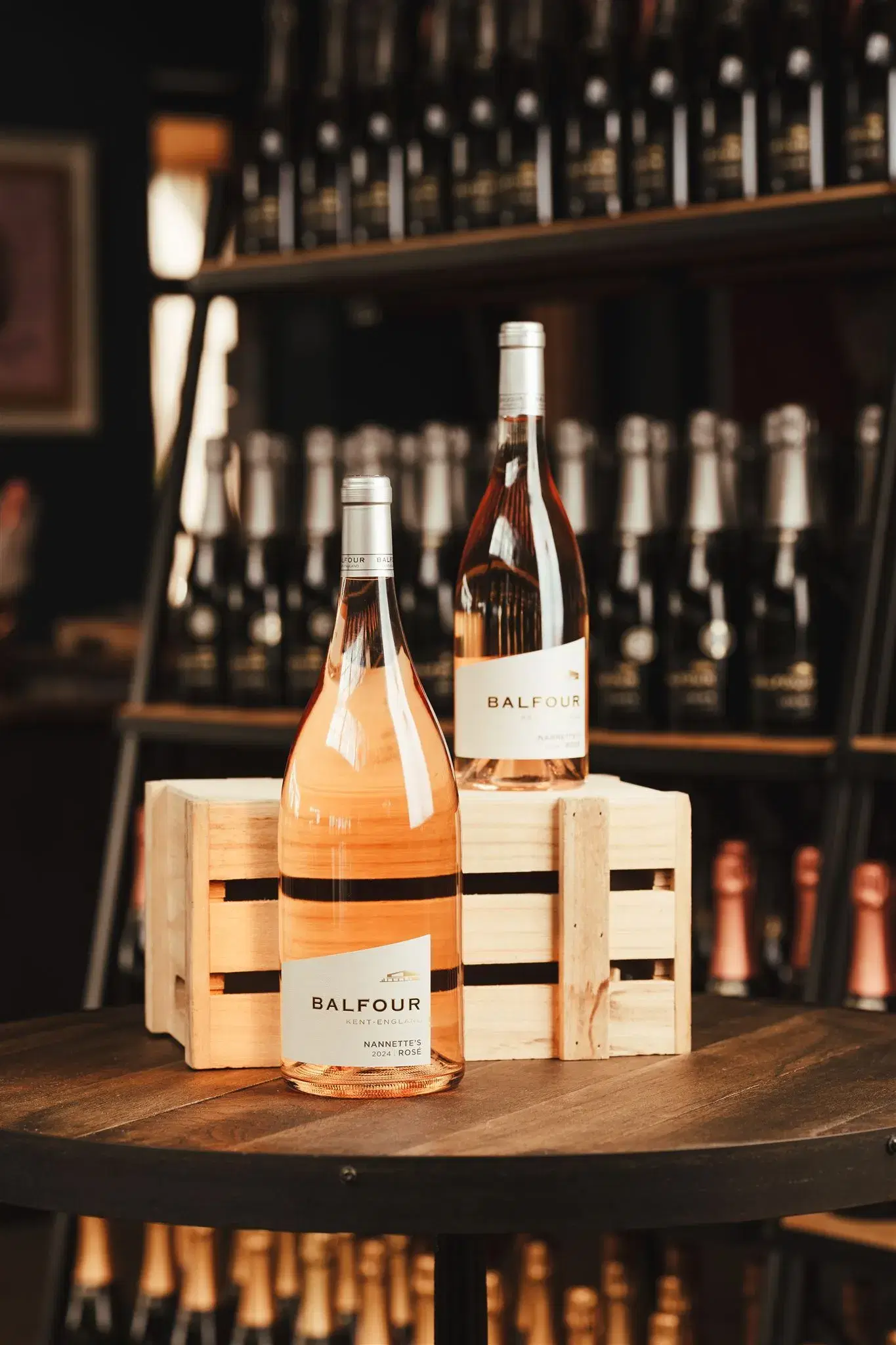
Balfour Winery’s £25 still rosé from Staplehurst blends Pinot Meunier, Chardonnay, Pinot Noir and Reichensteiner.
Balfour Winery’s £25 still rosé from Staplehurst blends Pinot Meunier, Chardonnay, Pinot Noir and Reichensteiner.
That combination gives the release a useful clarity. You know the producer, the place, the vintage, the exact grape mix, the bottle price and the conservation link before the cork is pulled. For a wine region still most often discussed through the lens of traditional-method sparkling, Balfour is putting a still rosé from Kent into the conversation with unusually specific front-of-house detail.
Nannette’s Rosé is not new to the estate. Balfour introduced it in 2010, the same year the winery invested in a winery and tasting room on the Hush Heath Estate. The 2024 vintage arrives fourteen years later with the same useful question attached: how should serious drinkers read English rosé when it is not relying on bubbles for shape, texture or ceremony?
The key detail is the blend. Pinot Meunier and Chardonnay sit level at 40% each, with Pinot Noir at 18% and Reichensteiner at 4%. That makes the wine neither a simple Pinot-led rosé nor a Chardonnay footnote dressed in pink. Its structure begins with two varieties more commonly discussed in the English sparkling context, then moves into still-wine territory.
For drinkers who follow English wine closely, the inclusion of Reichensteiner is also a useful reminder not to flatten Kent into a Champagne-variety copybook. The grape appears here in a small proportion, but its presence changes the conversation from imitation to estate decision-making. Balfour is not presenting a generic pale rosé; it is publishing a blend that points directly back to its own vineyard and cellar choices.
The price gives the bottle another anchor. At £25, or US$33, Nannette’s Rosé 2024 sits in the realm of deliberate buying rather than casual supermarket habit. It is still rosé with a named estate behind it, a vintage on the label and enough detail for a buyer to compare it with other English still wines rather than treating it as a seasonal pour.
Balfour Winery is in Staplehurst, Kent, and that location is not incidental to the release. Kent has become one of the counties most closely associated with England’s maturing wine identity, particularly for producers working with Chardonnay, Pinot Noir and Pinot Meunier. Nannette’s Rosé 2024 draws on that language, then strips away the mousse.
Balfour planted its first vines in 2002. That date matters because it places the estate within the generation of English producers that moved from ambition to infrastructure in a relatively short period. By 2010, Balfour had invested in a winery and tasting room on the Hush Heath Estate; in 2018, the estate followed with an expansion. Nannette’s Rosé entered the range in the same year as the original winery and tasting-room investment.
The timing gives the bottle a cleaner reading. This is not a one-off still rosé added to chase a warm-weather drinking trend. Nannette’s has been part of the Balfour story since 2010, alongside the estate’s more public-facing development at Hush Heath. The 2024 vintage therefore lands with a history already attached, not a long museum history, but enough continuity to make the release more than a seasonal aside.
The 2024 blend carries a sparkling-wine vocabulary without turning into a sparkling wine. Pinot Meunier, Chardonnay and Pinot Noir do much of the work, and Balfour’s choice to name the percentages lets the bottle stand up to closer reading. You can see the architecture before tasting it.
That matters for anyone who has grown used to judging English wine through lees ageing, dosage and mousse. A still rosé asks different questions. How does Pinot Meunier behave without the lift of carbonation? What does Chardonnay contribute when freshness must show without the framing of autolysis? How much Pinot Noir is needed before the wine begins to feel red-fruited rather than simply pale and brisk?
Nannette’s Rosé 2024 does not answer those questions through technical theatre. It answers them through proportion. Equal parts Pinot Meunier and Chardonnay set the base; Pinot Noir adds a smaller share; Reichensteiner finishes the blend at 4%. For a buyer, those numbers are more useful than a row of adjectives. They tell you what Balfour wanted in the glass.
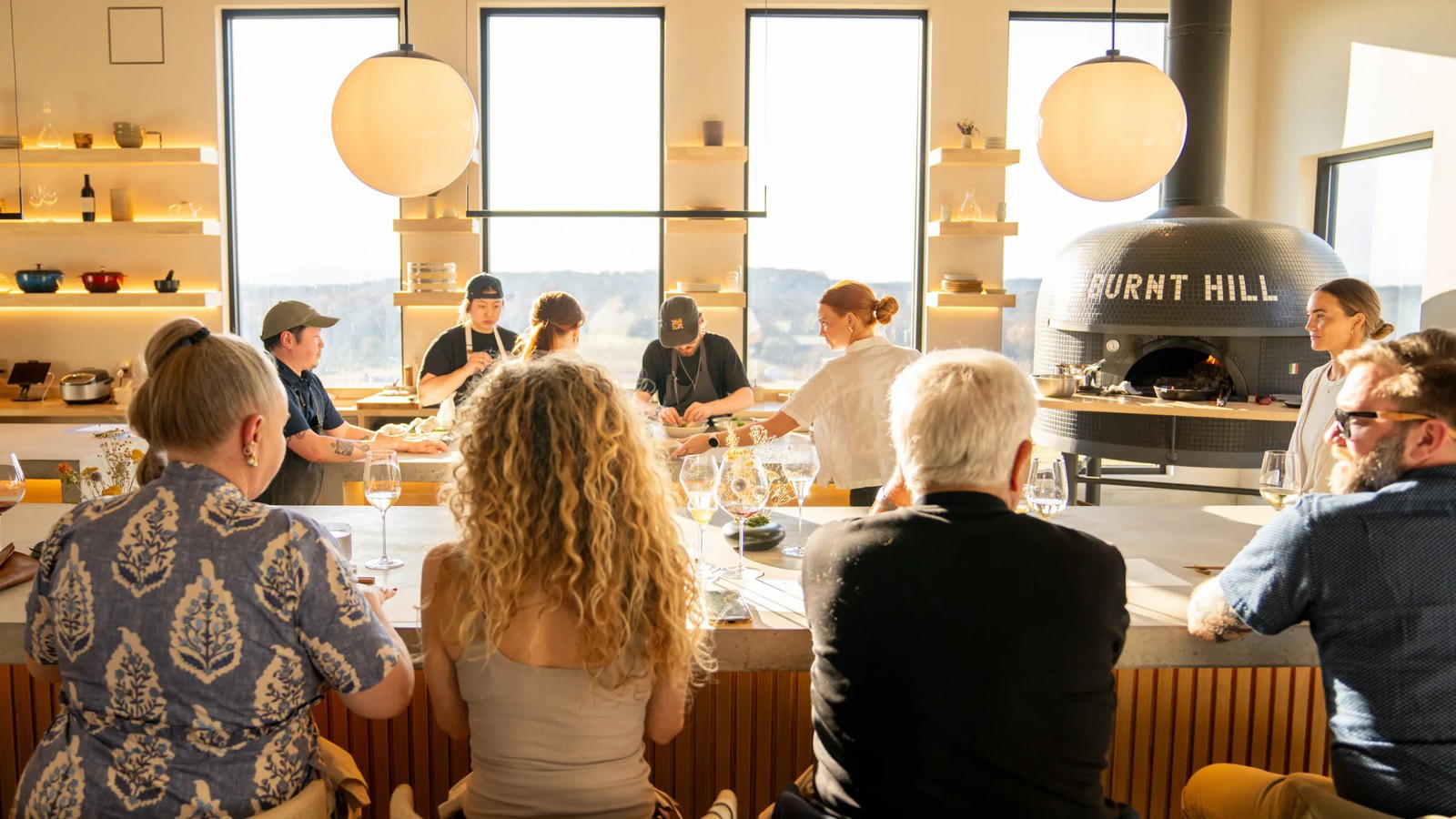
The Hush Heath Estate sits at the centre of the Balfour visitor story. The winery and tasting room investment in 2010 gave the estate a place to receive drinkers, not just make wine, and the 2018 expansion added another marker in its development. Those dates frame Nannette’s Rosé with a physical destination rather than a loose regional label.
For wine travel, that distinction matters. A bottle tasted at home can show you the vintage and the blend; a bottle encountered at the estate also puts the wine against the rhythm of a producer’s own hospitality. You are not just reading “Kent” on a back label. You are connecting Staplehurst, Hush Heath, the first vines planted in 2002 and the still rosé first introduced in 2010.
The release also gives visitors a different way into Balfour. Many drinkers arrive at English estates expecting sparkling wine as the main event, particularly when Chardonnay, Pinot Noir and Pinot Meunier are in play. Nannette’s Rosé 2024 changes the order of attention. It brings the same varieties into a quieter format, where the vintage, blend and table setting carry the argument.
For every bottle of Nannette’s Rosé sold, Balfour Winery donates to support Kent Wildlife Trust.
That link keeps the release local in more than one way. The wine comes from Balfour in Staplehurst, carries a Kent identity, and sends support to Kent Wildlife Trust through each bottle sold. It is a tighter story than a broad sustainability claim because it names the organisation and attaches the donation to the wine itself.
For drinkers, the conservation element should not eclipse the blend. The reason to pay attention remains the wine: a 2024 still rosé from Balfour, built from Pinot Meunier, Chardonnay, Pinot Noir and Reichensteiner. The Kent Wildlife Trust donation adds provenance around the bottle rather than replacing the need for it.
Nannette’s Rosé 2024 gives English still rosé a compact set of details serious drinkers can use: Staplehurst, Kent; Balfour Winery; the 2024 vintage; a blend of 40% Pinot Meunier, 40% Chardonnay, 18% Pinot Noir and 4% Reichensteiner; a £25 retail price; and a donation to Kent Wildlife Trust for every bottle sold.
The release is not trying to behave like a cellar trophy. Its interest lies in the way a Kent producer with vines first planted in 2002 is continuing to give still rosé a named place in the range. Fourteen years after Nannette’s was introduced, the 2024 vintage reads as a measured statement from Balfour: English rosé can speak without sparkle, provided the bottle gives drinkers enough detail to listen closely.
The next thing to watch is how Balfour continues to position still wine alongside its estate hospitality at Hush Heath. If visitors arrive in Staplehurst expecting bubbles and leave comparing Pinot Meunier, Chardonnay, Pinot Noir and Reichensteiner in a still rosé, the conversation around Kent wine will have gained another glass to argue from.
Tagged
Get the App
Take the shortlist into the En Primeur Club app for concierge access, saved places, and the next step after discovery.
Get Exclusive AccessMore from the editors