← Guides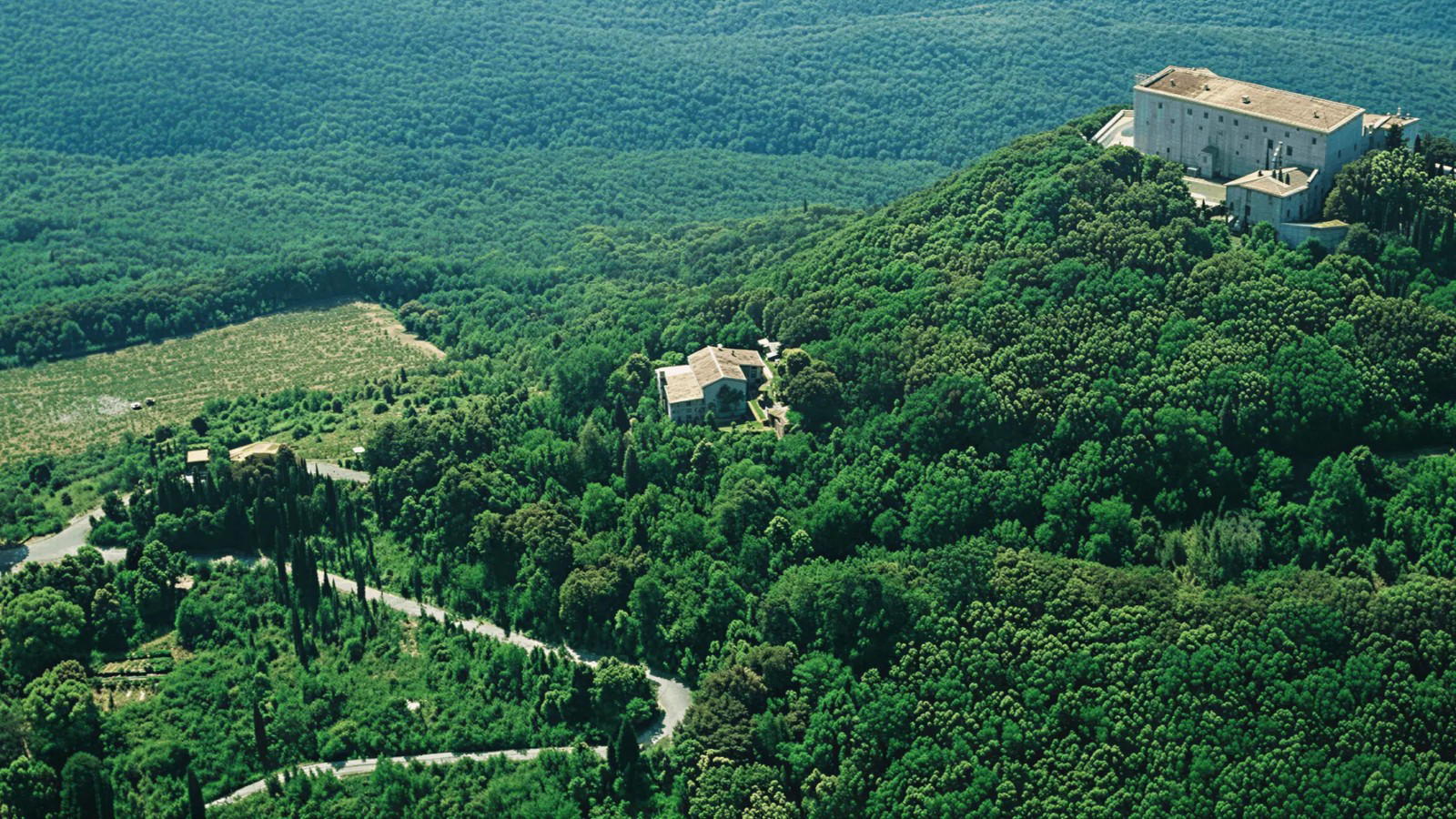
Can You Actually Visit Tenuta San Guido in 2026? Yes, but only on the estate's terms, and those terms are stricter than most Tuscan wineries will admit upfront.
Can You Actually Visit Tenuta San Guido in 2026? Yes, but only on the estate's terms, and those terms are stricter than most Tuscan wineries will admit upfront.
Yes, but only on the estate's terms, and those terms are stricter than most Tuscan wineries will admit upfront. Tenuta San Guido does not operate a public tasting room, does not list on any booking platform, and does not accept walk-in visitors. Access to the Bolgheri estate, the birthplace of Sassicaia, Italy's only single-estate DOC (Bolgheri Sassicaia DOC, granted 2013), runs through a direct request to the estate itself, and the estate is selective about who it hosts.1 For most collectors, the wine is far easier to acquire than the visit.
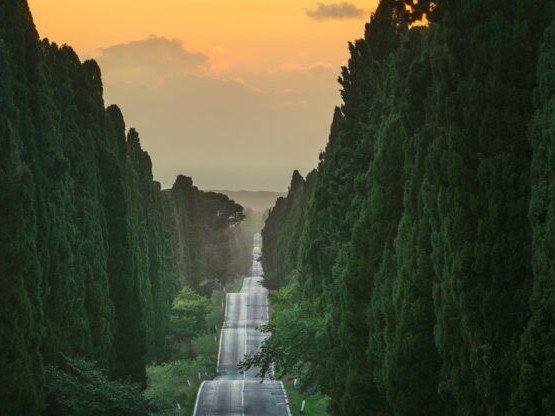
The Tenuta San Guido estate sits on the Maremma coast of Tuscany, roughly five kilometres from the medieval village of Bolgheri along the famous cypress-lined avenue, the Viale dei Cipressi, that Giosuè Carducci immortalised in verse. The property is agricultural in the truest sense: working farmland, not a curated wine-tourism destination. Visitors arrive at a working estate, not a showroom.
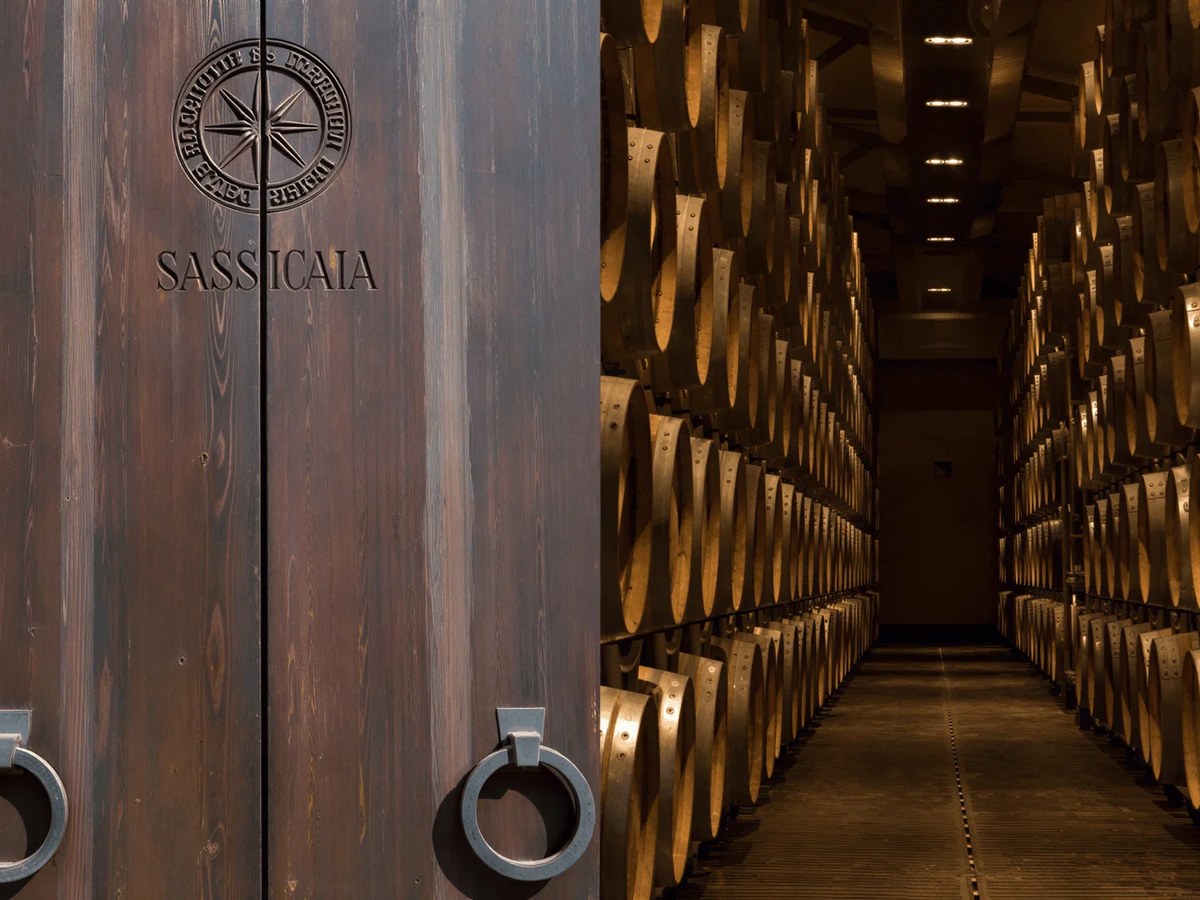
Tastings, when granted, are conducted in the estate's private facilities rather than a purpose-built visitor centre. The format typically centres on current releases of Sassicaia alongside the estate's second wine, Guidalberto, a Cabernet Sauvignon and Merlot blend, and sometimes Le Difese, the entry-level Cabernet Sauvignon and Sangiovese.
The wines are poured in the context of the estate's history: the Incisa della Rocchetta family planted the first Cabernet Sauvignon vines in the 1940s, inspired by the Graves wines they admired, and the estate's first commercial vintage was 1968, released in 1971.
That lineage is present in every conversation.
Cellar access, walking the barrel rooms where Sassicaia ages in French oak barriques, is not guaranteed and appears to depend on the nature of the visit and the relationship with the estate. The experience varies. What is consistent, by all accounts, is that the setting itself carries the weight: the coastal Maremma light, the proximity to the Tyrrhenian Sea that moderates the growing season, and the gravelly soils that echo the Médoc in texture if not in latitude. You are tasting the wine where the idea of it was born.
The visit is not a commercial product in the conventional sense. An alternative route into the estate's wines is a gourmet lunch at Enoteca San Guido, which sits on the Sassicaia estate and can be arranged as a separate booking.1 Treat the formal visit itself as a private audience rather than a ticketed experience.
Sassicaia's position in the Italian wine hierarchy is singular. It is the only wine in Italy to hold its own DOC, Bolgheri Sassicaia DOC, granted in 2013, and it has anchored the Super Tuscan category since the 1970s. That status generates a volume of interest the estate has no structural incentive to accommodate. Tenuta San Guido is a family estate, still controlled by the Incisa della Rocchetta family, and it has never positioned itself as a wine-tourism business.
The competition for visits comes primarily from three directions: trade buyers and importers with existing commercial relationships, journalists and critics on assignment, and high-net-worth collectors who have built relationships through their merchants. Private individuals without a trade connection or a warm introduction face the steepest climb. Visits require an appointment and can take months to schedule even for trade delegations.2
There is no Resy listing, no Tock page, no publicly available booking surface of any kind. The estate's own website provides contact information, and direct enquiry by email or phone is the only documented route.
Bolgheri wineries typically operate Monday to Friday and require advance reservations; they typically close during grape harvest.1 If you are planning a trip to Bolgheri around a visit to Tenuta San Guido, confirm directly with the estate well in advance, and build contingency into your itinerary, because confirmation is not guaranteed. Attempting to arrive without a confirmed appointment is not a viable strategy; the estate is private property and access is controlled.
Direct contact with the estate is the only published route for a visit. The estate's website carries contact details; a well-crafted, specific enquiry, stating your background, your connection to the wine, and the nature of the visit you are requesting, is more likely to receive a response than a generic tourism request. Write in Italian if you can, or have your request translated. The estate is Tuscan, not international-hospitality-facing.
Your fine wine merchant is the channel most collectors underuse for visit access. Importers and merchants with active commercial relationships with Tenuta San Guido occasionally facilitate introductions for their best clients. If you buy Sassicaia regularly through a single merchant, particularly one with a direct import relationship, ask explicitly whether they can support a visit request. This is the route that most reliably produces a confirmed appointment for private collectors.
Harvest and trade events in Bolgheri occasionally bring the estate into a more accessible context. The Bolgheri DOC consortium and regional wine events sometimes include estate visits as part of structured programmes. These are not guaranteed routes to Tenuta San Guido specifically, but they place you in the right geography and the right conversations.
Wine travel specialists who operate in Tuscany, agencies that build bespoke itineraries for collectors, sometimes hold relationships with estates that are otherwise difficult to access. Private Bolgheri wine tours through specialist operators run from €550 to €800 per person depending on group size.1 Verify any claimed access before booking; the estate's selectivity means that not every operator who claims access can deliver it.
Arriving without a confirmed appointment. The estate is private property. There is no tasting room to walk into, no sign directing visitors to a reception. Showing up unannounced at Tenuta San Guido does not produce a spontaneous tasting; it produces a polite refusal at the gate, at best.
Framing the request as tourism rather than wine. The estate responds to people who know the wine, its history, its vintages, its place in the Bolgheri DOC. A request that reads as a bucket-list tick rather than a genuine engagement with Sassicaia is less likely to succeed. Name the vintages you have cellared. Reference the estate's history with the Incisa della Rocchetta family. Show that you have done the reading.
Leaving insufficient lead time. Given the volume of interest and the estate's non-commercial orientation toward visits, last-minute requests are unlikely to succeed. If you are planning a Tuscan trip for the autumn harvest season, when Bolgheri is at its most atmospheric, begin your outreach months in advance, not weeks. Note also that cancellation policies for Bolgheri tour operators can be strict: cancellations within 48 hours of a confirmed visit typically incur an 80% charge.1
Relying on a third party who cannot actually deliver. Some tour operators and concierge services imply access they do not have. Ask for specifics: has the operator confirmed a visit with the estate directly, and can they provide documentation? Vague assurances are not appointments.
The visit to Tenuta San Guido is worth pursuing if you are a serious collector of Sassicaia with multiple vintages in your cellar, if you are travelling to Tuscany with enough flexibility to absorb a possible refusal, or if you have a trade or merchant relationship that can support the introduction. It is a natural anchor for a Bolgheri-focused trip that also takes in Ornellaia and Michele Satta, the appellation rewards a multi-estate itinerary.
It is not the right pursuit if you are visiting Tuscany primarily for Chianti Classico or Brunello and adding Bolgheri as an afterthought. The coastal Maremma is a separate journey, geographically and stylistically, from the Chianti hills. Build the trip around Bolgheri if you are going to Bolgheri.
Harvest season, September and October, is when the estate is most alive, but it is also when the team is most occupied. Bolgheri wineries typically close during grape harvest,1 so autumn visits to Tenuta San Guido are particularly unlikely to be confirmed. Spring visits, when the vines are in growth and the estate is less pressured, may be easier to arrange. Confirm directly; do not plan a trip around an unconfirmed window.
| Estate | Access Difficulty | Booking Route | What You Get | Sassicaia Substitute? |
|---|---|---|---|---|
| Ornellaia (Bolgheri) | Moderate, structured visitor programme | Direct via estate website; advance booking required | Cellar tour, tasting of Ornellaia and Le Serre Nuove; seasonal harvest experiences available | Close, Cabernet Sauvignon-led, similar coastal terroir |
| Guado al Tasso / Antinori (Bolgheri) | Moderate, part of Antinori's broader visitor infrastructure | Via Antinori's booking system; more accessible than single-family estates | Estate tour and tasting; Bolgheri Superiore and Vermentino | Partial, different ownership philosophy, broader production |
| Michele Satta (Bolgheri) | Lower, smaller, more artisan operation | Direct contact; more flexible with private visitors | Intimate tasting with the producer; Cavaliere and Piastraia | Different register, more artisan, less grand vin |
| Tasting Sassicaia in situ (Enoteca Tognoni, Bolgheri village) | Low, walk-in wine bar in the village | No booking required for bar seating | Sassicaia by the glass or bottle; Bolgheri village atmosphere | The wine itself, without the estate |
Ornellaia is strongly recommended to be booked well in advance due to high demand,1 it is particularly direct alternative for collectors who want a Bolgheri estate experience at the same quality level. The estate runs a structured visitor programme including harvest experiences, and the wines sit in the same conversation as Sassicaia: Cabernet Sauvignon-dominant, coastal Maremma terroir, aged in French oak. The access mechanics are more transparent and the booking surface is public.
For the wine itself without the estate visit, the Tenuta San Guido wine shop sits across the road from the winery2 and is accessible after a confirmed visit. Enoteca Tognoni in Bolgheri village pours Sassicaia by the glass and by the bottle. It is not the same as standing in the vineyard, but it is Sassicaia in its home village, which is not nothing.
Tenuta San Guido is one of the few Italian estates where the visit genuinely adds something that the wine alone cannot give you, the coastal light, the gravelly soils, the sense of a family that planted Cabernet Sauvignon in Tuscany before anyone thought it made sense. That context changes how you taste the wine afterward. It is worth pursuing.
But pursue it honestly. This is not a visit you book; it is a visit you earn through relationship, preparation, and a well-timed, well-written request. The merchant route is one reliable path for private collectors, if you buy Sassicaia regularly, your importer is your best advocate. Direct outreach works, but it requires patience and specificity. Build the Bolgheri trip around Ornellaia as your confirmed anchor, and treat the Tenuta San Guido visit as the hoped-for addition rather than the guaranteed centrepiece.
For most collectors, Sassicaia in the glass, whether at Tognoni in the village or in your own cellar, is the more reliable reward. The estate's inaccessibility, in the end, is part of what makes the wine what it is: a Cabernet grown on a private Tuscan farm by a family that never needed to sell you a tour.
No. Tenuta San Guido is a private working estate with no public tasting room or walk-in access. All visits require a confirmed appointment arranged directly with the estate in advance. Arriving without one will not produce a tasting.
The estate does not operate a public booking page or list on any reservation platform. The documented route is direct contact via the estate's website. A specific, well-prepared enquiry, referencing your connection to the wine and the nature of the visit, is more likely to receive a response than a generic request. Confirm well in advance of any planned travel.
Harvest season (September, October) is when the estate is most active but also most occupied. Spring visits, when the team is less pressured, may be easier to arrange. Confirm directly with the estate; do not plan a trip around an unconfirmed visit window.
Ornellaia runs a structured visitor programme including harvest experiences and can be booked directly through the estate's website, book well in advance, as demand is high. Guado al Tasso (Antinori) offers a more accessible booking infrastructure. For Sassicaia itself without an estate visit, Enoteca Tognoni in Bolgheri village pours the wine by the glass in the village where it was born.
Get the App
Take the shortlist into the En Primeur Club app for concierge access, saved places, and the next step after discovery.
Get Exclusive AccessMore from the editors