← Guides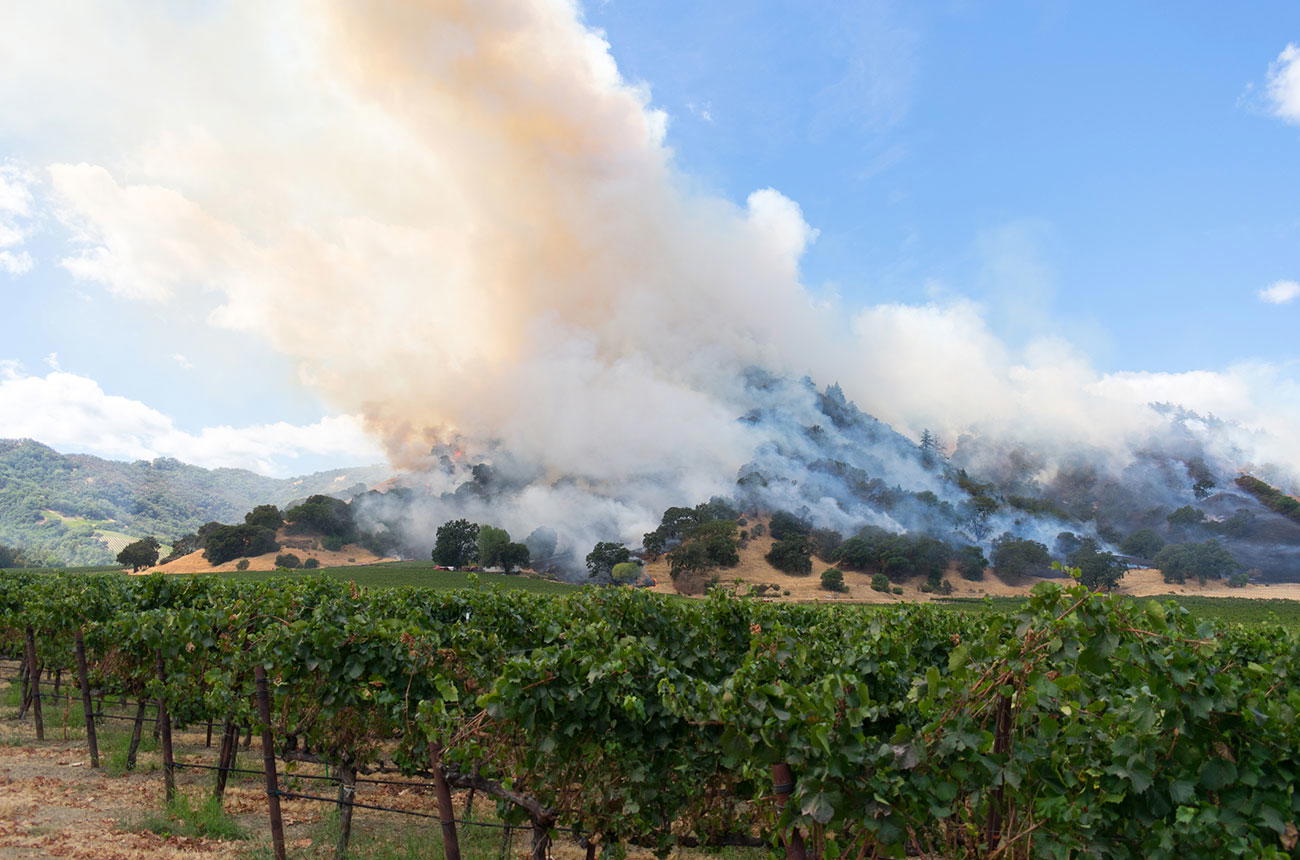
Bordeaux estates sent staff, tractors and water cisterns as 103,000 acres burned near Bordeaux; Philippe Castéja says no vineyard was touched.
Bordeaux estates sent staff, tractors and water cisterns as 103,000 acres burned near Bordeaux; Philippe Castéja says no vineyard was touched.
Smoke over the pine forest near France’s Atlantic coast is not the image Bordeaux wants at the start of a growing season, yet by late July 2026 that was the scene: 103,000 acres burned near Bordeaux, and estates including Château Margaux and Château Giscours sent staff, tractors and equipment while Philippe Castéja said no vineyard had been touched. For readers searching bordeaux wildfire response 2025, the lesson now belongs to the July 2026 fire: between July 25 and 29, it moved through pine forest and small villages, sending residents and tourists out of harm’s way and threatening outer suburbs as well as aerospace and military facilities near Bordeaux.
For Bordeaux, the story sits at the edge of the vines, where luck met practical estate work. Châteaux in the Médoc, Graves, Pessac-Léognan and Entre-deux-Mers used agricultural machinery, water access and estate staff as part of the regional response. Château Smith Haut Lafitte put private water cisterns at the disposal of local firefighters. Château Margaux sent staff. Château Giscours sent tractors and other equipment to ferry water. Château Haut-Bailly watched smoke pass nearby without fire touching the vineyard.
Bordeaux’s scale gives the outcome its weight. According to Wine Enthusiast, the region’s vineyards cover 233,000 acres, five times more ground than Napa Valley. A fire that missed every vineyard parcel, while burning 103,000 acres of surrounding forest and villages, asks you to hold two facts together: swift protection on the ground, and climate pressure arriving before the 2026 harvest begins.
The phrase bordeaux wildfire response 2025 may be what many readers type first, but the sourced fire event now shaping Bordeaux’s conversation is the July 2026 blaze reported by Wine Enthusiast. Vintage context lives and dies by dates, and Bordeaux’s 2026 growing season has already been marked by hot, dry weather, smoke fears and an unusually early harvest calendar.
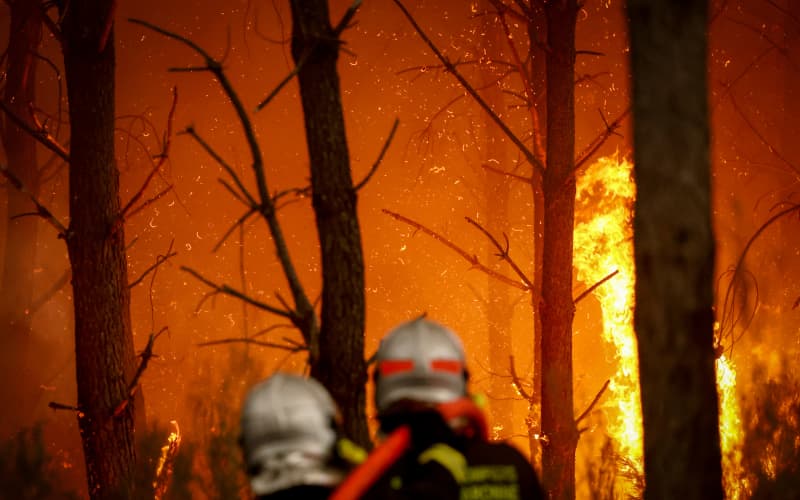
The fires burned most intensely between July 25 and 29 across pine forest and villages near the Atlantic coast. The immediate concern was human: residents and tourists evacuating, firefighters under pressure, and nearby infrastructure exposed. The wine question followed quickly because Bordeaux’s vineyard area runs north and south of the city, including the Médoc and Graves, and smoke does not respect appellation boundaries.
The first reassurance came from the estates themselves. Owners reported no fire losses. Wine Enthusiast described no immediate threat to vineyards in the Médoc and Graves, while acknowledging concern from smoke carried by wind. Philippe Castéja, president of the Conseil des Grands Crus, supplied the sentence likely to travel with the 2026 vintage in early collector notes: no vineyard had been touched.
That does not make the event a footnote. Bordeaux has been managing weaker consumption, and Wine Enthusiast reports that tourism had been the only growing segment of the Bordeaux wine business before the fires. The timing carried anxiety: high summer, visitors in the region, harvest approaching, smoke in the air, and the global wine trade already looking at 2026 through the lens of heat.
For travelers, the practical reading is simple. The châteaux are still standing; the vines were not burned; but the region’s summer itinerary now includes climate as part of the conversation. A tasting in Pessac-Léognan or Margaux after this fire season is no longer just a discussion of gravel and cellar architecture. It is also a discussion of water, tractors, evacuation routes and the shrinking distance between vineyard culture and emergency response.
Wine estates are built around timing. Pick too early and you lose depth; pick too late and you lose balance. During the July fires, timing meant a different kind of coordination. As the blaze spread, growers dispatched tractors to haul water, offered private cisterns to local crews, sent farm staff toward the front lines and coordinated estate networks to respond to new outbreaks, according to Wine Enthusiast.
That detail tells you more than any broad statement about Bordeaux solidarity. Tractors that usually work vineyard rows became water-hauling vehicles. Estate cisterns, maintained for agricultural and property use, became assets for firefighters. Staff whose seasonal rhythm usually runs from canopy work to harvest prep shifted into support roles for exhausted crews.
South of Bordeaux city, Château Haut-Bailly in Pessac-Léognan sat close enough to feel the threat through smoke. Director Véronique Sanders told Wine Enthusiast that growers were coming together to help fight the fire, while also making clear that the episode had shaken the community. The vineyards there were not affected by fire, but the estate’s experience captures the tension of the week: visible smoke one day, uncertainty the next, and a harvest calendar moving faster than usual.
Nearby Château Smith Haut Lafitte had water cisterns that director general Fabien Teitgen said the property put at the disposal of local firefighters. The same report notes that the estate had emergency plans to remove animals from its farm, though the fire did not come close. That is the kind of operational detail collectors rarely see during a polished visit: behind the tasting room, a working estate has livestock, water storage, staff protocols and contingency plans.
Further north, Château Margaux deputy managing director Aurélien Vallance said the estate sent staff to assist firefighters. Château Giscours in Margaux sent tractors and other equipment to ferry water. For readers who know these names through labels and auction catalogues, the image lands sharply: Margaux estates turning agricultural capacity toward the fire line while the vines continue toward an August harvest.
The response was not an abstract industry statement. It was equipment and staff, named estates and specific appellations, deployed while fire burned beyond the vineyard perimeter.
The cleanest fact in the report is also the one Bordeaux will need repeated with care: 103,000 acres burned near Bordeaux, but no vineyard was directly damaged. Castéja put it plainly: "no vineyard has been touched and experts have said there is no noticeable effect on the vines," said Philippe Castéja.1
That sentence matters because Bordeaux’s vineyard geography can be misunderstood from a distance. The region is large, stitched across multiple banks and subregions, and Wine Enthusiast places its vineyard footprint at 233,000 acres. A fire near Bordeaux is not automatically a fire in the vines. In this case, the severe burning occurred in pine forest and small villages close to the Atlantic coast, while the major vineyard areas north and south of the city did not report fire losses.
The difference between fire damage and smoke exposure also matters for collectors. Direct flame destroys vines, buildings and infrastructure. Smoke is more complicated, especially with red grapes approaching harvest. Wine Enthusiast reports that Bordeaux growers played down the risk of smoke taint for 2026, with comparison made to California’s 2020 vintage as a far more severe smoke-taint episode. The Bordeaux concern remains concentrated around what continued smoke could mean if conditions changed before red grapes came in.
Guillaume Gonfrier of Vignobles Gonfrier in the southern Entre-deux-Mers told Wine Enthusiast he remained confident in the 2026 vintage. That is not a tasting note; nobody should pretend to taste wines still on the vine. It is, however, a producer signal from a part of Bordeaux away from the headline châteaux, and it helps widen the map beyond the Médoc and Graves.
The fire was contained at the time of the report, though Wine Enthusiast noted that fully putting it out would take months. That leaves a particular kind of Bordeaux tension: the worst had not reached the vineyards, yet the season was not finished. In the cellar, Bordeaux is often judged by patience. In the vineyard during 2026, patience may be less available.
The named estates give this story its shape. Château Haut-Bailly anchors the Pessac-Léognan account, with Véronique Sanders describing both grower response and community unease. The estate saw smoke, according to the report, but its vineyards were not touched by fire. For anyone planning a Graves or Pessac-Léognan itinerary, that distinction is central: the fear was real, the fire damage to vines was not.
Château Smith Haut Lafitte’s contribution centered on water access. Fabien Teitgen told Wine Enthusiast that the property had multiple water cisterns placed at the disposal of local firefighters. A liter count has not been given, and that absence matters; precision is part of honest wine writing. What we can say is narrower and more useful: Smith Haut Lafitte had private water resources and made them available to crews working the fire.
Château Margaux’s role came through people. Aurélien Vallance, deputy managing director, said the estate sent staff to assist firefighters and worked closely with other estates to coordinate any response if the fires came closer. The estate also provides among the more concrete harvest signals in the report through Pavillon Blanc, the white wine of Château Margaux, which was nearing picking far earlier than many Bordeaux drinkers might expect.
Château Giscours contributed machinery. Wine Enthusiast reports that the Margaux estate sent tractors and other equipment to ferry water to firefighters. In a region where the word château can seduce visitors into thinking only of salons and cellars, Giscours is a reminder that these properties are farms with practical, heavy, useful tools.
Together, these names show the mechanics of the Bordeaux wildfire response: Pessac-Léognan water and smoke vigilance, Margaux staff and tractors, Entre-deux-Mers producer confidence, and a regional network built quickly enough to matter.
The fire arrived just as Bordeaux was preparing for an unusually early harvest. Wine Enthusiast attributes that timing to increasingly hot, dry weather, and Vallance gave one precise date signal from Château Margaux: "We could start harvesting the whites for Pavillon Blanc in about 10 days [on August 10], and for the reds by the end of August," said Aurélien Vallance.2
For collectors, that quote does more than mark a picking window. Pavillon Blanc is made from white grapes at Château Margaux, and its potential August 10 start date places the estate’s white harvest almost immediately after particularly intense phase of the fires. Reds by the end of August sharpen the question further, because red grapes are the category growers flagged when discussing smoke risk.
Wine Enthusiast reports that growers played down smoke taint concerns, saying the situation was nothing like California in 2020. That comparison should calm some nerves without ending the conversation. California 2020 has become a reference point for smoke impact in fine wine circles because it forced estates, buyers and critics to confront how invisible compounds can alter market confidence. Bordeaux 2026 is not being described in those terms.
The more durable issue is heat. The report frames Europe as heating quickly, with the hot, dry summer of 2026 acting as a sign of what Bordeaux may face more often. Earlier harvests can protect acidity and freshness when managed well; they can also compress decision-making across large estates and appellations. Bordeaux’s identity depends on balance, and heat tests that grammar.
A disciplined collector should resist predicting yields, allocations or price movement from this report alone. The more useful watch points are the dates producers actually pick, what estates report about smoke during vinification, and how early tastings frame freshness, alcohol and tannin. The fire did not burn the vines. The vintage will still need to speak through the glass.
Bordeaux’s fires did not only threaten vineyards from a distance; they interrupted the region’s visitor economy at the height of summer. Wine Enthusiast reports that residents and tourists fled as fires burned near the Atlantic coast and threatened outer suburbs and key facilities. That timing matters because tourism had been the only growing segment of the Bordeaux wine business before the fires, according to the report’s account of comments made by winemaker Edouard le Grix de la Salle to PBS.
For En Primeur Club readers, that creates a practical lens for the next Bordeaux trip. The essential addresses remain in view: Château Margaux, Château Giscours in Margaux, Château Haut-Bailly in Pessac-Léognan, Château Smith Haut Lafitte, and producers such as Vignobles Gonfrier in Entre-deux-Mers. But the visitor experience now carries a new layer. Ask how estates managed smoke. Ask how harvest timing changed. Ask what they learned from sharing tractors, cisterns and staff with local firefighters.
The phrase bordeaux wildfire response 2025 may continue to circulate in search, but the live lesson belongs to 2026. Bordeaux’s vineyards escaped the flames; its estates proved useful beyond their cellar doors; and the early harvest now approaching will show how a hot, dry, smoke-shadowed season translates into fruit, must and, eventually, bottles. The next chapter will not be written by the fire line alone, but by picking dates, fermentations and the first honest tastings of the 2026 wines.
Get the App
Take the shortlist into the En Primeur Club app for concierge access, saved places, and the next step after discovery.
Get Exclusive AccessMore from the editors