Zen Sushi Omakase
On Eldridge Street in Manhattan's Lower East Side, Zen Sushi Omakase occupies a narrow address that places it squarely within New York's most competitive omakase tier. The format follows the counter-only discipline that defines the city's serious sushi scene: a fixed progression of courses, chef-led pacing, and a room designed to keep attention on the plate. For those tracking where the Lower East Side's dining scene has shifted in recent years, it belongs on the list.
Pearl is the En Primeur Club membership app — saves, bookings, and concierge access live there. Same editors, same standards.
- Address
- 235 Eldridge St, New York, NY 10002
- Phone
- +1 917 673 1724
- Website
- zensushiomakase.com
- Directions
- Get directions
 Saves & bookings on Pearl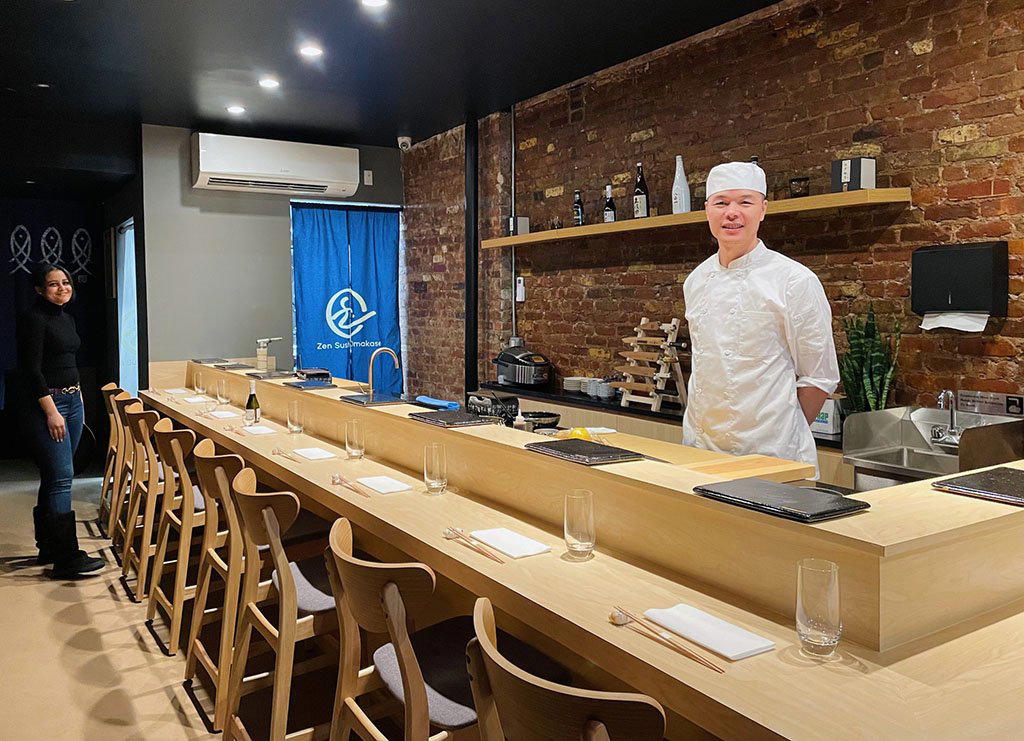
The Counter as Architecture
New York's omakase scene has, over the past decade, converged on a particular physical logic: fewer seats, longer counters, and rooms stripped of almost everything that doesn't focus attention on the chef's hands. The format is now so established that the counter itself functions as the primary design statement. At 235 Eldridge Street, Zen Sushi Omakase works within that tradition, occupying a Lower East Side address that has become one of the more active corridors for serious, format-driven dining in Manhattan. The building's narrow footprint, typical of this stretch of Eldridge, constrains the interior in ways that suit omakase's intimacy requirements better than a conventional dining room could.
The Lower East Side's evolution as a dining destination is worth understanding before you book. A neighbourhood that once meant late-night ramen and dive bars has, through a sustained run of openings since roughly 2015, acquired a layer of technically serious restaurants operating at price points that compete directly with Midtown and the West Village. Omakase, a format that demands proximity and focus from both chef and guest, fits that neighbourhood energy well. It doesn't require a grand room, only a precise one.
What the Format Demands
Counter omakase, as a dining structure, eliminates nearly all the variables that restaurants usually manage through table spacing, menu breadth, or service hierarchy. The room becomes the menu's first course. In the tighter omakase houses of New York, particularly those on the Lower East Side and in the East Village, the design calculus is consistent: warm wood, minimal overhead lighting, and counter heights calibrated so that the preparation surface is visible without straining. The absence of ornamentation isn't minimalism as aesthetic choice so much as omakase's inherent logic applied to construction.
This matters because it shapes the entire visit. A well-constructed omakase counter forces a particular quality of attention from its guests, one that a split-level dining room or a dim cocktail lounge cannot replicate. The physical container creates the conditions for the experience. New York's serious sushi operations, from the allocation-driven counters in Midtown to the neighborhood-rooted spots in the East Village, have understood this for long enough that guests now arrive with that expectation baked in.
Lower East Side Context and Where Zen Sushi Fits
Eldridge Street sits between Delancey and Houston, a few blocks from the corridor that includes some of the neighbourhood's most visited bars and restaurants. The density of options in this part of the Lower East Side means that a single-format operation like Zen Sushi Omakase competes not just on cuisine but on evening utility. Guests are often choosing between a long omakase counter and a table at one of the area's more casual spots, and the format signals a commitment to a specific kind of evening: seated, sequential, unhurried.
New York's bar scene in the same general geography offers meaningful pairing options before or after a counter meal. Superbueno and Amor y Amargo both operate within a short reach of the Lower East Side, with the latter running one of the city's more disciplined bitters-focused programs. Angel's Share and Attaboy NYC represent the East Village iteration of that same shift toward technical bar programs over atmosphere-led spaces. For an omakase dinner that ends early by New York standards, any of these function as logical extensions of the evening.
For readers tracking counter-driven dining and serious bar programs across American cities, the pattern repeats. Kumiko in Chicago runs a Japanese-inflected cocktail and bar-snack format that shares structural DNA with omakase's sequenced approach. Bar Leather Apron in Honolulu and Jewel of the South in New Orleans both apply similar precision-over-volume thinking to their programs. Julep in Houston, ABV in San Francisco, and Allegory in Washington, D.C. round out a cohort of American bars where the format and the room design carry as much weight as the drink list. Even in Europe, The Parlour in Frankfurt on the Main reflects a similar movement toward restrained, technically grounded hospitality spaces.
Booking, Timing, and the Lower East Side Variable
New York's omakase market stratifies sharply by lead time. The most allocated counters book out three to four months ahead; neighbourhood-level operations can offer shorter windows, though this shifts seasonally. The Lower East Side as a neighbourhood tends to be slightly more accessible in terms of reservation lead times than the Midtown or West Village equivalents, which attracts guests who want the format without the scheduling friction of the city's most competitive tables. This is a meaningful distinction in a city where booking difficulty has become its own proxy for quality.
Weekend versus weekday matters here more than in casual dining. Counter omakase, because the pacing is set by the chef rather than the table, benefits from weeknight visits when the rhythm is less compressed. The Lower East Side's foot traffic pattern also shifts noticeably: weekend nights bring a different energy to the streets surrounding Eldridge, which affects the experience of arriving at and leaving a focused, quiet counter format.
For a fuller picture of where Zen Sushi Omakase sits within New York's broader dining scene, the EP Club New York City guide maps the relevant tiers across neighbourhoods and cuisine types.
Know Before You Go
- Address: 235 Eldridge St, New York, NY 10002
- Neighbourhood: Lower East Side, Manhattan
- Format: Counter omakase
- Leading approach: Weeknight visits for a quieter counter experience; check lead times before planning
- Nearby bars: Amor y Amargo, Attaboy, Angel's Share (East Village), Superbueno
How Zen Sushi Omakase New York City compares with similar nearby venues.
| Venue | Cuisine |
|---|---|
| Cocktail Omakase | Tokyo-inspired cocktail tasting menu |
Continue exploring
More in New York City
Bars in New York City
Browse all →
Restaurants in New York City
Browse all →
Hotels in New York City
Browse all →




At a Glance
- Intimate
- Elegant
- Cozy
- Quiet
- Special Occasion
- Date Night
- Standalone
- Counter Only
- Sake
Current opening hours
- Monday
- Closed
- Tuesday
- 5–10:30 PM
- Wednesday
- 5–10:30 PM
- Thursday
- 5–10:30 PM
- Friday
- 5–11:30 PM
- Saturday
- 12:30–3:30 PM, 5–11:30 PM
- Sunday
- 12:30–3:30 PM, 5–10:30 PM
Hours can change for holidays and private events. Last verified .
Quiet, leisurely sushi counter setting with complementary background music playlist that supports a thoughtful omakase experience.
Know Before You Go
- Getting there
- 235 Eldridge St, New York, NY 10002