UGO Cocktail Bar - Bistrot occupies a corner of Milan's Navigli-adjacent Porta Genova district on Via Corsico, where the city's hybrid bar-bistrot format has found some of its most considered expressions. The venue pairs a cocktail program with a kitchen, placing it in a format tier that separates it from Milan's dedicated cocktail bars and from conventional restaurant dining alike.
Pearl is the En Primeur Club membership app — saves, bookings, and concierge access live there. Same editors, same standards.
- Address
- Via Corsico, 12, 20144 Milano MI, Italy
- Phone
- +39 02 3981 1557
- Website
- ugobar.it
- Directions
- Get directions
 Saves & bookings on Pearl
Via Corsico and the Porta Genova Bar Scene
Milan's cocktail culture has reorganised itself over the past decade into distinct tiers. At one end sit the grand-café institutions like Camparino in Galleria, trading on address and heritage. At the other, technically ambitious operations like 1930 or Moebius Milano pursue competition-level bartending. Between those poles, a smaller cohort of bar-bistrot hybrids has emerged in the neighbourhoods south and west of the centre, where the canal district's less formal register suits a format that doesn't ask guests to choose between a serious drink and a proper meal. UGO Cocktail Bar - Bistrot is a bar at Via Corsico 12 in Milan,288 reviews and a price tier of 3. It sits inside that cohort.
Via Corsico runs through the Porta Genova zone, a neighbourhood that has absorbed several waves of creative and hospitality investment without losing the residential texture that keeps it from feeling like a designated nightlife corridor. That character matters to how hybrid bar-bistrot venues function here. The foot traffic is local as often as it is destination-driven, which tends to produce programming calibrated around repeat visits rather than one-off spectacle.
The Physical Space as an Argument
The bar-bistrot format lives or dies by how it resolves the spatial tension between a cocktail bar and a restaurant. These are rooms that need to function simultaneously as places where someone orders a pre-dinner Negroni at the counter and someone else settles in for two hours with a plate and a glass of wine. Getting that right is an architectural and furniture problem as much as it is a programming one. Italian bars that have solved it well, including L'Antiquario in Naples and Al Covino in Venice in their own registers, tend to do so by creating clear visual zones without hard separation: counter seating distinct from table seating, lighting that differentiates without partitioning.
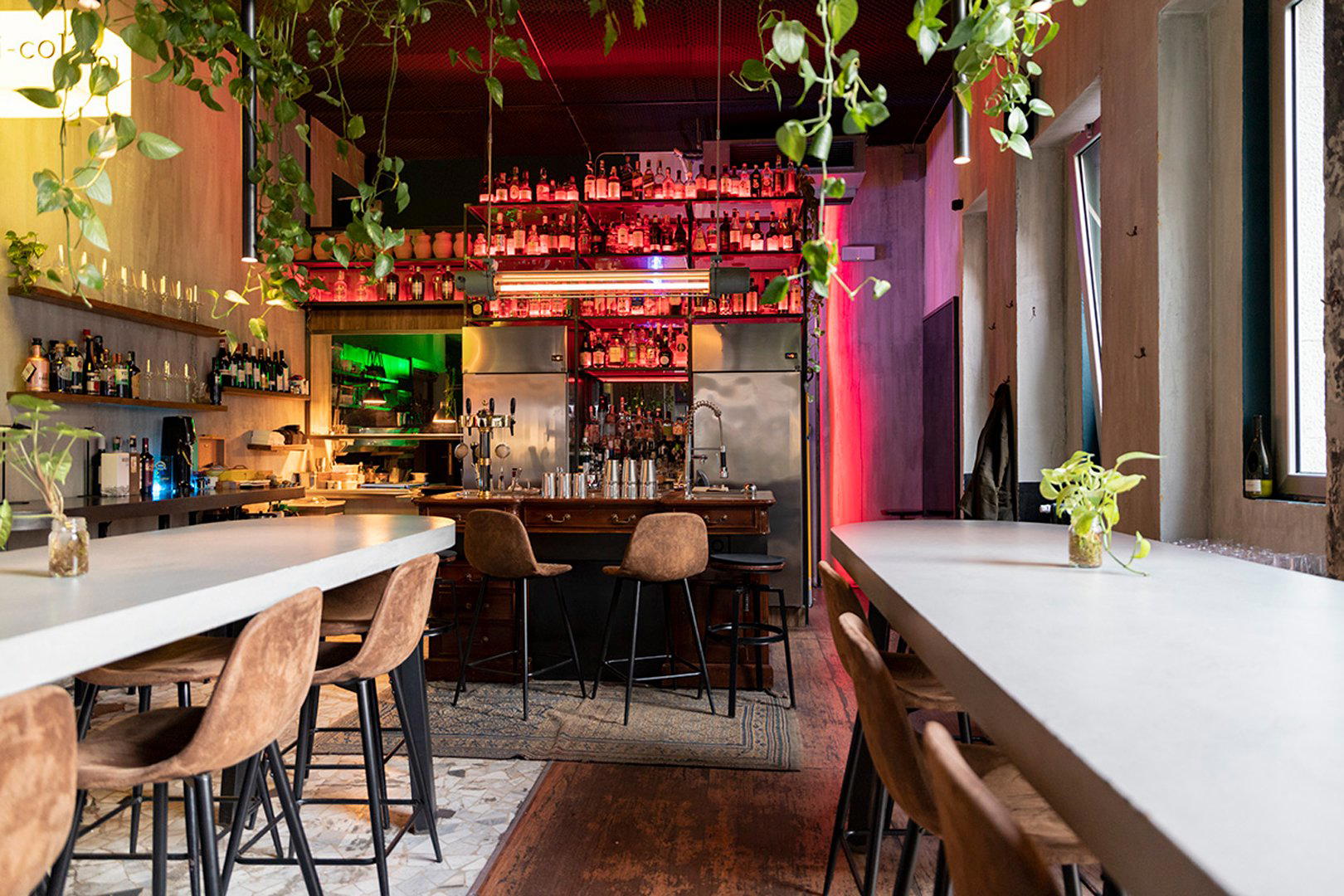
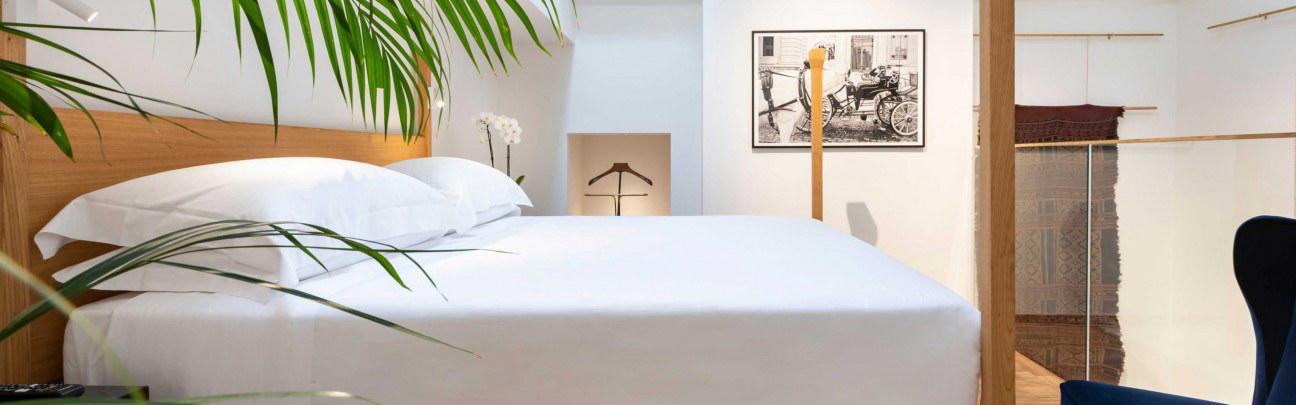
UGO's address on Via Corsico places it in a building stock typical of the inner Navigli belt: lower-ground or street-level units with the sort of proportions that encourage intimacy rather than volume. The Milanese bar-bistrot interiors that work in this zone tend to use natural materials and warm light to hold a room at conversational scale, keeping the kitchen presence felt but not dominant. The bistrot register in Milan has borrowed this approach from French neighbourhood dining rooms and applied it to a context where aperitivo culture means the room needs to operate comfortably from late afternoon through late evening.
Cocktail Bar Culture in Milan's Western Neighbourhoods
Milan's most discussed cocktail programs tend to cluster either in the centre or in the eastern Isola and Porta Venezia corridors. The western districts around the Navigli canals operate on a different model: less focused on singular technical ambition, more interested in the integration of drinks into the full hospitality offer. Nottingham Forest, one of Milan's longest-running serious cocktail venues, established early that the city could support dedicated bar culture outside the obvious luxury hotel circuit. What followed in the canal district was less a replication of that model than a parallel development, where cocktail thinking met food culture in a format with few direct precedents in Italian hospitality.
Across Italy, this bar-bistrot hybrid has taken different forms. Drink Kong in Rome is a more maximalist version, with a design-forward identity that makes the space itself part of the offer. Gucci Giardino in Florence sits at a different extreme, where brand context shapes the entire experience. Milan's Navigli-adjacent versions tend to sit closer to the everyday end of that spectrum, venues where the ambition is in the execution rather than the concept, and where the test is whether guests return on a Tuesday rather than whether they photograph the room on a Saturday.
The Bistrot Kitchen in a Cocktail Context
When a bar adds a kitchen, the questions it generates are mostly about coherence. Does the food program complement the drink program, or do the two coexist without conversation? In Milan's bar-bistrot tier, the food tendency runs toward the bistrot end of Italian-French crossover: charcuterie, small plates, pasta dishes that work as bar food without being reduced to the aperitivo spread that has become the default shorthand in the city's aperitivo culture. The enoteca model elsewhere in northern Italy, practiced in venues like Enoteca Historical Faccioli in Bologna, suggests an alternative route where wine anchors the food-drink coherence. UGO's cocktail-bar identity places it in a different lane, where the spirits program carries the conceptual weight and the kitchen supports rather than leads.
Where UGO Sits in the Broader Bar Conversation
Internationally, the bar-bistrot hybrid has produced particularly durable addresses of the past decade. Bar Leather Apron in Honolulu is a good reference point for how a serious cocktail program can coexist with a food identity without either compromising the other. Lost and Found in Nicosia demonstrates that the format translates across contexts well removed from the cities where it developed. What these venues share is a decision about hierarchy: the drink and the food are both primary, which creates a different planning expectation from a guest than either a pure cocktail bar or a restaurant-with-a-bar-section.
UGO's Via Corsico location situates it in a neighbourhood where that hierarchy is understood by the local audience. Porta Genova guests are accustomed to spending an evening at a single address rather than moving through a sequence of venues, which suits the bar-bistrot format's economic model and its pacing assumptions.
Planning a Visit
Via Corsico 12 is accessible from Porta Genova FS station on the metro green line, placing it within direct reach of central Milan without requiring a taxi from the Duomo zone. For the bar-bistrot format to work on its own terms, arriving with time rather than a schedule matters: the format rewards guests who order a drink, consider the food, and let the evening extend rather than those arriving with a hard out. Reservations are recommended, and the bar is open Tue to Sat from 6 PM to 2 AM and Sun from 5 PM to 1 AM, with Mondays closed. For a full picture of Milan's bar and restaurant scene across neighbourhoods,
Just the Basics
Comparable venues nearby, for context on price, style, and recognition.
| Venue | Price | Notes |
|---|---|---|
| UGO Cocktail Bar - BistrotThis venue — the venue you are viewing | $$$ | Not listed |
| The Doping | $$$ | Porta Ticinese - Conca Del Naviglio, cocktail_bar |
| Bar Paradiso | $$$ | Pta Romana, wine_bar |
| Salmon Guru Milan | $$$ | Sarpi, cocktail_bar |
| Galleria Vik Milano | $$$$ | Duomo, hotel_bar |
| Cavallante | $$ | Pta Romana, wine_bar |
Continue exploring
More in Milan
Bars in Milan
Browse all →
Restaurants in Milan
Browse all →
Hotels in Milan
Browse all →

At a Glance
- Cozy
- Elegant
- Intimate
- Sophisticated
- Date Night
- After Work
- Late Night
- Casual Hangout
- Standalone
- Seated Bar
- Lounge Seating
- Classic Cocktails
- Craft Cocktails
Current opening hours
- Monday
- Closed
- Tuesday
- 6 PM–2 AM
- Wednesday
- 6 PM–2 AM
- Thursday
- 6 PM–2 AM
- Friday
- 6 PM–2 AM
- Saturday
- 6 PM–2 AM
- Sunday
- 5 PM–1 AM
Hours can change for holidays and private events. Last verified .
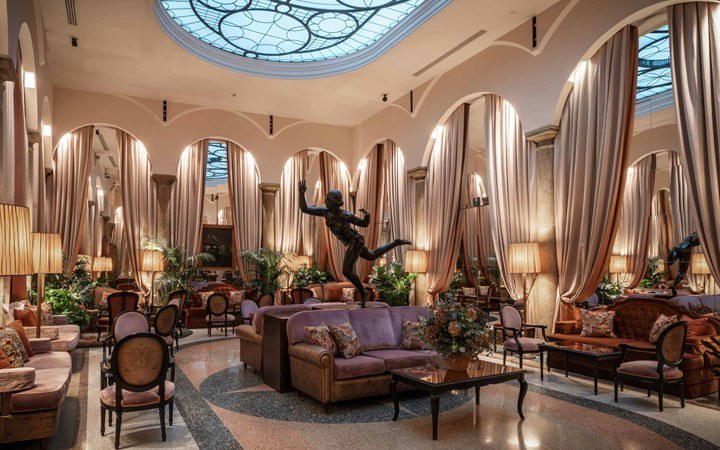
Intimate yet lively atmosphere with warm lights, subtle music, and low-lit cozy vibe.