Trader Vic's
Trader Vic's at 9 Anchor Drive in Emeryville is the California outpost of the tiki bar concept that defined mid-century American drinking culture. The original Trader Vic's chain, founded in Oakland, is credited with codifying the Mai Tai and shaping the tiki cocktail movement that still echoes through bars from Honolulu to New York. This location carries that lineage into the East Bay today.
 Discover on Pearl
Pearl is the En Primeur Club membership app — saves, bookings, and concierge access live there. Same editors, same standards.
- Address
- 9 Anchor Dr, Emeryville, CA 94608
- Phone
- +1 510 653 3400
- Website
- tradervicsemeryville.com
Where the Tiki Tradition Started
Trader Vic's is a bar in Emeryville, California, with a long association to the origins of the American tiki cocktail tradition. Craft programs in cities like San Francisco, Seattle, and New York spend considerable energy on provenance, tracing spirits to specific distilleries and techniques to particular bartending lineages. Trader Vic's is one of the two venues that built that foundation. Victor Bergeron opened the original location in Oakland in 1934, and the address at 9 Anchor Drive, Emeryville, CA 94608 keeps that thread connected to the East Bay where it began.
The significance isn't merely nostalgic. Tiki, at its core, was a technically ambitious drinking format long before technique became a marketing point. Bergeron's team worked with fresh citrus, house-made syrups, layered rums, and intricate garnish long before the craft cocktail revival made those elements standard. The Mai Tai, whose invention Bergeron claimed, a dispute that occupied cocktail historians for decades, is a drink built on balance between aged rum, orgeat, orange curaçao, and citrus with almost no margin for error. That kind of construction demands precision, and Trader Vic's placed that precision at the center of its program when most American bars were content to pour and stir.
The Cocktail Program in Historical Context
To understand what Trader Vic's represents as a cocktail venue, it helps to map the broader arc of American bar culture. The post-Prohibition period produced two competing visions of the cocktail: the European-influenced hotel bar, spare and spirit-forward, and the theatrical escapist format that would become tiki. Trader Vic's belonged firmly to the second camp, but the theatrics were never purely decorative. The drinks themselves, elaborate rum constructions, citrus-forward punches, layered tropical formats, required sourcing, preparation, and assembly that the conventional bar of the 1940s and 1950s simply didn't attempt.
That legacy shapes how serious drinking culture now regards the category. Bars such as Bar Leather Apron in Honolulu and Bar Kaiju in Miami work within a tiki-adjacent idiom while applying contemporary technique. The category has also influenced craft programs far removed from tropical aesthetics: the emphasis on fresh ingredients and house-made components that defines venues like ABV in San Francisco and Kumiko in Chicago traces, partly, to the standards that tiki pioneers set when they refused to take shortcuts.
The tiki format also pioneered what later became known as the experience-driven bar. Long before Allegory in Washington, D.C. built themed narrative into its programming, or Bitter & Twisted in Phoenix committed to immersive cocktail storytelling, the tiki bar understood that atmosphere and drink were inseparable. The carved wood, the ceramic vessels, the torches, these weren't distractions from the liquid in the glass. They were arguments for a complete sensory context that made the drink mean more.
Emeryville as a Setting
Emeryville sits between Oakland and Berkeley on the eastern shore of San Francisco Bay, a small city that spent much of the twentieth century as an industrial corridor before its gradual conversion into a mixed commercial and residential district. The Anchor Drive address places Trader Vic's near the waterfront, a location with direct sightlines across the bay that would have read very differently in the mid-century heyday of the brand than it does today. The East Bay now carries a distinct food and drink identity, with Oakland in particular developing a bar and restaurant scene that competes seriously with San Francisco across the water.
The East Bay positioning also matters when placing Trader Vic's against the contemporary California cocktail scene. The flagship craft programs in San Francisco proper, including ABV, operate in a market with high density and intense competition for attention. The Emeryville location functions as something different: a venue with historical weight that the newer generation of bars, however technically accomplished, cannot replicate by design.
Situating Trader Vic's in the American Bar Canon
The American craft cocktail movement that accelerated through the 2000s and 2010s has now diversified into distinct camps. There are spirit-forward programs, such as Canon in Seattle, which built one of the largest documented whiskey collections in the country. There are culinary-driven programs like Kumiko, where Japanese techniques and ingredients structure the menu. There are regional-identity programs like Julep in Houston, which grounds its work in Southern spirits traditions, and Jewel of the South in New Orleans, which frames cocktails through Creole culinary history. And then there are the venues that represent a specific moment in American drinking history, operating as living documents of how the bar format evolved.
Trader Vic's belongs to that last category in a way that no newer venue can replicate. Superbueno in New York City might work with tropical flavors and festive formats, and The Parlour in Frankfurt might carry cocktail culture across international contexts, but neither carries the specific historical claim that comes with a name that was present at the creation of the category itself.
That claim comes with responsibilities as well as advantages. A venue operating under a historically significant name invites comparison not just to contemporary peers but to its own past. The question for any visit to Trader Vic's is whether the program lives up to the technical ambition of the format Bergeron's team codified, whether the rum constructions are built with the same care for balance that made the Mai Tai a lasting benchmark rather than a period curiosity.
Planning Your Visit
Trader Vic's Emeryville is located at 9 Anchor Drive, accessible from the Emeryville waterfront area. Given the venue's profile as a destination tied to a specific historical brand, it draws visitors from across the Bay Area as well as travelers passing through Oakland and Berkeley. The waterfront setting makes the venue worth timing to catch the late afternoon light across the bay before the dinner service begins in earnest.
Frequently Asked Questions
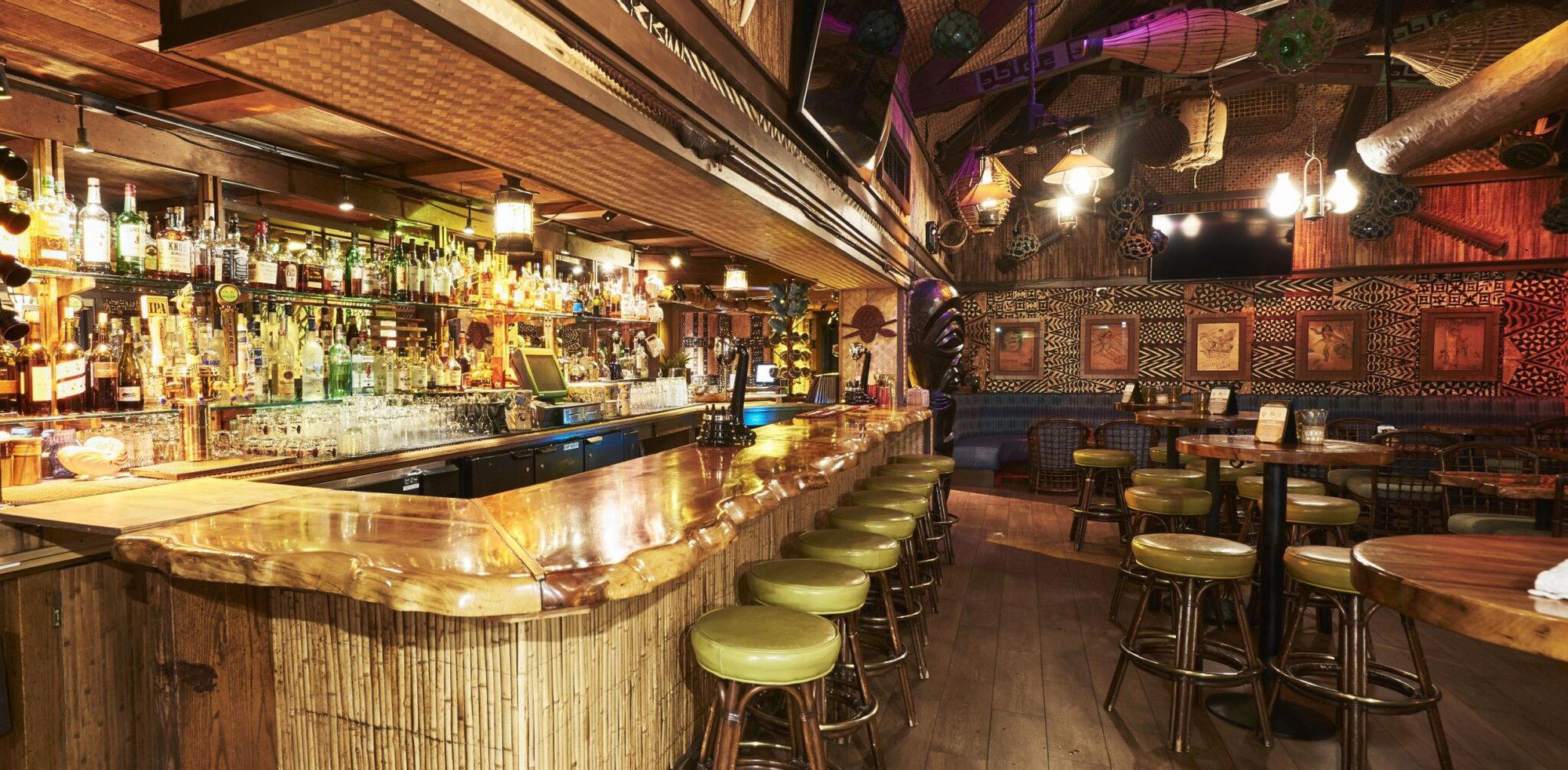
- How would you describe the overall feel of Trader Vic's? Trader Vic's carries the atmosphere of mid-century escapism, carved wood, ceramic tiki vessels, and a theatrical commitment to setting that predates the modern experience-driven bar by decades. The Emeryville location maintains that format in a waterfront setting on the eastern edge of San Francisco Bay, which gives the room a particular quality of light and spatial openness that differs from the interior-focused tiki bars that the format later inspired.
- What should I try at Trader Vic's? The Mai Tai is the necessary order, not because it's the easiest choice but because it's the drink that Trader Vic's has the strongest claim to, Bergeron's version of the drink, built on aged rum, orgeat, and citrus, is the template against which every subsequent Mai Tai gets judged. Starting there gives you a fixed point from which to assess the rest of the rum-forward program.
- What's the main draw of Trader Vic's? The historical claim is genuinely rare. Emeryville and Oakland are where the tiki format was codified at a commercial scale, and Trader Vic's is the name directly associated with that development. For anyone interested in American cocktail history, this is primary-source territory rather than a revival or tribute act.
- Is Trader Vic's the original location of the brand? The original Trader Vic's opened in Oakland in 1934, making the broader East Bay the birthplace of the brand and its associated cocktail program. The Emeryville address at 9 Anchor Drive is the current California expression of that lineage, positioned near the Oakland border in a waterfront district that keeps it connected to the geographic origin of the concept. For visitors tracing the history of the American tiki bar, the East Bay is the correct starting point.
In Context: Similar Options
Comparable venues nearby, for context on price, style, and recognition.
| Venue | Cuisine | Price | Awards | Notes |
|---|---|---|---|---|
| Trader Vic'sThis venue — the venue you are viewing | tiki_bar | $$$ | , | |
| Trader Vic's | Polynesian Tiki Fusion | $$$ | , | Emeryville Marina |
| Rubio's | Baja-Style Mexican Coastal Grill | $$ | , | Emeryville |
| Pasta Pomodoro | Italian Pasta | $$ | , | Emeryville |
| Wally's Cafe | Authentic Lebanese Mediterranean | $$ | , | Emeryville |
| Minnie Bell's Soul Movement | Southern Soul Food | $$ | , | Public Market |
Continue exploring
More in Emeryville
Bars in Emeryville
Browse all →
Restaurants in Emeryville
Browse all →
Hotels in Emeryville
Browse all →

At a Glance
- Classic
- Iconic
- Whimsical
- Date Night
- Group Outing
- Celebration
- Special Occasion
- Historic Building
- Lounge Seating
- Booth Seating
- Private Rooms
- Classic Cocktails
- Rum
- Waterfront
Tropical interior with exotic, vintage tiki decor, mood lighting, and a spirited paradise atmosphere.