On Queen Street West, The Shameful Tiki Room has anchored Toronto's tiki revival for years, running one of the city's most committed tropical cocktail programs in a room built for full theatrical immersion. The venue sits in a distinct tier of Toronto bars where format discipline and thematic depth matter more than conventional cocktail minimalism.
Pearl is the En Primeur Club membership app — saves, bookings, and concierge access live there. Same editors, same standards.
- Address
- 777 Queen St W, Toronto, ON M6J 1G1, Canada
- Website
- shamefultikiroom.com
- Directions
- Get directions
 Saves & bookings on Pearl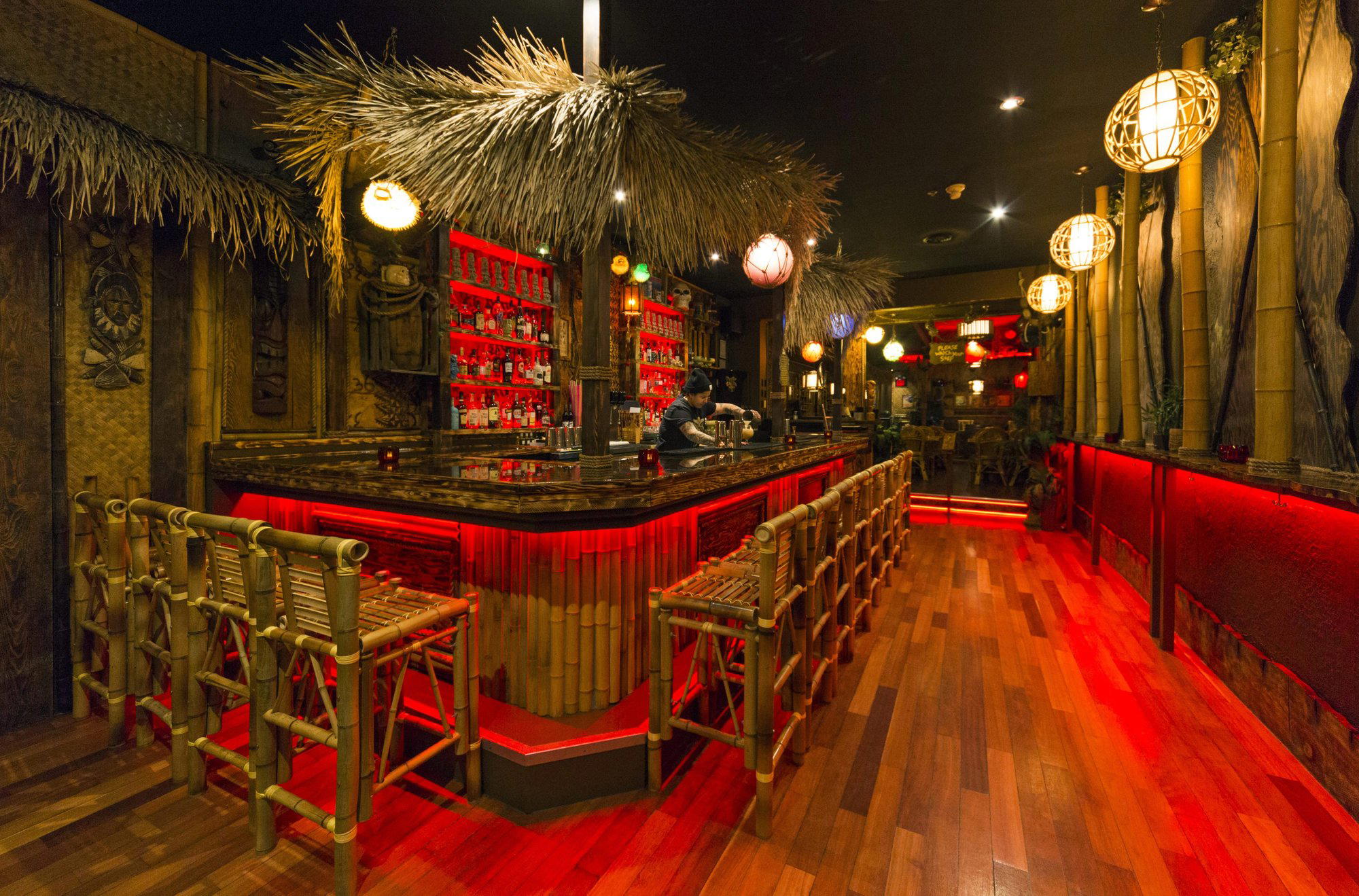
Polynesian Pop in a City That Keeps Moving On
Queen Street West has cycled through several identities over the past two decades, shedding dive bars for cocktail lounges, then cocktail lounges for natural wine rooms and izakayas. Against that churn, The Shameful Tiki Room at 777 Queen St W has maintained a position that most themed bars fail to hold: it kept the theme serious. Walking into the space, the shift is immediate. The light drops, the ceiling fills with raffia and carved totems, and the soundtrack anchors you somewhere between a 1957 Hawaiian hotel bar and a mid-century California fantasy of the South Pacific. That specific atmosphere is not incidental.
Tiki's arc, and where Toronto sits in it
Tiki as a drinking format has a complicated history in North America. It emerged in the 1930s and 1940s through figures like Donn Beach and Trader Vic, peaked in the postwar suburban boom, then collapsed under the weight of too-sweet, too-generic execution by the 1980s. The revival that began in the early 2000s was, in its first phase, largely an American project. Cities like New Orleans, Portland, and San Francisco rebuilt tiki programs on craft spirits, fresh citrus, and historically informed recipes rather than pre-mix syrups and novelty glassware.
Toronto arrived at that revival conversation with The Shameful Tiki Room, which has occupied a specific position in the city's bar scene: it is the venue that proved tiki in Canada could operate at the same register as the serious American revival programs, not as a novelty act but as a format with real cocktail depth. In a city where bars tend to cluster around wine programs, European-style aperitivo formats, or Japanese-influenced minimalism, a tiki room committed to full immersion is a structural outlier. That outlier status has proven durable.
The Evolution: From Novelty to Institution
When tiki first re-emerged in Toronto's bar conversation, the working assumption among some observers was that it would run as a novelty cycle: open with strong press, attract a wave of curious drinkers, then soften the concept once the trend moved on. The Shameful Tiki Room did not follow that arc. The format has remained intact and, if anything, has deepened rather than diluted. That kind of thematic consistency is harder to sustain than it looks. Toronto's drinking audience is sophisticated and restless, and bars that rely on concept alone without execution tend to lose ground within two to three years of opening.
What distinguishes the longer-run tiki operations in North America from those that fade is a commitment to the technical side of the drink, not just the visual side of the room. Tiki cocktails done correctly are among the more technically demanding in the bar canon: multiple rums blended for layered proof and flavour, house-made syrups and liqueurs, fresh juice, and precise dilution from crushed or cracked ice. The margin for error is narrow, because the drinks are complex enough that imbalance is immediately apparent. Bars that treat tiki as a costume rather than a discipline tend to reveal that gap quickly. The Shameful Tiki Room's continued presence on Queen West, in a strip that has seen considerable turnover, suggests the execution has held.
Where It Sits in Toronto's Bar Tier
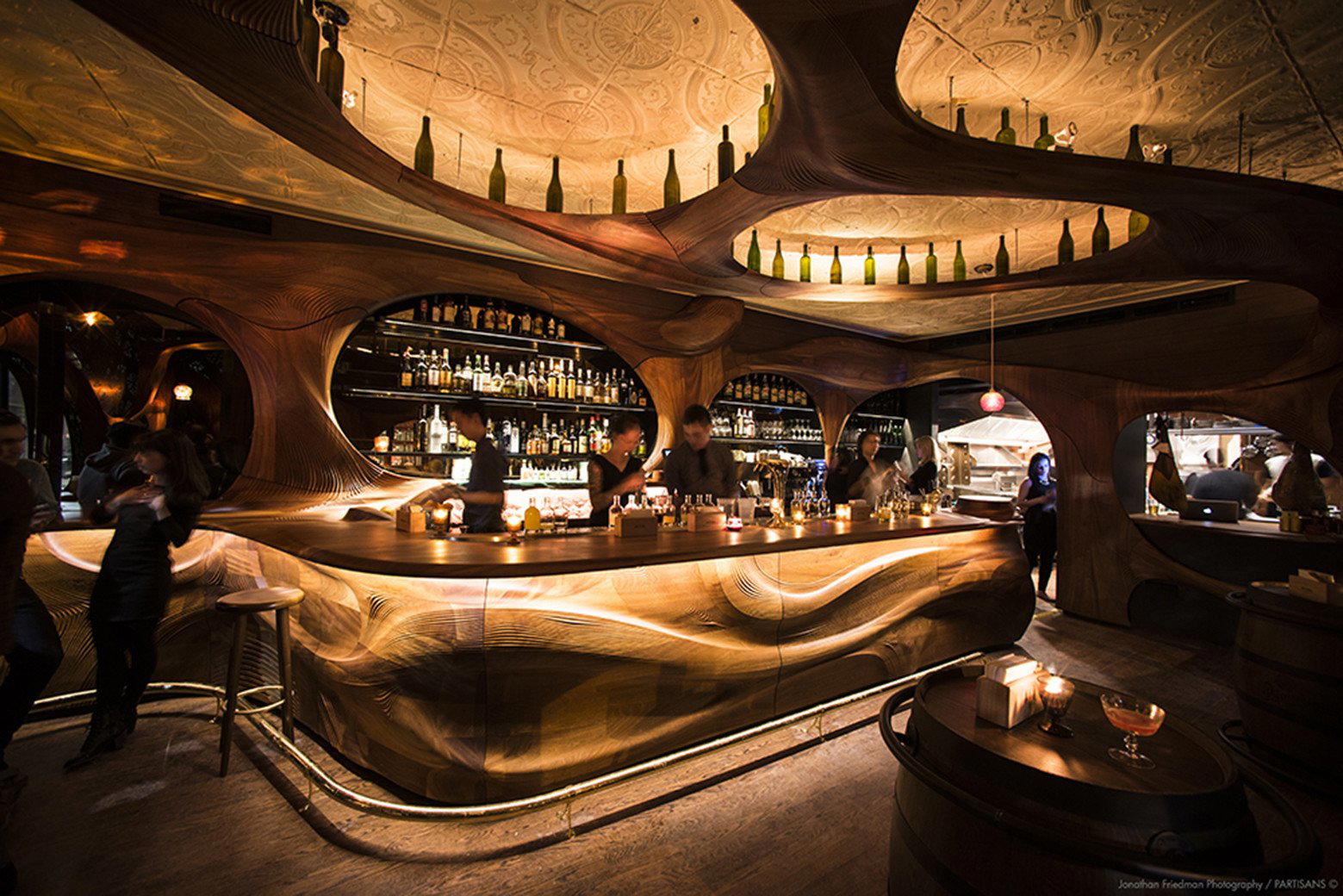
Toronto's bar scene in 2024 has a reasonably defined upper tier of cocktail-focused operations. Bar Raval on College Street operates a Spanish-inflected vermouth and pintxos format inside one of the city's most architecturally significant rooms. Bar Mordecai runs a serious neighbourhood cocktail program in Little Italy. Bar Pompette has built a reputation around natural wine and French bistro energy. Civil Liberties occupies the Roncy end of the spectrum with a drinks-focused format and an editorial voice about its own program.
The Shameful Tiki Room competes on a different axis from all of them. Where those bars tend toward restraint or European reference points, the tiki room operates through abundance: layered drink construction, theatrical presentation, a room designed for total sensory commitment. Atwater Cocktail Club in Montreal operates in a different format register entirely. Botanist Bar in Vancouver, Humboldt Bar in Victoria, and Missy's in Calgary each represent distinct regional approaches to premium cocktail culture, none of which overlap directly with tiki. Internationally, comparison points like Bar Leather Apron in Honolulu operate in a market where Polynesian reference is part of the geography itself rather than a deliberate import. Peer bars in festival circuits and Bearfoot Bistro in Whistler similarly occupy their own experiential niches. The Shameful Tiki Room occupies a niche in the Toronto market that has no direct local competitor, which is both an advantage and a pressure: there is no floor to fall back to, because the bar defines the category.
Queen West as Context
The address at 777 Queen St W places the bar in the western stretch of Queen Street, east of Dufferin but west of the Ossington cluster where much of Toronto's bar density has concentrated over the past decade. That stretch of Queen West has gone through several waves. It was the city's original art and indie-music corridor in the 1980s and 1990s, shifted toward retail and chain pressure in the 2000s, and now holds a mixed inventory of independent operators, galleries, and food and drink businesses that have survived successive rent cycles. A bar with a strong concept identity and a loyal repeat audience is better positioned to hold ground in that environment than a generalist operation.
the full Toronto restaurants and bars guide covers the city by neighbourhood and format type.
Where the Accolades Land
Comparable venues nearby, for context on price, style, and recognition.
| Venue | Cuisine | Price | Notes |
|---|---|---|---|
| The Shameful Tiki Room TorontoThis venue — the venue you are viewing | tiki_bar | $$ | Not listed |
| Superpoint | wine_bar | $$ | Trinity Bellwoods |
| Kaminari Ramen Bar | sake_bar | $$ | Parkdale |
| Sugo | lounge | $$ | Wallace Emerson |
| Brass Taps Pizza Pub | pub | $$ | Greektown |
| Snakes & Lattes College | pub | $$ | Little Italy |
Continue exploring
More in Toronto
Bars in Toronto
Browse all →
Restaurants in Toronto
Browse all →
Hotels in Toronto
Browse all →

At a Glance
- Whimsical
- Cozy
- Trendy
- Date Night
- Group Outing
- Casual Hangout
- Speakeasy
- Design Destination
- Seated Bar
- Booth Seating
- Craft Cocktails
- Rum
- Classic Cocktails
- Frozen
Current opening hours
- Monday
- 5 PM–12 AM
- Tuesday
- 5 PM–12 AM
- Wednesday
- 5 PM–12 AM
- Thursday
- 5 PM–12 AM
- Friday
- 5 PM–2 AM
- Saturday
- 5 PM–2 AM
- Sunday
- 5 PM–12 AM
Hours can change for holidays and private events. Last verified .
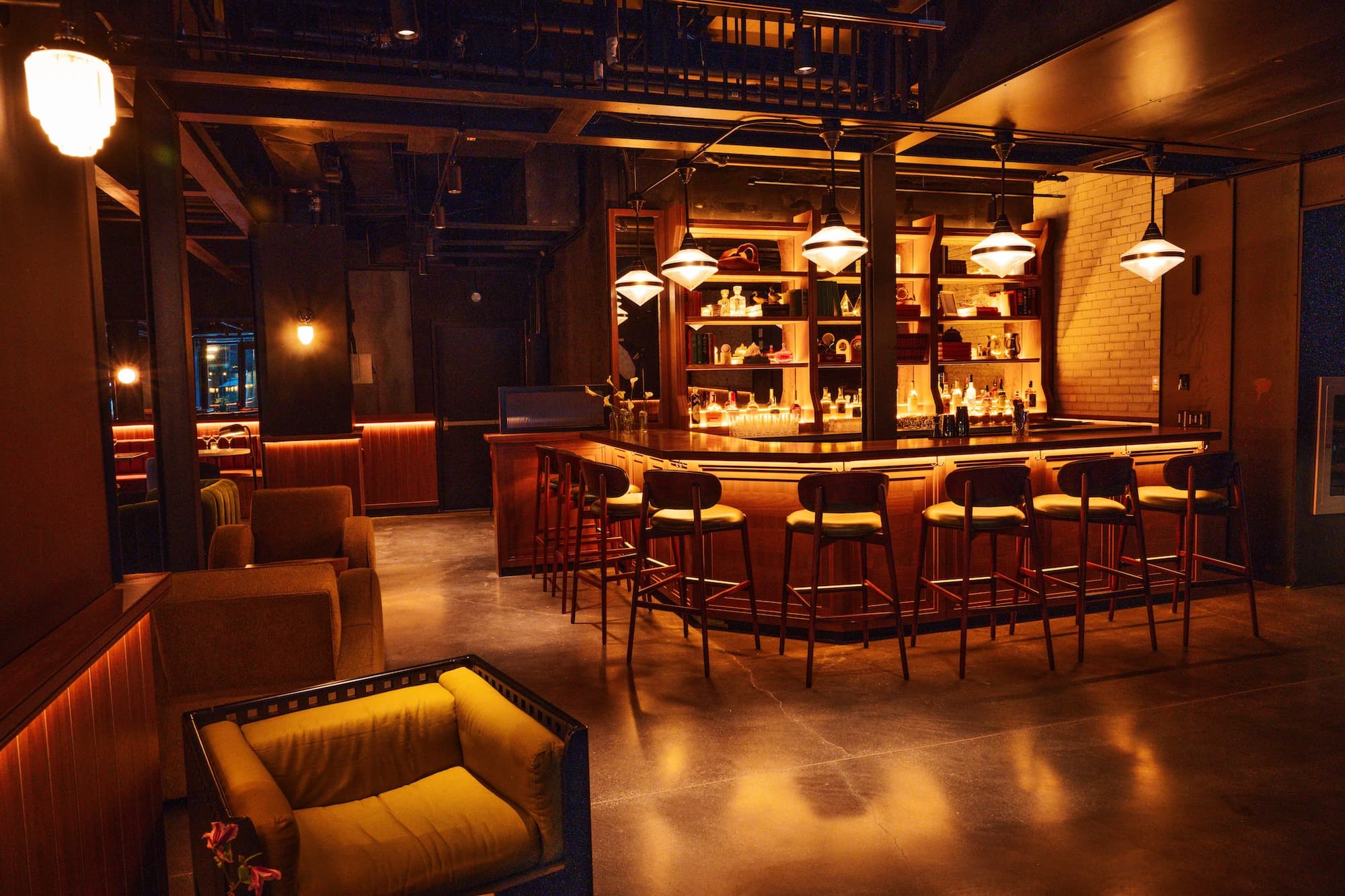
Dimly lit with pink-tinged lighting, carved wooden masks, cane furniture, and kitschy Polynesian elements creating a festive, kitschy tropical paradise.