The Parlour
Set inside Canary Wharf's Canada Square at 40 Canada Square, The Parlour occupies a distinct position among the financial district's after-work drinking options, trading the high-volume bar format for drinks and light refreshments in a more contained setting. For London's east-end business crowd, it reads less as a destination bar and more as a considered pause between meetings or after a long trading day.
 Discover on Pearl
Pearl is the En Primeur Club membership app — saves, bookings, and concierge access live there. Same editors, same standards.
- Address
- The, 40 Canada Square, London E14 5FW, United Kingdom
- Phone
- +44 20 7715 9551
- Website
- drakeandmorgan.co.uk
Drinking in the Shadow of the Towers
Canary Wharf has never been London's most obvious destination for considered drinking. The estate was built for throughput: thousands of finance workers moving between glass towers, trading floors, and the DLR, with bars and restaurants designed to absorb that volume efficiently rather than slow it down. Against that backdrop, a bar oriented around drinks and light refreshments, tucked into 40 Canada Square, occupies an interesting position. The address alone signals something about its intended audience: this is not a late-night destination for the Shoreditch crowd, nor a cocktail-forward room competing with 69 Colebrooke Row or A Bar with Shapes For a Name in the west. It is, instead, a bar that fits its location and plays to it.
That distinction matters in a city where the drinking offer has fragmented sharply by neighbourhood. Central London's cocktail-bar tier, represented by operations like Amaro and Academy, operates in a different competitive set from what Canary Wharf offers. The Wharf's bars largely serve a captive audience with clear timing pressures: lunch windows, post-close drinks, pre-dinner pauses. A bar that understands that rhythm and builds its offer around it is serving a genuine function, even if it does not appear on the usual shortlists for London's most technically ambitious programs.
The Format and What It Suggests
The Parlour sits at 40 Canada Square, one of the estate's primary commercial addresses. The drinks-and-light-refreshments positioning places it in a category that London does reasonably well in transit hubs and business districts: the high-functioning all-day bar that accommodates a coffee or a cocktail without making either feel like an afterthought. This is a format that the UK's better hospitality operators have refined over the past decade, and it requires a particular kind of front-of-house competence to execute without the space collapsing into the generic hotel-lobby experience it can easily become.
The collaboration between bar staff and the team managing food service is where this category lives or dies. In venues of this type, the service dynamic matters more than the headline drink list. When a guest at a business lunch transitions from sparkling water to something more structured, or when a solo visitor working through emails at the bar wants to move from a light snack to a proper drink, the ability of the team to read and respond to those shifts determines the experience far more than any individual cocktail's technical ambition. Across the UK, bars that have mastered this register, from Merchant Hotel in Belfast to Schofield's in Manchester, share a quality of attentiveness that feels calibrated rather than performative.
Canary Wharf's Drinking Scene in Context
Placing The Parlour within London's broader bar geography requires acknowledging that Canary Wharf has historically been underwritten in serious drinking guides. The neighbourhood's reputation for after-work volume drinking, large-format chain bars, and expense-account excess has made it easy for critics to overlook. That reputation is not entirely unearned, but it obscures what is actually a reasonable concentration of well-run, professionally staffed hospitality operations serving a high-spending, time-pressured clientele.
The comparison that matters here is not with London's destination cocktail rooms but with other business-district bars in UK cities. Mojo Leeds in Leeds and Horseshoe Bar Glasgow in Glasgow each occupy specific roles in their city's after-work drinking culture, and both demonstrate that bars operating outside the critical spotlight can build strong, loyal followings by simply serving their context well. The same principle applies in East London's financial district. Internationally, the business-district bar format appears in cities as varied as Honolulu, where Bar Leather Apron has shown that a hotel-adjacent bar can build genuine credibility through program discipline rather than location convenience.
Scotland's bar scene offers another useful benchmark. Bramble in Edinburgh built its reputation by making a deliberately low-key format feel authoritative through drink quality and team knowledge. The model is instructive: ambition does not require a statement interior or a destination address. It requires consistency and staff who know what they are serving.
What the Light Refreshments Model Asks of a Team
The editorial angle that sits underneath any serious assessment of a venue in this category is the question of team coherence. A bar offering drinks alongside light refreshments needs its staff to operate as a coordinated unit across categories that, in larger venues, would be siloed into separate departments. The person taking a drinks order needs to know the food offer; the person managing table service needs to understand the bar program well enough to make a recommendation without routing every question back to the bar. In practice, this kind of cross-trained fluency is rarer than it should be, and it is the first place the experience tends to fracture.
Bars in London that have made this model work, including several in the Soho and Fitzrovia corridor where all-day formats are more established, tend to invest in team culture as a service lever rather than relying on a single named figure to carry the operation. That approach scales better in a location like Canary Wharf, where client turnover is high and the audience changes sharply by time of day: morning coffee drinkers giving way to lunch trade, then post-market drinks, then evening wind-downs.
Planning Your Visit
Address: 40 Canada Square, London E14 5FW. Getting there: Canary Wharf station (Jubilee line and Elizabeth line) is the primary approach; the DLR also serves the estate directly. Reservations are recommended. Budget: The Parlour sits at about $25 per person. Timing: Lunchtime and early afternoon are typically quieter windows if you want a more measured experience rather than the volume that comes with post-work trade. 69 Colebrooke Row and A Bar with Shapes For a Name represent the direction the city's most recognised cocktail operations have taken. L'Atelier Du Vin Wine and Cocktail Bar in Brighton And Hove offers a useful comparison point for the wine-led light-refreshments format in a UK coastal context.
The Short List
Comparable venues nearby, for context on price, style, and recognition.
| Venue | Cuisine | Price | Notes |
|---|---|---|---|
| The ParlourThis venue — the venue you are viewing | $$$ | ||
| Hidden Society | $$$ | Fitzrovia, cocktail_bar | |
| Mr Fogg’s Tavern | Covent Garden, pub | $$$ | |
| The Pelican | Notting Hill, pub | $$$ | |
| The Phene | Chelsea, pub | $$$ | |
| Josette | $$$ | Clerkenwell, wine_bar |
Continue exploring
More in London
Bars in London
Browse all →
Restaurants in London
Browse all →
Hotels in London
Browse all →
At a Glance
- Intimate
- Elegant
- Cozy
- Date Night
- Special Occasion
- Live Music
- Lounge Seating
- Craft Cocktails
- Classic Cocktails
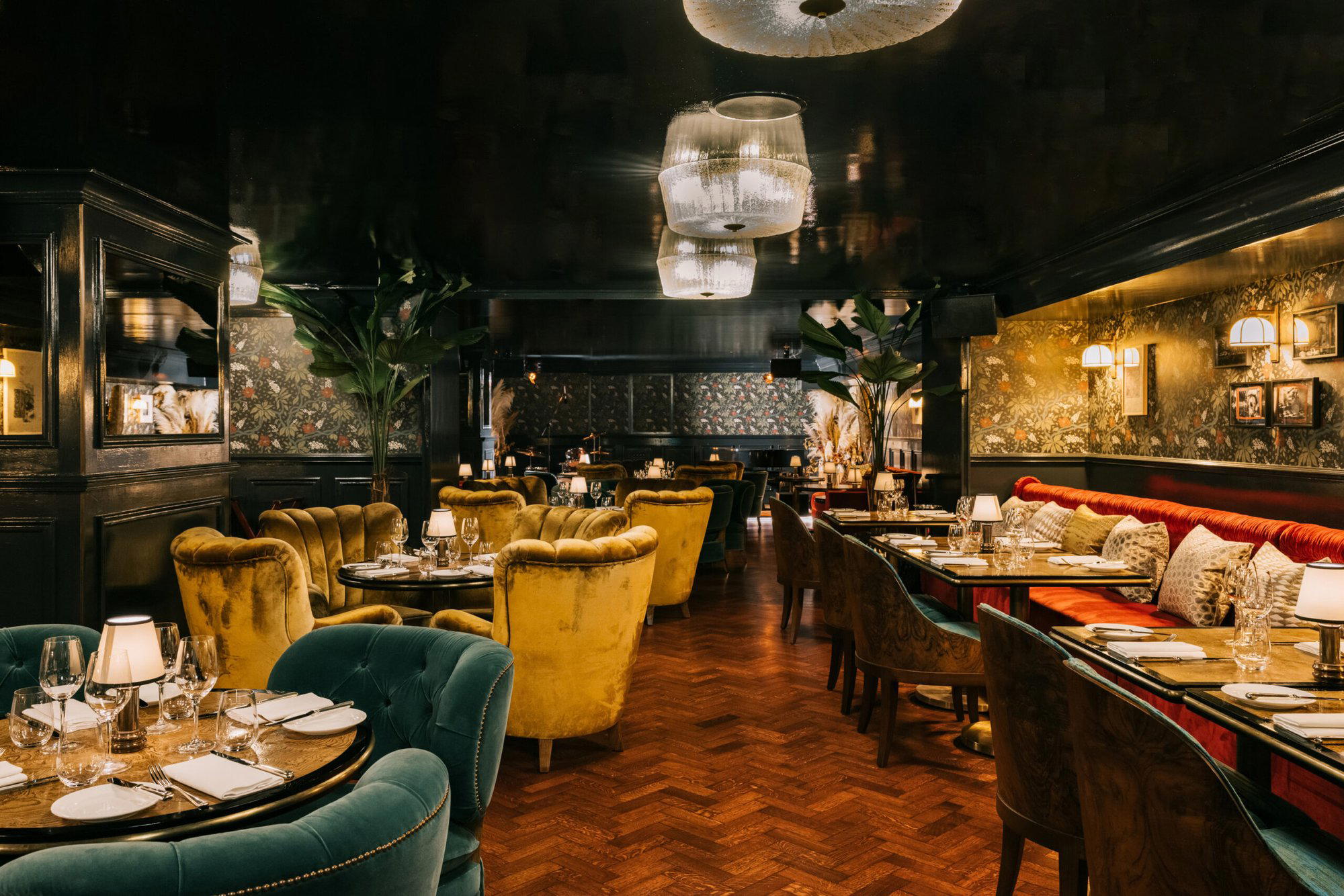
Moody velvet-backed setting with dark floral wallpaper, creating an elegant and atmospheric space for live performances.