Tántalo Hotel / Kitchen / Roofbar
Tántalo occupies a converted building in Panama City's Casco Viejo, running three distinct programs across its floors: a ground-floor kitchen, a bar, and a rooftop that opens the neighbourhood's colonial skyline to the night air. The property sits at the intersection of the city's design-hotel revival and its maturing cocktail scene, making it a reference point for the district's broader creative shift.
 Discover on Pearl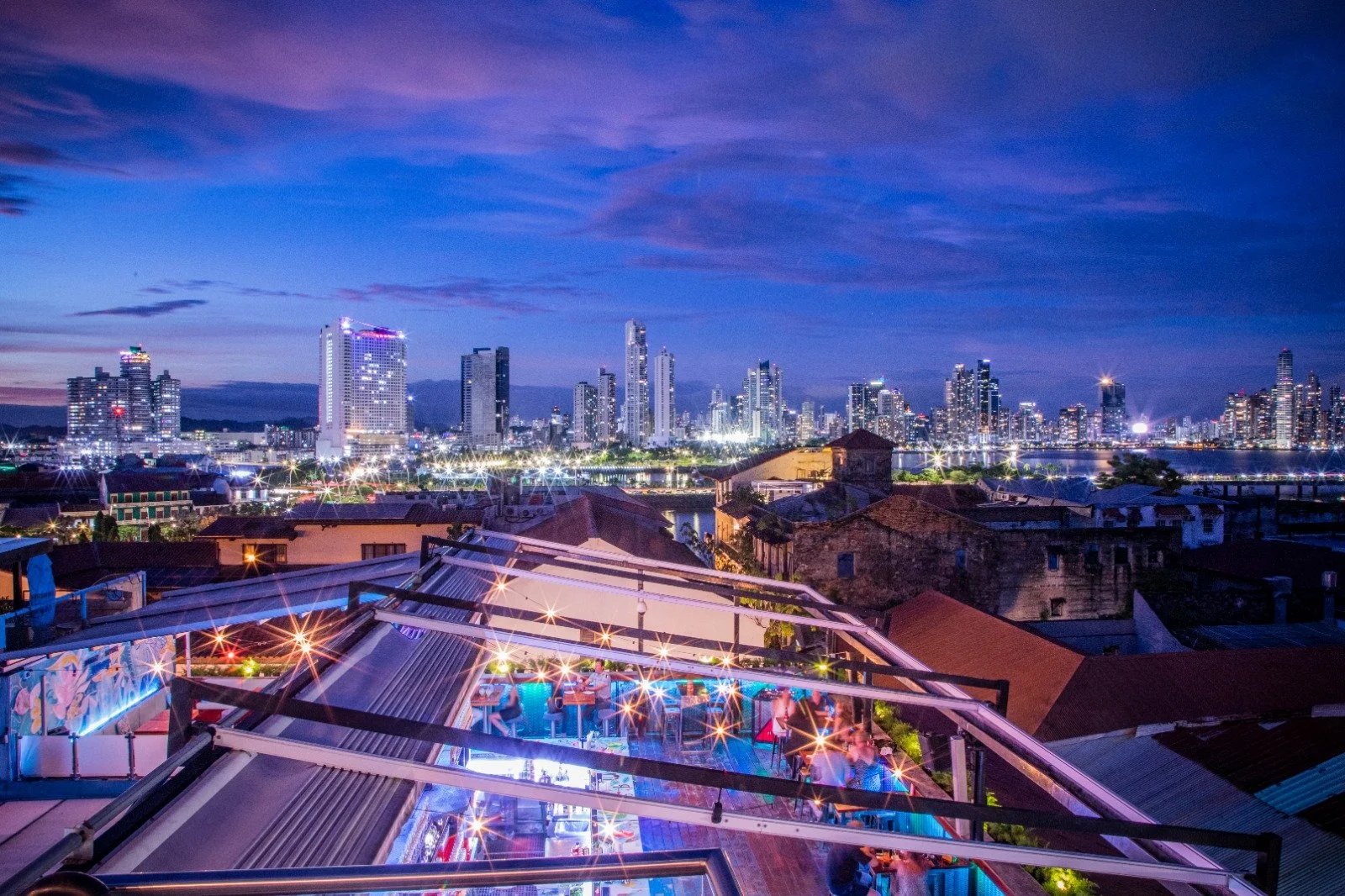
Casco Viejo After Dark: The Rooftop That Defines the Neighbourhood's Mood
In Casco Viejo, Panama City's colonial quarter, the transition from afternoon heat to evening cool is one of the more theatrical moments in Latin American urban life. The streets narrow, the light goes amber, and the choice of where to position yourself for that shift matters. Tántalo Hotel / Kitchen / Roofbar occupies a converted building on Calle 8 Este and functions across three distinct registers: hotel, ground-floor kitchen, and rooftop bar. It is the vertical layering that gives the property its particular character, with the rooftop functioning as the social apex of all three.
Casco Viejo has spent the past decade moving from cautious restoration to confident destination. The neighbourhood's UNESCO World Heritage status brought attention and investment, and a cluster of design-conscious small hotels followed. Tántalo belongs to that cohort: properties with limited keys, adaptive reuse design approaches, and programming that treats the bar or restaurant as a public-facing draw rather than an amenity for guests only. The result is that the roofbar draws a mix of hotel guests, Panamanian professionals, and travellers based elsewhere in the city, which gives it a social density that purely hotel-guest venues rarely achieve.
The shortlist, unlocked.
Hard-to-book tables, cellar releases, and concierge-planned trips.
Get Exclusive Access →The Rooftop as Spatial Argument
Across the Americas, rooftop bars have split into two broad types. The first is the large-format hotel terrace, where scale and skyline view do the heavy lifting and the drink program is secondary. The second is the smaller, more considered rooftop where the physical design creates intimacy at height. Tántalo's roofbar operates closer to the second model. The views over Casco Viejo's terracotta rooflines and toward Panama Bay situate the space geographically in a way that panoramic tower bars cannot replicate: you are inside the neighbourhood, looking across it, rather than above a city you cannot quite identify.
That positioning matters for how the space functions socially. At street level in Casco Viejo, the pedestrian scale of the colonial grid creates one kind of encounter. From a rooftop at this height, the same neighbourhood becomes legible as a pattern: the church domes, the fortification walls, the water beyond. The bar sits at an altitude that makes that reading possible without detaching from the quarter's texture entirely. It is a spatial argument about how to experience a historic neighbourhood, and it is one that a larger, taller property in the Punta Pacifica hotel corridor cannot make.
Kitchen and Bar as the Evening's Architecture
The kitchen component positions Tántalo within a broader shift in how small design hotels in Latin America structure their food and beverage programs. A decade ago, the boutique hotel in a heritage neighbourhood often treated dining as an obligation, outsourcing or minimising it. The more recent pattern, visible in properties across Cartagena, Havana, and now Casco Viejo, is for the kitchen to carry genuine editorial weight: a menu that references local supply chains, a bar program with technical ambition, and a format open enough to draw non-residents. Panama City's food scene has matured enough that a hotel kitchen can compete on its own terms against standalone restaurants. For local bar programming in the city, venues like Maito Restaurante and Olivo Wine Bar & Shop set a reference point for what thoughtful, locally anchored hospitality looks like. Tántalo operates in that company by offering a rooftop-bar-anchored format that draws on the neighbourhood's density of visitors and creative professionals.
The cocktail program at a property like this tends to reflect either a local-ingredient approach or a classic-technique approach, with the most considered programs combining both. In cities with strong rum traditions and access to tropical citrus and botanicals, the former path produces distinctive drinks that read as genuinely placed. Panama sits at a crossroads of Caribbean and Pacific supply, and a rooftop bar in Casco Viejo that engages that geography has raw material that bars in colder climates can only approximate. For international reference, technically disciplined cocktail programs at venues like Bar Leather Apron in Honolulu, Jewel of the South in New Orleans, or Kumiko in Chicago demonstrate what separates a program with genuine depth from one that simply lists rum drinks. Closer in spirit to the Latin American cocktail conversation, Superbueno in New York City shows how regional ingredient logic can be carried into a metropolitan bar format. Tántalo's roofbar sits within that broader movement toward place-specific drink programs, even if its specific menu composition is not available for direct comparison here.
Booking, Timing, and the Practical Calculus
Casco Viejo is compact, which means foot traffic concentrates rapidly at popular venues on weekend evenings. A rooftop with limited capacity and a view will fill without much prompting. The practical implication for visitors planning around the roofbar is to arrive early in the evening if the goal is a relaxed drink with the leading light, or to accept a busier, louder version of the space after 9pm when the neighbourhood's social density peaks. Hotel guests have the structural advantage of proximity, but the roofbar's semi-public profile means non-guests can and do access it. Checking current booking availability directly through the property is advisable before arrival, particularly for larger groups or for Friday and Saturday evenings. For context on Panama City's broader hospitality options, our full Panama City restaurants guide maps the city's dining and drinking across neighbourhoods.
For travellers comparing cocktail-forward bar programs at a global level, destinations like The Parlour in Frankfurt on the Main, 1806 in Melbourne, 1930 in Milan, and 28 HongKong Street in Singapore represent different points on the spectrum of what a serious bar program can look like. Equally, Julep in Houston offers a regional American analog for how a bar can anchor itself to local spirit traditions without becoming a novelty act. Tántalo's roofbar operates at a different scale and in a different market, but the underlying logic — that a bar program should reflect where it is — connects it to that global conversation about place and drink.
Who the Space Is For
Tántalo works leading for travellers who want to be inside Casco Viejo's rhythm rather than observing it from a distance. The three-part format (hotel, kitchen, roofbar) means that a single evening can move from dinner at the kitchen level to drinks above the roofline without requiring any displacement into the neighbourhood's evening street scene, which can feel overwhelming on busy nights. For visitors staying elsewhere in Panama City, the roofbar functions as a destination in its own right, accessible without a hotel booking and positioned at the social centre of a neighbourhood that rewards slow, upward movement through its layers.
Frequently Asked Questions
- What's the must-try cocktail at Tántalo Hotel / Kitchen / Roofbar?
- Specific menu details are not publicly confirmed, but the roofbar's position in Panama City, a country with strong rum and tropical citrus traditions, makes local-spirit-forward cocktails the logical focus. Bars operating in Casco Viejo with access to Central American ingredients tend to build their identity around those regional materials rather than importing a generic international menu. Ask the bartender for the current house signature when you arrive.
- What is Tántalo Hotel / Kitchen / Roofbar known for?
- The property is known primarily for its rooftop bar in Casco Viejo, which draws both hotel guests and non-residents and offers views over the colonial quarter's roofline toward Panama Bay. The three-part format (hotel, kitchen, roofbar) is relatively rare in the neighbourhood and positions it as a social hub rather than a purely accommodation-focused property. Its location on Calle 8 Este places it within walking distance of Casco Viejo's central plazas and restaurants.
- Should I book Tántalo Hotel / Kitchen / Roofbar in advance?
- For the roofbar on weekend evenings, arriving early or confirming availability in advance is prudent given Casco Viejo's high visitor density and the rooftop's limited capacity. Hotel stays should be booked as far ahead as the travel dates allow, as small boutique properties in this neighbourhood operate with limited room counts and fill on holiday weekends. Direct contact with the property is advisable since public booking details are not listed on third-party platforms at this time.
- What's the leading use case for Tántalo Hotel / Kitchen / Roofbar?
- The property works leading as an evening anchor in a Casco Viejo itinerary, particularly for travellers who want the option to move between a restaurant and a rooftop bar without leaving the building. It suits solo travellers, couples, and small groups who value location and atmosphere over large-format service. For Panama City visitors building a broader night out, pairing it with nearby venues documented in our full Panama City guide gives a more complete picture of what the neighbourhood offers.
- Is Tántalo Hotel / Kitchen / Roofbar accessible to non-hotel guests?
- The roofbar and kitchen operate as semi-public venues, meaning visitors not staying at the hotel can access both. This is a deliberate programming choice common among design boutique hotels in Casco Viejo that want to function as neighbourhood destinations rather than closed residential properties. Arriving during off-peak hours gives non-guests the leading chance of securing space at the bar without the pressure of a full house.
What It’s Closest To
A fast peer set for context, pulled from similar venues in our database.
| Venue | Cuisine | Awards | Notes |
|---|---|---|---|
| Tántalo Hotel / Kitchen / Roofbar | This venue | ||
| Olivo Wine Bar & Shop | |||
| Maito Restaurante |
Need a Table?
Our members enjoy priority alerts and concierge-led booking support for the world's most difficult bars and lounges.
Get Exclusive AccessThe shortlist, unlocked.
Hard-to-book tables, cellar releases, and concierge-planned trips.
Get Exclusive Access →