

A 19th-century Oslo pharmacy transformed into one of Scandinavia's most celebrated cocktail bars, Svanen occupies a preserved neo-classical space on Karl Johans Gate where antique mahogany cabinets now hold spirits and apothecary drawers store botanicals. Ranked #72 in the World's 50 Best Bars 2024 and #88 in the Top 500 Bars 2025, it earns its place through serious drink-making rather than the novelty of its setting.
 Discover on Pearl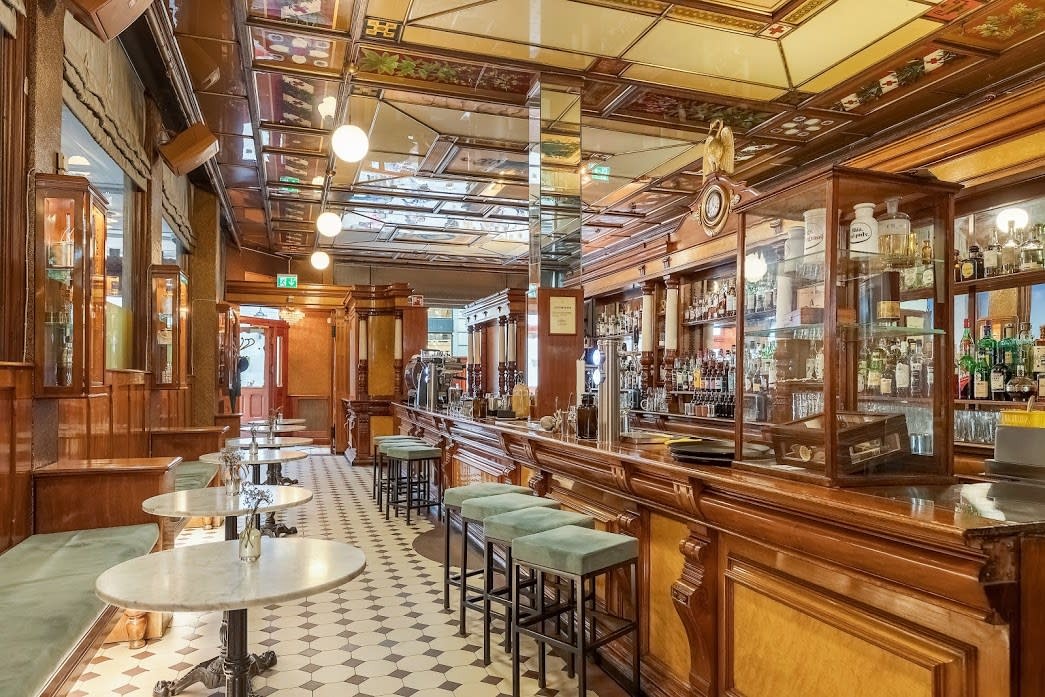
Where Pharmacy Meets the Back Bar
The history of the cocktail traces back, at least in part, to the apothecary. Before dedicated drinking establishments, bitter tonics and spirit-based curatives were dispensed across pharmacy counters as remedies rather than pleasures. That lineage is not metaphorical at Svanen: the bar occupies a near-intact 19th-century Oslo pharmacy at Karl Johans Gate 13, and the continuity between its former purpose and its current one is closer than you might expect. Spirits fill the medicine dressers. Botanicals sit in the original apothecary drawers. The counter, once a dispensing station, now produces some of the more technically precise cocktails in northern Europe.
The Swan Pharmacy, as it was known, has operated in some form since 1628, moving into this Karl Johans Gate address in 1896. When the pharmacy finally closed, the neo-classical building retained everything: decorative antique mahogany, vintage glass cabinets, marble columns, original tiled floors, and panelled ceilings painted by Wilhelm Krogh. The transition to a bar was, in the words of anyone who has walked through the door, seamless. This is a cultural heritage site preserved through use rather than museumification.
The Back Bar as Botanical Archive
Editorial angle on Svanen cannot begin with cocktails alone, because the physical collection of the bar is itself part of the proposition. The back bar and its surrounding cabinetry function less like a conventional spirit shelf and more like a curated archive. The original apothecary furniture, built to store and categorise ingredients with precision, turns out to be a near-ideal format for a serious botanical program. Gin, rum, aquavit, and a range of modifiers occupy spaces once reserved for tinctures and compounds, and the organisation reflects the original intent of the furniture: methodical, accessible, and purposeful.
That physical infrastructure shapes what a bar can do. Venues that store botanicals in dedicated, original cabinetry treat ingredients differently from those working out of standard back-bar shelving. At Svanen, the botanical depth informs the cocktail list, which draws on tea, fresh juices, herbs, and spirits in combinations that require genuine ingredient management rather than a standardised pour. The bar's sustained ranking across three consecutive years in the World's 50 Best Bars programme (including #72 in 2024 and #84 in 2023) suggests this is not an operation coasting on its setting.
The Drinks Program
Yunus Yildiz and Karel Varga made a deliberate choice when building the cocktail list: no enforced pharmaceutical theme, no prescription-pad menus, no pill-bottle vessels. The restraint is significant. Conceptually themed bars frequently sacrifice drink quality for the sake of consistency with the concept. By keeping the drinks separate from the décor narrative, Svanen lets the cocktails stand on their own terms.
The Stolen Apples illustrates the approach: rum, gin, green apple juice, lapsang souchong tea, ginger, and shiso. The combination works because each element contributes to a coherent flavour structure rather than serving a visual or theatrical purpose. The smokiness of the lapsang souchong offsets the fresh acidity of the apple, while the shiso introduces an aromatic register that neither the rum nor the gin alone would provide. It is the kind of drink that rewards attention without demanding it.
This positions Svanen in the category of bars that have moved past the theatrical era of cocktail culture. The global shift from elaborate presentation and hidden-door conceits toward transparent technical programs has reshaped what serious bars do with their ingredients. Svanen sits comfortably in the technical tier, where the quality of the back bar and the sophistication of the build matter more than the gimmick of the reveal. Comparable venues operating in this mode include Kumiko in Chicago, Jewel of the South in New Orleans, and Bar Leather Apron in Honolulu, each of which anchors its program in ingredient depth rather than spectacle.
Two Floors, Two Registers
The bar does not operate as a single room. The ground floor is the apothecary space itself, where the heritage architecture sets the terms. The basement bar, Den Grimme Ælling (the Ugly Duckling, Yildiz's own addition), takes a different approach: one foot in the future, as the brief description puts it. The juxtaposition is deliberate and the naming is precise. The Ugly Duckling is the counterpoint to the Swan above, a space that can absorb more experimental work without disrupting the curatorial integrity of the main bar.
This two-register format has become a useful structural solution for heritage venues that want to maintain a serious program without being locked into a single aesthetic register. The ground floor earns the awards; the basement earns the regulars who come back when they want something less expected.
Svanen in Oslo's Bar Scene
Oslo's cocktail culture has developed relatively quietly compared to London or New York, but the city now has multiple bars operating at international level. Himkok, which has its own place in the World's 50 Best rankings, represents the other dominant strand of Oslo bar culture: Nordic-ingredient-led, with aquavit and local botanicals at the centre of the program. Svanen operates from a different premise, one grounded in heritage space and classical technique rather than regional identity. The two approaches are not in competition; they reflect the range of what Oslo's bar scene can now offer.
Karl Johans Gate, the city's main boulevard, is not typically associated with late-night bar culture, which makes the Svanen address worth noting. The street runs from Oslo Central Station to the Royal Palace and carries more tourist and daytime foot traffic than the bar-dense neighbourhoods further east. Svanen's placement there reflects the building's origin rather than a deliberate positioning in a drinking district, and the bar draws an audience willing to seek it out specifically rather than stumbling in from an adjacent venue.
Planning Your Visit
Svanen is at Karl Johans Gate 13, 0154 Oslo, a short walk from Oslo Central Station and within easy reach of the city's main hotel corridor. Given its ranking and the capacity constraints inherent in a heritage building, booking ahead is advisable, particularly on weekends. The dual-floor format means the bar can accommodate different group sizes and social registers in the same visit: the main apothecary floor for the full architectural experience, the basement Den Grimme Ælling for a second round in a different key. For broader context on Oslo's drinking culture, our full Oslo bars guide maps the city's current program across neighbourhoods and styles.
If your Oslo trip extends to dining and accommodation, our full Oslo restaurants guide and our full Oslo hotels guide cover the broader picture. For those building an itinerary around the city's wine culture or off-the-bar experiences, our Oslo wineries guide and our Oslo experiences guide provide further orientation.
For reference points elsewhere in the global technical-bar tier, Julep in Houston, Superbueno in New York City, and The Parlour in Frankfurt each represent the category in their respective cities, with distinct approaches to curation and ingredient sourcing that reward comparison.
Frequently Asked Questions
Budget Reality Check
These are the closest comparables we have in our database for quick context.
Need a Table?
Our members enjoy priority alerts and concierge-led booking support for the world's most difficult bars and lounges.
Get Exclusive Access