Sushi Yasaka
A longstanding sushi address on the Upper West Side, Sushi Yasaka has built its following through consistency rather than spectacle. At 251 W 72nd Street, it occupies a tier of neighbourhood omakase and à la carte Japanese dining that Manhattan's sushi regulars return to on rotation, valuing proximity, reliability, and a room that doesn't perform for first-timers.
 Discover on Pearl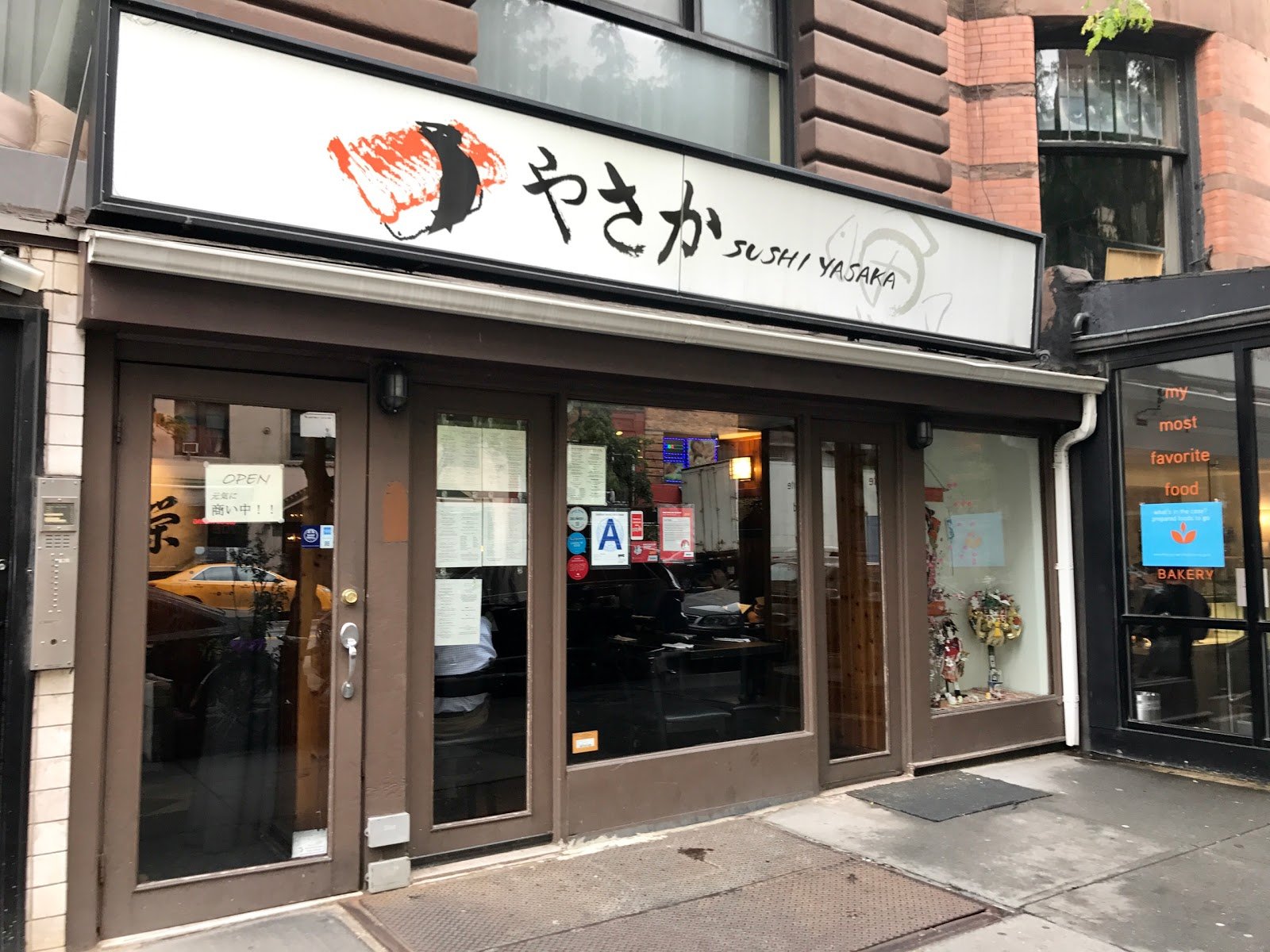
A West Side Fixture, Not a Destination Stunt
The Upper West Side has never been Manhattan's flashpoint for Japanese cuisine. That distinction belongs to Midtown's expense-account omakase counters and the East Village's more experimental fish-forward rooms. What 72nd Street offers instead is a different compact: neighbourhood sushi that regulars treat as a standing appointment rather than a special-occasion declaration. Sushi Yasaka, at 251 W 72nd St, has occupied that position long enough that its clientele is self-selecting — people who live nearby, who know what they want, and who have already filtered out the rooms that prioritise theatrics over the fish itself.
In a city where new omakase concepts open with press campaigns and close before their second anniversary, longevity on the Upper West Side carries its own credential. The regulars who keep returning to a neighbourhood sushi counter are, by definition, harder to impress than a one-time visitor with no baseline for comparison. That dynamic shapes what a place like Sushi Yasaka is — and what it is not.
The Regulars' Logic
There is a specific calculation that Manhattan sushi regulars make when choosing between counters. The high-commitment omakase rooms , prix-fixe only, three months out, $300-plus per person , serve a different function than a room where you can walk in on a Tuesday with a reasonable expectation of a seat and a meal that holds up. New York's sushi scene has bifurcated sharply along this line. The upper tier has moved toward scarcity as a value signal: limited seats, no à la carte, chef-dictated pacing. The neighbourhood tier, by contrast, trades on access, reliability, and the quiet satisfaction of a room that already knows you.
Sushi Yasaka sits in that second register. Its repeat clientele aren't there because they couldn't get into somewhere more celebrated , they're there because the calculus of a neighbourhood sushi counter, done well, produces a different kind of satisfaction. The fish doesn't need to be the rarest available; it needs to be handled with care and served without delay. The room doesn't need to be architecturally significant; it needs to feel like yours. These are the terms on which local loyalty is built, and they're harder to manufacture than a Michelin campaign.
For context on the broader New York City dining scene and how neighbourhood sushi fits into it, see our full New York City restaurants guide.
Neighbourhood Context: What 72nd Street Signals
The Upper West Side's restaurant identity has long been shaped by its residential density and relative distance from the media-driven dining conversation that tends to cluster below 14th Street or in certain pockets of Brooklyn. That geographic remove is not a disadvantage for regulars , it's a filter. The rooms that survive here do so because local diners return, not because tourists seek them out. Sushi counters in this part of Manhattan tend toward the functional and the consistent, rather than the conceptual or the seasonal-press-moment-driven.
That context places Sushi Yasaka in a peer set that includes other long-running neighbourhood Japanese rooms across the city's outer residential corridors: places measured not by their Instagram footprint but by how many of their tables are occupied by people who were there last week. It's a different competitive logic than the one that governs Tribeca or the Meatpacking District, and it produces different kinds of places.
What Keeps the Room Full
The unwritten menu at any well-established neighbourhood sushi counter is built over time through repetition. Regulars develop a shorthand with the kitchen: preferences noted, portions adjusted, the sequence of nigiri calibrated to what a returning diner actually wants rather than what the menu formally lists. This kind of accumulated familiarity is not something a new room can simulate, regardless of its chef's credentials or its PR budget.
It also creates a room dynamic that reads differently to first-time visitors. A table of regulars at Sushi Yasaka is not performing their dining experience for onlookers , they're eating. The energy is quieter and more purposeful than the rooms where the occasion is partly the point. For some diners, that atmosphere registers as low-key; for others, it's the whole reason to go. The regulars' perspective is simply that a good meal shouldn't require a production.
New York's cocktail culture has developed along similar neighbourhood-versus-destination lines. Bars like Angel's Share and Attaboy NYC each occupy specific niches within the city's drinking scene, and Amor y Amargo has built a loyal following through a focused bitters-driven program , all examples of how specialisation and consistency accumulate their own distinct audiences. The same logic applies to Superbueno, where a precise creative identity has done more for retention than any broadening of format. Across American cities, the same pattern holds: Kumiko in Chicago, Bar Leather Apron in Honolulu, Jewel of the South in New Orleans, Julep in Houston, and ABV in San Francisco all reward consistent patronage more than single visits. Even internationally, venues like Allegory in Washington, D.C. and The Parlour in Frankfurt on the Main demonstrate that a room with a clear identity and a reliable offer builds a different kind of audience than one chasing trends.
Planning Your Visit
Sushi Yasaka is located at Address: 251 W 72nd St, New York, NY 10023, on the Upper West Side with easy access from the 1/2/3 subway lines at 72nd Street. Reservations: Check current availability directly with the venue, as booking practices for neighbourhood sushi counters of this type vary and walk-in availability fluctuates by day and season. Timing: Midweek evenings tend to offer more flexibility than Friday and Saturday, when the room fills with local regulars and the occasional date-night diner from further afield. Budget: Pricing information is leading confirmed at the time of booking, as à la carte neighbourhood sushi in Manhattan currently spans a wide range depending on fish selection and volume. Format: The room operates as a neighbourhood sushi counter rather than a high-commitment omakase room, meaning the experience is shaped more by what you order than by a fixed chef-driven sequence.
Frequently Asked Questions
Cuisine-First Comparison
A small set of peers for context, based on recorded venue fields.
| Venue | Cuisine | Awards | Notes |
|---|---|---|---|
| Sushi Yasaka | This venue | ||
| The Long Island Bar | World's 50 Best | ||
| Dirty French | |||
| Superbueno | World's 50 Best | ||
| Amor y Amargo | World's 50 Best | ||
| Angel's Share | World's 50 Best |
Need a Table?
Our members enjoy priority alerts and concierge-led booking support for the world's most difficult bars and lounges.
Get Exclusive Access