Sugar Monk

On Frederick Douglass Boulevard in Harlem, Sugar Monk occupies a distinct niche in New York's bar scene: house-distilled amari, foraged botanicals, and Art Deco surroundings delivered at a pace that resists the city's usual urgency. The program draws on African American cultural history and the deep herbal traditions that shaped American bittersweet drinking, making it one of the more intellectually grounded bar experiences above 110th Street.
 Discover on Pearl
Pearl is the En Primeur Club membership app — saves, bookings, and concierge access live there. Same editors, same standards.
- Address
- 2292 Frederick Douglass Blvd, New York, NY 10027
- Phone
- (917) 409-0028
- Website
- sugarmonklounge.com
Harlem's Bittersweet Tradition
The story of amaro in America is partly a story of erasure. The bitter, herb-infused digestifs that defined Italian and Central European drinking culture for centuries arrived with immigrant communities, found their way into American bars, and then largely vanished during Prohibition, replaced by sweeter, more commercial alternatives. What took longer to document is a parallel tradition: the African American use of foraged roots, barks, and botanicals, rooted in both West African herbalism and the practical knowledge of people who worked the land, that fed into the same bittersweet flavor register long before amaro had a name in this country. Sugar Monk, on Frederick Douglass Boulevard in Harlem, operates at that intersection. The house-distilled amari and foraged botanical program here are not a stylistic affectation; they are a deliberate act of cultural reclamation.
Harlem has long been the cultural and intellectual center of Black America, and its drinking establishments have reflected that identity at every stage of the neighborhood's history. The corridor along Frederick Douglass Boulevard has seen multiple cycles of investment and decline, and Sugar Monk arrived in a period of renewed interest in the neighborhood as a destination rather than a pass-through. That positioning matters: a bar program this specific, this rooted in material culture and botanical knowledge, needs a neighborhood willing to support the conversation it is trying to start.
The Program: Amaro, Foraging, and the Art of the Bitter
New York's cocktail scene has spent the last decade sorting itself into legible tiers. The era of hidden-door theatrics gave way to transparency about technique; clarified drinks, fat-washing, and ingredient provenance became the new signals of seriousness. What Sugar Monk does sits adjacent to that shift but is not quite inside it. Where much of the technical bar movement remains focused on spirits manipulation, the Sugar Monk program centers the botanical source: what is being foraged, why those plants carry particular meaning, and how distillation translates that meaning into a glass.
House-distilled amari require a level of commitment that most bars sidestep entirely. Producing your own bitter liqueur means selecting botanicals, developing an infusion and distillation protocol, and then waiting. The timeline alone filters out operators who are not serious. In a city where Amor y Amargo has built a devoted following around bitters and amaro-centric drinking, and where Attaboy NYC has refined the high-speed intuitive service model, Sugar Monk occupies a different register: slower, more deliberate, rooted in a specific cultural history rather than in technical virtuosity for its own sake.
The foraged botanicals element is worth taking seriously on its own terms. Foraging has become a culinary signal of naturalism, but the practice at Sugar Monk carries additional weight. Many of the plants associated with traditional African American herbalism, from sassafras to spicebush, were used medicinally and culinarily long before they appeared in any craft cocktail context. When a bar in Harlem builds a program around these ingredients, it is making an argument about whose knowledge counts as expertise.
Art Deco Drama and Unhurried Hospitality
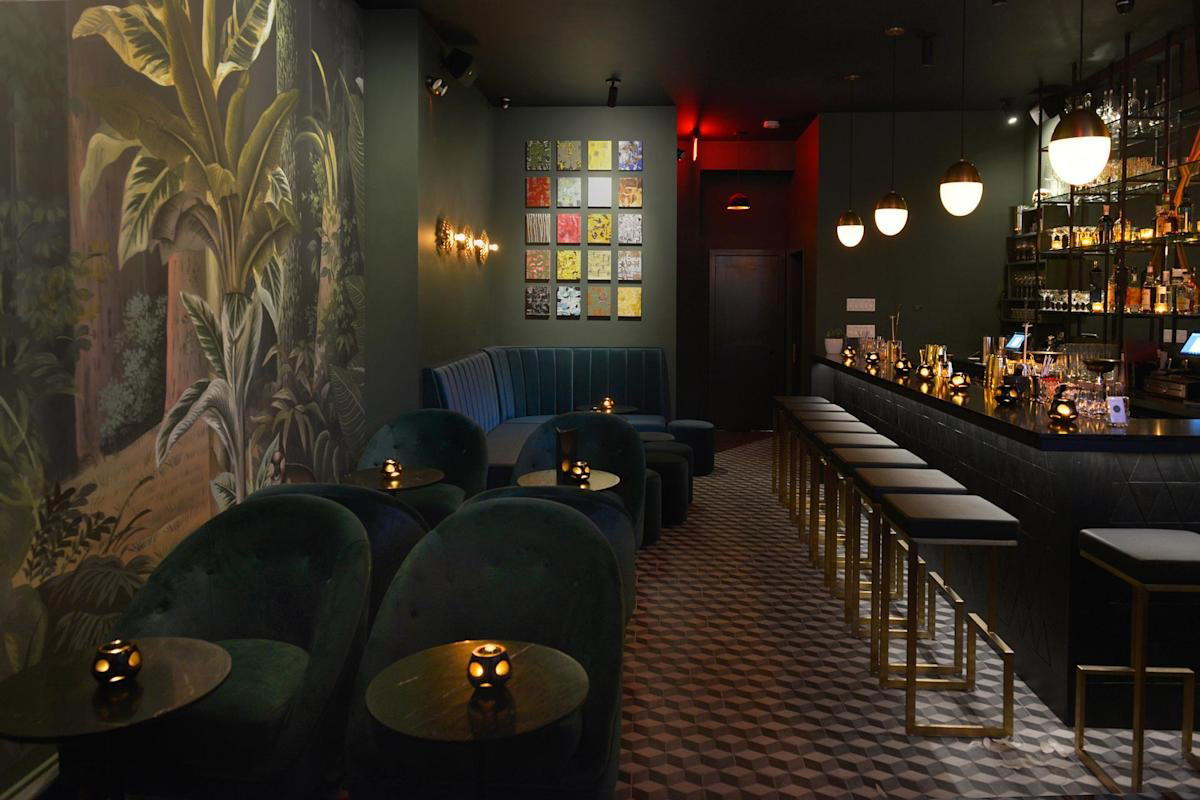
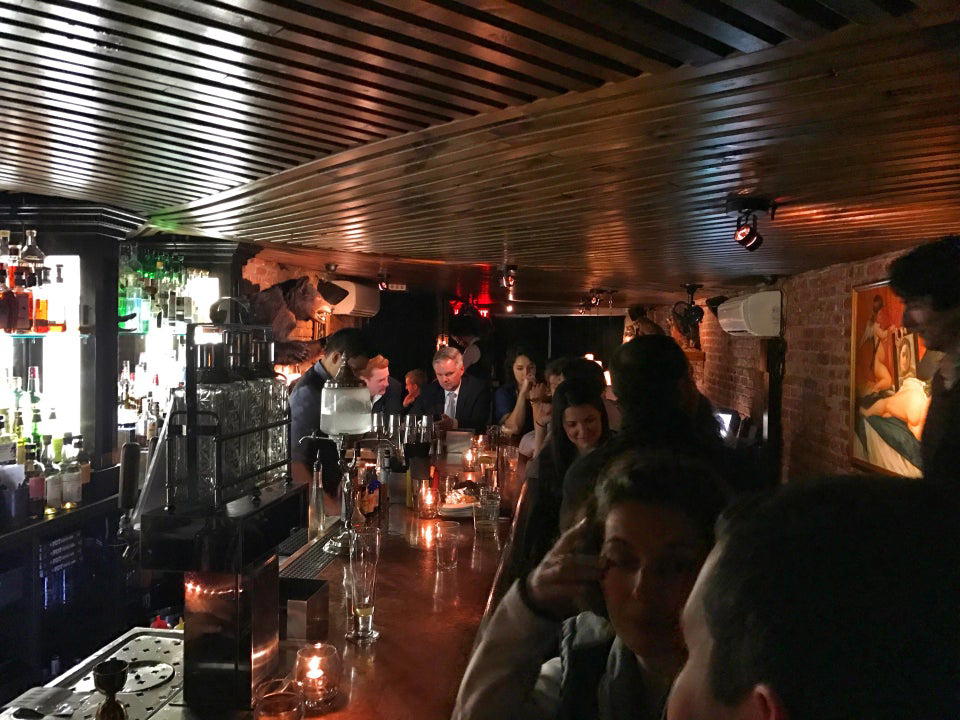
The physical setting reinforces the program's seriousness. Art Deco design, with its geometry, its use of rich materials, and its association with the Harlem Renaissance period specifically, is not a neutral aesthetic choice at 2292 Frederick Douglass Boulevard. The Harlem Renaissance of the 1920s and 1930s coincided with Art Deco's peak influence, and Harlem venues of that era, the ballrooms, the supper clubs, the speakeasies operating under the radar, were as architecturally ambitious as anything downtown. Bringing that visual language back in a contemporary bar context is a form of historical argument.
Hospitality model described as unhurried is increasingly rare in New York, where table turns, volume, and throughput define most operations. Bars that resist that pressure, that build their experience around a pace that allows conversation and consideration, are making a commercial sacrifice in exchange for a different kind of loyalty. Angel's Share in the East Village has sustained a similar commitment to atmosphere and measured service for decades. Sugar Monk pursues the same instinct from a very different cultural foundation.
Harlem in Context: Where Sugar Monk Sits
Broader New York bar scene rewards comparison. Downtown Manhattan's cocktail corridor, from the Lower East Side through the West Village, concentrates most of the city's recognized bar programs. Harlem has historically been underrepresented in that conversation, not because of a lack of quality but because critical attention and tourism infrastructure have been slower to follow. Sugar Monk's existence on Frederick Douglass Boulevard is partly a statement about that geography: serious drinking does not require a Soho address.
Nationally, a small number of bars have built programs around African American food and drink traditions with comparable rigor. Jewel of the South in New Orleans connects its cocktail program to the deep French Creole tradition of that city. Julep in Houston centers Southern drinking culture with particular attention to its Black contributors. Sugar Monk joins that small peer group as its New York representative, a bar that treats cultural specificity as a program feature rather than a marketing note.
For visitors building a New York itinerary around serious bar experiences, the geography of Sugar Monk makes it an easy anchor for an uptown evening. The bar sits in a part of the city that rewards spending time in rather than treating as a single-stop destination. Pairing it with a meal in Harlem before or after, or using it as the centerpiece of an evening that stays above 110th Street, reflects how the neighborhood itself functions. full New York City restaurants guide covers the broader uptown picture for those building a longer itinerary.
Planning Your Visit
Sugar Monk is located at 2292 Frederick Douglass Boulevard in Harlem. The bar is accessible via the B and C subway lines at 116th Street, a short walk north. Given the specificity of the program and the unhurried pace, this is a destination that rewards arriving without a tight schedule. The house-distilled amari are the natural starting point for any visit; they represent the most direct expression of what the bar is doing and why it is doing it there.
Quick reference: 2292 Frederick Douglass Blvd, New York, NY 10027. Nearest subway: B/C at 116th Street.
Cost Snapshot
Comparable venues nearby, for context on price, style, and recognition.
| Venue | Price | Awards | Notes |
|---|---|---|---|
| Sugar MonkThis venue — the venue you are viewing | $$$ | 1 recognition | |
| Undercote | $$$ | 1 recognition | Midtown South-Flatiron-Union Square, speakeasy |
| June | $$$ | 1 recognition | Carroll Gardens-Cobble Hill-Gowanus-Red Hook, wine_bar |
| Barely Disfigured | $$$ | 1 recognition | Carroll Gardens-Cobble Hill-Gowanus-Red Hook, cocktail_bar |
| Sushi Lab Rooftop | $$$ | , | Midtown-Times Square, rooftop_bar |
| BAR GOTO | $$$ | 2 recognitions | Lower East Side, cocktail_bar |
Continue exploring
More in New York City
Bars in New York City
Browse all →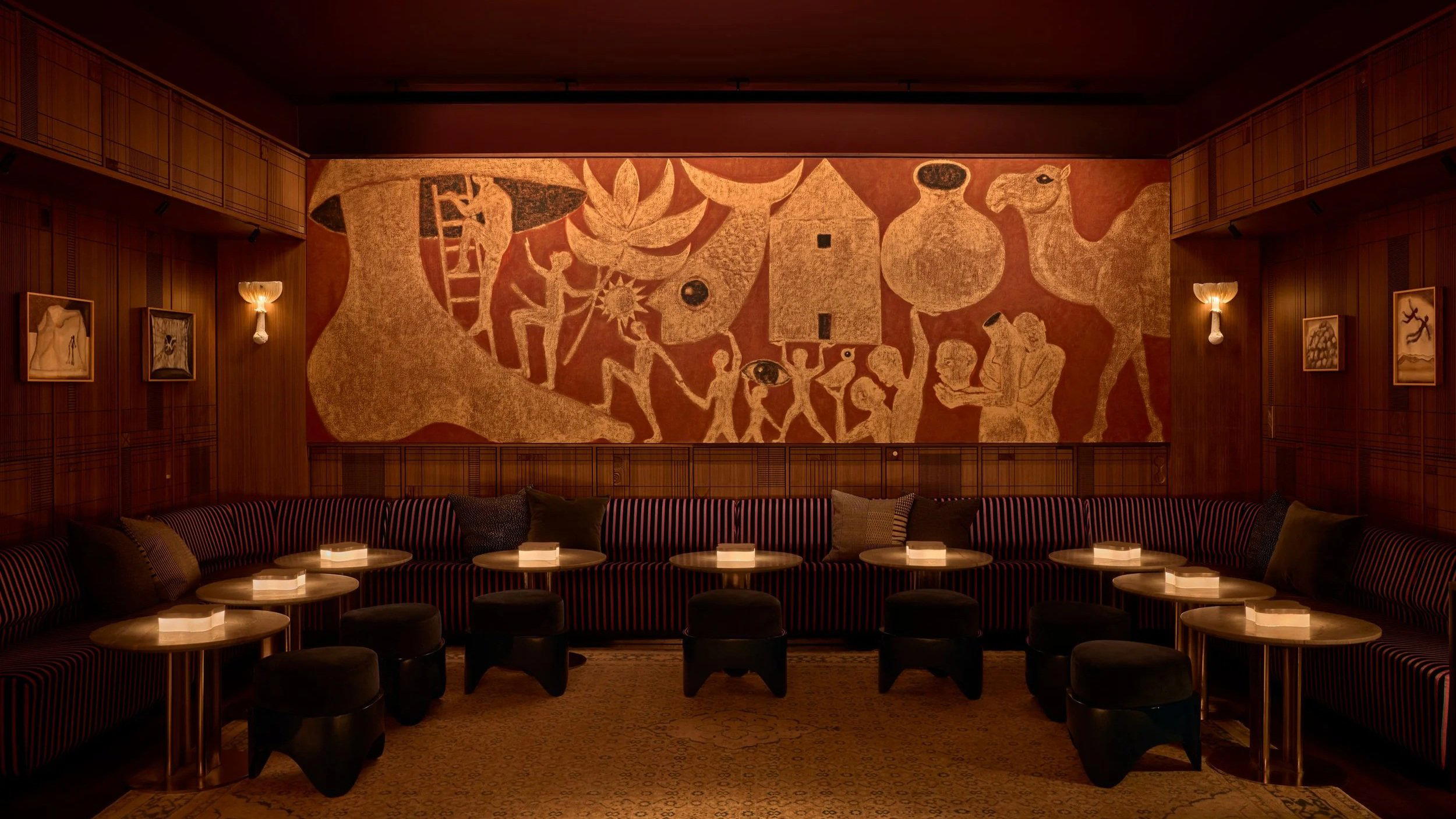
Restaurants in New York City
Browse all →
Hotels in New York City
Browse all →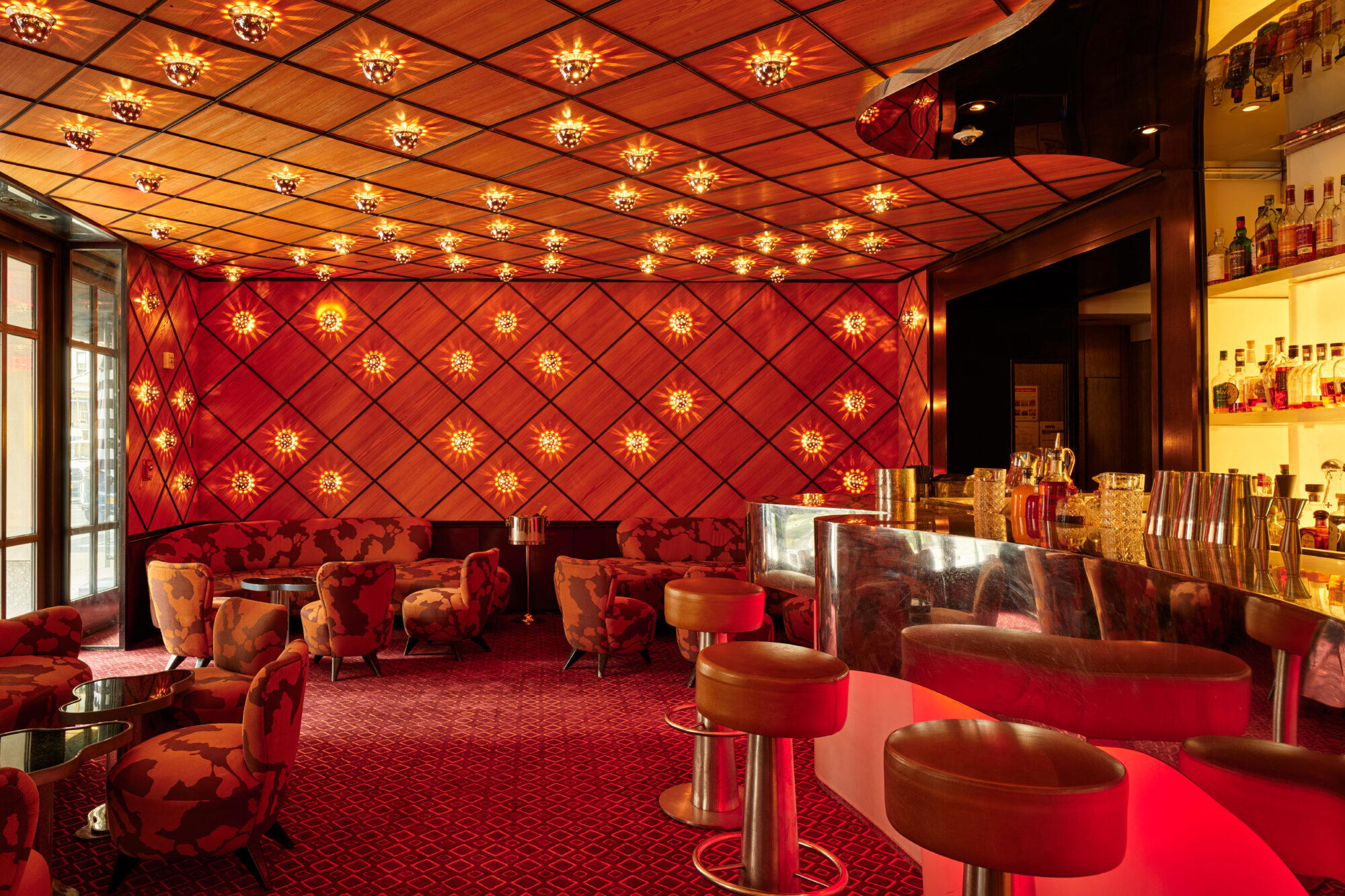


At a Glance
- Intimate
- Elegant
- Cozy
- Sophisticated
- Hidden Gem
- Date Night
- Special Occasion
- Casual Hangout
- Speakeasy
- Design Destination
- Seated Bar
- Lounge Seating
- Booth Seating
- Craft Cocktails
- Low Abv
Moody and intimate with candlelight, teal velvet seating, Art Deco elements, and a jazz soundtrack creating a sophisticated, artistic atmosphere.