Spicy Moon West Village
Spicy Moon West Village brings Sichuan heat to one of Manhattan's most competitive dining neighbourhoods, operating from 68 W 3rd St in Greenwich Village. The kitchen draws on the numbing, layered spice profiles that define the regional tradition, placing it within a small but growing cohort of serious Sichuan operators in New York City. Plan ahead: demand consistently outpaces walk-in availability.
Pearl is the En Primeur Club membership app — saves, bookings, and concierge access live there. Same editors, same standards.
- Address
- 68 W 3rd St, New York, NY 10012
- Phone
- +1 646 590 1390
- Website
- spicymoonnyc.com
- Directions
- Get directions
 Saves & bookings on Pearl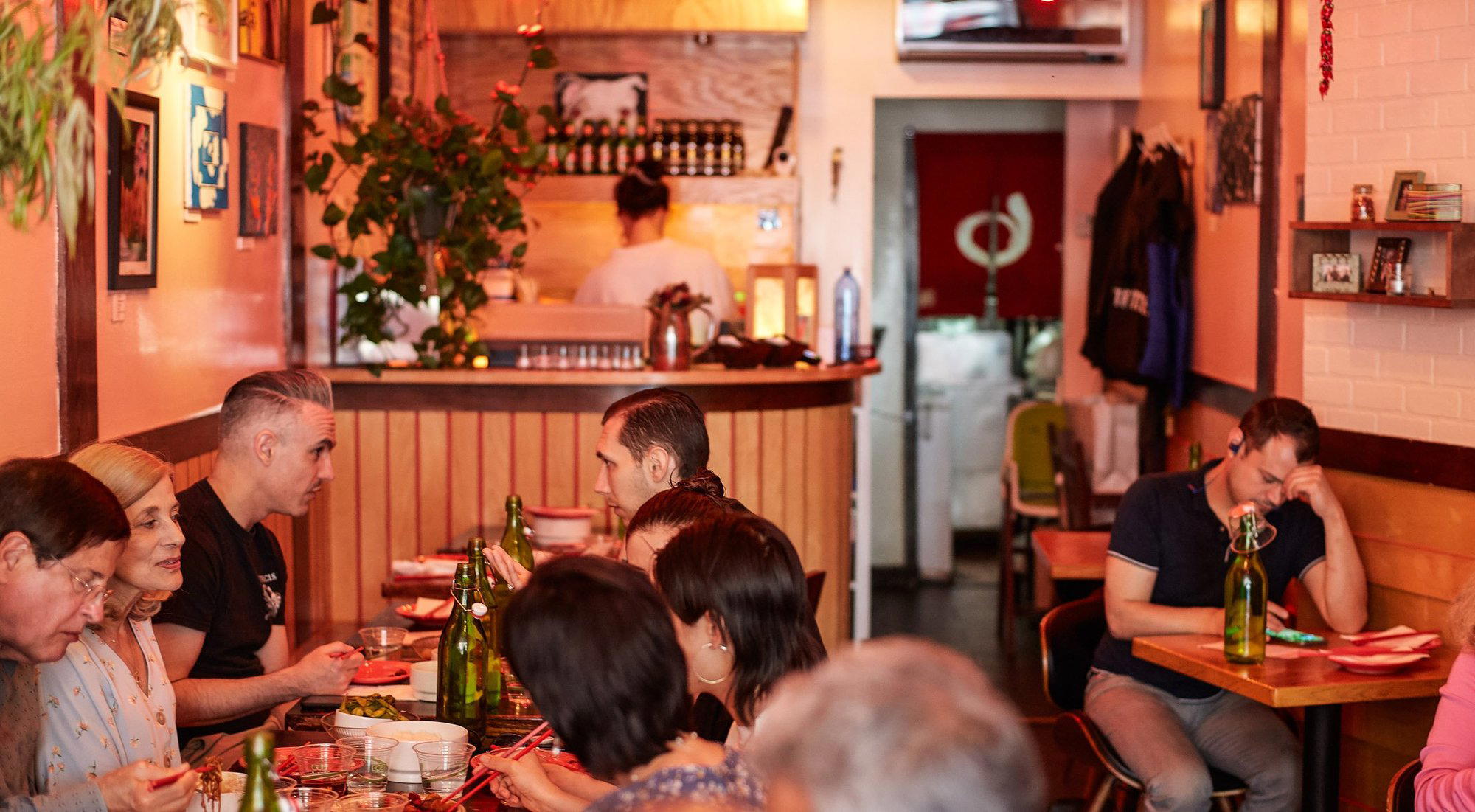
Sichuan in the Village: A Regional Tradition Takes Root
New York City's Sichuan scene has spent the better part of two decades sorting itself into tiers. The early wave of mala-forward restaurants concentrated in Flushing and the outer boroughs, where rent economics supported large-format dining rooms and broad menus. The second movement, which gathered pace through the 2010s, saw a smaller number of operators push Sichuan cooking into Manhattan proper, betting that diners would follow the cuisine rather than the other way around. Spicy Moon West Village, at 68 W 3rd St in Greenwich Village, belongs to that second cohort: a Manhattan Sichuan address positioned in one of the borough's most active and opinionated dining neighbourhoods.
Greenwich Village is an instructive place to open a regional Chinese restaurant. The neighbourhood's dining culture has long rewarded specificity. Operators who commit to a narrow culinary identity, and execute it with consistency, tend to build loyal repeat business faster here than in more transient parts of the city. The Village also sits at the intersection of NYU foot traffic and long-term residents with serious dining habits, which creates a customer base that can sustain a kitchen through both weeknight lulls and weekend rushes. Spicy Moon's address places it within walking distance of that dual audience.
The Sichuan Framework: What the Cuisine Actually Demands
Understanding what Spicy Moon is doing requires some grounding in what Sichuan cooking actually involves. The cuisine's defining characteristic is the interplay between la (spicy heat, typically from dried chillies) and ma (the numbing tingle produced by Sichuan peppercorn). These two sensations don't simply add up; they create a third effect, a kind of oral interference pattern, that good Sichuan cooking manages with some precision. Too much heat without the numbing agent produces a flat, punishing experience. Too much numbing without sufficient chilli produces something oddly anesthetic. The balance is the craft.
Beyond the mala pairing, Sichuan cooking operates across a wider flavour vocabulary than its chilli-forward reputation suggests: sweet bean paste, fermented black beans, aged vinegar, and dry-fried aromatics all contribute to dishes that can shift between rich, funky, sour, and sharp within a single plate. This complexity is what separates kitchens that have genuinely absorbed the tradition from those running on chilli volume alone. In Manhattan's current Sichuan tier, the question any serious restaurant must answer is which register it occupies.
The West Village Bar Scene and Where Spicy Moon Sits Within It
The editorial angle for any serious dining venue in this part of Manhattan increasingly runs through its drinks programme. The West Village and adjacent Greenwich Village have developed one of the city's densest concentrations of thoughtful bar operations, from spirits-focused neighbourhood anchors to internationally recognised cocktail programmes. Venues like Amor y Amargo have made the case for amaro-led programmes as a serious culinary statement, while Angel's Share in the East Village has demonstrated for decades that precision Japanese-influenced cocktail work builds a durable audience in this city. Attaboy NYC runs a no-menu format that has influenced how bartenders across the city think about guest interaction. And Superbueno has shown that a Latin-inflected creative programme can anchor a neighbourhood dining room as effectively as the kitchen itself.
The broader national conversation about drinks-forward dining rooms is equally instructive. Kumiko in Chicago built its identity around Japanese technique and house-made liqueurs. Jewel of the South in New Orleans centres its programme on historical American cocktail tradition. Bar Leather Apron in Honolulu, Julep in Houston, ABV in San Francisco, and Allegory in Washington, D.C. each represent a regional approach to the question of what a serious drinks programme looks like in a food-led dining room. Even internationally, venues like The Parlour in Frankfurt on the Main are demonstrating that the conversation about cocktail identity has moved well beyond the coastal American cities that originally drove it.
For a Sichuan restaurant in this environment, the drinks question is genuinely consequential. The cuisine's heat and complexity create specific pairing demands that generic wine lists handle poorly. The mala profile tends to diminish tannin-heavy reds and overwhelm delicate whites. Formats that perform well against Sichuan cooking typically lean toward lower-alcohol, higher-acidity options, lager-weight beers, or cocktails built around sour and bitter frameworks that can hold up against the chilli heat without competing with it. How any Greenwich Village Sichuan operator answers that pairing question says something meaningful about how seriously it takes the full dining experience.
Positioning in New York's Broader Sichuan Market
New York's Sichuan operators now span a wider range than the category's reputation suggests. At one end, high-volume Flushing addresses serve large tables with laminated menus running to dozens of dishes. At the other, a small number of Manhattan operators have narrowed their menus and raised their price points, trading breadth for focus. Manhattan's real estate economics impose this logic to some degree: a smaller menu is easier to execute consistently with the kitchen sizes that West Village buildings allow. Spicy Moon's address suggests it belongs in this more focused tier rather than the broad-menu format that works better in outer-borough spaces.
A restaurant that lands in Greenwich Village and charges Manhattan prices needs to be doing something more precise than a Flushing operation charging half as much. That is not a criticism of either model; it is simply the framework by which diners and critics reasonably assess value in each context.
Planning a Visit
Spicy Moon West Village operates at 68 W 3rd St, New York, NY 10012, in the heart of Greenwich Village. For those building a wider evening around the neighbourhood's drinks culture, the cluster of serious bar programmes within walking distance makes this a strong anchor for a longer night. The full New York City restaurants and bars guide covers additional options across the city's major dining neighbourhoods.
Given demand patterns typical of serious Manhattan Sichuan addresses, arriving with a reservation rather than relying on walk-in availability is the practical approach, particularly on weekends and Thursday evenings. Current hours, contact details, and booking information are best confirmed directly with the venue before visiting.
Quick reference: 68 W 3rd St, New York, NY 10012. Greenwich Village. Reservations recommended; confirm current hours and booking method directly.
Price and Positioning
| Venue | Price |
|---|---|
| Spicy Moon West VillageThis venue — the venue you are viewing | This venue |
| The Long Island Bar | World's 50 Best |
| Superbueno | World's 50 Best |
| Amor y Amargo | World's 50 Best |
| Angel's Share | World's 50 Best |
Continue exploring
More in New York City
Bars in New York City
Browse all →
Restaurants in New York City
Browse all →
Hotels in New York City
Browse all →






At a Glance
- Trendy
- Lively
- Cozy
- Date Night
- Group Outing
- Casual Hangout
- Standalone
- Seated Bar
- Lounge Seating
- Craft Cocktails
Current opening hours
- Monday
- 11:30 AM–10:30 PM
- Tuesday
- 11:30 AM–10:30 PM
- Wednesday
- 11:30 AM–10:30 PM
- Thursday
- 11:30 AM–10:30 PM
- Friday
- 11:30 AM–12 AM
- Saturday
- 11:30 AM–12 AM
- Sunday
- 11:30 AM–10:30 PM
Hours can change for holidays and private events. Last verified .
Dimmed lights with quite loud music creating a lively and lively setting.
Know Before You Go
- Getting there
- 68 W 3rd St, New York, NY 10012