Schaller's Stube Sausage Bar
Schaller's Stube Sausage Bar on the Upper East Side occupies a specific and underserved niche in New York's bar-food scene: a German-style sausage house where the sourcing tradition matters as much as the product on the plate. Positioned between the city's gastropub tier and its more theatrical concept restaurants, it draws a neighbourhood crowd that returns for the directness of the offering rather than the spectacle.
Pearl is the En Primeur Club membership app — saves, bookings, and concierge access live there. Same editors, same standards.
- Address
- 1652 2nd Ave, New York, NY 10028
- Phone
- +1 646 726 4355
- Website
- schallerstube.com
- Directions
- Get directions
 Saves & bookings on Pearl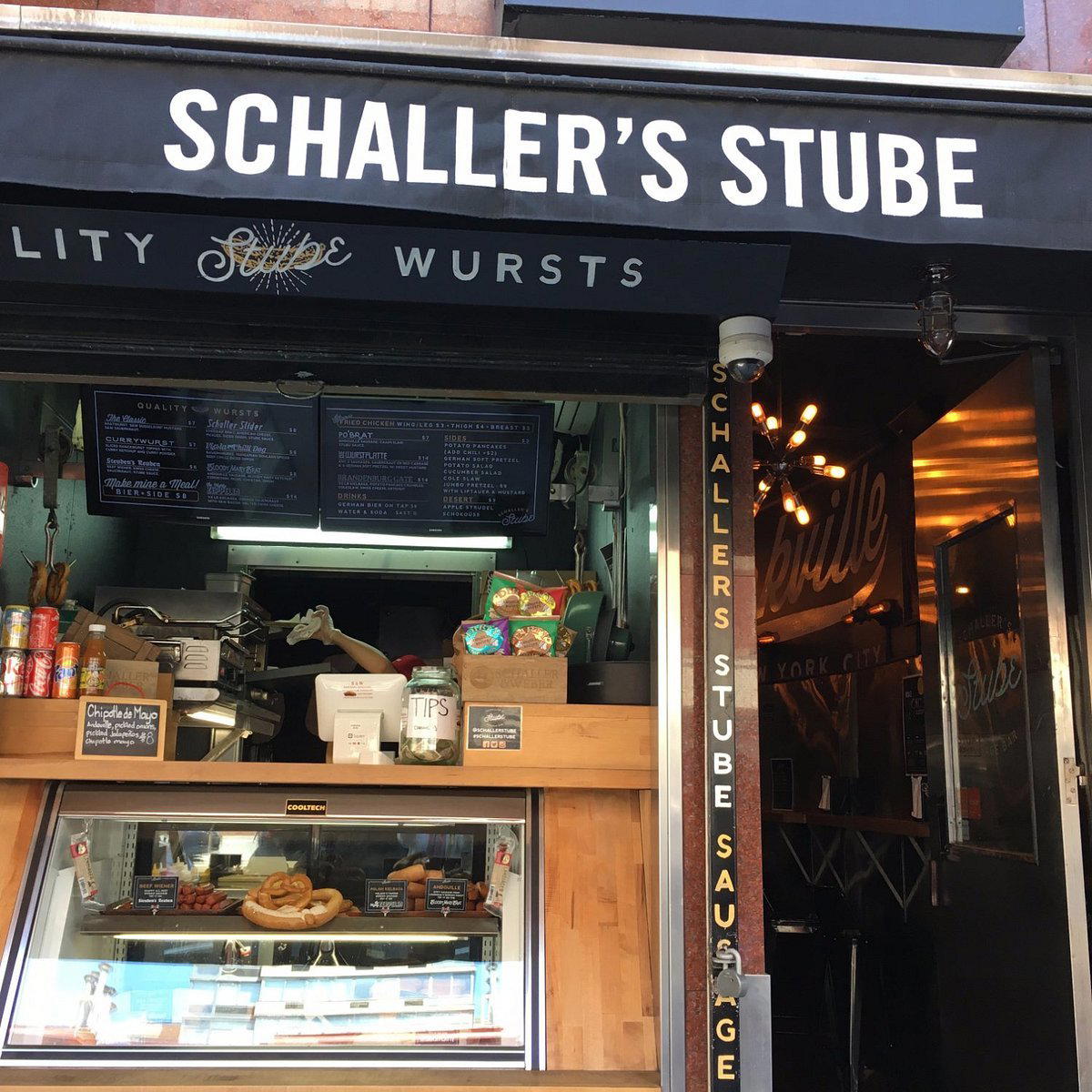
The German Sausage Tradition in a City That Forgot It Had One
New York's relationship with German food is longer than most diners remember. The city's Kleindeutschland district on the Lower East Side once made it one of the largest German-speaking cities outside Europe, and the sausage culture that came with those communities ran deep through the nineteenth and early twentieth centuries. That tradition largely receded as demographics shifted, leaving behind only a handful of establishments willing to take the wurst seriously as a culinary category rather than a novelty. Schaller's Stube Sausage Bar, at 1652 2nd Avenue in the Upper East Side's Yorkville neighbourhood, sits in what was once the geographic and cultural heart of that German-American community. The address is not incidental.
Yorkville's German character faded over the second half of the twentieth century, but its food infrastructure was never entirely erased. Schaller & Weber, the butcher shop that gave rise to the Stube, has operated on 2nd Avenue since 1937, making it one of the longest-running German specialty food operations in New York. The Stube functions as an extension of that legacy, converting the butcher's sourcing knowledge and production relationships into a bar-format eating experience. That lineage matters when assessing what you're actually eating.
Sourcing as the Central Argument
In a city where the provenance of ingredients has become a marketing exercise across restaurant tiers, the sausage bar format is one of the few contexts where sourcing is the product rather than a decoration applied to it. The entire offering at Schaller's Stube is predicated on the quality and specificity of what goes into the casing. Schaller & Weber's production history, spanning decades of charcuterie and cured meat for New York's specialty food market, provides the direct supply chain that most bar kitchens have to construct artificially through third-party relationships.
German sausage tradition divides broadly between fresh varieties, which require cooking to order, and cured or smoked products, which have undergone controlled preservation. Both categories demand different handling and reflect different regional traditions across Germany, Austria, and the broader Central European spectrum. A venue operating from a butcher's base can apply that categorical knowledge in ways that a kitchen ordering from a distributor typically cannot. The difference shows in the consistency and character of the product rather than in any single dramatic presentation.
This sourcing angle also positions Schaller's Stube in a different competitive conversation from the gastropub tier. New York has plenty of bars serving refined sausages sourced from artisan producers, usually positioned alongside craft beer lists and reclaimed-wood interiors. The Stube's claim is more specific: the production relationship between the bar and its supply is vertical rather than curated, which narrows the distance between maker and plate considerably.
The Upper East Side Context
The Upper East Side's bar and restaurant scene divides between two distinct registers: the old-guard dining rooms that have served the neighbourhood's apartment-dwelling professional class for decades, and a newer layer of concept-driven operations targeting younger residents and destination visitors. Schaller's Stube occupies neither category cleanly, which is part of what makes it legible as a neighbourhood fixture. It draws from the Yorkville block's pedestrian traffic and from the Schaller & Weber customer base, creating a regulars-led atmosphere that concept restaurants find difficult to manufacture.
Within that guide, venues like Amor y Amargo and Attaboy NYC represent the craft-cocktail end of the Manhattan bar spectrum, while Superbueno and Angel's Share illustrate how venue format and neighbourhood placement shape the experience as much as the drink program. Schaller's Stube sits in a different register from all of them, closer to a European-style eating-and-drinking hybrid than to any of the city's cocktail-first venues.
The bar-food hybrid format has proven durable across other American cities as well. Venues like Kumiko in Chicago, ABV in San Francisco, and Jewel of the South in New Orleans each demonstrate how a food-forward drinking establishment can anchor itself in a specific culinary tradition rather than defaulting to generic bar fare. Julep in Houston, Allegory in Washington, D.C., and Bar Leather Apron in Honolulu each reinforce the same broader pattern: specificity of concept, when backed by genuine sourcing or craft credibility, produces a more resilient operation than broad-appeal programming. The Parlour in Frankfurt on the Main offers a useful transatlantic comparison point, given Frankfurt's own embedded tradition of Äppelwoi and rustic sausage houses.
The Stube Format and What It Implies
The word Stube refers to a traditional German parlour or tavern room, a format historically distinct from the formal gasthaus in its informality and its emphasis on simple, well-sourced food served alongside beer or regional wine. The Stube model is convivial by design: shared seating, direct service, and a limited menu that rewards repetition rather than novelty-seeking. Importing that format to a New York avenue setting involves some translation, but the core logic holds. The venue is not designed for single-visit destination dining in the way that many Manhattan restaurants now position themselves. It is designed for the kind of return visit that requires no occasion.
That distinction matters for how to approach an evening here. A visitor expecting a broad menu, elaborate preparation, or extensive cocktail programming will read the offering incorrectly. The Stube's format is a compression, not a limitation. The European precedent for this kind of specialist eating house, where the depth comes from production knowledge rather than menu breadth, is well-established in cities like Munich, Vienna, and Frankfurt. New York has few direct equivalents.
Planning Your Visit
Schaller's Stube is located at 1652 2nd Avenue, Yorkville, Upper East Side, Manhattan. The 4, 5, and 6 subway lines stop at 86th Street, placing the venue within comfortable walking distance. The Upper East Side's density of residential buildings and limited late-night options means the earlier part of the evening tends to be one active period for neighbourhood-facing operations of this type. Current phone, hours, and booking details are best confirmed directly with the venue before visiting, as operational specifics are subject to change.
Just the Basics
Comparable venues nearby, for context on price, style, and recognition.
| Venue | Cuisine | Price | Notes |
|---|---|---|---|
| Schaller's Stube Sausage BarThis venue — the venue you are viewing | Not listed | $$ | Not listed |
| Bar 7 | Greenwich Village, lounge | $$ | Not listed |
| CHILI | Midtown-Times Square, lounge | $$ | Not listed |
| Gyu-Kaku Japanese BBQ | Not listed | $$ | Hell's Kitchen, sake_bar |
| Tulcingo Del Valle Restaurant | Hell's Kitchen, lounge | $$ | Not listed |
| The Wayland | Not listed | $$ | East Village, cocktail_bar |
Continue exploring
More in New York City
Bars in New York City
Browse all →
Restaurants in New York City
Browse all →
Hotels in New York City
Browse all →





At a Glance
- Rustic
- Cozy
- Lively
- Casual Hangout
- After Work
- Historic Building
- Counter Only
- Seated Bar
- Craft Beer
Current opening hours
- Monday
- 11 AM–10 PM
- Tuesday
- 11 AM–10 PM
- Wednesday
- 11 AM–10 PM
- Thursday
- 11 AM–10 PM
- Friday
- 11 AM–11 PM
- Saturday
- 11 AM–11 PM
- Sunday
- 12–6 PM
Hours can change for holidays and private events. Last verified .
Industrial with meat hooks and metal racks, quiet by day but lively with loud music and crowds in the evening.