Sam Adams Downtown Boston Taproom
The Sam Adams Downtown Boston Taproom at 60 State St sits at the intersection of Financial District foot traffic and the brewery's decades-long presence in the city's beer culture. A working taproom from one of American craft brewing's most recognized names, it offers a direct line to the Samuel Adams portfolio in the neighborhood where the brand first built its local identity.
Pearl is the En Primeur Club membership app — saves, bookings, and concierge access live there. Same editors, same standards.
- Address
- 60 State St, Boston, MA 02109
- Phone
- +1 617 466 6418
- Website
- samadamsbostontaproom.com
- Directions
- Get directions
 Saves & bookings on Pearl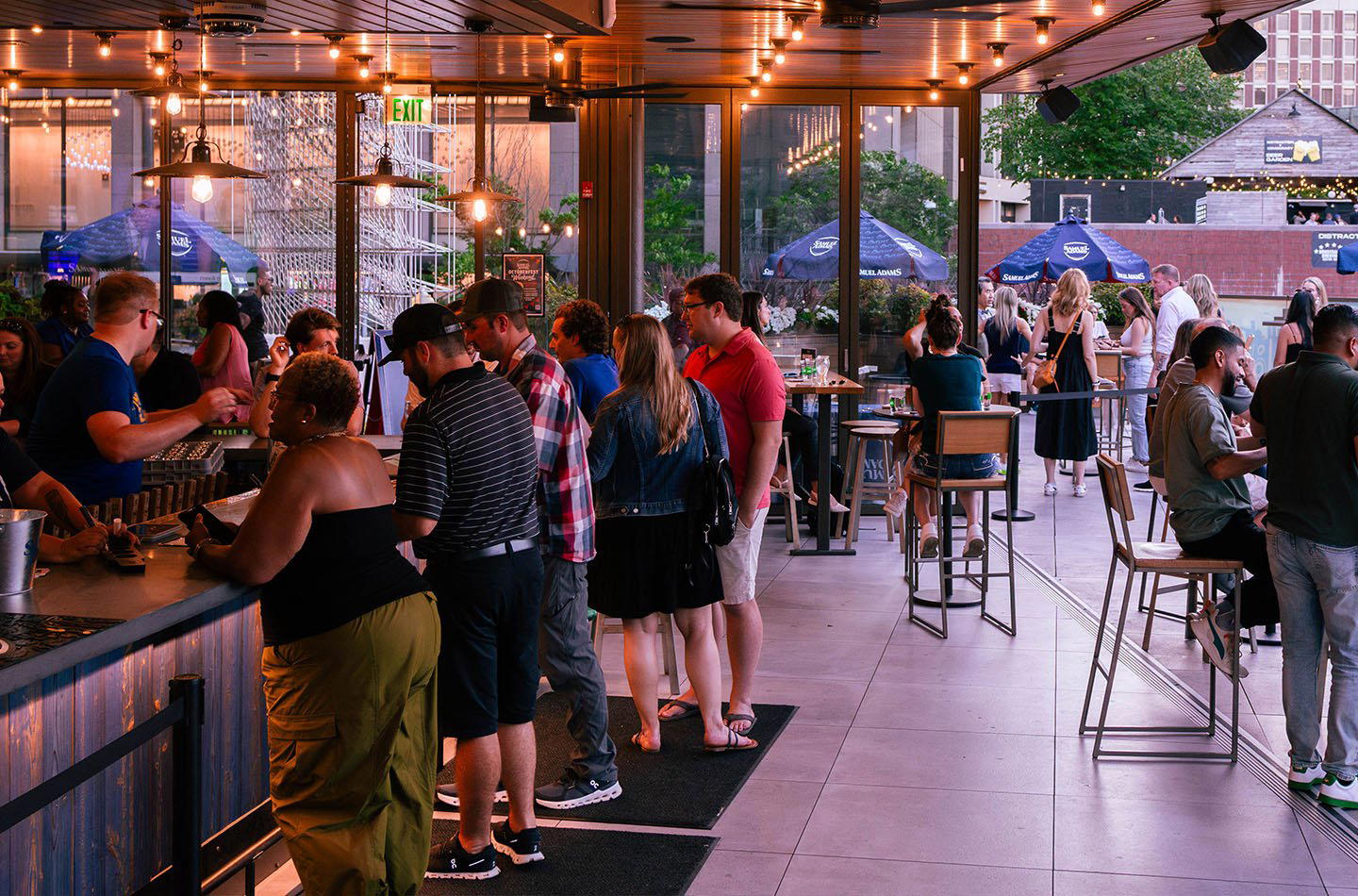
Where Financial District Boston Meets American Craft Brewing
State Street in Boston's Financial District moves at a particular pace: suits at lunch, tourists threading toward Faneuil Hall, locals cutting through from the T. It is not, historically, a neighborhood that rewards slow drinking. The Sam Adams Downtown Boston Taproom at 60 State St exists partly as a counterargument to that rhythm. Boston's relationship with Samuel Adams beer predates the modern craft brewing movement as Americans now understand it, the brand launched in 1984, entered the Great American Beer Festival that same year, and spent the following decades becoming among the more recognized American brewing names in both domestic and export markets. That history sits behind every pour here, whether or not the drinker thinks about it.
The broader American craft beer scene has fractured considerably since the 1980s. Regional taprooms, single-location microbreweries, and hyper-local IPAs now compete for the same shelf space and barstool that Samuel Adams once largely owned. In that context, the Downtown Taproom functions as something more specific than a bar: it's a point of contact between a founding-era craft brand and a city that has grown a much more layered beer culture around it. Boston now supports cocktail-forward programs like Equal Measure alongside traditional taverns, wine bars, and ambitious small-plate formats. The taproom occupies its own lane within that spread.
The Progression Through the Samuel Adams Portfolio
Taproom drinking, when it works as a format, offers something draft-and-bottle retail cannot: a curated sequence through a brewery's range, poured by staff who understand the production context. The tasting progression at a brewery taproom typically moves from lighter, more approachable styles toward fuller-bodied or higher-ABV expressions, with seasonal and limited releases appearing mid-sequence as evidence of current production priorities.
Samuel Adams maintains one of the wider portfolios in American brewing, spanning lagers, ales, IPAs, seasonal rotations, and barrel-aged experiments through its Utopias program. The Downtown Boston location, as a direct brand outpost, represents the logical place to work through that range in order, starting with the flagship Boston Lager, which remains the reference point against which the rest of the portfolio is measured, and building toward whatever specialty or limited production is current. This is the same logic that drives tasting-room culture at Napa wineries or distillery visitor centers: the progression teaches the range in a way that a single glass at a restaurant bar cannot.
The Financial District setting also means the taproom absorbs a different crowd than a destination brewery might. Visitors on a Boston itinerary, office workers finishing a shift, and travelers moving between the waterfront and Beacon Hill all pass through the same door. For readers with broader craft drinking interests, the taproom fits naturally into a day that might include Asta or Baleia later in the evening, two Boston programs that operate in a different register but share the same commitment to considered drinking.
Samuel Adams in the American Craft Brewing Timeline
The critical context for understanding what the Downtown Taproom represents is the position Samuel Adams occupies in American brewing history. The 1984 founding, the early GABF recognition, and the subsequent national expansion placed the brand at the origin point of what became the craft beer movement. By the 1990s, Samuel Adams was the largest American craft brewer by volume, a distinction that eventually created tension with a craft community that came to associate size with compromise.
That tension is worth naming, because it shapes how the taproom reads in 2024. American craft brewing has spent a decade debating what scale means for quality and independence, with the Brewers Association adjusting its definition of "craft" more than once in response to ownership changes and production thresholds. Samuel Adams, through its parent Boston Beer Company, sits in a category that some segments of the craft community no longer classify as independent craft. The Downtown Taproom does not resolve that debate. What it does offer is access to a portfolio built over forty years of production, including styles and aging experiments that smaller operations rarely have the infrastructure to attempt, notably the Utopias series, which has reached ABV levels above 28% through extended barrel aging and draws comparisons to fortified wine formats more than conventional beer.
For comparison, the craft cocktail bars that have reshaped American drinking culture over the same period, programs like Kumiko in Chicago, Jewel of the South in New Orleans, or ABV in San Francisco, built their identities around similar questions of craft, scale, and producer transparency. The taproom format, at its leading, answers some of those questions directly by putting production context in front of the drinker.
Boston as a Backdrop
Boston's drinking culture has broadened considerably from the Irish-tavern and sports-bar template that once defined it externally. The city now supports serious cocktail programs, a growing natural wine presence, and a craft beer scene that extends well beyond the Samuel Adams name into newer local breweries. The Financial District specifically sits between neighborhoods with distinct bar identities: the Seaport's newer, louder venues to the south, and the quieter, more residential character of Beacon Hill to the west.
60 State St places the taproom within walking distance of the Freedom Trail and Faneuil Hall Marketplace, which means the visitor demographic skews toward travelers and first-time Boston drinkers as much as regulars. That mix tends to suit taproom formats well, the guided-by-the-pour structure works for someone who doesn't know the range as well as it does for a repeat visitor. Readers planning a fuller evening in Boston might look at Abe & Louie's for a different register, or consult our full Boston restaurants guide for broader neighborhood-level context.
For those traveling between American drinking cities, the taproom format at the Downtown Boston location is broadly comparable in structure to brand outposts in other markets, the same way that Julep in Houston, Superbueno in New York City, or Bar Leather Apron in Honolulu each represent a specific local-drinking identity rooted in their city. The Sam Adams taproom is rooted in Boston in a different but equally specific way: the brand is named for a founding-era Bostonian, brewed in the city, and has spent four decades as part of the local identity whether or not the current craft conversation positions it that way. Internationally, the format has parallels in brewery visitor programs like those found at The Parlour in Frankfurt on the Main, where beverage heritage and urban location combine to create a specific kind of informed drinking experience.
Planning a Visit
The taproom is located at 60 State St, accessible from the State Street MBTA station on the Orange and Blue lines, which places it inside a two-minute walk from the entrance. The Financial District location means the surrounding streets are quieter on weekends than during the weekday lunch and after-work windows, when the taproom absorbs organic foot traffic.
Cuisine and Awards Snapshot
Comparable venues nearby, for context on price, style, and recognition.
| Venue | Cuisine | Price | Notes |
|---|---|---|---|
| Sam Adams Downtown Boston TaproomThis venue — the venue you are viewing | beer_bar | $$ | Not listed |
| Beyond Proof | cocktail_bar | $$ | Jamaica Plain |
| haley.henry | wine_bar | $$ | Downtown Crossing |
| Baleia | cocktail_bar | $$ | South End |
| LULU GREEN | cocktail_bar | $$ | South Boston |
Continue exploring
More in Boston
Bars in Boston
Browse all →
Restaurants in Boston
Browse all →
Hotels in Boston
Browse all →
Wineries in Boston
Browse all →
At a Glance
- Lively
- Industrial
- Well Known
- After Work
- Group Outing
- Casual Hangout
- Rooftop
- Historic Building
- Communal Tables
- Craft Beer
- Street Scene
Current opening hours
- Monday
- 11 AM–9 PM
- Tuesday
- 11 AM–9 PM
- Wednesday
- 11 AM–9 PM
- Thursday
- 11 AM–9 PM
- Friday
- 11 AM–10 PM
- Saturday
- 11 AM–10 PM
- Sunday
- 11 AM–9 PM
Hours can change for holidays and private events. Last verified .
Energetic brewpub atmosphere with historic Boston views from the rooftop patio and lively indoor spaces across three floors.