On Via Camollia, one of Siena's quieter artisan streets, Osteria il Vinaio occupies the kind of address that rewards walkers who stray from the Campo's orbit. The format is rooted in the osteria tradition: wine-led, simple, neighbourhood-facing. Compared to the more theatrical wine bars clustering near the Piazza, il Vinaio keeps its register lower and its pours more deliberately considered.
 Discover on Pearl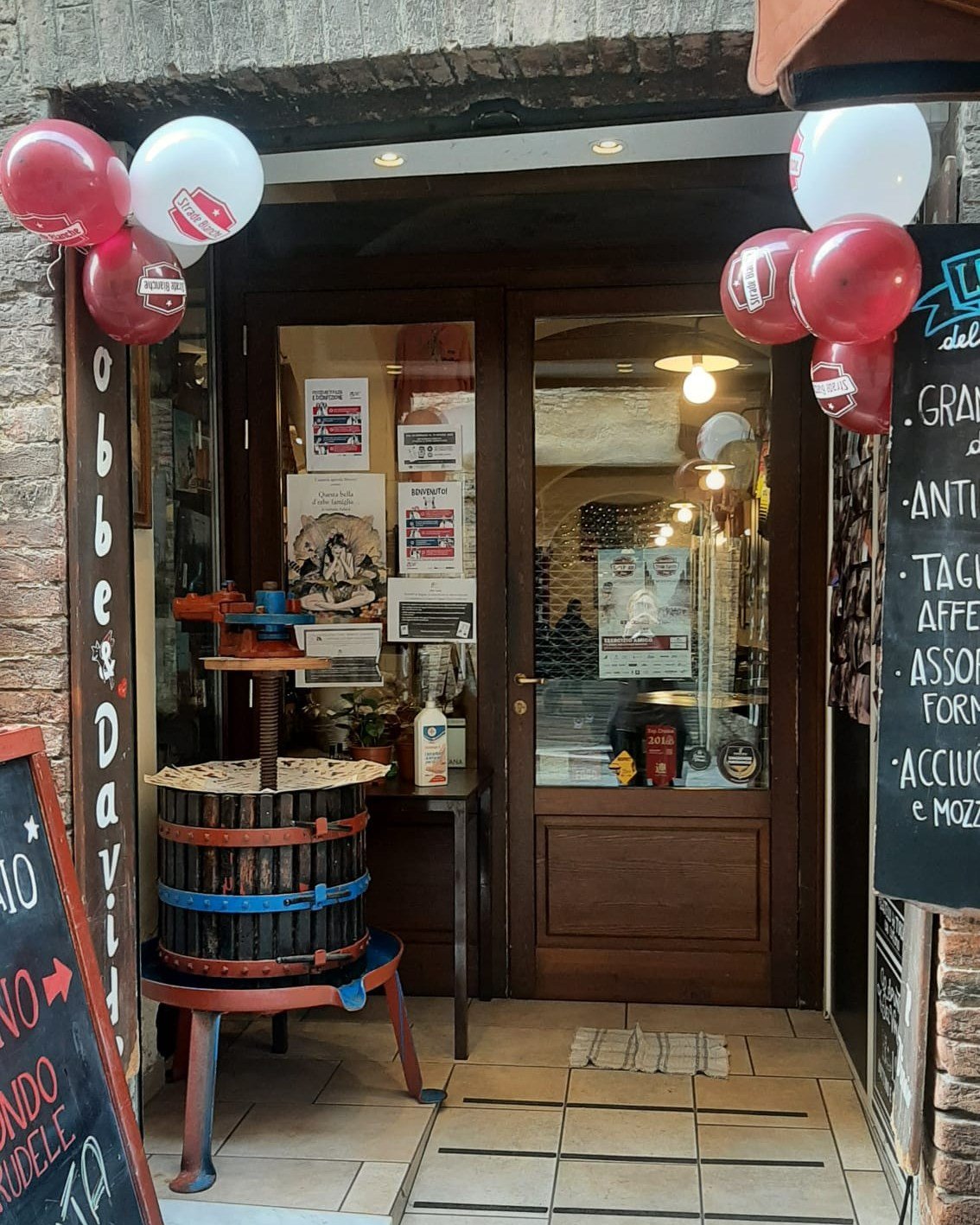
Where Via Camollia Meets the Counter
The northern approach into Siena along Via Camollia is a working street rather than a tourist corridor. Shutters, local bakeries, and the occasional workshop front sit alongside wine bars that have served the same neighbourhood for decades. Osteria il Vinaio occupies this stretch at number 138, and the address alone is enough to tell you something about the register it operates in: this is a spot oriented toward the city rather than toward the Campo.
In a city where the bar scene divides sharply between heritage caffè formats and the newer aperitivo-led drinking rooms clustered near the historic centre, an osteria-bar along Camollia occupies a specific niche. The model leans toward counter hospitality, wine poured by the glass alongside a short food offering, and a pace that tracks the neighbourhood rather than tour-group rhythms. This is how a significant portion of Siena's after-work drinking culture actually operates, away from the more photographed piazzas.
The shortlist, unlocked.
Hard-to-book tables, cellar releases, and concierge-planned trips.
Get Exclusive Access →The Craft Behind the Counter
Italian bar culture at this tier is frequently misread by visitors expecting the cocktail-bar theatrics that have taken hold in Milan or Rome. The discipline at an osteria-wine bar is quieter and, in some ways, more demanding. The person behind the counter is expected to know the producer behind every bottle on the list, to pour without ceremony, and to read when a customer wants conversation and when they want to be left alone. It is a hospitality grammar closer to the Lyon bouchon tradition than to the contemporary cocktail bar.
Across Italy, the bars generating the most consistent conversation among informed drinkers are those where counter craft extends beyond technique to curation. At Drink Kong in Rome, that curation centres on Japanese-inflected methodology and fermentation; at 1930 in Milan, it is prohibition-era formalism expressed through studied restraint. At an osteria-format bar in Tuscany, the equivalent discipline shows in the wine list: which producers, which vintages, and whether the glass pours reflect genuine knowledge or simply what the distributor delivered that week.
Siena sits inside Chianti Classico and within easy reach of Brunello di Montalcino, Morellino di Scansano, and the Maremma producers that have shifted the region's red-wine conversation over the past fifteen years. A bar with genuine counter expertise in this city should be able to navigate that geography with specificity, not just default to the recognisable label. That is the bar set by the leading operators in this format, and it is the framework against which a visit to Osteria il Vinaio is worth framing.
The Via Camollia Context
Siena's bar scene does not map neatly onto a single neighbourhood the way Florence's does around Santo Spirito or Oltrarno. Instead, the city's character distributes itself across a handful of nodes: the Campo-adjacent spots with their refined foot traffic, the enoteca cluster near San Domenico, and the quieter working-street operations further north. Via Camollia falls into the third category, which means lower turnover, a more local clientele, and, on a good evening, a slower pace that allows for longer conversations at the counter.
For comparison: Cacio E Pere and Caffè Le Logge both operate nearer the historic core, with the foot traffic and visibility that implies. bella vista social pub and Key Largo Bar occupy different format categories altogether. Il Vinaio's position on Camollia places it in a different competitive context: less about visibility, more about repeat custom from people who know where they are going.
The closest analogue to this format in other Italian cities might be Al Covino in Venice, where the bacaro tradition similarly privileges the pour over the production value of the room. Or, further afield, L'Antiquario in Naples, which brings a comparable specificity to its spirits program. The format varies; the underlying discipline is the same.
What the Format Offers
Osteria-format bars in this tier typically combine a wine-by-the-glass offering with a short food menu built around cured meats, aged cheeses, and whatever the kitchen can plate without turning the counter into a restaurant operation. The food is not incidental. In the Sienese context, local salumi traditions are pronounced, and a bar running this format without engaging seriously with them is leaving a significant part of the proposition on the table.
The drinking logic is also specific to place. Vernaccia di San Gimignano to the northwest, Vino Nobile di Montepulciano to the southeast, Chianti Classico throughout the surrounding hills: the regional geography gives a knowledgeable bar operator in Siena more to work with than almost anywhere else in Italy. A single glass pour can be a lesson in appellation geography if the person behind the counter is inclined to explain it, and the leading operators in this format generally are.
Internationally, the discipline involved in this kind of counter hospitality has equivalents at venues like Gucci Giardino in Florence, where curation and setting carry the weight, or Bar Leather Apron in Honolulu and Lost and Found in Nicosia, where the bar program is built around genuine research rather than trend-following. The register is different in each case, but the core value is consistent: someone behind the bar who has done the work.
Planning a Visit
Via Camollia 138 is accessible on foot from Siena's northern gate, the Porta Camollia, and sits within a fifteen-minute walk of the Campo through the city's medieval street network. The format of an osteria-bar at this address suggests afternoon through evening hours, with the aperitivo window from around five to eight typically the most active period for the counter. Arriving outside peak hours generally makes it easier to engage with whoever is pouring. No booking data is available in our records, which is consistent with the counter-and-glass format, where walk-in is usually the operating model. For the broader context on where il Vinaio fits within Siena's drinking and dining scene, the our full Siena restaurants guide covers the city's key nodes and formats in detail.
The shortlist, unlocked.
Hard-to-book tables, cellar releases, and concierge-planned trips.
Get Exclusive Access →Frequently Asked Questions
The Minimal Set
A short peer set to help you calibrate price, style, and recognition.
Need a Table?
Our members enjoy priority alerts and concierge-led booking support for the world's most difficult bars and lounges.
Get Exclusive AccessThe shortlist, unlocked.
Hard-to-book tables, cellar releases, and concierge-planned trips.
Get Exclusive Access →