Odd Duck
Odd Duck sits in Milwaukee's Walker's Point neighborhood, where a concentration of independently owned restaurants has quietly reshaped the city's dining conversation. The kitchen works from a small-plates format with a farm-forward sensibility, drawing a consistent crowd that books ahead. It occupies a specific tier in Milwaukee's independent dining scene that rewards planning rather than walk-ins.
 Discover on Pearl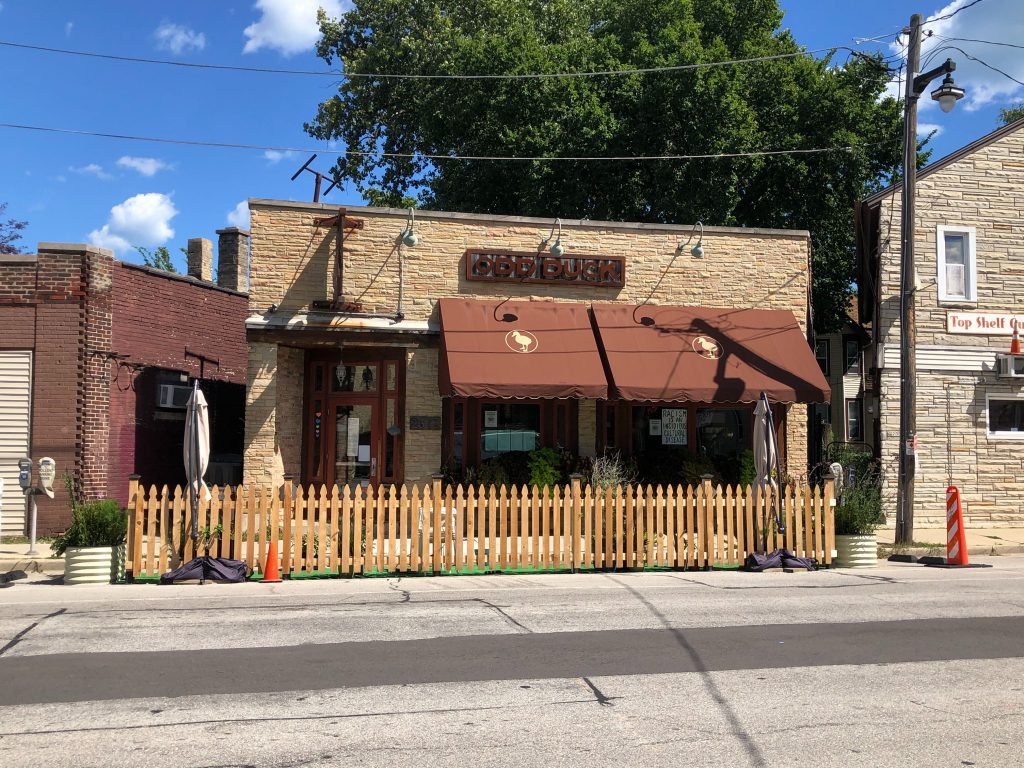
Walker's Point and the Argument for South Side Dining
Walker's Point does not announce itself the way Third Ward does. There are no converted loft buildings advertising their histories, no tourist-facing brochure trails. What the neighborhood has instead is a density of independently owned food and drink operations that have accumulated over the past decade into something more coherent than a trend. Odd Duck, at 939 S 2nd St, sits within that accumulation. Its address alone puts it in a peer group that includes places like Braise Restaurant & Culinary School, a restaurant that formalized the farm-to-table argument in Milwaukee before farm-to-table became a table stakes phrase. This part of the city rewards the decision to go south of downtown rather than staying within the obvious loop.
The physical approach to Odd Duck is low-key in the way that signals confidence rather than neglect. Walker's Point storefronts tend toward brick and painted wood rather than glass curtain walls, and the restaurant fits that register. What you notice inside is warmth in the literal sense: a room that has been thought through without announcing the thought. This is a dining format where the room functions as context for the food rather than competing with it.
Small Plates and What That Format Actually Means Here
Milwaukee's better independent restaurants have split over the past several years between full-service tasting formats and more flexible small-plates structures. Odd Duck sits in the latter category, which carries specific implications for how a meal works. Small-plates dining at this level is not the same as tapas-bar efficiency or sharing-plate informality at a casual group spot. The format demands kitchen precision at a smaller unit size, and it changes the pacing logic of an evening. Dishes come in waves that require some coordination from the table, and the bill tends to climb faster than the format implies for first-time visitors.
The farm-forward orientation that defines the kitchen's sourcing places Odd Duck in a specific tier of Midwestern independent restaurants, a cohort that treats ingredient provenance as a structural decision rather than a marketing note. This approach has been more common in Chicago, where places like Kumiko have shown how deeply sourcing choices can shape a program's identity. In Milwaukee, it remains a differentiator rather than a baseline, which means Odd Duck occupies a clearer position in the local competitive set than it might in a larger market.
Drinking in Walker's Point
The bar program at a small-plates restaurant in this neighborhood exists in interesting company. Walker's Point has Birch and Boone & Crockett within reasonable walking distance, and further north the city's cocktail history runs through places like At Random, which has been operating since 1964 and represents a completely different register of Milwaukee drinking culture. What this means in practice is that an evening in Walker's Point can move between formats: dinner at Odd Duck followed by a drink somewhere that treats the cocktail as its primary subject rather than a supporting player.
For visitors oriented toward program-driven cocktail bars as a reference point, the national peer set for this kind of evening includes places like Bar Leather Apron in Honolulu, Jewel of the South in New Orleans, Julep in Houston, ABV in San Francisco, and Superbueno in New York City. Milwaukee's cocktail scene operates at a smaller scale than those markets, but the Walker's Point cluster has enough density to construct a genuine evening around drink as well as food. Internationally, The Parlour in Frankfurt on the Main offers a useful European comparison point for how independently owned drink programs operate outside major capitals.
Planning the Visit
Odd Duck draws the kind of consistent local following that tends to fill mid-week tables as reliably as weekends, which is the pattern you see at well-established independents in mid-sized American cities once they pass roughly five years of operation. Walk-in availability on Friday and Saturday evenings in Walker's Point is not a reasonable assumption for a restaurant at this tier. Checking availability in advance, ideally more than a week out for weekend timing, reflects how the neighborhood's better independents now operate rather than any particular constraint unique to this address. For a fuller picture of where Odd Duck fits within Milwaukee's dining options, the full Milwaukee restaurants guide maps the city's broader competitive set across neighborhoods and price points.
Walker's Point is accessible by car with street parking that, compared to Third Ward on busy evenings, tends toward the manageable. The neighborhood's concentration means that arriving early for a drink before dinner, or extending the evening to a nearby bar afterward, is a realistic plan rather than an optimistic one.
Frequently Asked Questions
- What should I drink at Odd Duck?
- The drink program at Odd Duck functions as a companion to a farm-forward small-plates format, which tends to favor wines with enough acidity and texture to work across multiple small dishes rather than a single large plate. Walker's Point also has dedicated cocktail bars nearby, including Birch and Boone & Crockett, which means drinks before or after dinner can be handled by specialists if that matters to you.
- What should I know about Odd Duck before I go?
- The small-plates format means your bill will depend significantly on how many dishes the table orders, so setting expectations before you sit down avoids the mid-meal recalibration that catches first-time visitors off guard. Walker's Point as a neighborhood is worth treating as a destination rather than a backdrop: the surrounding blocks have enough independent food and drink operations to structure a full evening. For broader Milwaukee context, the full Milwaukee restaurants guide covers the city's dining tiers and neighborhoods in detail.
- Do I need a reservation for Odd Duck?
- Yes, in practice. Odd Duck is an established independent in a neighborhood that has built a consistent local following, and the pattern at this tier of Milwaukee dining is that weekend tables fill well ahead of time. If you are visiting from out of town, treating a reservation as essential rather than optional is the correct approach. Mid-week timing offers more flexibility, though availability should still be confirmed before you plan an evening around it.
- Who tends to like Odd Duck most?
- Odd Duck draws diners who are comfortable with a meal that requires some active engagement: deciding how many dishes to order, adjusting pace as courses arrive, and treating the table as a collaborative project. It appeals to Milwaukee locals who follow independent restaurant openings and to visitors who are in the city specifically to eat rather than eating as an afterthought. The farm-sourcing orientation tends to resonate with diners who cross-reference sourcing in other markets.
- Is Odd Duck actually as good as people say?
- Its longevity in a neighborhood that has seen regular turnover among independents is the clearest signal available. Restaurants at this format and price tier in mid-sized American cities do not sustain consistent local followings for multiple years on reputation alone. The farm-forward sourcing approach, paired with a small-plates format that demands consistent kitchen execution, is a structurally demanding combination. The fact that Odd Duck remains a reference point in Milwaukee's independent dining conversation is a more reliable signal than any single review cycle.
- How does Odd Duck fit into Milwaukee's broader independent restaurant scene compared to its Walker's Point neighbors?
- Walker's Point has become the most coherent cluster for independent, chef-driven dining in Milwaukee, and Odd Duck represents the tier within that cluster where sourcing decisions and kitchen format are doing the most work. Places like Braise Restaurant & Culinary School established the neighborhood's farm-to-table credibility earlier, which gave Odd Duck a peer set to work alongside rather than having to build context from scratch. For visitors, the density of this block means a single evening can cover multiple independent operations without requiring a car between stops.
Where It Fits
A small set of peers for context, based on recorded venue fields.
| Venue | Cuisine | Awards | Notes |
|---|---|---|---|
| Odd Duck | This venue | ||
| Orenda Restaurant | |||
| At Random | |||
| Birch | |||
| Boone & Crockett | |||
| Braise Restaurant & Culinary School |
Need a Table?
Our members enjoy priority alerts and concierge-led booking support for the world's most difficult bars and lounges.
Get Exclusive Access