Few venues in Lagos carry the cultural weight of the New Afrika Shrine in Ikeja's Agidingbi district. Built on the legacy of Fela Kuti's original Afrika Shrine, this open-air complex is where Afrobeats heritage, live music, and the city's night culture converge. Arrive on a Friday or Saturday and the rhythm takes hold before you've found a seat.

Pearl is the En Primeur Club membership app, where members save venues, book tables and use the concierge.
Where the Music Is the Architecture
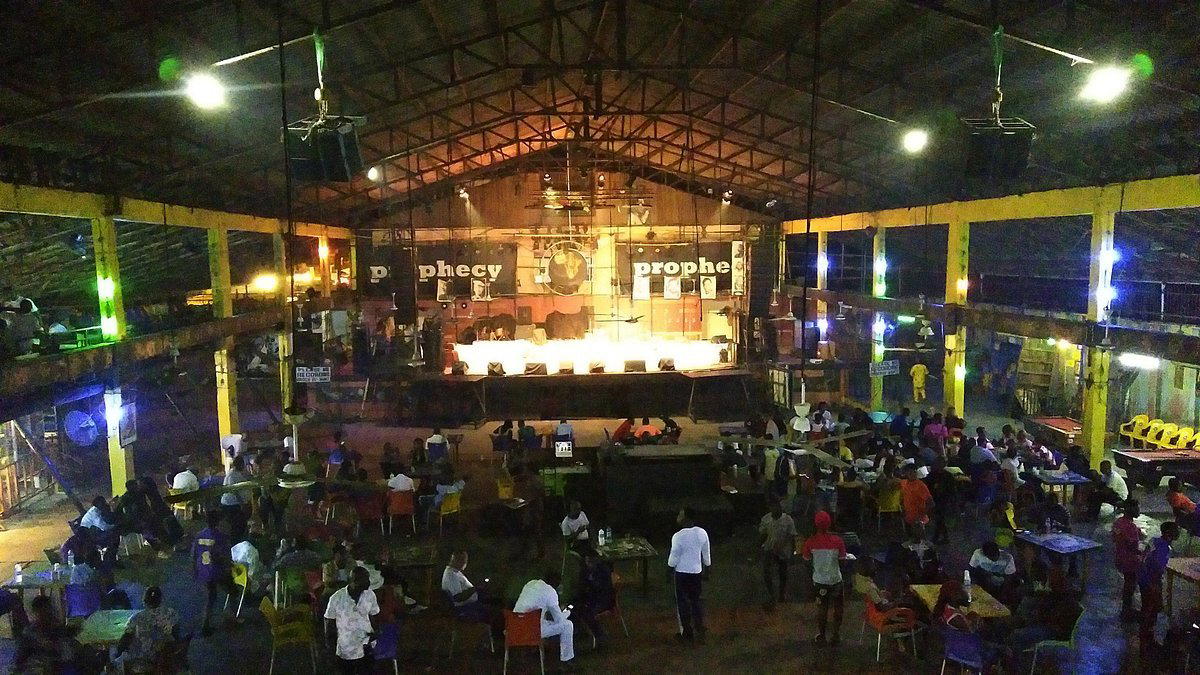
There are bars that serve drinks, and there are places where the drink arrives as a secondary concern. The New Afrika Shrine in Agidingbi, Ikeja, sits firmly in the second category. Approaching the compound on a weekend evening, the bass registers before the gates do. The site occupies a substantial open-air plot, with a main stage structure, peripheral seating areas, and the low hum of a crowd that assembles here not because it appeared in a magazine but because it has been coming, generation after generation, for the better part of three decades. This is how Lagos builds cultural institutions: through repetition, community ownership, and a gravitational pull that no marketing budget replicates.
The Shrine's lineage connects directly to Fela Anikulapo-Kuti, the musician and activist who ran the original Afrika Shrine as a performance space, political forum, and social club through the 1970s and 1980s. After his death in 1997, his son Femi Kuti established the New Afrika Shrine on this Ikeja site, and the compound has been a fixture of Lagos night culture since. That lineage is not background colour; it is the structural reason the space functions the way it does. The bar and its drinks exist inside a tradition of communal gathering rather than as the principal attraction, which changes how every element of the experience reads. For context on the broader Ikeja scene, see our full Ikeja restaurants guide.
The Drinks Programme in Context
West African bar culture has its own distinct logic, and the Shrine's drinks offering operates inside that framework rather than against the template of a Western cocktail bar. Where venues like Kumiko in Chicago or 69 Colebrooke Row in London have built reputations on technique-led menus with extended R&D; behind each drink, the Shrine's approach is communal and volume-oriented. Cold beer, palm wine, and spirits served in the open air to hundreds of people is its own discipline, and the craft lies in logistics and atmosphere rather than molecular preparation.
That distinction matters when setting expectations. A visitor arriving with the framework of 1806 in Melbourne or Bar Leather Apron in Honolulu will find a different kind of bar programme entirely. The Shrine's drinks are unpretentious by design: Nigerian lager, locally produced spirits, and the occasional palm wine that arrives in communal quantities. The social architecture of drinking here is collective, not individual, which is precisely what keeps the compound relevant against the more curated Lagos bar scene. Venues like Four Degrees in Lagos occupy the refined-cocktail tier; the Shrine operates on a different register, where volume, heat, and live music shape what you order and how fast you drink it.
That is not a limitation. It is the Shrine's editorial position in Lagos nightlife. The bar programme at 28 HongKong Street in Singapore or Superbueno in New York City rewards slow, attentive consumption. The Shrine rewards presence. The drink in your hand is a prop for participating in the room, and the room is the point.
The Live Music Format and What It Demands of You
Afrobeats and Afrojuju performances at the Shrine follow a format that has not been softened for tourist consumption. Sets run long, the stage dominates the compound, and the crowd response is participatory rather than passive. Friday and Saturday evenings draw the largest turnout, with resident and guest performers rotating through a calendar that has included Femi Kuti and other artists from the extended Kuti family orbit. The open-air configuration means the space breathes differently from a conventional music venue, and the sightlines from most seating areas are adequate rather than precise, which is consistent with how the space has always prioritised communal energy over individual comfort.
Compared to more structured cultural formats, such as the seated dinner-and-performance concepts found in European cities or the ticketed tasting events that venues like Jewel of the South in New Orleans or The Parlour in Frankfurt have developed, the Shrine operates without much formal scaffolding. There is no fixed programme distributed in advance, no dress code enforced at the gate, and the relationship between performer and audience is direct. That directness is the product of decades of practice, not a stylistic choice made for effect.
Getting There and Planning Your Visit
The Shrine sits in Agidingbi, Ikeja, in Lagos State. Ikeja is Lagos's administrative capital and functions as a distinct urban node from Lagos Island and Victoria Island, which host much of the city's high-end hospitality. The Shrine is most accessible by private car or ride-hailing apps, the latter being the standard mode for cross-Lagos movement on weekend evenings when traffic patterns shift significantly. Arriving before 9pm on a Friday or Saturday places you ahead of peak attendance. The compound accepts walk-ins; there is no reservation system operating on a conventional basis. Visitors with a specific interest in catching a Femi Kuti performance should monitor the Shrine's social channels for scheduling, as dates are not always announced with significant lead time. Comparable venues internationally, such as 1930 in Milan or Julep in Houston, operate with advance booking systems and curated programming; the Shrine asks for a different kind of flexibility, one that the experience repays.
Who This Is For
The New Afrika Shrine is not calibrated for visitors looking for a refined cocktail programme with tableside service and a laminated menu. It is calibrated for anyone who understands that some of the most consequential drinking environments in the world derive their authority from cultural weight rather than technique points. The compound holds a specific position in Lagos nightlife: historically grounded, community-facing, and genuinely indifferent to trends in the international bar world. That position is what makes it worth understanding on its own terms.
Fast Comparison
| Venue | Price |
|---|---|
| New Afrika ShrineThis venue (the venue you are viewing) | $1–10 |
| Vaniti Lagos | $20–30 |
| W Bar Lounge | $30–50 |
Continue exploring
More in Ikeja


Details
- Lively
- Energetic
- Well Known
- Group Outing
- Late Night
- Celebration
- Live Music
- Historic Building
- Outdoor Terrace
- Standing Room