Mitsuwa Marketplace - New Jersey
Mitsuwa Marketplace in Edgewater, New Jersey is one of the largest Japanese supermarket complexes on the East Coast, drawing shoppers, food court regulars, and dedicated ingredient hunters from across the tri-state area. Located at 595 River Rd with direct sightlines to the Manhattan skyline, it functions as a self-contained hub for imported Japanese groceries, fresh prepared foods, and periodic cultural events that reflect the depth of Japanese food culture rarely found outside Japan.
 Discover on Pearl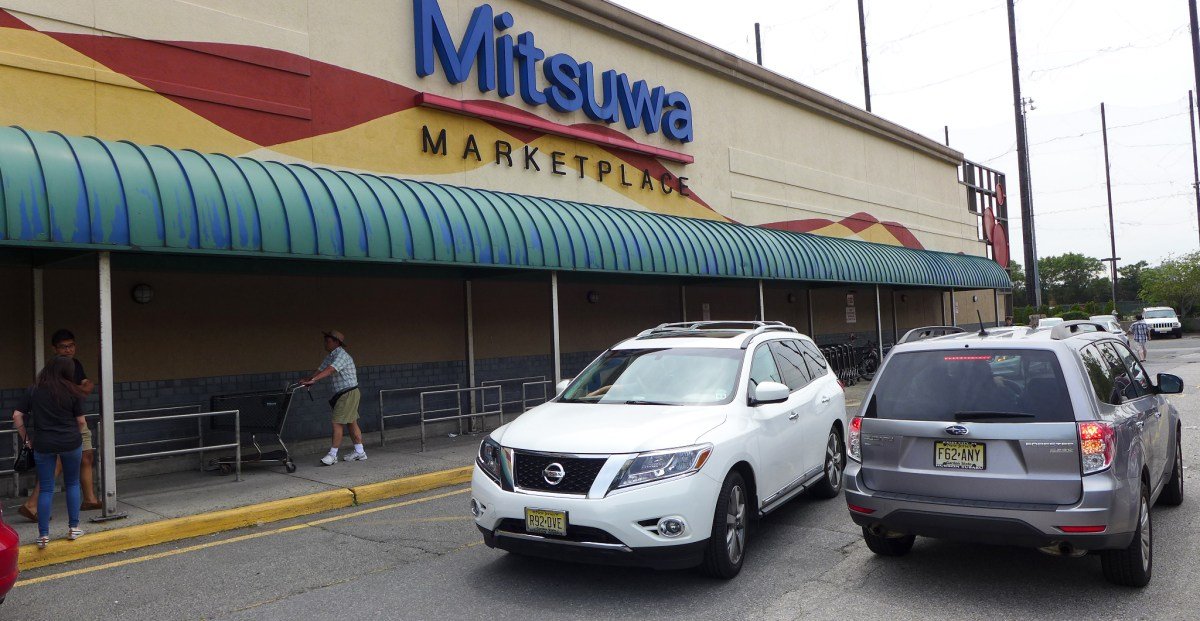
Where the Hudson Meets a Piece of Japan
The drive along River Road into Edgewater from the George Washington Bridge passes through a stretch of riverside New Jersey that feels neither fully suburban nor fully urban. The Manhattan skyline sits just across the water, close enough that the Mitsuwa Marketplace parking lot at 595 River Rd functions as an accidental viewing platform. That geographic tension — between two cities, two food cultures — is precisely what makes the site interesting. Mitsuwa is not a niche import shop or a specialty grocer running on nostalgia. It is a full-scale Japanese marketplace occupying a footprint that would be unremarkable in Osaka or Tokyo but reads as genuinely significant in the American retail context, particularly on the East Coast, where Japanese grocery infrastructure of this scale is thin.
For those arriving from New York City, the most direct route is the NJ Transit bus from the Port Authority Bus Terminal on 42nd Street, which drops riders within walking distance of the address. From northern New Jersey, River Road is navigable by car, and the adjacent parking is large enough to absorb weekend crowds, which run heavy. Saturday and Sunday afternoons, particularly during seasonal food festivals, draw lines that start at specific food court counters and extend outward.
The shortlist, unlocked.
Hard-to-book tables, cellar releases, and concierge-planned trips.
Get Exclusive Access →The Food Court as Cultural Document
The food court inside Mitsuwa operates on a model that has largely disappeared from American retail: individual vendor stalls, each running a focused menu, sharing a common seating area with no unified management overlay. This structure is standard practice in Japanese department store basement food halls and urban food courts in Tokyo, where specialization by vendor is the expectation rather than the exception. In the American context, it reads as distinctive. Ramen counters, udon stations, and prepared bento operations each hold a defined lane rather than attempting to cover the full spectrum of Japanese cuisine under one menu.
The practical implication for visitors is that peak hours require patience. The most popular counters sell out of specific items, and the rhythm of service reflects the original model: dishes prepared in volume but with attention to form. Arriving before noon on weekends avoids the worst of the congestion, though it reduces the ambient energy that makes the space function as a scene rather than a simple errand stop.
The Grocery Floor and What It Signals About Curation
In discussions about imported spirits and beverage curation , the kind of editorial territory covered by bars like Kumiko in Chicago or Bar Leather Apron in Honolulu, where Japanese whisky and shochu selections signal serious curatorial intent , Mitsuwa occupies an upstream position. The liquor and beverage section carries Japanese whiskies, sake in formats unavailable at standard American retailers, shochu by prefecture of origin, and imported beer labels from regional Japanese breweries. This is not the back bar of a cocktail program, but the sourcing logic is comparable: depth over breadth, and selection organized around what is actually produced in Japan rather than what travels well to Western markets.
Sake selection in particular tends toward the kind of specificity that differentiates a venue like Jewel of the South in New Orleans from a generic spirits list. Junmai daiginjo from smaller kura, nigori in seasonal formats, and nama (unpasteurized) sake requiring refrigeration all appear on shelves that most American grocery environments cannot accommodate, either logistically or commercially. For a reader planning to build a home collection or simply curious about what a curated Japanese spirits section looks like at retail scale, Mitsuwa functions as a reference point in the same way that programs at ABV in San Francisco or Bitter and Twisted in Phoenix serve as references for professional bar curation.
Imported non-alcoholic beverages follow the same logic: Japanese canned coffees, regionally specific teas, and soft drink formats that have no American equivalent take shelf space alongside the more familiar exports. The grocery section as a whole functions as a curated argument about what Japanese food culture actually consumes at home, as opposed to what gets exported to satisfy Western assumptions about Japanese cuisine.
Seasonal Events and the Calendar Question
Mitsuwa runs periodic food festivals tied to Japanese cultural and culinary seasons: ramen festivals, wagyu events, and regional food showcases that bring in vendors from specific Japanese prefectures for short-run appearances. These events are announced through the marketplace's own channels and tend to draw visitors from well outside the immediate area. The ramen festivals in particular generate significant weekend traffic from New York City, functioning as a recurring anchor event that shifts the marketplace from everyday grocery stop to destination visit. Checking the events calendar before making a trip from any significant distance is the practical move; an ordinary Saturday visit and a festival Saturday are genuinely different experiences in terms of crowd density and available product.
This event structure mirrors what Allegory in Washington, D.C. does with rotating cocktail programs, or what Superbueno in New York City achieves by tethering the bar experience to a cultural identity that extends beyond the menu. The through-line is that the most engaging food and drink destinations generate reasons to return, rather than delivering a static experience that can be fully assessed in a single visit.
Edgewater in Context
Edgewater's dining and food retail scene is narrower than its proximity to New York might suggest, which is part of why Mitsuwa functions as an anchor for the area rather than one option among many. Baumgart's Cafe represents the longer-standing casual dining tradition in the area, while Mitsuwa occupies a different register entirely. The two coexist in a town that has not developed the restaurant density of Hoboken or Jersey City to the south. For a fuller picture of what Edgewater offers, our full Edgewater restaurants guide covers the range of options across price points and cuisine types.
The Manhattan skyline view from the waterfront side of River Road is a detail worth holding: eating ramen from a Mitsuwa food court counter while looking across at Midtown is a specific kind of experience that belongs to a particular geography, one that Bar Kaiju in Miami or The Parlour in Frankfurt cannot approximate. Place matters here in a way that is literal rather than atmospheric.
Planning Your Visit
Mitsuwa Marketplace at 595 River Rd, Edgewater, NJ 07020 is accessible by NJ Transit bus from the Port Authority Bus Terminal in Midtown Manhattan, making it reachable without a car for New York-based visitors. Weekday mornings offer the most navigable shopping experience; weekend afternoons are crowded but carry the fuller energy of the marketplace at operating capacity. Visitors coming specifically for the beverage and grocery sections should allow time for the food court as well, since the two experiences inform each other. Festival dates shift the calculus entirely and justify planning around the events calendar rather than a standard weekend slot. Regarding Julep in Houston and other craft programs that emphasize spirits sourcing as an editorial statement, Mitsuwa belongs in the same conversation at the retail level: the selection reflects genuine curation rather than commercial convenience, and that distinction is worth the commute from across the river.
Frequently Asked Questions
- What kind of setting is Mitsuwa Marketplace - New Jersey?
- Mitsuwa is a large-format Japanese supermarket and food court complex in Edgewater, NJ, positioned along the Hudson River with direct views of the Manhattan skyline. It operates as one of the most substantial Japanese retail environments on the East Coast, combining grocery, prepared food, and periodic cultural events under one roof at 595 River Rd.
- What's the must-try cocktail at Mitsuwa Marketplace - New Jersey?
- Mitsuwa is a grocery marketplace rather than a bar, so cocktails are not on the menu. The beverage section does carry a curated selection of Japanese sake, shochu, and imported whisky that represents the kind of depth more commonly found in dedicated spirits programs. For cocktail-specific visits in the region, the EP Club bar guides for New York and beyond are the relevant starting point.
- What should I know about Mitsuwa Marketplace - New Jersey before I go?
- The marketplace draws significant weekend crowds, and the most popular food court counters can sell out of specific items by mid-afternoon. Arriving on weekday mornings or early weekend mornings gives the clearest access to both the grocery floor and the food court. Seasonal festival events shift the experience considerably and are worth checking in advance.
- Can I walk in to Mitsuwa Marketplace - New Jersey?
- Yes, Mitsuwa operates as a walk-in retail and food court environment with no reservation system. From New York City, the NJ Transit bus from Port Authority Bus Terminal provides direct access. Parking is available on site for those arriving by car from New Jersey.
- Is Mitsuwa Marketplace - New Jersey worth the trip?
- For anyone with a serious interest in Japanese food culture, imported ingredients, or the kind of sake and shochu selection rarely available at American retail scale, the answer is yes. The food court alone generates a repeat-visit argument, and the festival calendar provides additional reason to plan around specific dates rather than treating it as a casual detour.
- What makes Mitsuwa in Edgewater different from a standard Japanese grocery in the United States?
- Scale and sourcing depth set Mitsuwa apart from the smaller Japanese import shops that serve most American metro areas. The sake section runs to unpasteurized nama formats and junmai daiginjo from smaller producers, categories that require cold logistics and specialist buying relationships. The food court's vendor-specialist structure mirrors Japanese department store food hall models rather than American food court conventions, and the periodic regional food festivals bring in short-run product and vendors that do not appear in permanent retail anywhere else on the East Coast.
Budget and Context
These are the closest comparables we have in our database for quick context.
Need a Table?
Our members enjoy priority alerts and concierge-led booking support for the world's most difficult bars and lounges.
Get Exclusive AccessThe shortlist, unlocked.
Hard-to-book tables, cellar releases, and concierge-planned trips.
Get Exclusive Access →