On a quiet stretch of Nguyễn Phúc Chu in Hoi An's Minh An ward, MANGO MANGO occupies the kind of address that rewards those who look past the Ancient Town's more trafficked lanes. The space leans into the relaxed, fruit-forward character of the central Vietnamese coast, making it a natural stop within a dining corridor that includes Mai Fish Restaurant and a growing cluster of neighbourhood-specific spots covered in our full Hoi An restaurants guide.
 Discover on Pearl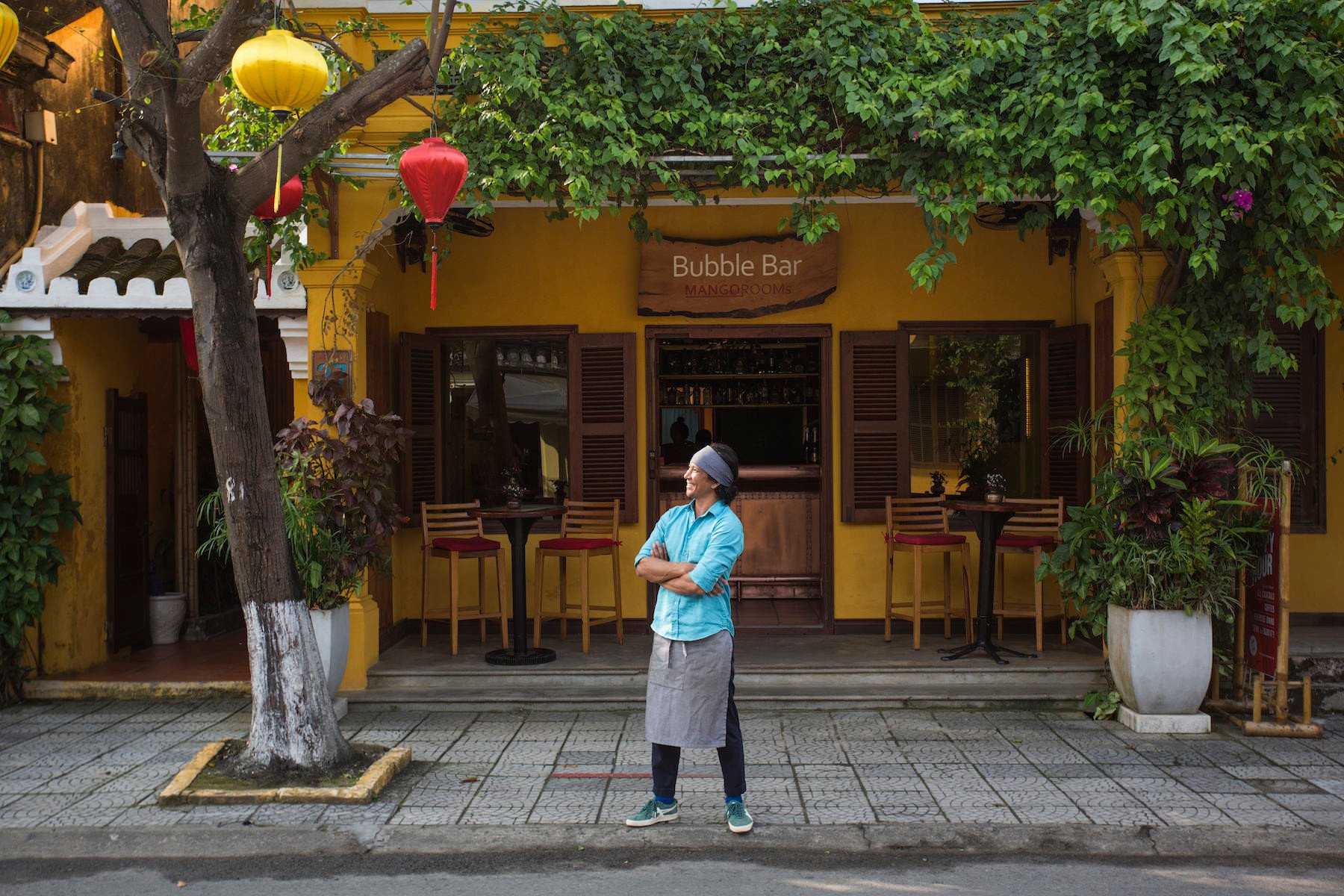
A Street That Sets Its Own Tempo
Nguyễn Phúc Chu is not one of Hoi An's postcard lanes. It sits at a slight remove from the UNESCO-protected core, far enough from the lantern-lit souvenir circuit to attract a different kind of foot traffic: residents, returning visitors, and travellers who have already done the Ancient Town sweep and are looking for something less rehearsed. The street has a residential quality to it, with low-rise shophouses and the occasional motorbike parting a narrow corridor of shade. MANGO MANGO sits within that register rather than against it.
That locational choice matters in Hoi An more than in most Vietnamese cities. The town divides fairly cleanly between venues that perform heritage for a tourist audience and those that operate as functional neighbourhood anchors. The former cluster around Trần Phú and the covered market bridge; the latter scatter through Minh An's quieter grid. MANGO MANGO's address on Nguyễn Phúc Chu places it in the second category, and the atmosphere follows from that geography.
The Physical Register
Hoi An's dining and drinking spaces have developed a recognisable visual grammar over the past decade: warm timber, open frontages that dissolve the boundary between interior and street, ceiling fans turning slowly overhead, and lighting calibrated to amber rather than white. The approach is not accidental. It responds to both the climate (hot, humid, occasionally rainy) and to a visitor expectation that has been shaped by the town's broader aesthetic. Open-air or semi-open formats allow the evening breeze off the Thu Bon to do meaningful work, and the ambient sound of the street replaces whatever a sound system might otherwise provide.
Within that local typology, spaces along Nguyễn Phúc Chu tend toward the lower-key end of the spectrum. The energy on this street is conversational rather than performative — the kind of setting where the measure of a good evening is whether you noticed how much time had passed. That tempo suits MANGO MANGO's positioning in the neighbourhood's social geography.
For context on how different the mood can run across Hoi An's bar and dining scene, it is worth comparing: Hoi An Brewing Company Tap Room & Riverside Beer Garden tilts toward the riverfront social end of the dial, while Before and Now occupies a more curated, drinks-forward register. MANGO MANGO reads as something quieter than either.
Fruit-Forward Identity in a Tropical Coastal Town
The name itself signals intent. In central Vietnam, mango appears across formats: green and shredded into salads dressed with fish sauce and chilli, ripe and sliced alongside sticky rice, blended into juice that arrives in condensation-fogged glasses at midday. The fruit is not a gimmick in this context; it is embedded in the region's food culture at a level that makes it a credible anchor for a venue identity.
Hoi An's dining corridor has always skewed toward fresh, light, seafood-adjacent flavours rather than the heavier broths of the north or the more complex spicing of the south. That regional identity — white rose dumplings, cao lầu, bánh mì assembled to local specification , creates a flavour environment in which something fruit-forward and refreshing fits naturally. MANGO MANGO draws from that tradition rather than working against it.
Across the broader Vietnamese dining scene, the most interesting recent development has been the emergence of spaces that hold a local food identity while operating at a quality level that attracts international visitors without adjusting the offering to meet assumed preferences. Mai Fish Restaurant approaches this through its seafood focus; MANGO MANGO approaches it through the fruit-and-refreshment axis that the central coast does well.
Placing It in the Wider Vietnam Picture
Hoi An is a useful case study in how a mid-sized Vietnamese city manages the tension between heritage preservation and hospitality expansion. The Ancient Town designation constrains development in ways that push newer venues toward streets like Nguyễn Phúc Chu, which in turn concentrates interesting neighbourhood-level spots outside the tourist core. The dynamic is not unlike what has happened in Hanoi's West Lake area or in Ho Chi Minh City's District 3, where pressure on central real estate pushes quality operators outward.
For travellers moving along the central Vietnam corridor, Hoi An functions as a natural midpoint between the urban density of Da Nang to the north and the quieter stretch toward Hue. The city's bar and restaurant circuit has matured significantly in the past five years, with enough variety now to support multi-night stays built primarily around eating and drinking. Mr Bean Bar covers one end of that circuit; the Hoi An Brewing Company another. MANGO MANGO contributes a third, more low-key option.
For those extending the trip regionally, the contrast with Ho Chi Minh City's bar culture is instructive: venues like Drinking & Healing in Ho Chi Minh City operate at a different scale and ambition level than anything in Hoi An, while Hanoi offers its own distinct register via places like The Haflington. The central Vietnamese coastal town remains its own thing: more relaxed, more tied to the physical environment, less interested in metropolitan signals.
Further afield, if you are mapping the broader Southeast Asian drinks circuit, worth noting that the technical cocktail conversation happening at venues like Bar Leather Apron in Honolulu or Le Pont Club in Hai Phong operates at a remove from what Hoi An's Nguyễn Phúc Chu addresses are doing. That is not a criticism; it is a calibration point for setting expectations.
Planning a Visit
MANGO MANGO is at 45 Nguyễn Phúc Chu in the Minh An ward, which puts it within comfortable walking distance of the Ancient Town's eastern edge. The street is accessible by foot from most of the town's guesthouse and hotel concentration, and motorbike taxi from the riverside area takes under five minutes. Contact details and current hours are not confirmed in our record, so checking ahead via the address directly or through your accommodation is the practical approach. The venue appears to operate without an advance booking requirement, consistent with the neighbourhood's walk-in culture, though evening visits during high season (roughly November through February, when Hoi An draws its largest international visitor numbers) may warrant arriving early. For a broader map of what the city offers, our full Hoi An restaurants guide covers the current field. Regional context from nearby spots like Le Rendez Vous French Restaurant in Da Nang's Son Tra or Bamboo 2 Bar in Thanh Khe rounds out the picture for anyone spending time across the wider Da Nang–Hoi An corridor. For a different flavour of Vietnam's emerging bar circuit, Genji Bar in Cam Pha offers a northern contrast worth noting if your itinerary extends that far.
Frequently Asked Questions
- Is MANGO MANGO more low-key or high-energy?
- MANGO MANGO reads as firmly low-key, consistent with its position on Nguyễn Phúc Chu rather than on Hoi An's busier riverfront or Ancient Town addresses. The street itself sets the tone: residential, unhurried, oriented toward conversation rather than spectacle. It sits at the quieter end of the Hoi An spectrum compared to riverside options, and that positioning is a feature rather than a limitation for visitors who have already done the high-traffic circuit.
- What's the leading thing to order at MANGO MANGO?
- Without confirmed menu data in our record, we cannot responsibly specify dishes or drinks. What the name and central Vietnamese context suggest is a fruit-forward offering that draws on the region's mango culture, which in Hoi An spans everything from green-mango salads to fresh juice. Central Vietnam's coastal flavour profile, light and fresh with strong citrus and fish sauce underpinning, provides the culinary frame. For specific current menu guidance, checking directly with the venue or your accommodation concierge is the reliable path.
- Is MANGO MANGO a good option for travellers wanting to eat away from the Ancient Town tourist circuit?
- The Nguyễn Phúc Chu address in Minh An positions MANGO MANGO outside the highest-concentration tourist zone, which is precisely its appeal for repeat visitors or longer-stay travellers who have covered the Ancient Town's main dining corridor. The street operates at a neighbourhood pace rather than a heritage-tourism pace, and that distinction shows in the atmosphere. It fits a specific moment in a Hoi An itinerary: the evening when you want something genuinely local in register rather than local in theme.
Cuisine and Recognition
A fast peer set for context, pulled from similar venues in our database.
| Venue | Cuisine | Awards | Notes |
|---|---|---|---|
| MANGO MANGO | This venue | ||
| Before and Now | |||
| Hoi An Brewing Company Tap Room & Riverside Beer Garden | |||
| Mai Fish Restaurant | |||
| Mr Bean Bar | |||
| Soul Kitchen |
Need a Table?
Our members enjoy priority alerts and concierge-led booking support for the world's most difficult bars and lounges.
Get Exclusive Access