Luminaria Restaurant
On Old Santa Fe Trail, Luminaria Restaurant sits within the Inn and Spa at Loretto, placing it inside one of the city's most architecturally grounded settings. The menu draws on New Mexico's deep agriculture tradition, where chile provenance and local sourcing carry as much weight as technique. For visitors orienting themselves in Santa Fe's dining scene, it represents a considered entry point into Southwestern cooking at a full-service level.
 Discover on Pearl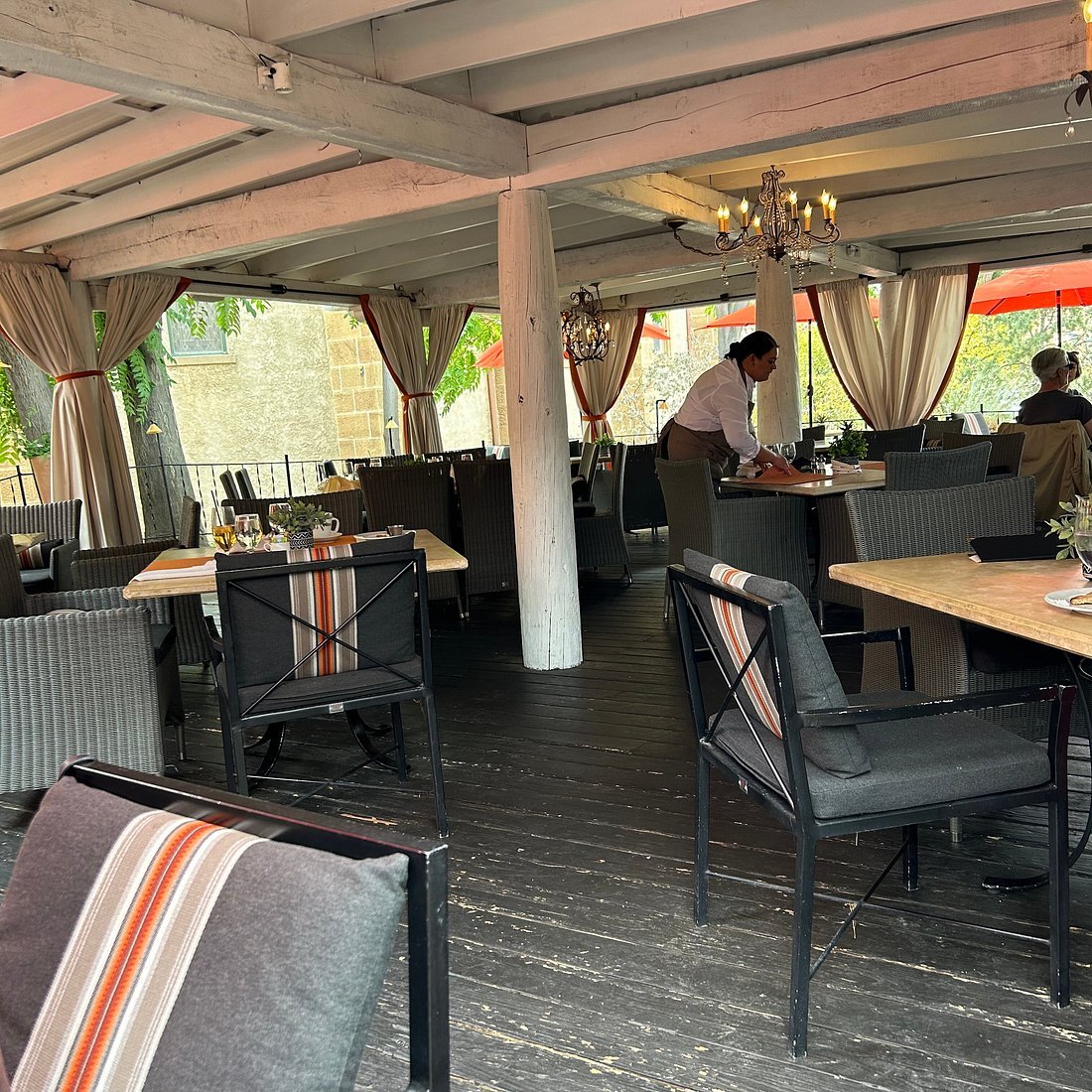
Old Santa Fe Trail and the Weight of Place
There is a particular logic to how Santa Fe organises its serious restaurants. The city's most enduring dining rooms tend to anchor themselves to historic buildings or to corridors that carry genuine cultural weight, and Old Santa Fe Trail is one of those corridors. The address at 211 places Luminaria Restaurant inside the Inn and Spa at Loretto, a property modelled on the adobe vernacular of the region, within a short walk of the State Capitol and the older commercial blocks of the city centre. That physical context is not incidental. In a city where provenance and rootedness shape how food is received, the setting does real editorial work before a dish arrives.
Santa Fe's dining scene has grown considerably more competitive over the past decade. The city attracts a visitor profile that skews toward cultural spending, and that has supported a tier of restaurants serious enough to draw comparison with Southwestern programmes in cities three or four times the size. Luminaria sits within that pattern: a full-service restaurant at a recognised hotel property, positioned to serve both the inn's guests and the broader dining public that moves through the neighbourhood each evening. For the city's dining context, see our full Santa Fe restaurants guide.
The shortlist, unlocked.
Hard-to-book tables, cellar releases, and concierge-planned trips.
Get Exclusive Access →The Sourcing Logic of New Mexico Cooking
The editorial angle that matters most for any serious Southwestern restaurant in New Mexico is ingredient provenance. This is not an abstract concern. New Mexico chile agriculture has a documented regional identity, with Hatch Valley producers supplying restaurants and households across the state in a supply chain that mirrors, in its own way, the appellation logic applied to wine in France or olive oil in Italy. The question of which chiles a kitchen uses, and where they come from, carries genuine weight in New Mexico dining in a way it simply does not in most other American states.
Beyond chile, the broader sourcing context for a restaurant at this address includes proximity to northern New Mexico ranching operations, to blue corn producers whose varieties trace back centuries to Indigenous agricultural practice, and to a network of smaller farms that supply restaurants in the Española Valley and surrounding areas. Southwestern cooking at its most considered is not fusion or approximation. It is a specific regional cuisine with identifiable ingredients, techniques, and producers, and the restaurants that take it seriously work within that supply chain rather than around it. That framework is the one against which Luminaria's programme should be read.
The Hotel Restaurant Question
Hotel restaurants in the American Southwest occupy a complicated position. At their weakest, they function as amenity rather than destination, calibrated to the lowest-common-denominator preferences of a transient guest population. At their most serious, they use the structural support of a hotel operation to sustain sourcing standards, kitchen continuity, and a wine programme that a standalone restaurant at comparable price would struggle to maintain. The Inn at Loretto has operated as a significant property in Santa Fe for decades, and Luminaria functions within that infrastructure.
The competitive set for a restaurant in this position includes properties like the Four Seasons Resort Rancho Encantado Santa Fe, whose dining operation benefits from similar hotel support but targets a higher price bracket and a different guest demographic. Below that tier, the city's independent restaurants, from the long-running Coyote Cafe and Rooftop Cantina to the more casual Cowgirl, operate without hotel infrastructure but with the flexibility that independence allows. Luminaria sits between those poles: more supported than a standalone, more locally embedded than a purely branded hotel operation.
Drinking in Santa Fe
The bar and drinks culture surrounding Old Santa Fe Trail has its own character. Del Charro represents one mode of Santa Fe drinking: a relaxed, neighbourhood-facing room with a long history in the city. Ecco Espresso and Gelato covers the daytime and early-evening window with a different register entirely. Luminaria's own bar operation falls within the hotel context, which typically means a broader cocktail list oriented toward accessibility and a wine selection that favours recognisable producers over specialist allocation.
For reference, the more technically focused cocktail programmes in the American Southwest and beyond include Bar Leather Apron in Honolulu, Jewel of the South in New Orleans, Julep in Houston, Kumiko in Chicago, Superbueno in New York City, ABV in San Francisco, and The Parlour in Frankfurt. Those programmes operate at a different level of specialisation. Luminaria's drinks offering is better understood as part of a complete hotel dining experience rather than as a standalone bar destination.
Planning a Visit
Old Santa Fe Trail is walkable from the Plaza and from the bulk of the city's gallery district, which makes Luminaria a practical choice for an evening that begins with a museum visit or gallery opening. The Inn at Loretto's position on the Trail means arrival is direct on foot from the central hotel cluster, and parking near the property is easier than in the immediate Plaza blocks. For visitors staying elsewhere in the city, the walk from the Plaza takes under ten minutes. Reservations at hotel restaurants at this level are typically worth making several days in advance during the summer high season, which in Santa Fe runs from late May through September and coincides with the city's festival and arts calendar. The shoulder months of April, October, and early November offer a different calculation: fewer competing bookings, lower ambient noise in the dining room, and access to the same kitchen at a less pressurised moment.
Frequently Asked Questions
- What do regulars order at Luminaria Restaurant?
- Regulars at a Southwestern restaurant on this circuit tend to anchor their order around the kitchen's treatment of New Mexico chile, whether as a red or green sauce application. The degree to which a kitchen sources regionally, particularly from Hatch Valley producers, shapes the quality differential on those core dishes more than any other single factor. Without confirmed menu data on file, specific dish recommendations require direct verification with the restaurant.
- Why do people go to Luminaria Restaurant?
- The address on Old Santa Fe Trail, within the Inn at Loretto, puts Luminaria in the geographic and cultural centre of the city's visitor circuit. For travellers whose itinerary is built around the State Capitol, the nearby museums, and the gallery corridor, it represents a full-service dinner option without requiring a car or significant planning effort. The hotel setting also provides a level of service infrastructure that standalone restaurants in the same city block cannot always match.
- Should I book Luminaria Restaurant in advance?
- Santa Fe's high season, from late May through September, compresses demand across the city's mid-range and upper dining tier. Hotel restaurants at recognised properties tend to fill their non-guest reservations faster than the booking window suggests during those months. Booking at least three to five days ahead during the summer and festival periods is a practical precaution. Outside that window, same-day availability is more likely, though calling ahead remains the safer approach given the hotel's event calendar.
- Who is Luminaria Restaurant leading for?
- Luminaria works well for visitors who want a grounded, full-service Southwestern dinner without navigating the city's more casual end of the market. It suits travellers staying in the Old Santa Fe Trail corridor, guests of the Inn at Loretto, and diners looking for a programme that covers the regional canon, chile sauces, local proteins, indigenous grain applications, at a hotel-supported level of execution.
- Does Luminaria Restaurant reflect Indigenous and New Mexican agricultural traditions in its menu?
- New Mexico's restaurant scene at its most serious draws directly from Indigenous agricultural lineage, including blue corn varieties cultivated by Pueblo communities for centuries and chile strains with documented regional provenance. A restaurant at this address, within a property that references the Pueblo Revival architectural tradition, operates in a context where those connections carry cultural as well as culinary significance. Guests interested in that dimension should ask the kitchen directly about sourcing relationships and the specific regional producers represented on the current menu.
Quick Comparison
A short peer table to compare basics side-by-side.
| Venue | Cuisine | Price | Awards | Notes |
|---|---|---|---|---|
| Luminaria Restaurant | This venue | |||
| Four Seasons Resort Rancho Encantado Santa Fe | ||||
| Cowgirl | ||||
| Coyote Cafe & Rooftop Cantina | ||||
| Del Charro | ||||
| Ecco Espresso and Gelato |
Need a Table?
Our members enjoy priority alerts and concierge-led booking support for the world's most difficult bars and lounges.
Get Exclusive AccessThe shortlist, unlocked.
Hard-to-book tables, cellar releases, and concierge-planned trips.
Get Exclusive Access →