Ecco Espresso and Gelato
On East Marcy Street, a short walk from the Plaza, Ecco Espresso and Gelato occupies a quieter register than Santa Fe's louder dining rooms. The format is spare: espresso pulled with care, gelato made in a style that reads closer to a Roman gelateria than an American ice cream counter. For a city that can lean heavily on red chile and ceremonial dining, Ecco offers a useful counterpoint.
 Discover on Pearl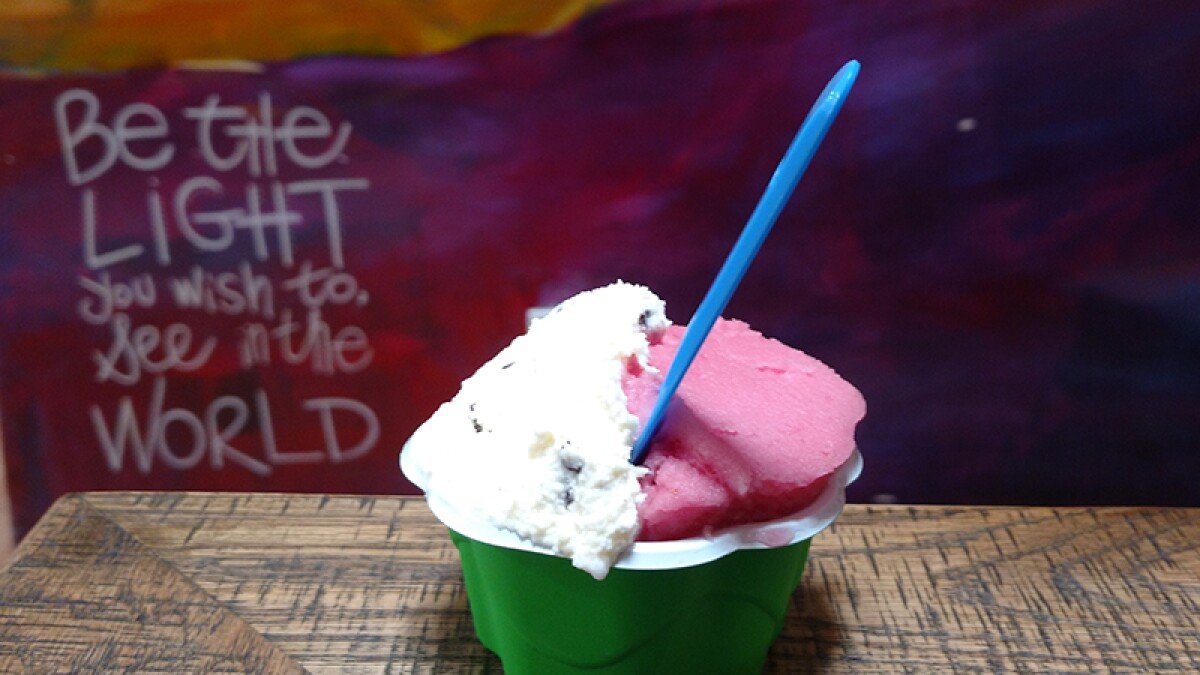
East Marcy Street and the Case for Restraint
Santa Fe's food culture is layered and, at times, theatrical. The Plaza-adjacent blocks carry the weight of the city's dining reputation: rooms built around adobe and vigas, menus anchored by New Mexican chile traditions, and a hospitality posture calibrated to visitors who arrive with expectations. Against that backdrop, the espresso-and-gelato format represents a quieter, more deliberate kind of stop. It doesn't ask much of you. It delivers something specific and moves on.
Ecco Espresso and Gelato sits on East Marcy Street, one of the more walkable corridors connecting the Plaza to the Canyon Road gallery district. That positioning matters. The street catches foot traffic from people in transit between Santa Fe's two most visited cultural zones, and the cafe format suits that movement. You stop, you drink something, you continue. But the format only works if the product justifies the detour rather than merely filling a gap in the block.
The Logic of the Espresso-and-Gelato Pairing
In Italy, the pairing of espresso and gelato is unremarkable, a structural feature of how the day is organized rather than a concept to be explained. The two products share a cold-warm contrast, a density-of-flavor relationship, and a portion logic that keeps both items in the territory of pause rather than meal. In American cafe culture, the combination is less common, and venues that commit to both seriously occupy a distinct category from either the full-service coffee bar or the dessert-focused scoop shop.
The editorial angle here is craft at the counter. Across the bar-and-cafe spectrum, from technically ambitious programs like Kumiko in Chicago and Bar Leather Apron in Honolulu to hospitality-forward rooms like Jewel of the South in New Orleans, what separates the serious operations from the functional ones is the degree to which the person behind the counter treats the product as the point. Espresso, like cocktails, is unforgiving in that respect. The variables are narrow: grind, dose, extraction time, water temperature, milk texture where applicable. There is no sauce to hide behind.
Gelato carries its own discipline. The fat content is lower than American ice cream, the churn rate slower, the serving temperature warmer, which means texture and flavor profile have less margin for error. A gelateria that understands its product serves it at a temperature that allows the texture to speak; one that doesn't serves something that reads as ice cream with an Italian name. The distinction is not pedantic. It determines whether the experience is what it claims to be.
Where Ecco Sits in Santa Fe's Cafe Scene
Santa Fe's cafe culture has historically been secondary to its restaurant culture. The city's dining energy concentrates around dinner, around the ceremonial quality of New Mexican cuisine and the rooms that present it. Lunch is functional for many visitors. Coffee is often incidental, picked up at a hotel lobby or a national chain near the parking structure. The independent cafe, pulling proper espresso and treating it as a destination rather than a convenience, occupies a smaller niche here than it would in, say, Portland or Denver.
That makes Ecco's positioning on East Marcy Street more consequential than the address might suggest. The nearby bars that anchor Santa Fe's social drinking scene, including Cowgirl, El Farol, and Del Charro, operate in a different register entirely: louder, evening-focused, built around alcohol and the social rituals that accompany it. Coyote Cafe and Rooftop Cantina draws a different crowd again. Ecco is daytime, quieter, and organized around a different kind of attention.
For the visitor who has spent a morning in the galleries or the morning market at the Palace of the Governors, the format is well-matched. The question is always whether the product delivers. Bars that have built credibility through craft, like ABV in San Francisco, Julep in Houston, and Superbueno in New York City, share a common feature: the person behind the counter knows the product well enough to explain it without a script. The same principle applies at a gelato counter. The Parlour in Frankfurt on the Main demonstrates how hospitality precision at a smaller scale can define a room's reputation. Ecco operates at that same scale, where the interaction across the counter is the primary experience.
Planning Your Visit
East Marcy Street is walkable from the Plaza in a few minutes, and the address at 128 E Marcy St places Ecco close enough to Canyon Road that it works as either a starting point or a mid-morning stop during a gallery circuit. The cafe format means you are unlikely to need a reservation or advance planning. Santa Fe mornings can be cool even in summer given the elevation at roughly 7,000 feet above sea level, which makes a hot espresso a practical as well as aesthetic choice earlier in the day. By mid-afternoon, gelato season extends comfortably through the warmer months from late spring through early fall. For a broader orientation to what Santa Fe offers across price points and cuisine types, the full Santa Fe restaurants guide covers the wider scene.
Frequently Asked Questions
The Essentials
Comparable venues for orientation, based on our database fields.
Need a Table?
Our members enjoy priority alerts and concierge-led booking support for the world's most difficult bars and lounges.
Get Exclusive Access