Little Nonna's
Little Nonna's occupies a Locust Street address in Philadelphia's Center City, where the bar program leans into spirits curation with the kind of depth that rewards repeat visits. The setting pulls from Italian-American hospitality traditions while the back bar does the heavier editorial work. A solid reference point in a city whose cocktail scene has grown considerably more serious over the past decade.
 Discover on Pearl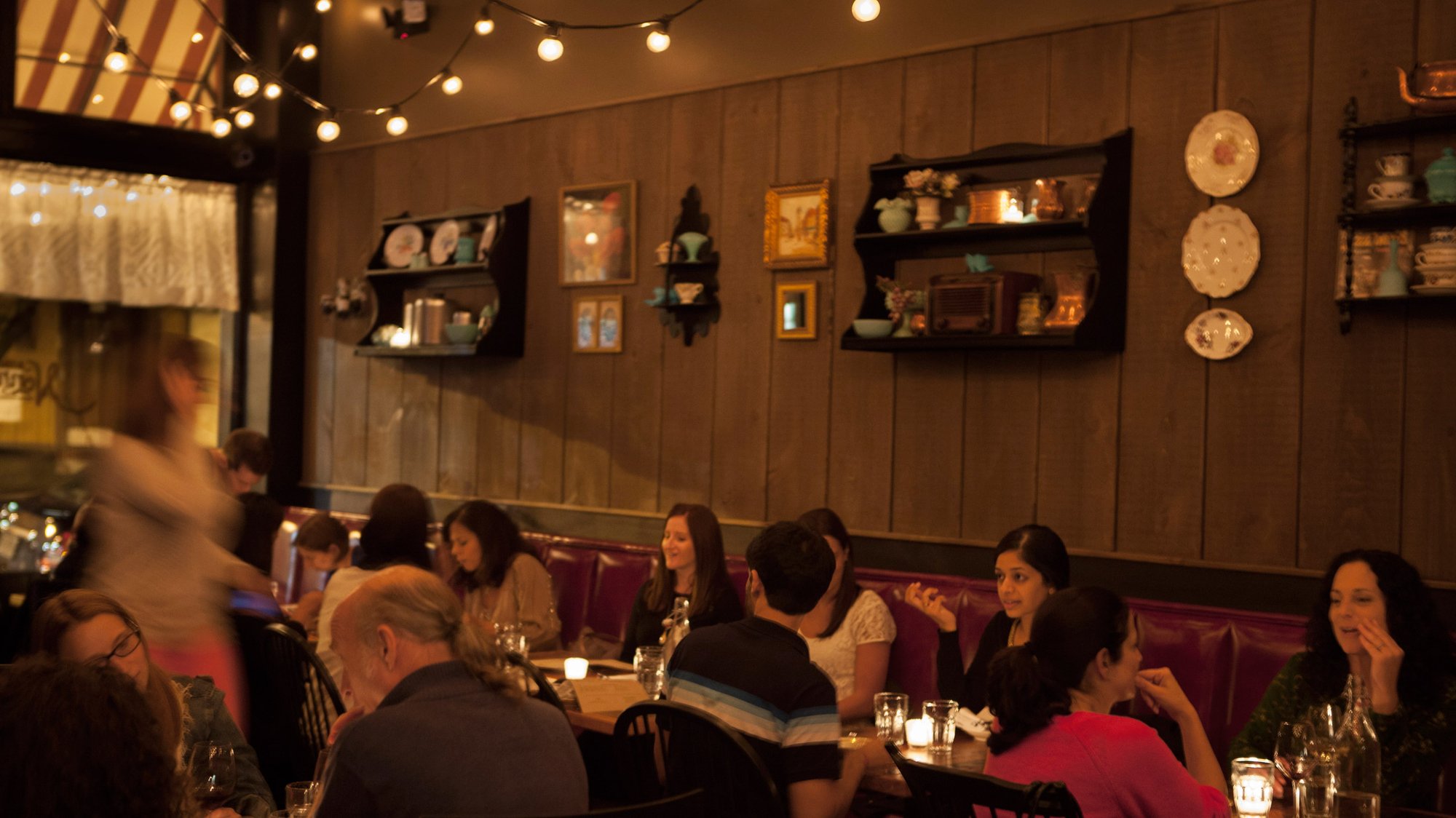
Locust Street and the Grammar of the Back Bar
Philadelphia's cocktail scene has spent the better part of ten years sorting itself into tiers. The early wave of speakeasy-style rooms gave way to something more technically grounded, and the venues that survived that transition are, broadly, the ones that invested in their spirits programs rather than their door policies. Little Nonna's, at 1234 Locust St in Center City, belongs to that later chapter. The address sits in a stretch of Locust that has quietly accumulated a few serious drinking establishments, and the bar's framing within an Italian-American hospitality register gives it a distinct position relative to the more neutrally styled cocktail bars in the same neighborhood.
Italian-American bar culture has its own logic, one that European-influenced American restaurants have been reassessing for the past decade. The emphasis on amari, digestivi, and spirits with regional specificity is a natural fit for a back bar built around depth over breadth. Where some Philadelphia bars accumulate bottles as decor, a curated spirits collection used as the actual engine of the menu is a different proposition entirely. That curatorial discipline is where bars in this category either distinguish themselves or don't.
The shortlist, unlocked.
Hard-to-book tables, cellar releases, and concierge-planned trips.
Get Exclusive Access →The Spirits Collection as Editorial Statement
Across American cities, the bars drawing serious attention from spirits-literate drinkers are increasingly those that treat the back bar as an argument rather than an inventory. Kumiko in Chicago built its reputation around Japanese whisky and liqueur curation with unusual depth. Bar Leather Apron in Honolulu operates on a similar principle: a focused, considered selection that gives the cocktail menu a coherent point of view. Jewel of the South in New Orleans anchors its program in historical cocktail research and the spirits that make that research legible. What these bars share is a refusal to treat the bottle selection as incidental.
Little Nonna's Italian-American framing naturally orients the spirits program toward categories that remain genuinely underexplored in American bar culture: grappas, regional Italian digestivi, lesser-traveled amaro expressions, and the broader world of bitter and herbal liqueurs that Italian drinking tradition has produced over centuries. A bar that takes those categories seriously has access to a depth of material that whisky-led or agave-led programs can't easily replicate, because the category itself is so much less familiar to most drinkers. That unfamiliarity is an asset when the curation is confident.
For comparison, ABV in San Francisco has long maintained a back bar notable for its range across amaro and bitter spirits, and it remains a reference point for how that category can anchor a cocktail menu without overwhelming it. Superbueno in New York City takes a different approach, using spirits curation to serve a specific cultural cuisine context. The common thread is intentionality: the bottle selection tells you something about what the bar believes.
Philadelphia's Drinking Scene in 2024
Center City's bar geography has become more differentiated in recent years. Venues like 12 Steps Down represent the dive-bar end of the spectrum, valued for its unpretentious consistency. 1501 Passyunk Ave and 48 Record Bar occupy different niches, the latter combining vinyl culture with drinking in a way that positions music as the primary experience. 637 Philly Sushi Club demonstrates how Philadelphia venues have increasingly layered food and drink programming into coherent hybrid formats.
Little Nonna's sits outside most of those categories. Its Italian-American identity gives it a cultural specificity that the more neutral cocktail bar format doesn't have, and that specificity matters when the back bar is built around it. The dining room context, where food and drink share space rather than compete for it, is also a characteristic of Italian-American hospitality that distinguishes it from standalone cocktail bars in the city. Nearby, bars like Almanac have built reputations around hyper-seasonal, fermentation-led Japanese-inspired programs, and Next of Kin has carved out space with cocktails and bar snacks. Little Nonna's occupies a different cultural register from both.
For bars operating in a similar spirits-depth territory in other cities, Julep in Houston and The Parlour in Frankfurt on the Main both demonstrate that a coherent spirits philosophy can generate sustained critical attention regardless of market size. The question for any bar in this mode is whether the program communicates its point of view clearly enough that a first-time visitor understands what they're drinking inside of ten minutes. The bars that succeed in this category are the ones where the menu is a legible expression of what's on the shelf behind the bartender.
What to Order and When to Go
In any bar with a serious amaro and Italian spirits focus, the most direct way to take the measure of the program is to ask for something from the back bar rather than from the cocktail list. A flight of amari, arranged by bitterness or region, will tell you more about the depth of the selection than any single cocktail will. Italian digestivo culture operates on the premise that the drink after the meal is as considered as the drink during it, and a bar that's committed to that tradition should be able to walk a curious drinker through meaningful distinctions between, say, a Sicilian amaro and an alpine one.
Locust Street in Center City is walkable from most of Philadelphia's central hotel stock, and the address at 1234 Locust places it within easy reach of the broader Restaurant Row corridor. Evenings are the natural window for a bar of this type: the Italian-American hospitality format tends to reward the longer visit, where a meal transitions into a digestivo or a second round of cocktails rather than a clean exit. For visitors working through a broader Philadelphia bar itinerary, the EP Club Philadelphia guide maps the city's drinking scene across neighborhoods and formats.
The Case for Depth Over Range
The broader argument that bars like Little Nonna's make, whether they articulate it explicitly or not, is that depth in a specific category outperforms superficial range across many. A back bar with forty thoughtfully selected Italian spirits, arranged and served by people who understand them, is a more useful tool than a back bar with two hundred bottles from across every category. The discipline required to make that argument credible is considerable: the selection has to be genuinely deep, the staff have to be able to navigate it, and the cocktail menu has to reflect rather than contradict the underlying collection.
That standard is what separates bars that use a cultural identity as atmosphere from bars that use it as a structural principle. Italian-American hospitality has enough material to support the latter, and Philadelphia has enough of a drinking culture now to reward it. Little Nonna's on Locust Street is positioned to be the kind of place where the spirits program is the reason you return, not just the background to a meal.
Frequently Asked Questions
- What kind of setting is Little Nonna's?
- Little Nonna's occupies a Center City Philadelphia address on Locust Street, working within an Italian-American hospitality format where dining and drinking are framed as connected rather than separate experiences. It sits in a different register from the city's standalone cocktail bars and more closely resembles the European model of a restaurant with a serious back bar.
- What's the signature drink at Little Nonna's?
- The bar's Italian-American framing places amari, digestivi, and Italian regional spirits at the center of its program, which suggests those categories are where the curation runs deepest. A direct conversation with the bartender about what's worth exploring on the back bar is usually more useful than defaulting to the cocktail list.
- What's Little Nonna's leading at?
- The bar's strongest claim is its spirits collection built around Italian and Italian-American drinking traditions, a category that remains less explored in Philadelphia than whisky or agave programs. For drinkers who want to get serious about amaro and digestivo culture in a setting that treats the category as a primary concern rather than a supporting note, Little Nonna's on Locust Street is a logical first stop in the city.
- Is Little Nonna's a good choice for someone new to Italian amari and digestivi?
- Bars anchored in Italian spirits culture tend to be well-suited to curious but inexperienced drinkers, because the bartender's knowledge is the main access point rather than a pre-existing familiarity with the category. Locust Street's Center City location makes Little Nonna's easy to reach from most of Philadelphia's central accommodation, and an evening visit, when the hospitality format runs at its natural pace, gives enough time to work through a few options with guidance. The Italian-American tradition of ending a meal with something bitter and considered is a format that rewards a slow, conversational approach.
Budget Reality Check
A quick peer list to put this venue’s basics in context.
| Venue | Price | Awards | Notes |
|---|---|---|---|
| Little Nonna's | This venue | ||
| Almanac | Japanese-inspired craft cocktails; hyper-seasonal, in-house fermentation | ||
| Next of Kin | Cocktails, bar snacks | ||
| Sacred Vice Brewing – Berks (taproom) | Brewery taproom; beer-focused, vinyl music selection | ||
| Tria | |||
| Irwin's |
Need a Table?
Our members enjoy priority alerts and concierge-led booking support for the world's most difficult bars and lounges.
Get Exclusive AccessThe shortlist, unlocked.
Hard-to-book tables, cellar releases, and concierge-planned trips.
Get Exclusive Access →