Google: 4.8 · 101 reviews
Almanac
On the second floor of 310 Market Street, Almanac brings Japanese-inspired craft cocktails and hyper-seasonal fermentation to Old City Philadelphia. The bar sits at a specific intersection of technical ambition and ingredient obsession, where in-house fermentation drives the menu rather than decorating it. For a city that rewards drinking with purpose, it occupies a distinct position.
 Discover on Pearl
Pearl is the En Primeur Club membership app — saves, bookings, and concierge access live there. Same editors, same standards.
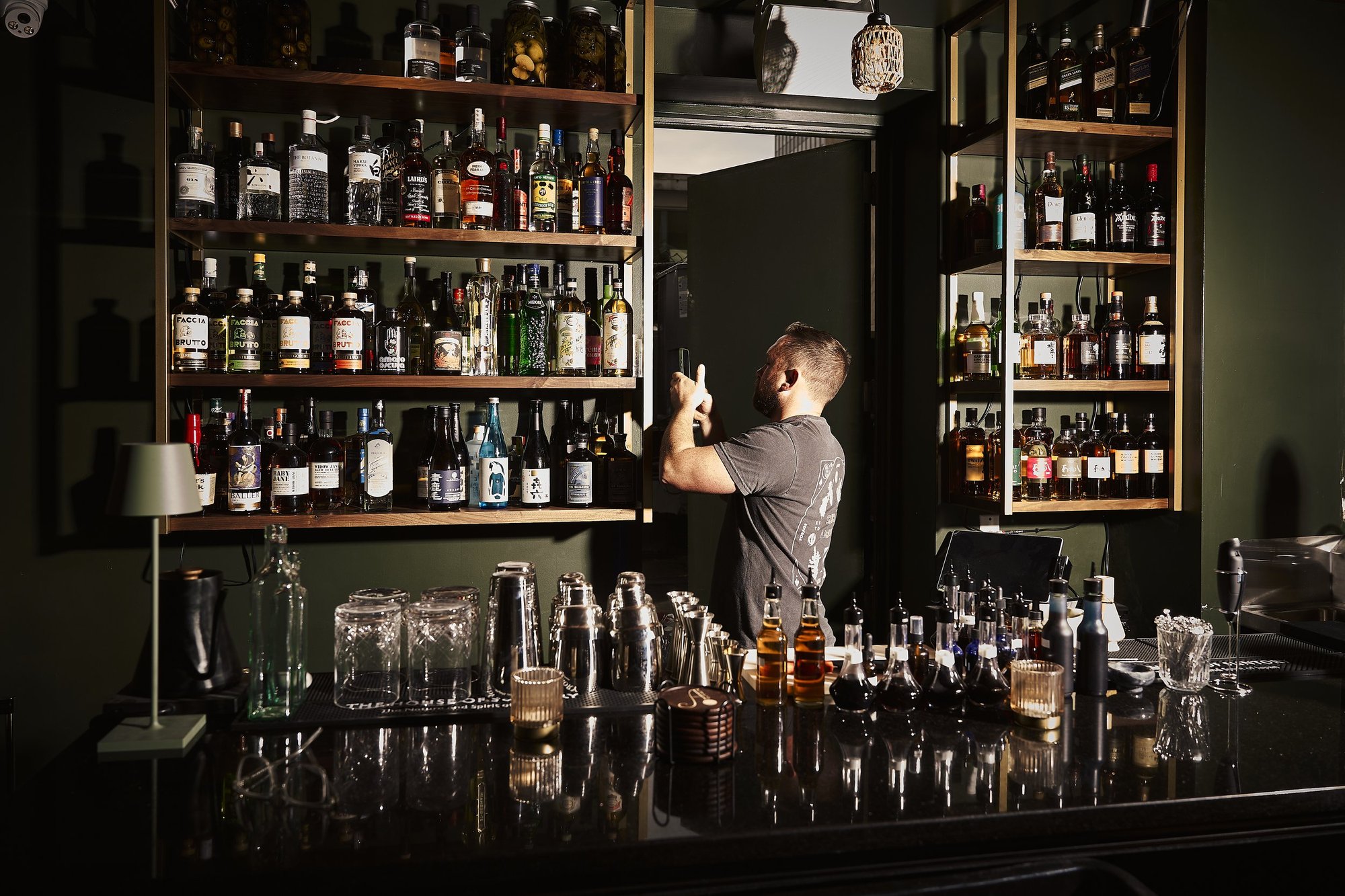
Old City, Upper Floor, Serious Intent
Philadelphia's Old City drinking scene has long operated on two registers: the casual bar anchored to history tourism and the technically serious room that happens to share a zip code with the Liberty Bell. Almanac, situated on the second floor of 310 Market Street, belongs to the second category. Arriving via staircase rather than street-level entry creates a deliberate separation from the cobblestone foot traffic below, and that physical remove signals something about the register of drinking that happens upstairs. This is not a room designed for impulse visits.
The second-floor position gives Almanac the kind of ambient remove that occasion drinking requires. A birthday dinner, an anniversary aperitif, a celebration that deserves more than a well cocktail and a crowded bar — these are the moments the format serves. In a city where many bars compete on neighborhood accessibility, Almanac competes on intentionality. The climb, however modest, marks a threshold.
Japanese Influence as a Technical Framework, Not an Aesthetic
Japanese-inspired craft cocktail programs have proliferated across American cities over the past decade, but the better ones treat Japanese bartending principles as a discipline rather than a visual reference. Precision, restraint, seasonal alignment, and the primacy of texture over sweetness are the hallmarks of that tradition. Almanac's positioning within this current draws direct comparison to programs like Kumiko in Chicago, where Japanese technique shapes the structure of the menu, and Bar Leather Apron in Honolulu, which applies similar restraint in a very different geographic context.
What distinguishes Almanac's approach within Philadelphia is the hyper-seasonal mandate paired with in-house fermentation. Fermentation as a cocktail tool is not decorative here — it is the engine. Shrubs, kombuchas, lacto-fermented fruit, and house-produced vinegars shift the flavor architecture of drinks away from the spirit-forward framework that dominates most American cocktail programs. The result is a menu that changes not because the bartenders want variety, but because the underlying ingredients dictate it. Seasonal hyper-specificity of this kind is rare enough in Philadelphia's bar scene to constitute a genuine categorical distinction.
That combination , Japanese bartending philosophy applied through a fermentation-first seasonal lens , places Almanac in a national peer set that includes programs in larger markets. Jewel of the South in New Orleans and Julep in Houston each occupy a similar position in their respective cities: technically serious rooms where a clear conceptual framework governs the menu rather than trend-chasing or personality-driven lists.
Celebrating Here: What the Format Delivers
Occasion dining and occasion drinking share the same fundamental requirement: the guest should feel the evening was worth the planning. Almanac's format answers that requirement through specificity. When the menu is driven by what the fermentation lab has produced this week , which shrub has peaked, which kombucha is ready , the drinks you receive on a given night are genuinely of that moment. That kind of seasonal anchoring makes a celebration feel less like a transaction and more like a document of a particular time.
For milestone meals, the second-floor remove from street-level Philadelphia reinforces a sense of occasion without theatrical gimmickry. There are no hidden doors, no theatrical smoke effects, no password entry , the theatrics that defined an earlier era of cocktail bar design, and which cities like New York have largely moved past. The atmosphere at Almanac operates on quieter signals: the elevation, the technical seriousness, the menu that arrives without a single filler drink.
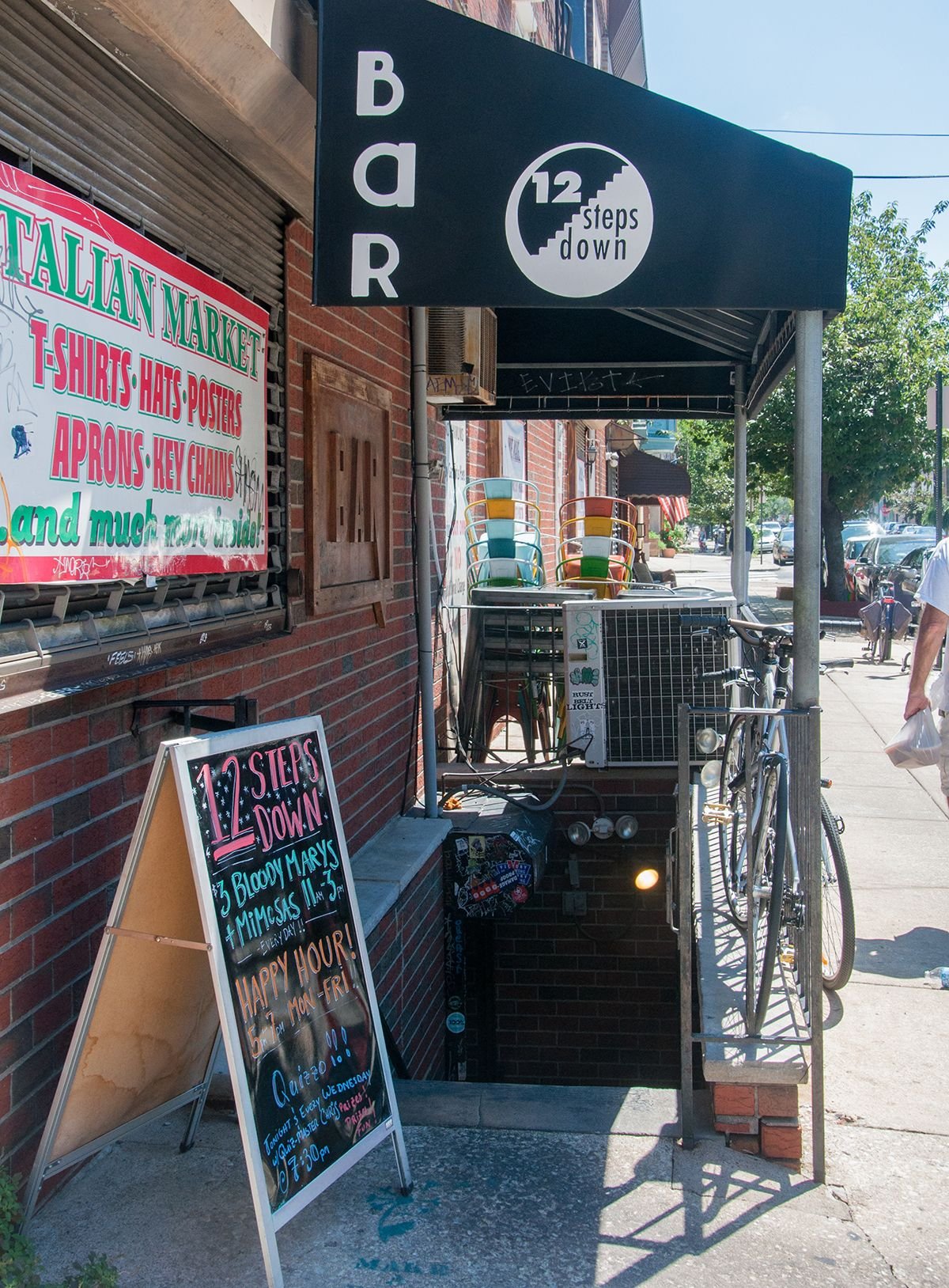
Philadelphia's own cocktail scene has matured considerably in this direction. Bars like 12 Steps Down and 1501 Passyunk Ave anchor different ends of the city's drinking spectrum, while 48 Record Bar and 637 Philly Sushi Club demonstrate how specific conceptual frameworks can hold an audience in a competitive market. Almanac sits toward the technically ambitious end of this range, a position that earns it a distinct role in the city's occasion-drinking ecosystem.
What to Drink, and How to Approach the Menu
Because the menu is hyper-seasonal and driven by active fermentation, the honest approach is to treat the current list as authoritative rather than consulting a historical snapshot. The fermentation program means that drinks rotate on the basis of ingredient readiness rather than a fixed quarterly calendar. Asking the bartender what is in peak condition on a given evening is not a lazy question , it is the correct one at a bar operating on this model.
Drinks rooted in Japanese technique tend to reward attention to texture and temperature over proof and sweetness. Expect lower-ABV formats alongside stirred spirit-forward options, with fermented bases or modifiers appearing as structural elements rather than garnish. For guests accustomed to more conventional cocktail programs, the adjustment is in recalibrating expectations: these are drinks designed to evolve as you drink them, not deliver maximum impact in the first sip. For a special occasion, that pacing suits a long evening better than a punishing list would.
Comparable fermentation-forward programs in American cocktail culture, including ABV in San Francisco and Superbueno in New York City, demonstrate that this approach builds a loyal audience willing to revisit precisely because the menu genuinely changes. The Parlour in Frankfurt on the Main applies a similarly disciplined seasonal philosophy in a European context, confirming that the model holds across markets when executed with consistency.
Planning Your Visit
Almanac sits at 310 Market Street, second floor, in Philadelphia's Old City neighborhood. The address places it within walking distance of the city's historic core, making it a natural pre- or post-dinner stop for evenings that begin elsewhere in the area. Current hours, booking availability, and pricing are leading confirmed directly through current channels, as the hyper-seasonal format means operational details align with ingredient cycles rather than fixed public schedules. For a broader orientation to Philadelphia's drinking and dining scene before planning a visit, our full Philadelphia restaurants guide maps the city's neighborhoods and their distinct hospitality characters.
The second-floor format suits smaller groups and couples more naturally than large parties, given both the physical layout and the style of drinking the menu invites. If your occasion requires a room that will make the evening feel deliberate rather than incidental, the format delivers on that requirement without requiring you to dress for a theater production or spend a week on a waiting list.
Price and Recognition
A quick context table based on similar venues in our dataset.
| Venue | Price | Awards | Notes |
|---|---|---|---|
| Almanac | This venue | ||
| Next of Kin | Cocktails, bar snacks | ||
| Sacred Vice Brewing – Berks (taproom) | Brewery taproom; beer-focused, vinyl music selection | ||
| Tria | |||
| Irwin's | |||
| Little Nonna's |
Continue exploring
More in Philadelphia
Bars in Philadelphia
Browse all →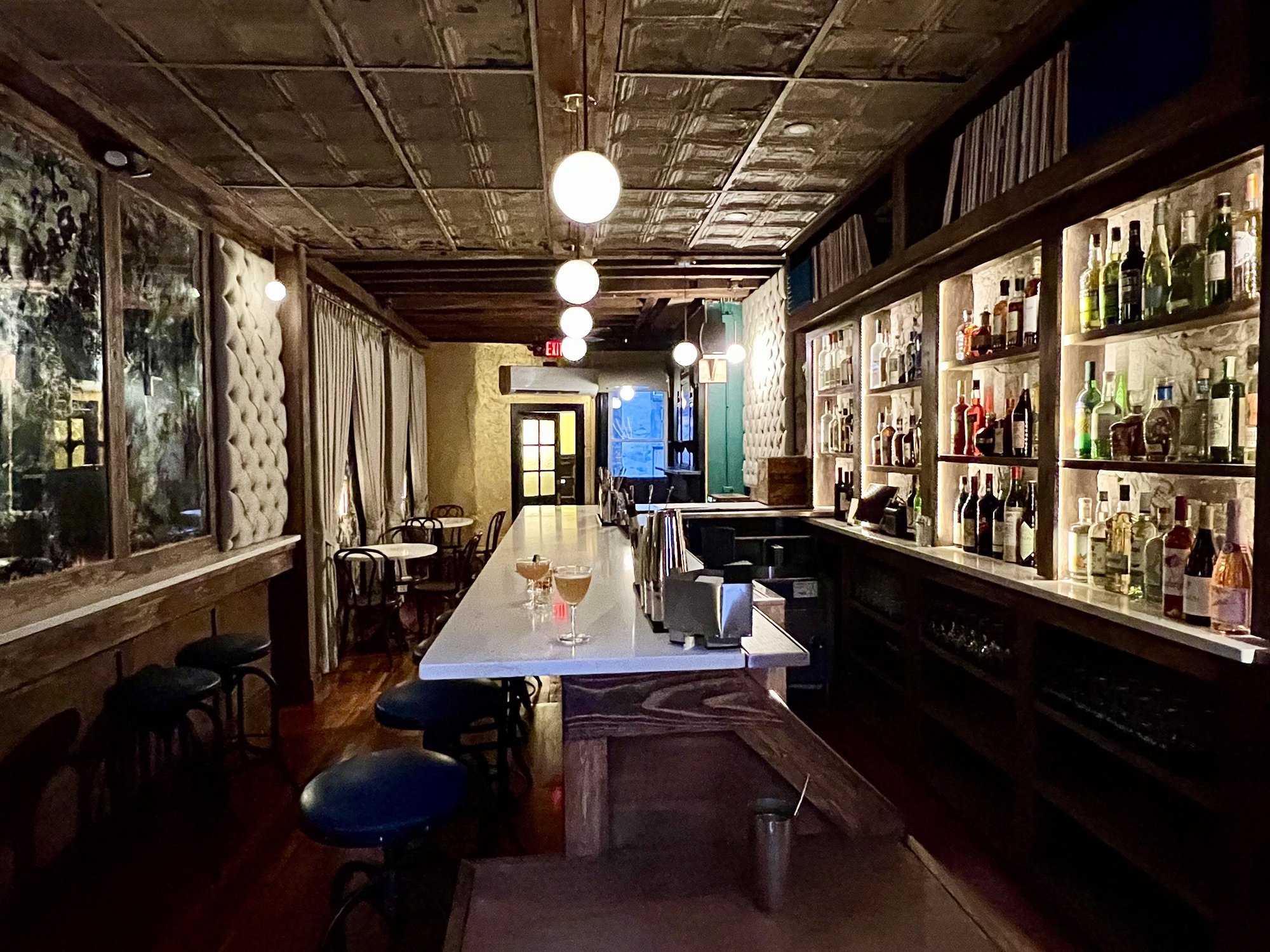
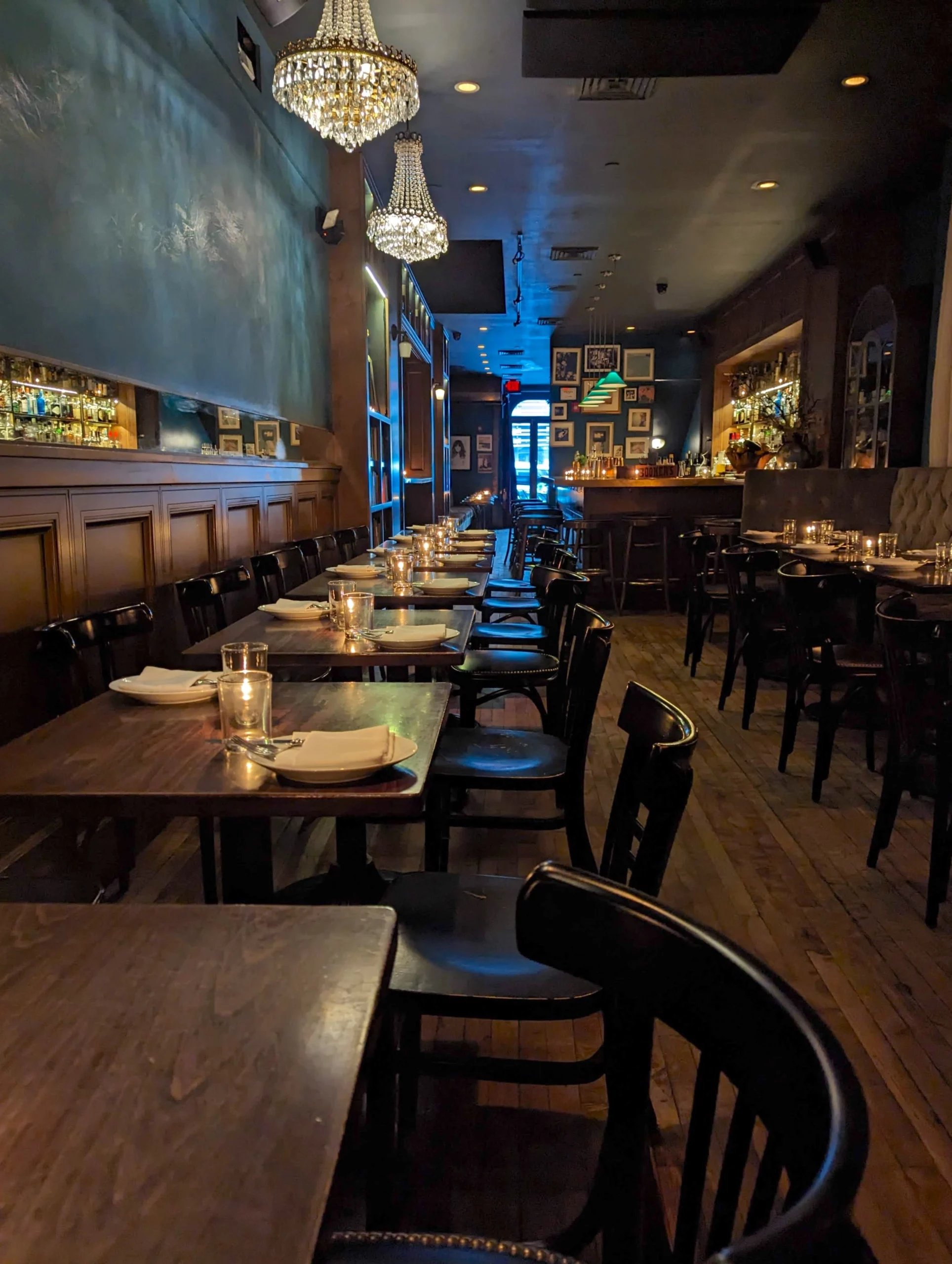
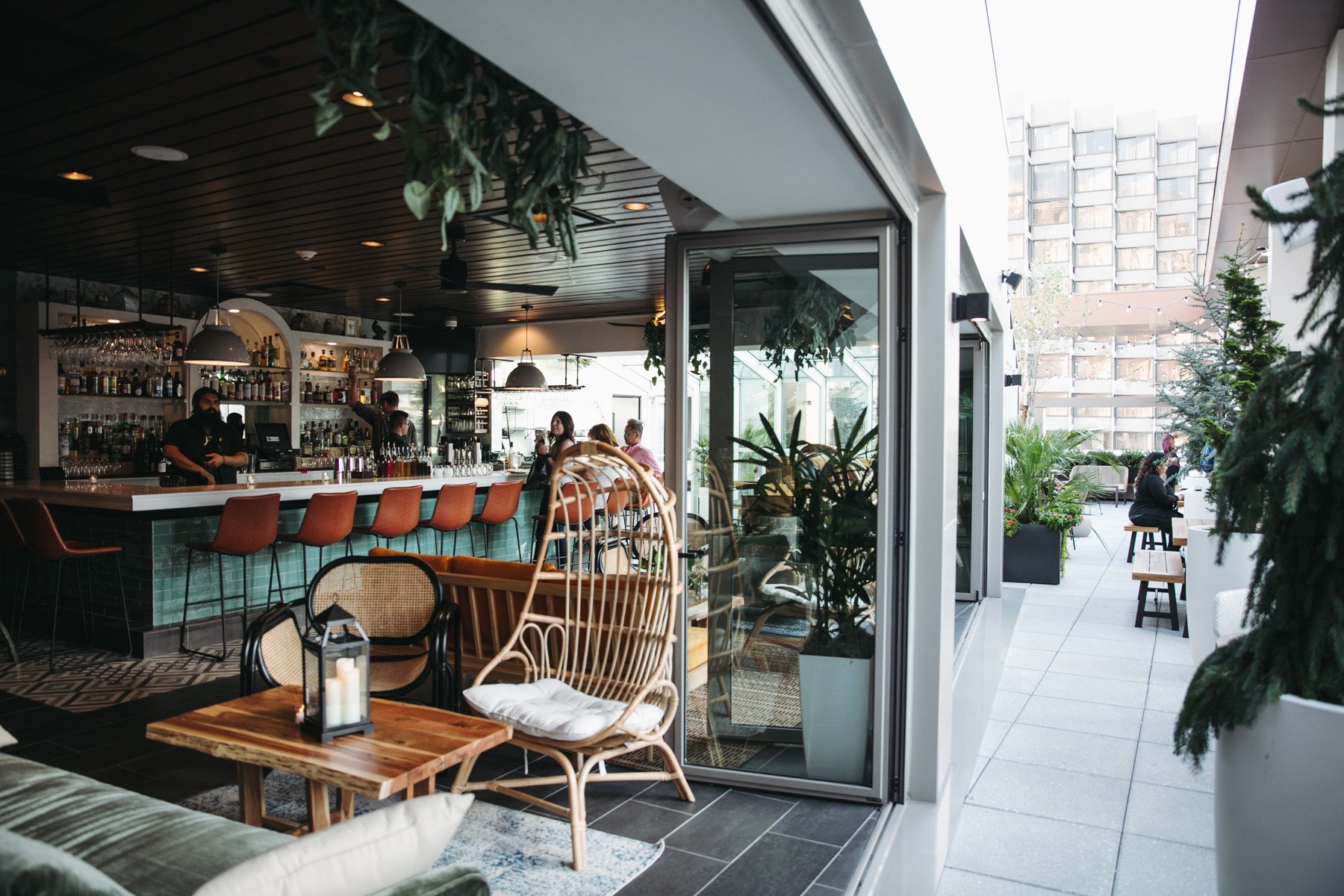
Restaurants in Philadelphia
Browse all →
At a Glance
- Intimate
- Sophisticated
- Trendy
- Elegant
- Cozy
- Date Night
- Special Occasion
- Speakeasy
- Seated Bar
- Lounge Seating
- Craft Cocktails
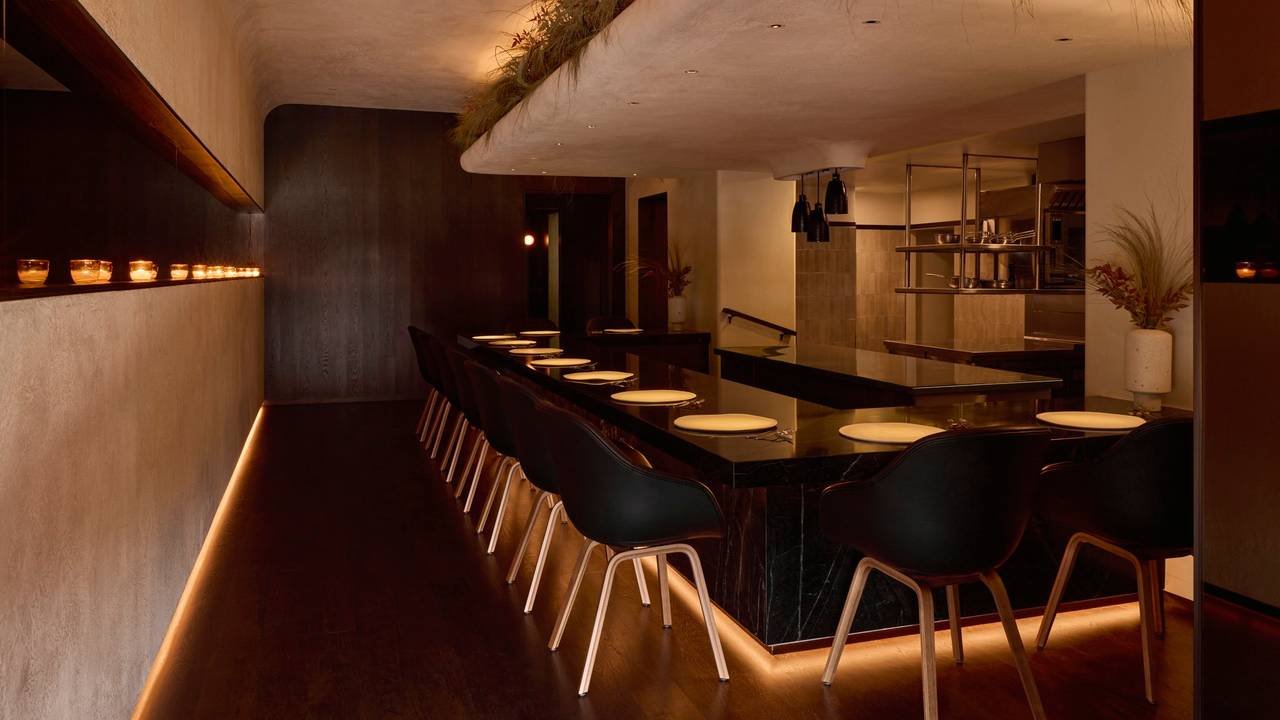
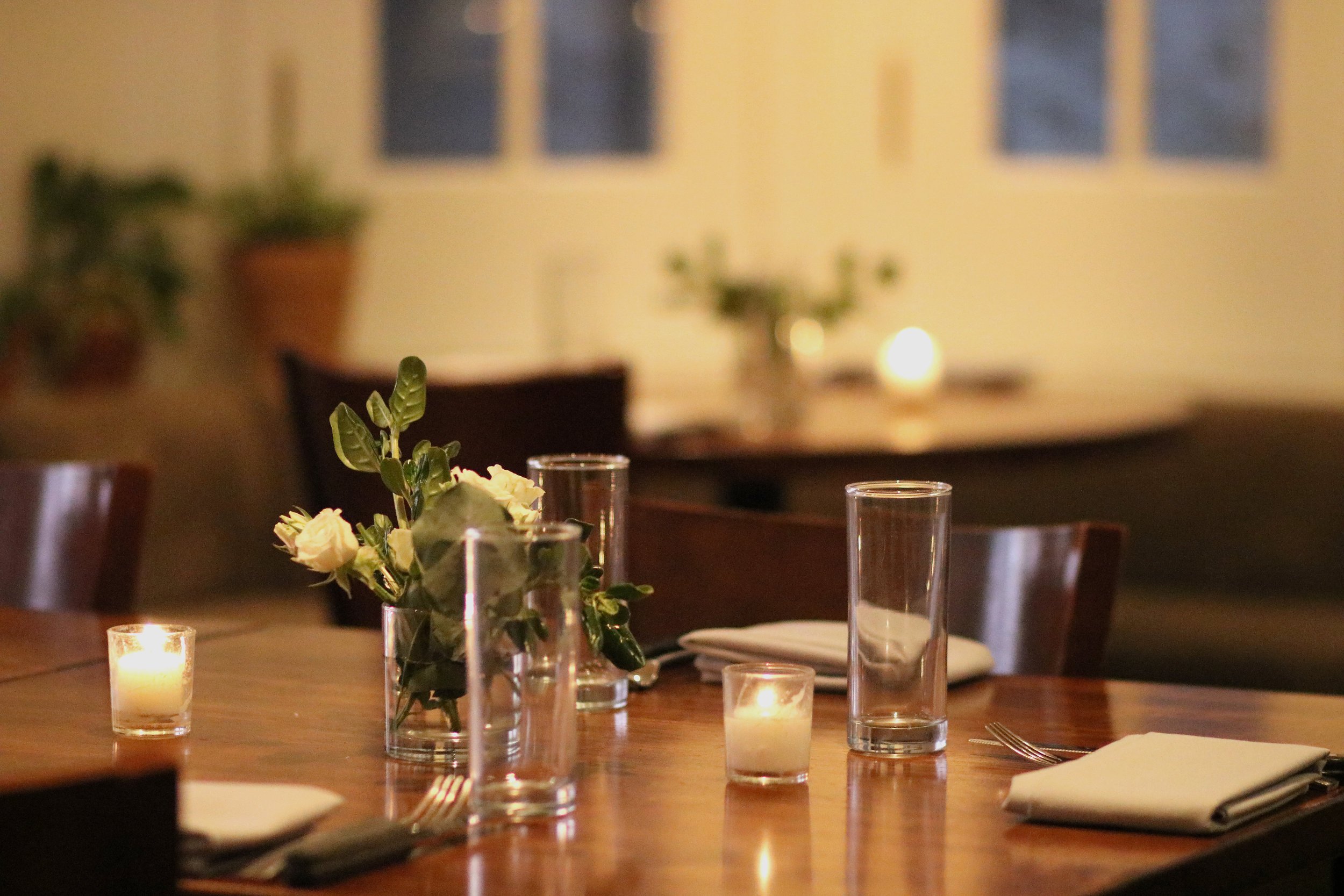
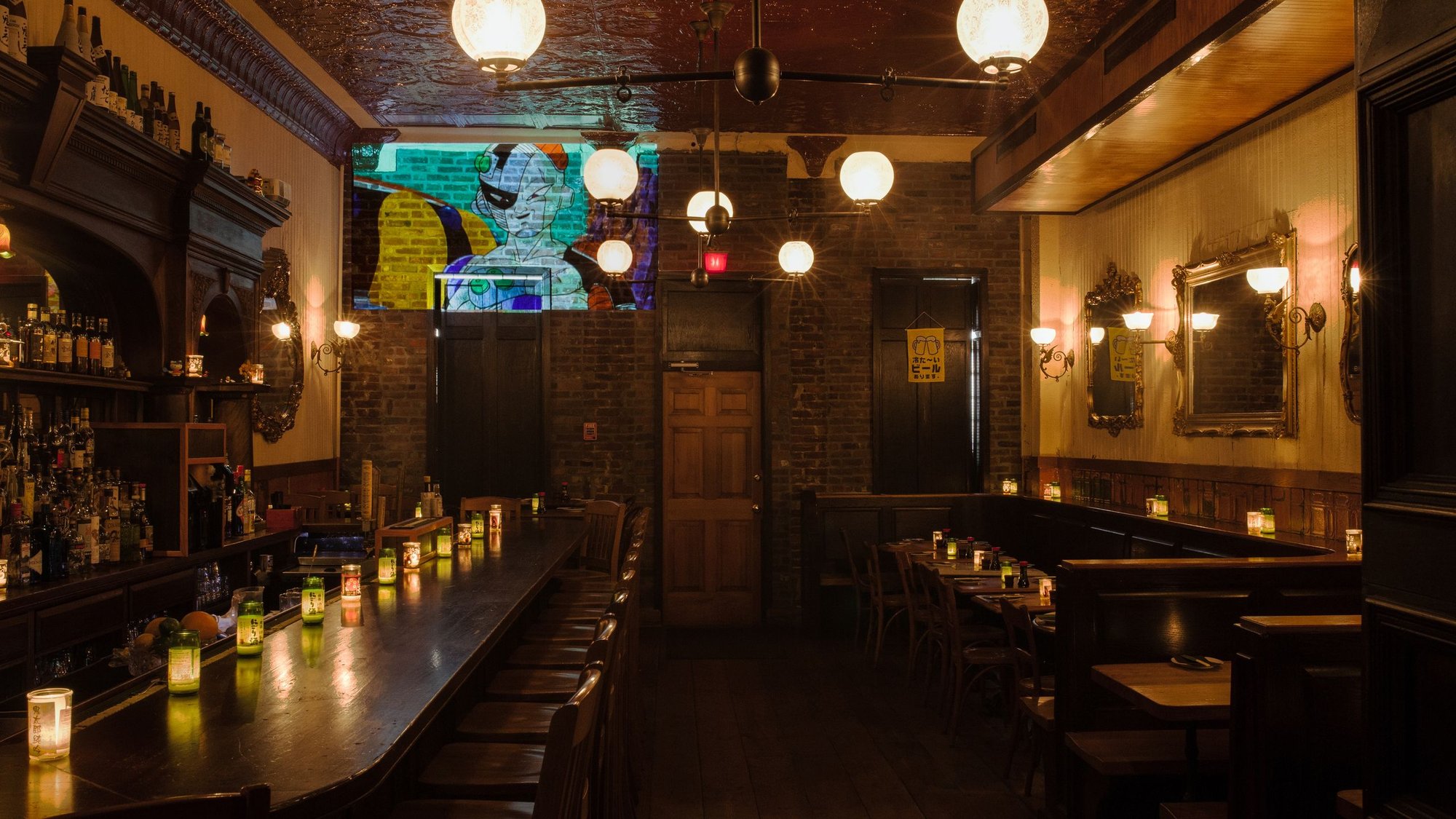
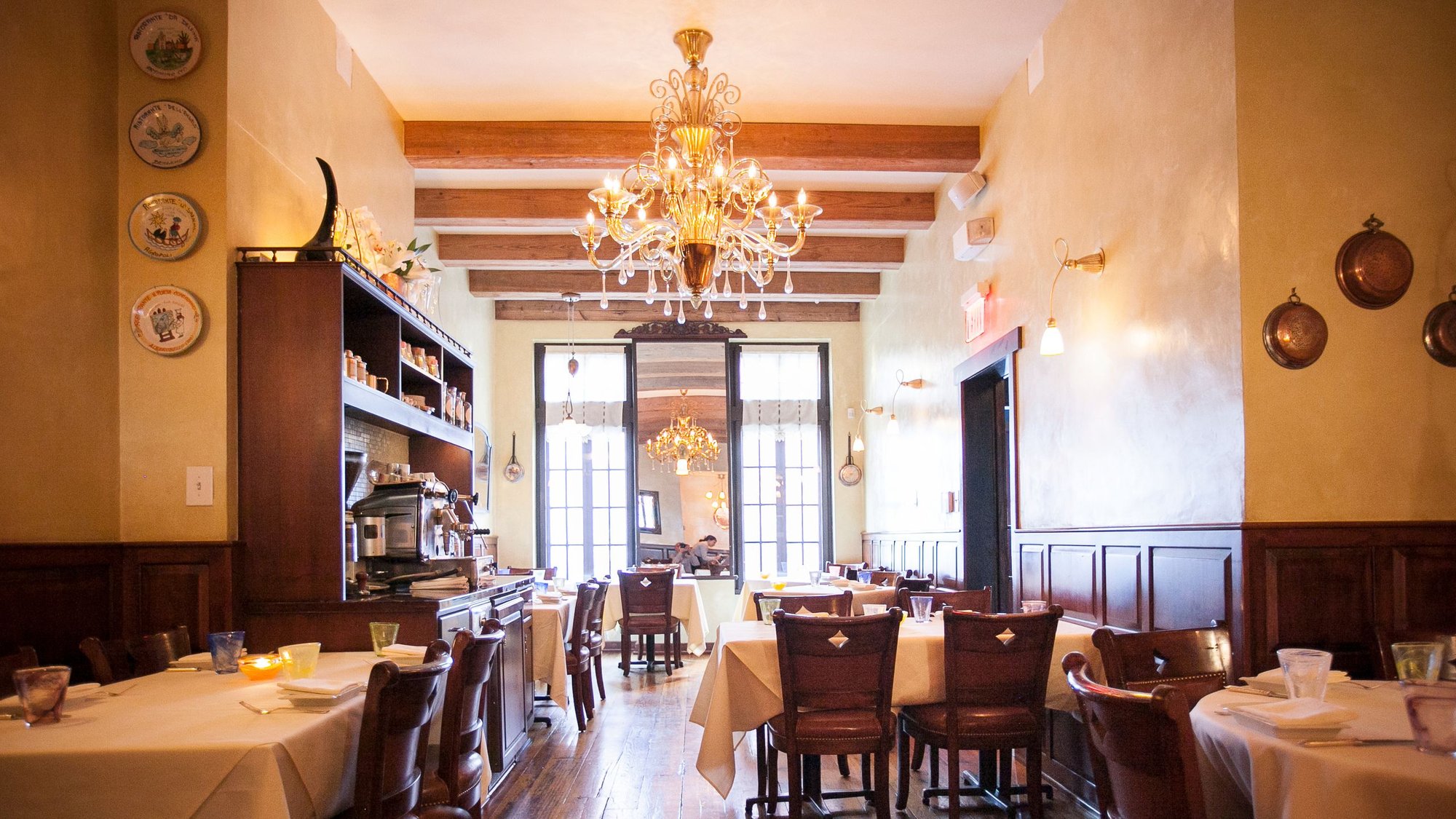
Moody speakeasy atmosphere with dim lighting, plush decor, moody lighting, and upbeat music at conversational volume.