Korea House 영동회관 Korean Cuisine & Sushi
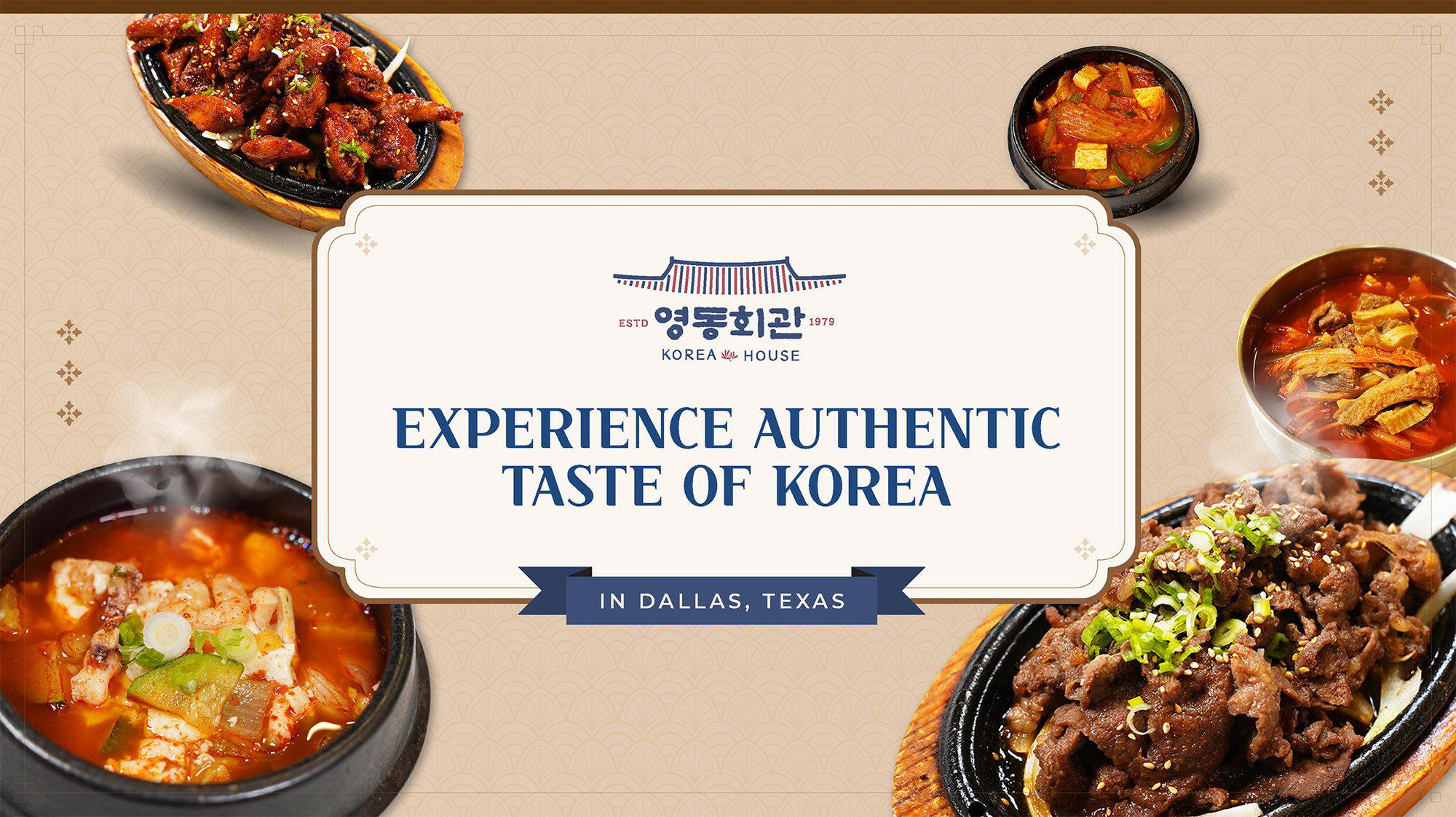
Korea House 영동회관 on Royal Lane sits within Dallas's established Korean dining corridor, drawing a loyal local following across both its Korean cuisine and sushi formats. The dual-kitchen approach reflects how Korean-American restaurant culture on the North Dallas stretch has long accommodated Japanese-American crossover. A neighborhood anchor that regulars return to on routine rotation rather than occasion.

Pearl is the En Primeur Club membership app — saves, bookings, and concierge access live there. Same editors, same standards.
Where Royal Lane Meets the Korean Table
The stretch of Royal Lane running through northwest Dallas carries a particular kind of commercial honesty. Strip centers alternate with family-run operations that have outlasted trendier competitors by decades, and the signage tends toward function over design. Korea House 영동회관 sits within that context, a address that positions it squarely in the Korean and Korean-adjacent dining corridor that has quietly consolidated along this part of the city. This is a neighborhood where regulars know their orders before they park, and where the ambient noise is the sound of grills working rather than curated playlists.
Dallas's Korean dining scene occupies a specific place in the broader Texas food picture. It does not carry the scale of Houston's Koreatown or the national profile of Los Angeles, but it sustains a core of restaurants that serve both a resident Korean-American community and a wider population of regulars who return for consistency rather than novelty. Korea House operates within this tier: a combined Korean cuisine and sushi format that reflects a pragmatic dual-menu approach common to Korean-owned restaurants across the American Southwest, where a single kitchen addresses multiple appetite categories without splitting its identity.
The Sensory Register of a Working Korean Kitchen
Korean barbecue-oriented spaces carry a particular atmospheric signature. The ventilation systems run audibly. The smell of marinated meat over charcoal or gas grill reaches the dining room before any menu does. Banchan arrives in small ceramic dishes as a matter of course, not as an upsell, and the temperature of the room tends to read warmer than comparable Western dining rooms because the heat source is at the table.
The combination of Korean cuisine and sushi on a single menu is worth understanding as a market response rather than a culinary compromise. Across the American Korean restaurant ecosystem, the dual Korean-Japanese menu has been a consistent format since at least the 1990s, particularly in cities where Korean population density does not yet support full restaurant specialization. It allows a kitchen to serve the family that wants soon tofu and the tablemate who wants a California roll within the same visit, and it keeps occupancy rates high across a broader demographic. Dallas's northwest corridor has several restaurants operating on this model, and they compete not on novelty but on execution, freshness of fish, and the quality of foundational Korean preparations.
Reading the Menu Across Two Traditions
A dual Korean-sushi operation asks its kitchen to maintain two distinct skill sets. On the Korean side, the range typically runs from rice and noodle dishes through grilled proteins, stews, and the banchan array that defines the communal table format. On the sushi side, the expectation is fresh fish, consistent knife work, and rice cooked to the right temperature and seasoning. These are not incompatible demands, but they require a kitchen organized to handle both without letting either side coast. Across Dallas's Korean dining corridor, the restaurants that sustain long-term neighborhood loyalty tend to be those that hold a consistent standard on both menus rather than treating one as a secondary afterthought.
For context on how Dallas positions within the regional dining conversation, the our full Dallas restaurants guide maps the city's broader dining character across neighborhoods and cuisine categories. The northwest corridor's Korean and pan-Asian operations represent one of the more established nodes in that picture, having built a customer base over multiple decades rather than through recent trend cycles.
The Northwest Dallas Dining Corridor
Royal Lane at this cross-section draws a mixed dining crowd. The surrounding area includes long-established family restaurants, Vietnamese operations, and pan-Asian hybrids that have served the same regulars for years. This is not a destination dining district in the sense of Deep Ellum or Uptown, where restaurants compete on atmosphere and social visibility. It operates on a repeat-visit economy, where proximity, parking, and reliable execution matter more than design investment or press coverage. That dynamic tends to produce restaurants with strong fundamentals and limited patience for inconsistency, because the customer base is not cycling through on curiosity alone.
Dallas's bar and cocktail culture, for those extending an evening beyond dinner, has evolved considerably across the city. Venues like 4525 Cole Ave, Adair's Saloon, Alcove Wine Bar, and Ampelos Wines each occupy distinct positions in that ecosystem, from neighborhood saloon culture to focused wine programming. For comparison across other American cities, the technical cocktail programs at Kumiko in Chicago, Bar Leather Apron in Honolulu, Jewel of the South in New Orleans, Julep in Houston, Superbueno in New York City, ABV in San Francisco, and The Parlour in Frankfurt on the Main illustrate the range of format and ambition that defines serious bar programming globally. Korea House operates in an entirely different register from those venues, and the comparison is offered for navigation rather than equivalence.
Planning a Visit
Korea House 영동회관 is located at 2598 Royal Ln, Dallas, TX 75229. Parking in the surrounding strip center area is generally direct for this type of northwest Dallas location. For a restaurant at this type of neighborhood positioning, walk-ins are typically accommodated, though weekend evenings in established Korean dining spots can move quickly, particularly for table-grill formats that turn over on longer meal cycles.
The Short List
A quick snapshot of similar venues for side-by-side context.
| Venue | Price | Notes |
|---|---|---|
| Korea House 영동회관 Korean Cuisine & SushiThis venue — the venue you are viewing | Not listed | Not listed |
| Bar Sylvestro | $20–30 | Cozy cocktail bar; serves Urbano Cafe Italian dishes |
| Cosmo's | $20–30 | Not listed |
Korea House 영동회관 Korean Cuisine & Sushi
Featured Guides
Continue exploring
More in Dallas
Bars in Dallas
All bars in Dallas →
Restaurants in Dallas
All restaurants in Dallas →
Hotels in Dallas
All hotels in Dallas →
Wineries in Dallas
All wineries in Dallas →
Details
- Classic
- Cozy
- Group Outing
- Casual Hangout
- Booth Seating
- Private Rooms
Current opening hours
- Monday
- 11 AM–10 PM
- Tuesday
- 11 AM–10 PM
- Wednesday
- 11 AM–10 PM
- Thursday
- 11 AM–10 PM
- Friday
- 11 AM–10 PM
- Saturday
- 11 AM–10 PM
- Sunday
- 11 AM–10 PM
Hours can change for holidays and private events. Last verified .
Warm, traditional Korean atmosphere with retro-inspired decor.