Google: 4.2 · 453 reviews
King Cole Bar
The King Cole Bar at the St. Regis New York occupies a particular place in the city's drinking culture: a Midtown room anchored by Maxfield Parrish's celebrated 1906 mural, where the Red Snapper — New York's original Bloody Mary — has been a fixture for decades. The bar operates as both a working cocktail destination and one of the more loaded historical rooms in American hotel drinking.
 Discover on Pearl
Pearl is the En Primeur Club membership app — saves, bookings, and concierge access live there. Same editors, same standards.
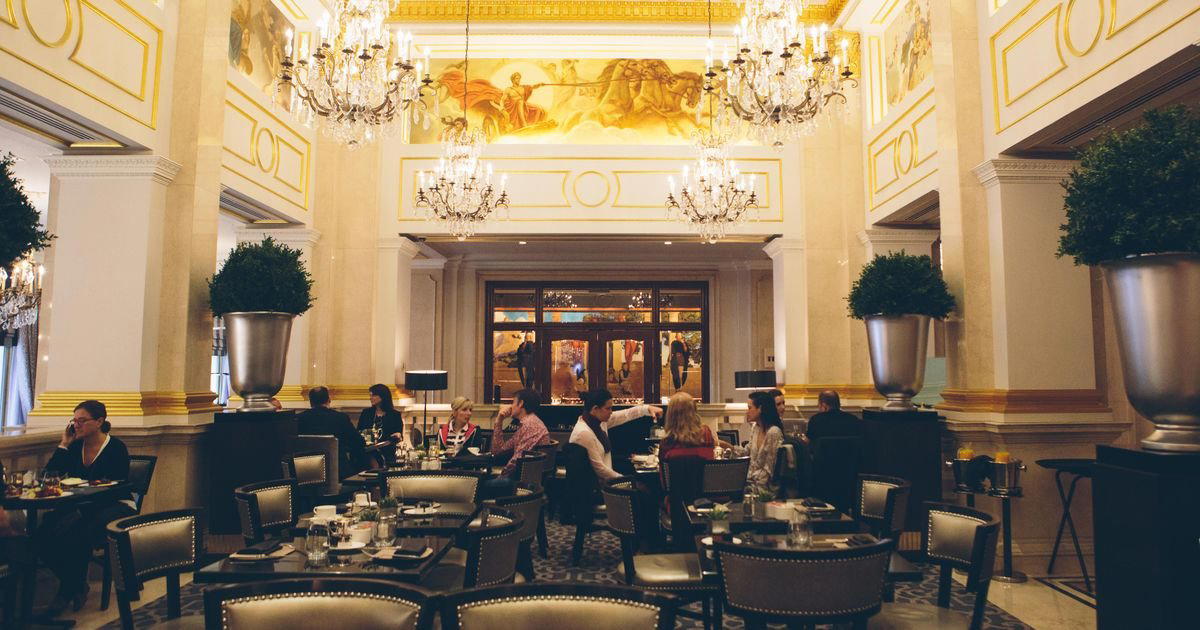
A Room That Predates the Conversation
Most hotel bars in Midtown operate at a remove from the city's serious cocktail culture. King Cole Bar at the St. Regis New York does not fit that pattern. The room's claim on the city's drinking history is specific and documented: it is the credited origin point of the Red Snapper, the house name for what became the Bloody Mary, introduced here in the early 1930s when the tomato-and-vodka combination was still novel enough to require a less confrontational name for the hotel's clientele. That history gives the bar a different kind of authority than the technical programs driving places like Attaboy NYC or the amaro-focused depth at Amor y Amargo. King Cole is not competing on those terms. Its standing rests on longevity, a specific visual anchor, and an unbroken continuity of service in one of the city's most consequential hotel rooms.
The mural itself is the physical fact around which everything else organizes. Maxfield Parrish painted the Old King Cole scene in 1894 for the Knickerbocker Hotel; it was relocated to the St. Regis in 1935, where it has remained. At roughly 30 feet wide, it dominates the bar wall in a way that makes the room immediately readable as something older and more fixed than most New York interiors. The figures are rendered with Parrish's characteristic luminous palette, and the scale means the painting reads as architectural rather than decorative. Visitors arriving for the first time tend to stop before they sit. That pause is part of the room's rhythm.
The Sequence of a Sitting
Drinking at King Cole Bar follows a logic that differs from the progression at a purpose-built cocktail bar. At a place like Angel's Share or Superbueno, the sequence is shaped by a creative menu built around a specific program. Here, the arc is more traditional: you arrive, the room does its work, and the drink comes second. The Red Snapper functions as an entry point not because it is the only serious option, but because ordering it at the bar where it originated carries a contextual weight that a Bloody Mary elsewhere does not. It is, in the most direct sense, the correct first order in this room.
From there, the session at King Cole tends to follow the patterns of classic hotel bar drinking rather than the explorative multi-course approach associated with contemporary cocktail programs. The service register is formal without being stiff, attentive without being intrusive. The bar's position within the St. Regis means it operates at a pace set by guests who may be on a long afternoon rather than a quick round, and the room accommodates that. Seating is arranged for conversation. The low lighting in the evening shifts the mural into a warmer register, and the room's acoustics absorb noise at a level that makes it possible to hear a companion without effort. These are not incidental qualities. They are the product of a room designed for sustained use.
Where King Cole Sits in New York's Drinking Map
New York's cocktail culture has diversified sharply over the past two decades, splitting between high-technical programs, neighborhood originals, and legacy rooms. King Cole belongs to that third category, alongside a small number of hotel bars where the physical space and historical continuity are the primary offering rather than a rotating seasonal menu. The distinction matters for how you plan a visit. If the goal is to track the city's current creative bar output, the relevant addresses are downtown and in the outer boroughs. If the goal includes situating that contemporary scene within a longer arc of New York drinking history, King Cole provides a fixed reference point.
Internationally, the parallel for this kind of room is not difficult to locate. Hotel bars with documented origin stories and preserved interiors occupy a specific niche in cities with old luxury hotel stock: the American Bar at the Savoy in London, the Hemingway Bar at the Ritz in Paris. King Cole occupies the equivalent position for New York, with the specific credibility of the Red Snapper claim. For travelers building a broader itinerary across American bar culture, this positions the bar alongside places like Jewel of the South in New Orleans or Kumiko in Chicago as stops that carry contextual weight beyond the drink in front of you. The comparison with Bar Leather Apron in Honolulu, Julep in Houston, ABV in San Francisco, Allegory in Washington, D.C., and The Parlour in Frankfurt on the Main points in each case to a different bar archetype. King Cole's type is the legacy hotel room: formal, high-ceilinged, with a singular object at its center.
Timing and Access
The bar's Midtown address at Two East 55th Street places it in the St. Regis New York, between Fifth and Madison Avenues. The location pulls from hotel guests, nearby office workers at lunch and early evening, and visitors specifically seeking out the room. Peak hours run from early evening through late night on weekdays, when Midtown's after-work density hits the 55th Street corridor. Weekend afternoons are quieter and allow more time with the room at its own pace. For a first visit, arriving before the early-evening surge in the autumn or winter months makes the most of the room's interior atmosphere — the season brings a shift in the light and a different quality to the hour before dinner. See our full New York City restaurants guide for broader planning context.
Know Before You Go
- Address: Two East 55th Street, New York, NY 10022 (St. Regis New York, between Fifth and Madison Avenues)
- Access: Open to hotel guests and walk-in visitors; no reservation required for bar seating
- Dress code: Smart dress is consistent with the room's register; the St. Regis maintains a formal-leaning standard
- Leading timing: Weekend afternoons for a quieter session; autumn and winter evenings for the full atmosphere of the room
- Signature order: The Red Snapper, the bar's original Bloody Mary, credited here from the early 1930s
- Neighborhood: Midtown East, walkable from Fifth Avenue retail, the MoMA, and the Rockefeller Center area
Continue exploring
More in New York City
Bars in New York City
Browse all →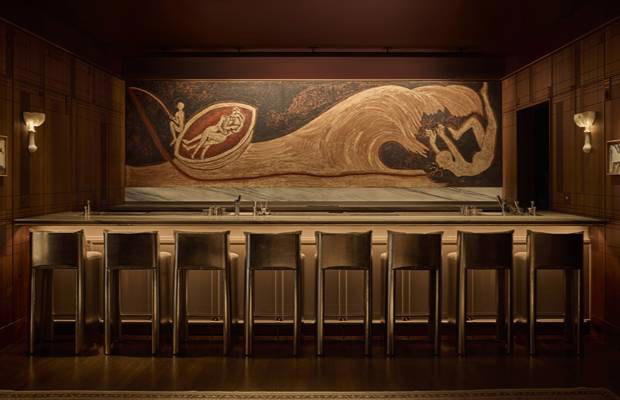
Restaurants in New York City
Browse all →
Hotels in New York City
Browse all →


At a Glance
- Elegant
- Sophisticated
- Iconic
- Classic
- After Work
- Date Night
- Special Occasion
- Celebration
- Historic Building
- Hotel Bar
- Design Destination
- Seated Bar
- Lounge Seating
- Booth Seating
- Classic Cocktails
- Craft Cocktails
- Conventional Wine
- Bottle Service
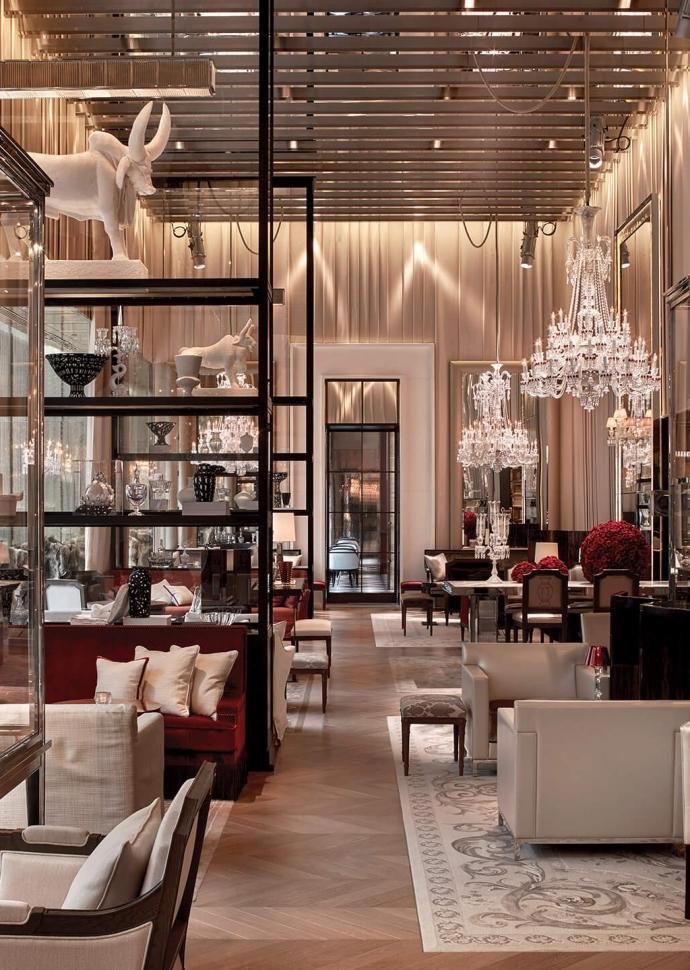
Elegant and refined with soft jazz music playing in the background, candlelit tables, and a cozy yet sophisticated atmosphere enhanced by the restored Parrish mural.