Kimika
Kimika occupies a considered corner of Nolita at 40 Kenmare Street, where the room itself signals intent before a drink arrives. The space sits in a broader New York wave of Italian-Japanese crossover venues that trade heavily on atmosphere and precise hospitality. For the neighbourhood, it functions as a reliable anchor for the kind of evening that begins with cocktails and extends well past dinner.
 Discover on Pearl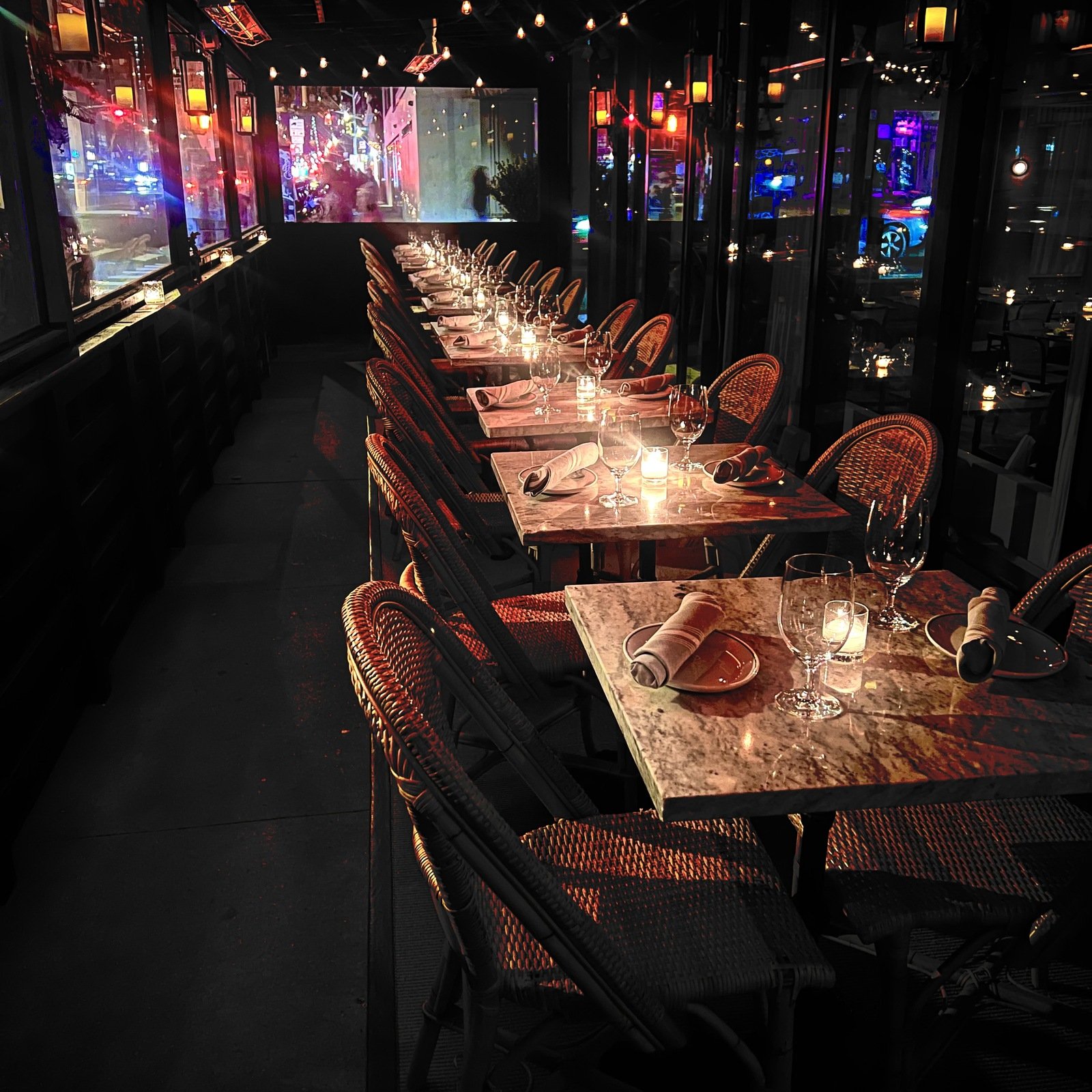
The Room as Opening Argument
Nolita has a particular talent for rooms that persuade you to stay longer than planned. The neighbourhood, compressed between Soho's commercial scale and the Lower East Side's looser energy, has produced a distinct tier of spaces that prioritise intimacy over volume. Kimika, at 40 Kenmare Street, belongs to that category. The physical container does significant work here: the proportions are close enough to feel convivial, the lighting calibrated to the specific hour rather than left static across a full service. You are aware, when you sit down, that someone made deliberate decisions about what this room should feel like at 8pm versus 10pm.
That attention to spatial atmosphere places Kimika inside a broader design conversation happening across Manhattan's mid-tier dining rooms. Where the previous decade rewarded rawness — exposed brick, Edison bulbs, the aesthetic of authentic accident — the current cohort of Nolita and Soho openings tends toward more intentional restraint. Surfaces are chosen rather than inherited. Seating arrangements consider sightlines. Kimika reads as part of that shift, a room built to function as a social container rather than a background.
Italian-Japanese in New York: The Tradition Kimika Joins
The Italian-Japanese category, sometimes called Itameshi after its Japanese originator, has a longer history in New York than its current visibility might suggest. It moved through the city's dining culture in waves, surfacing in upscale Midtown rooms in the 1990s before retreating, then returning with a lighter touch in downtown spaces over the past decade. The current iteration tends to be less formal, built around shareable formats and well-edited cocktail programs rather than tasting menus and wine pairings.
Kimika operates within this tradition. The fusion premise here is less about novelty , combining two cuisines for surprise value , and more about treating the overlap as a settled vocabulary. The leading examples of this format work because both contributing traditions share some underlying logic: precision in ingredient sourcing, a preference for umami-forward flavour, and a hospitality philosophy that treats timing as a form of care. When those alignments are used well, the result is a room where the cuisine and the service pace feel continuous rather than assembled.
For comparison, Kumiko in Chicago represents a similar sensibility on the Japanese cocktail side: a space where the drink program and the physical room are designed together rather than treated as separate departments. The approach is different to New York's more diverse bar scene, but the underlying priority , that atmosphere and programme should cohere , connects them.
Where Kimika Sits in New York's Bar and Dining Scene
New York's cocktail and dining convergence has accelerated over the past five years. Venues that function primarily as bars but also do serious food, or primarily as restaurants with bar programs that merit attention on their own terms, now form a recognisable mid-tier between dedicated cocktail bars and full tasting-menu operations. Kimika occupies that middle ground in Nolita.
The dedicated cocktail bar scene in the city is well-documented. Angel's Share in the East Village has operated since 1994, representing the older model of Japanese-inflected precision in a New York setting. Attaboy NYC, on the Lower East Side, sits in the bartender-forward, no-menu tradition. Amor y Amargo specialises in bitter-led programmes with an educational dimension. These are venues where the cocktail is the argument.
Kimika's position is different: it is a dining room with a cocktail program that matches the room's register rather than commanding it separately. That positioning puts it alongside Superbueno, which similarly integrates food and drink within a designed atmosphere on the Lower East Side. The comparison is useful because both venues are, in some sense, defined as much by what they feel like as by any single menu category.
Beyond New York, the same model appears in cities where the bar-dining boundary has softened. Bar Leather Apron in Honolulu integrates Japanese technique into a serious cocktail operation. Jewel of the South in New Orleans and Julep in Houston anchor Southern cocktail culture in spaces where hospitality extends beyond the glass. ABV in San Francisco and Allegory in Washington, D.C. offer further examples of American bar programs where atmosphere and beverage intent are treated as inseparable. The Parlour in Frankfurt on the Main shows the model operating outside the United States with comparable seriousness. Kimika belongs to that international cohort of spaces where the room and the program are co-authored.
Nolita as Context
The neighbourhood matters to how Kimika functions. Nolita, bounded roughly by Spring Street to the north and Prince Street to the south along Mulberry and Mott, draws a crowd that is older than the Lower East Side's late-night concentration but younger, in terms of social energy, than the more settled West Village. The area's restaurants and bars tend to run dinner service into late evening without the explicit nightlife framing of adjacent neighbourhoods. That means a venue like Kimika can operate across a longer arc of the evening, from early dinner through post-dinner cocktails, without the energy shifting awkwardly between modes.
Kenmare Street itself connects the neighbourhood to the slightly broader Soho corridor. Foot traffic on that block tends toward the intentional rather than the accidental , people who arrive have typically chosen to be there rather than walking in from the street. That dynamic supports a room that prioritises atmosphere and pacing over high-volume turnover, which aligns with what Kimika appears to be doing physically and operationally.
For a fuller picture of the city's dining and bar options, the EP Club New York City guide maps the scene across neighbourhoods and categories.
Planning a Visit
Kimika is located at 40 Kenmare Street in Nolita, positioned at a point where the neighbourhood is most walkable from both the J/Z/N/Q/R/6 subway lines at Canal Street and the B/D/F/M at Broadway-Lafayette. The venue's Italian-Japanese format positions it naturally as a dinner destination, with the bar as a legitimate standalone option for the later part of an evening. Given the room's emphasis on atmosphere, arriving closer to the beginning of service rather than mid-evening tends to offer a fuller sense of what the space is doing with light and pace. Reservations, where available, are advisable for weekend evenings in a neighbourhood where good rooms fill quickly.
Quick reference: 40 Kenmare St, New York, NY 10012 , Nolita, lower Manhattan.
Frequently Asked Questions
Just the Basics
These are the closest comparables we have in our database for quick context.
| Venue | Notes | Price |
|---|---|---|
| Kimika | This venue | |
| The Long Island Bar | ||
| Dirty French | ||
| Superbueno | ||
| Amor y Amargo | ||
| Angel's Share |
Need a Table?
Our members enjoy priority alerts and concierge-led booking support for the world's most difficult bars and lounges.
Get Exclusive Access