Kanyakumari
Kanyakumari occupies a quiet corner of the Flatiron District at 20 East 17th Street, where the dining ritual moves at a pace New York rarely allows. The kitchen draws on the coastal and spice-trade traditions of South India, placing it in a small cohort of New York restaurants working that culinary register with genuine specificity. For a city saturated with pan-Indian options, this address makes a more focused argument.
 Discover on Pearl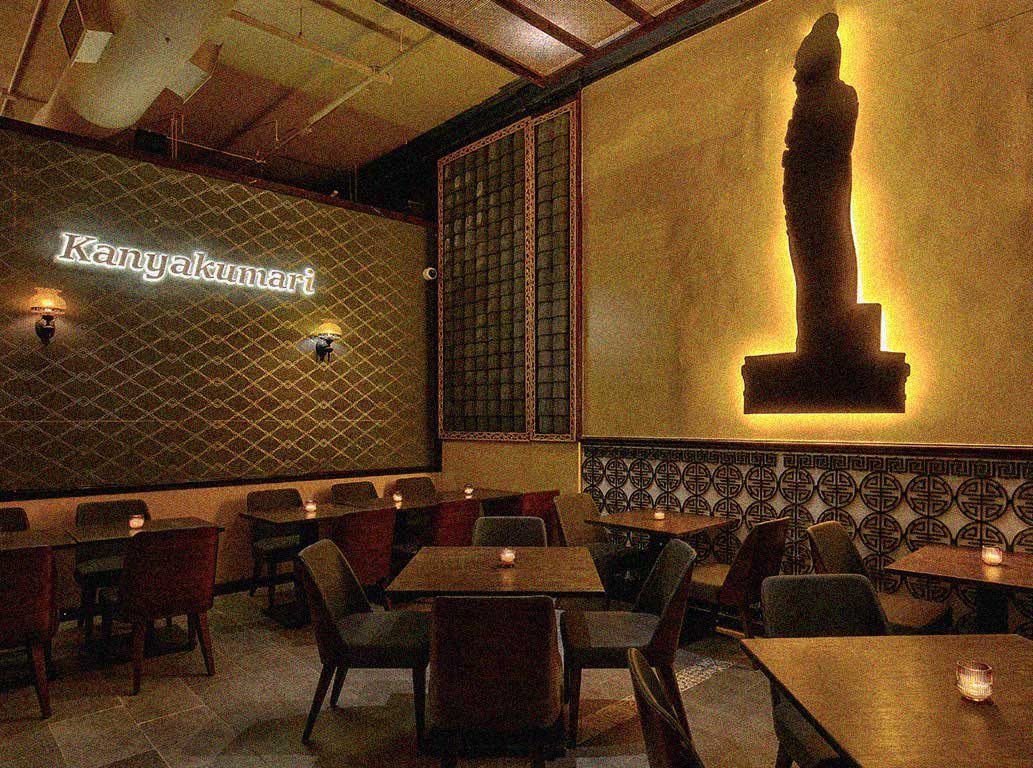
A Room That Asks You to Slow Down
The Flatiron District runs on lunch-counter efficiency and power-dinner velocity. Kanyakumari, at 20 East 17th Street, positions itself against both. The address sits close enough to Union Square to absorb the neighbourhood's foot traffic, yet the room's format signals something different from the open-kitchen theatre that dominates this stretch of Manhattan. The dining ritual here is meant to unfold rather than execute, which places it in a specific and underserved tier of New York Indian cooking.
South Indian cuisine, particularly the coastal and spice-trade traditions that the name Kanyakumari references, operates on a logic of layered heat, sourced spice, and textural contrast rather than the cream-reduced richness that still defines much of the city's Indian restaurant market. The cape of Kanyakumari, where India's southern tip meets three bodies of water, is a culinary crossroads in its own right: Tamil, Kerala, and Sri Lankan influences converge there, and that convergence gives a restaurant drawing on it a genuinely wide palette to work from.
The shortlist, unlocked.
Hard-to-book tables, cellar releases, and concierge-planned trips.
Get Exclusive Access →Where This Fits in the New York Indian Scene
New York's Indian restaurant market has stratified considerably over the past decade. At one end sit the tasting-menu-format operations in Midtown and the Upper East Side, pricing against French and Japanese peers. At the other, the Jackson Heights corridor in Queens maintains a density and price-point that no Manhattan address can replicate. In between, a smaller cohort of Flatiron and East Village restaurants has tried to occupy a middle register: ingredient-focused, regionally specific, priced for the neighbourhood rather than for expense accounts.
Kanyakumari belongs to that middle cohort, and the regional specificity of the name matters. It signals a narrower culinary argument than the broad "Indian" category that still defines many competitors. Restaurants working this way, drawing on a specific coastal or regional tradition rather than a pan-subcontinental menu, tend to attract a more culinarily literate crowd and face a different competitive set. In New York terms, the relevant comparisons are not the white-tablecloth Midtown rooms but the East Village and Lower East Side spots that have built followings on specificity and restraint.
The cocktail programming at venues in this neighbourhood tier has also shifted. Bars like Amor y Amargo and Attaboy NYC have helped set a city-wide expectation for drinks that reflect genuine point of view, and Indian-inflected spirits work, drawing on tamarind, curry leaf, and cardamom, has become more coherent at restaurants willing to invest in it. Across the country, comparable restaurants have found that a tightly composed drinks list reinforces the dining ritual rather than competing with it: Kumiko in Chicago and Jewel of the South in New Orleans both demonstrate how beverage programs can function as an extension of a kitchen's culinary logic rather than a separate department.
The Ritual of the Meal
South Indian dining has its own pacing logic, one that differs from the course-by-course European model and from the simultaneous-service tradition of a thali. At its most considered, the meal moves through a sequence of textures and heat levels, with fermented elements, tamarind-soured dishes, and coconut-tempered preparations each arriving at a point where they make sense against what preceded them. This is a different kind of meal architecture than New York diners encounter at most price points, and it rewards a willingness to let the kitchen set the pace.
Restaurants working this format in the United States have found that the dining room layout matters as much as the menu. Cramped, high-turnover seating works against the ritual; more generous spacing, lower ambient noise, and unhurried service all reinforce it. The Flatiron address at 20 East 17th Street places Kanyakumari in a block that has housed several considered dining operations, and the neighbourhood has a demonstrated tolerance for restaurants that ask more time of their guests than a 90-minute turn.
The broader shift in New York towards more specific regional Indian cooking has been documented by food journalists over the past five years. It tracks a national pattern: as the first and second generation of Indian-American chefs have moved into leadership positions, the menu argument has narrowed and deepened. The all-region pan-Indian format has ceded ground to Tamil, Malayali, Gujarati, and Punjabi-specific operations, each making a more precise claim on the diner's attention. Kanyakumari's name situates it squarely in that movement.
Drinking Around the Meal
The Flatiron and Union Square area has enough serious bar programming that pre- or post-dinner drinking is a coherent part of an evening here. Superbueno to the south and Angel's Share in the East Village have established reference points for what considered cocktail work looks like in this part of Manhattan. For visitors building a longer evening, the neighbourhood rewards a walk: the distance from Flatiron to the East Village is short enough that a dinner-and-drinks itinerary covering both makes geographic sense.
For those planning a broader trip around serious drinking, the EP Club network maps venues across the country that operate at a similar level of program discipline. Bar Leather Apron in Honolulu, Julep in Houston, ABV in San Francisco, Allegory in Washington, D.C., and The Parlour in Frankfurt on the Main all represent the kind of beverage-led thinking that pairs well with the type of regionally specific dining Kanyakumari represents.
Planning Your Visit
The Flatiron District runs busiest from Thursday through Saturday evenings, when the neighbourhood's proximity to both Midtown and downtown concentrates restaurant traffic. The 17th Street block sits within walking distance of the Union Square subway hub, which is served by the 4, 5, 6, L, N, Q, R, and W lines, making this one of the more transit-accessible dinner destinations in Manhattan. For a fuller picture of where Kanyakumari sits in the city's dining geography, see our full New York City restaurants guide.
Given the venue data currently available, specific hours, booking method, and pricing are not confirmed through our database. Checking directly with the restaurant before visiting is advisable, particularly for weekend evenings when Flatiron demand peaks.
Quick reference: 20 East 17th Street, Flatiron District, Manhattan. Transit via Union Square (4/5/6/L/N/Q/R/W). Book ahead for weekend evenings.
Frequently Asked Questions
- What is the main draw of Kanyakumari?
- The restaurant's main draw is its regional specificity within a New York Indian dining scene that has historically defaulted to pan-subcontinental menus. The name anchors it to the coastal and spice-trade traditions of India's southern tip, a culinary register that remains underrepresented at the Flatiron price tier. That narrower focus, rather than broad coverage, is what distinguishes it from competitors in the same neighbourhood and price band.
- Do I need a reservation for Kanyakumari?
- Given the restaurant's location in the Flatiron District, one of Manhattan's consistently busy dining corridors, advance booking is advisable for Thursday through Saturday evenings. The neighbourhood's demand patterns mean that walk-in availability at those times is not reliable. Specific booking methods are not confirmed in our current database, so contacting the restaurant directly is the practical first step.
- Who tends to like Kanyakumari most?
- Diners who arrive with some familiarity with South Indian regional cooking, or with a genuine curiosity about it, tend to get the most from an evening here. The format rewards engagement with the meal's pacing and sequencing rather than efficiency. Those accustomed to the tasting-menu rhythm or to considered prix-fixe dining will find the approach legible; those expecting the format of a high-turnover Indian restaurant may find it slower than expected.
- What is the signature drink at Kanyakumari?
- Specific cocktail or beverage details are not confirmed in our current database. South Indian culinary tradition offers a wide palette for drinks work, including tamarind, curry leaf, cardamom, and coconut, and restaurants in this category have increasingly built beverage programs that reflect the kitchen's regional focus rather than defaulting to generic wine lists. For comparable examples of drinks programs that extend a restaurant's culinary logic, Amor y Amargo and Attaboy NYC represent the standard the neighbourhood sets.
- How does Kanyakumari compare to other regionally specific Indian restaurants in New York City?
- New York has seen a shift over the past several years toward Indian restaurants that stake a specific regional claim rather than covering the full subcontinent. Kanyakumari's name places it in the Tamil and coastal South Indian tradition, a narrower and more precise argument than most competitors in the Flatiron tier make. That specificity functions as a credential in a city where culinary literacy around regional Indian cooking has grown considerably, and it aligns the restaurant with a cohort that attracts a different diner than the pan-Indian format does.
Style and Standing
A short peer set to help you calibrate price, style, and recognition.
| Venue | Cuisine | Awards | Notes |
|---|---|---|---|
| Kanyakumari | This venue | ||
| The Long Island Bar | World's 50 Best | ||
| Dirty French | |||
| Superbueno | World's 50 Best | ||
| Amor y Amargo | World's 50 Best | ||
| Angel's Share | World's 50 Best |
Need a Table?
Our members enjoy priority alerts and concierge-led booking support for the world's most difficult bars and lounges.
Get Exclusive AccessThe shortlist, unlocked.
Hard-to-book tables, cellar releases, and concierge-planned trips.
Get Exclusive Access →