Kang Ho Dong Baekjeong
A Korean BBQ institution in Los Angeles's Koreatown, Kang Ho Dong Baekjeong brings the galbi-grill tradition from Seoul's most recognizable franchise to 6th Street's dense dining corridor. The format is tableside charcoal, communal cuts, and the kind of organized chaos that defines the genre at its most committed. It draws a broad cross-section of the neighborhood, from after-work regulars to late-night groups running through soju and short ribs.
Where the Smoke Hits You First
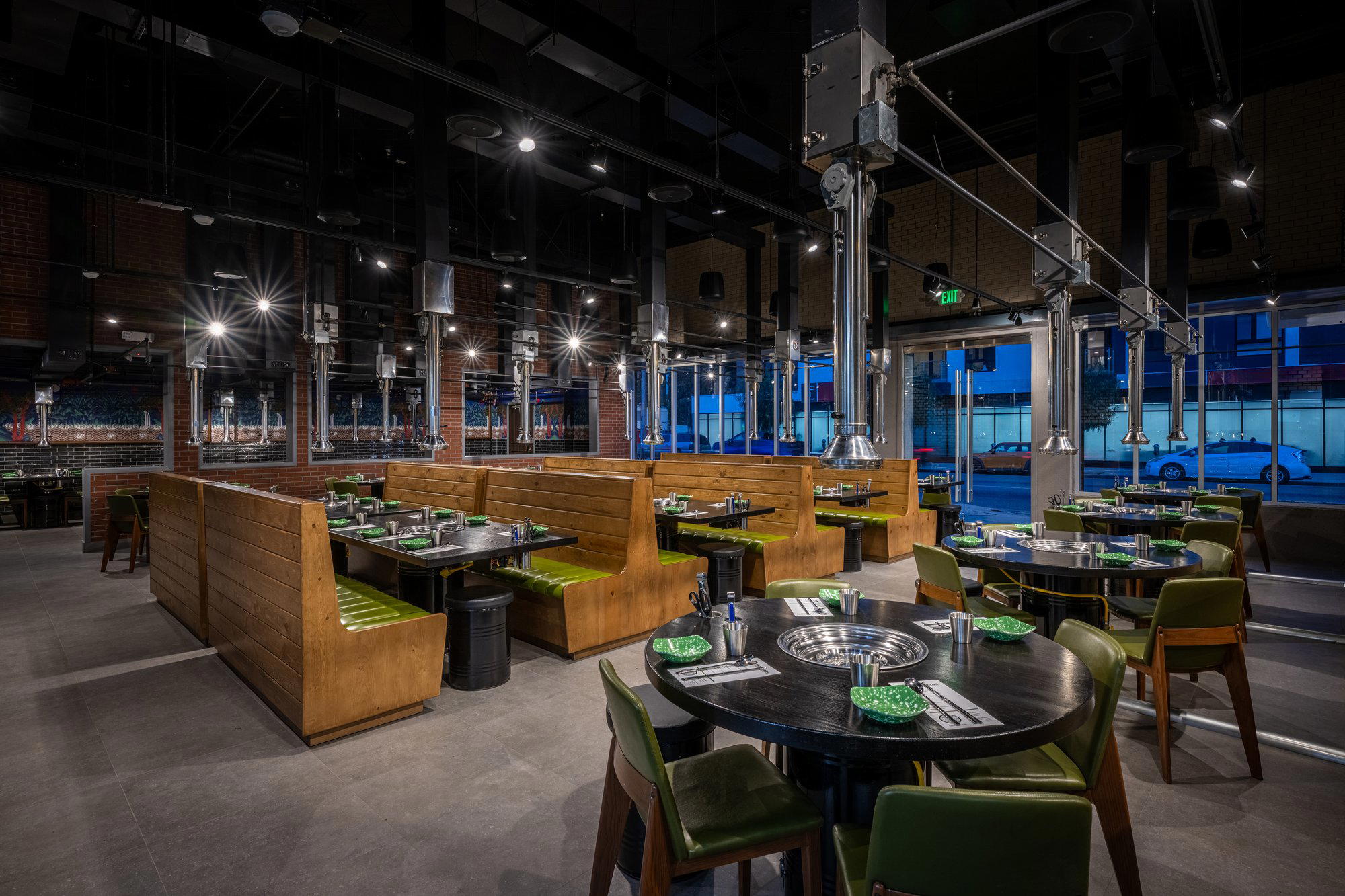
Step into the 6th Street corridor of Koreatown on a Friday evening and the smell arrives before the menu does. Korean BBQ operates on a sensory logic that most dining formats do not: the cooking happens at your table, the ventilation hoods drop from the ceiling, and the meal is measured in rounds of meat rather than courses. Kang Ho Dong Baekjeong, at 3465 W 6th St in the heart of K-Town, sits inside this tradition as a franchise export from Seoul, where the brand built its reputation on a specific register of grilled beef and pork cuts served in a high-energy, no-frills environment.
Koreatown Los Angeles functions as one of the densest restaurant corridors in the American West. The blocks around 6th and Vermont concentrate a peer set of Korean BBQ houses that compete on cut quality, grill type, and the efficiency of their service rhythm. Within that peer set, Baekjeong occupies a mid-to-upper tier by format and footprint, appealing to both first-time visitors to the genre and regulars who treat the galbi grill as a weekly ritual rather than an occasion.
The Format and What It Demands of You
Korean BBQ requires a certain kind of attention from the diner. You are, functionally, part of the kitchen operation. The grill embedded in your table is not decorative: you manage doneness, you track the rotation of cuts, and you coordinate the banchan landscape around the central heat source. This is what separates the format from passive dining and what gives it the communal charge that keeps groups returning.
At Baekjeong, the protocol follows the Seoul franchise model closely. Servers assist with the grill at intervals, but the experience rewards tables that engage with the process rather than waiting to be served. The cuts on offer follow the standard Korean BBQ architecture: samgyeopsal (pork belly), chadolbaegi (thin beef brisket), and the premium tier of galbi (short rib), which remains the reference point by which most diners in this genre evaluate a given house. The pairing logic is equally conventional and worth following: soju by the bottle, doenjang jjigae on the side, and the banchan replenished on request.
Koreatown as a Drinking Context
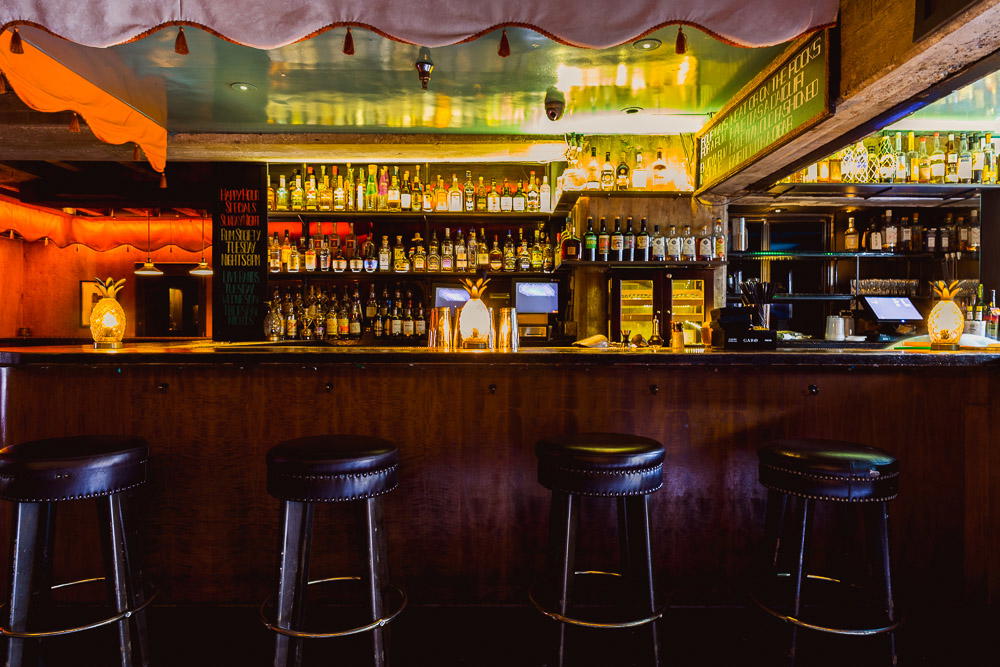
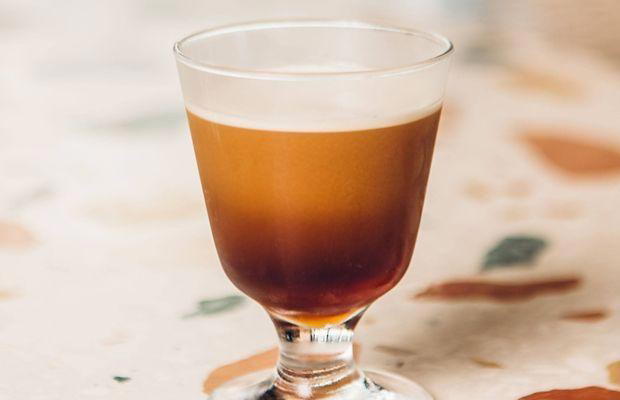
The editorial angle here cuts against expectation. Baekjeong is not a cocktail bar, and framing it through a drinks lens requires acknowledging that Korean BBQ venues operate with a drinks logic almost entirely separate from the craft cocktail scene developing elsewhere in Los Angeles. The drink at a Korean BBQ house is soju, served cold, consumed quickly, and refilled without ceremony. The ritual is social rather than technical: rounds are poured for the table, glasses are rarely empty, and the alcohol functions as counterpoint to the fat and char of the grill rather than as a standalone experience.
This is worth contextualizing against the wider Los Angeles bar scene, where venues like Death & Co (Los Angeles) and Mirate operate with programmatic rigor and chef-level technique behind the bar. The Standard Bar and Bar Next Door represent a different tier of craft investment. Baekjeong makes no claim to that territory. What it offers instead is the drink as social infrastructure: soju as the connective tissue of a meal built around shared fire.
For those calibrating a broader evening in Los Angeles, it is worth understanding that Koreatown's late-night culture extends well past dinner. Norebang (karaoke) rooms cluster in the same blocks, and the neighborhood's energy at midnight is distinct from most of the city. If you are comparing across American cities, the soju-and-BBQ dynamic has a different character from the cocktail-forward culture at places like Kumiko in Chicago, Jewel of the South in New Orleans, or Julep in Houston. Equally, the communal table dynamic at Baekjeong sits in a different register from the precision bar programs at Bar Leather Apron in Honolulu, ABV in San Francisco, or Superbueno in New York City. The point is not hierarchy but category: Baekjeong delivers on a format that is entirely its own.
The Koreatown Peer Set
Within Koreatown itself, Baekjeong competes with a dense roster of Korean BBQ houses that range from decade-old neighborhood anchors to newer spots targeting the Instagram-adjacent crowd. The franchise origin gives Baekjeong a consistency advantage over independently operated competitors, but it also means the experience tracks closely to the Seoul model without significant local adaptation. Diners who have eaten at Baekjeong outlets in New York or other U.S. cities will find the 6th Street location familiar in format and pacing.
The neighborhood context matters: Koreatown is one of the few areas in Los Angeles where late-night dining infrastructure is genuinely reliable. Most of the city shuts down early by international standards, but K-Town operates on a different schedule, with kitchens running past midnight and foot traffic sustaining energy well into the small hours. Baekjeong benefits from that ecosystem rather than creating it, and its position inside the 6th Street commercial strip places it within walking distance of the broader neighborhood offer.
For a comprehensive view of where Baekjeong fits in the broader Los Angeles dining picture, see our full Los Angeles restaurants guide. If you are exploring the international cocktail bar tier for comparison, The Parlour in Frankfurt on the Main represents a useful reference point for what a committed spirits program looks like at the other end of the spectrum.
Know Before You Go
- Address: 3465 W 6th St #20, Los Angeles, CA 90020
- Neighborhood: Koreatown, Mid-Wilshire
- Format: Korean BBQ, tableside grill, communal cuts
- Leading for: Groups of three or more; late-night dining; soju-forward occasions
- Booking: Walk-in recommended; waits are common on weekends
- Price range: Mid-range by Los Angeles standards; expect per-person spend to rise with premium cuts and additional rounds of soju
- Timing: The neighborhood hits its stride after 9pm; if you are planning a full Koreatown evening, dinner here before norebang or a bar visit is a well-worn sequence
Price and Recognition
A small set of peers for context, based on recorded venue fields.
| Venue | Awards |
|---|---|
| Kang Ho Dong BaekjeongThis venue — the venue you are viewing | |
| Mirate | World's 50 Best |
| Redbird Bar | |
| Bar Next Door | World's 50 Best |
| Death & Co (Los Angeles) | World's 50 Best |
| Standard Bar | World's 50 Best |
Continue exploring
More in Los Angeles
Bars in Los Angeles
Browse all →
Restaurants in Los Angeles
Browse all →
Hotels in Los Angeles
Browse all →
Wineries in Los Angeles
Browse all →
At a Glance
- Lively
- Energetic
- Group Outing
- Casual Hangout
- Standalone
- Communal Tables
- Sake
Raucous and vibrant atmosphere with bustling crowds and neon-lit energy reminiscent of Seoul streets.